In this issue of Breaking Barriers:
- Embrace your right to vote
- Key upcoming election dates
- White Cane Safety Awareness Day set for Oct. 15
- OSB takes part in Western Heritage Day
- Disclosure of a disability by employee can offer challenges
- Laine to be keynote speaker at OSHA convention Saturday
- Harlan's service to agency celebrated
- Online warriors needed to boost our work
- Communications team ready to respond
- Let's tell their story
- Grant boosts DRS bottom line in 2010
- Laugh it up: Making it to Friday
-
Riddle Me This: Standing alone

Embrace your right to vote
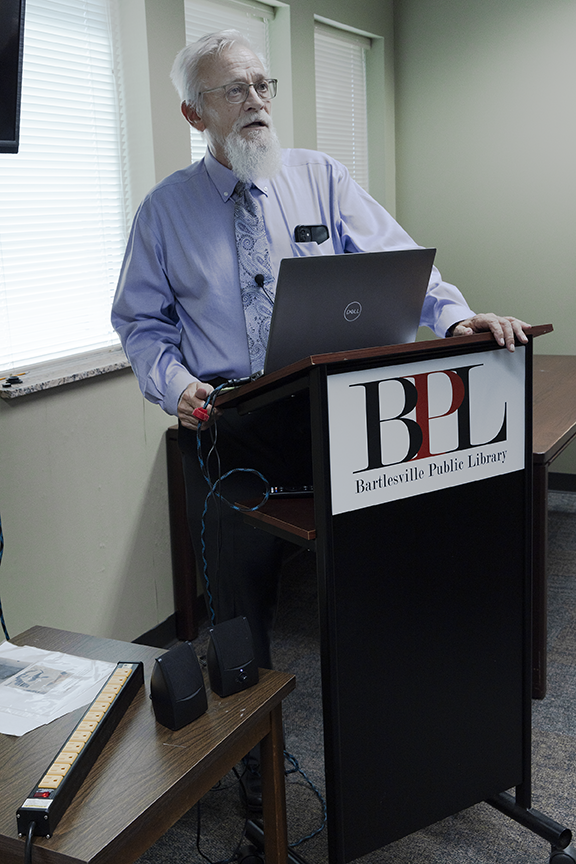 DRS' Charles Watt addresses a group of Bartlesville residents who have disabilities about how to vote and have their voices heard.
Watt: Voters with disabilities can tap state resources to make sure vote counts
DRS’ Charles Watt has been on the road recently, meeting with people with disabilities across the state of Oklahoma who are interested in voting in upcoming elections.
Watt met with Bartlesville residents on Sept. 19 at their local library, explaining how to check to see if they are registered to vote, how to request an absentee ballot and how to receive assistance at their precinct on election day.
Watt said voters with disabilities who have voting concerns have two great resources at their fingertips – the county election board, which is in charge of voting in the local precincts and the state’s voter portal where they can review the voting status, register to vote, request absentee ballots and many more services.
He encouraged voters with disabilities to consider casting their ballot during early voting because they will have time to receive assistance from the election board officials without feeling the pressure from long lines of voters on election days.
Voters with disabilities who choose to vote in person on election day will find precinct officials willing to provide help, including the use of each precinct’s audio tactile interface. The ATI system allows voters with disabilities to cast their ballots using a set of headphones and a hand-controller.
See Watt speak to voters with disabilities in Bartlesville.
Key upcoming election dates
General election date
Polls open at 7 a.m. and close at 7 p.m. on November 5
Voters who are in line when polls close will be able to cast ballots.
Deadline to register to vote
October 11
Absentee Ballot request deadline
October 21
County election board early voting dates and hours
(Additional early voting options may be available in your county. Contact your county election board.)
Oct. 30 to Nov. 1
8 a.m. to 6 p.m.
Nov. 2
8 a.m. to 2 p.m.
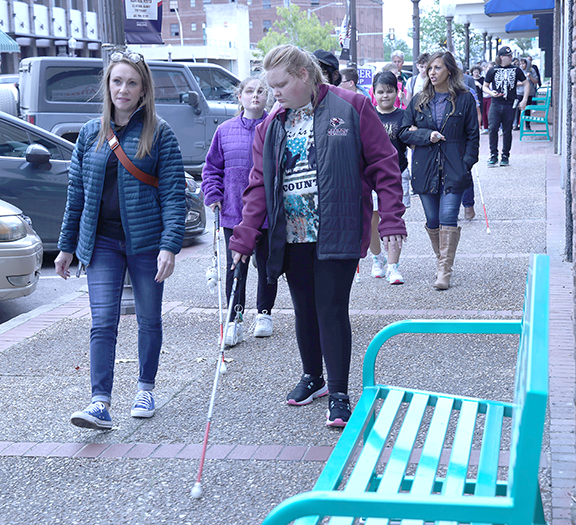 White cane users to celebrate White Cane Safety Awareness Day Oct 15 in Tulsa
TULSA – White cane users with visual disabilities and sighted supporters will celebrate National White Cane Safety Awareness Day from 10 a.m. to 12 p.m. on Oct. 15 with a walk through the heart of downtown Tulsa.
Services for the Blind and Visually Impaired, a division of the Oklahoma Department of Rehabilitation Services, will host this year’s event. SBVI staff invites participants to gather in Williams Green Park, 61 E 3rd St, in downtown Tulsa.
White Cane Safety Day was first established by presidential proclamation in 1964. The first white cane laws were drafted around that time. Today, similar laws exist in all 50 states and in the District of Columbia.
A proclamation from Oklahoma Gov. Kevin Stitt will be read, marking the importance of the day. Participants using white canes and dog guides will then circle the park.
White Cane Day walkers will hand out cards with a summary of the Oklahoma law requiring drivers to stop for white cane users and a thank you to drivers stopping during the celebration.
Oklahoma law requires drivers to completely stop their vehicles 15 feet away from pedestrians who are visually impaired and identified by their use of white canes with red tips or dog guides. People who violate this law are guilty of a misdemeanor punishable by imprisonment for up to three months or $100 fine or both.
Oklahoma law also stipulates that only blind people may carry white canes with or without red tips, which are internationally recognized as mobility aids for people with vision impairments.

OSB students ride tall in the saddle at annual Western Heritage Days at Silver Spur Lodge
MUSKOGEE – Staff of the Oklahoma School for the Blind helped their students saddle up on Sept. 25 for Western Heritage Day.
The Oklahoma Quarter Horse Association and Roy and Rose Anna Webb sponsored the event at Silver Spur Western Lodge.
The Webb’s annually donate their Silver Spur rodeo arena, stagecoach, hay wagon and employees to ensure that students enjoy an authentic cowboy experience with an educational impact.
Students enjoyed horse riding, fishing, rock climbing, bungee jumping and mechanical bull riding in a safe environment.
Volunteers who helped make the event a success included Connors State College equine program students, Haskell Future Farmers of America members and the Oklahoma Youth Quarter Horse Association members.
“This was my first-time attending this special event that introduces our students to both our history and the traditions of our state,” Interim OSB Superintendent Brent Pearce said. “All of us deeply appreciate the hard work that the sponsors and the volunteers put into making this event such a special memory for our students.”
Photos from the event.

Disclosure of a disability by employee can offer challenges for both employee and employer
As most of you who have spent some time working with individuals with disabilities are aware, October marks the celebration of National Disability Employment Awareness Month. One of the sensitive and persistent issues having to do with the intersection of disability and the workplace is that of personal disclosure.
The decision to disclose one’s disability is always at the discretion of the individual. They do not have to let anyone know about any medical condition if they don’t want to. However, if an person wants to receive a reasonable accommodation from their employer, they must disclose their disability and must provide medical documentation if the employer requests it.
This is all understandable, if a bit annoying, for individuals with non-obvious disabilities. How is an employer supposed to know about an employee’s needs if they aren’t made aware of them? And how can they determine if the need for accommodation and medical condition are covered by the ADA if they can’t independently examine and evaluate the medical documentation? They’re certainly not required to take everything an employee tells them as the unfettered truth.
However, here’s where it can get tricky. An employer is required to keep all medical information about an worker private and confidential. But there are incidences where they haven’t done so, leading to possible embarrassment and harassment for the employee.
There are differing opinions about disclosing disability in the workplace. Some advocates promote the idea of telling others about one’s disability early and often. Their idea is for individuals to “bring their whole selves to work;” to not be reluctant to let others know about their issues.
This approach is often difficult for those who still suspect society has misconceptions and prejudices against people with disabilities. It’s also a difficult approach for people who are introverted, who are just uncomfortable about openly sharing details of their personal lives.
However, individuals with disabilities might want to consider sharing their stories with their coworkers so they might understand why, if an accommodation is provided to the worker, they are getting “special” treatment. This can help forestall uncomfortable questions for the employee’s supervisor and unpleasant treatment for the employee.
We don’t live in a world where employers routinely provide every employee with whatever tools, processes and procedures they need to be able to be their most productive. The presence of the ADA means employees with disabilities are entitled to reasonable accommodations on the job, but that they must not only request an accommodation but disclose their disability at the same time.
Let’s celebrate employment of people with disabilities this month, but continue to educate people, employees and employers about how they both can benefit from the relationship.
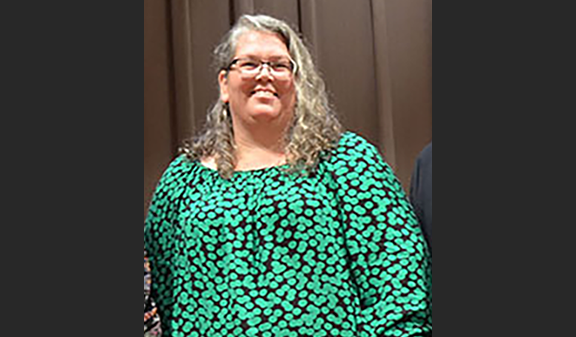 OSD's Heather Laine
Laine to be keynote speaker at OSHA convention Saturday at Oklahoma State University
Superintendent Heather Laine, of the Oklahoma School for the Deaf, will be the keynote speaker Saturday at the Oklahoma Speech-Language-Hearing Association annual convention being held Oct. 11 and Oct. 12 at Oklahoma State University.
Laine will share her journey and the importance of creating positive environments and overcoming challenges for Deaf and hard of hearing students in schools.
The convention brings together speech-language pathologists, audiologists and other communication professionals from across the state to gain new knowledge, sharpen their skills and earn continuing education credits necessary for certification and licensure.
“This year’s OSHA convention features an impressive lineup of internationally renowned speakers who will cover a broad spectrum of topics, ranging from cutting-edge research to clinical applications in speech-language pathology and audiology," said Ramesh Kaipa, head of OSU’s Department of Communication Sciences and Disorders. “Attendees can expect to engage with content that addresses both current challenges and future trends in the profession.”
Kaipa, who is overseeing this year's convention as vice president of OSHA, said there will be two keynote addresses: On Friday, OSU Center for Pet Therapy Director Kendria Cost will showcase Pete's Pet Posse, the university's comprehensive pet therapy program that provides wellness support and improves emotional resilience. On Saturday, Laine will share her experiences.
The convention will offer a broad array of sessions focused on the latest research, clinical techniques and best practices in areas such as speech sound disorders, dysphagia, AI in communication sciences, counseling and ethics.
"By featuring speakers like Dr. Heather Laine, who has positively impacted many lives, the convention aims to highlight how resiliency and celebrating differences has transformed our profession," Kaipa said.
OSHA is a professional organization dedicated to supporting speech-language pathologists, audiologists and communication professionals in Oklahoma. Its mission is to promote excellence in the field of communication sciences and disorders through advocacy, education and the advancement of clinical practices.
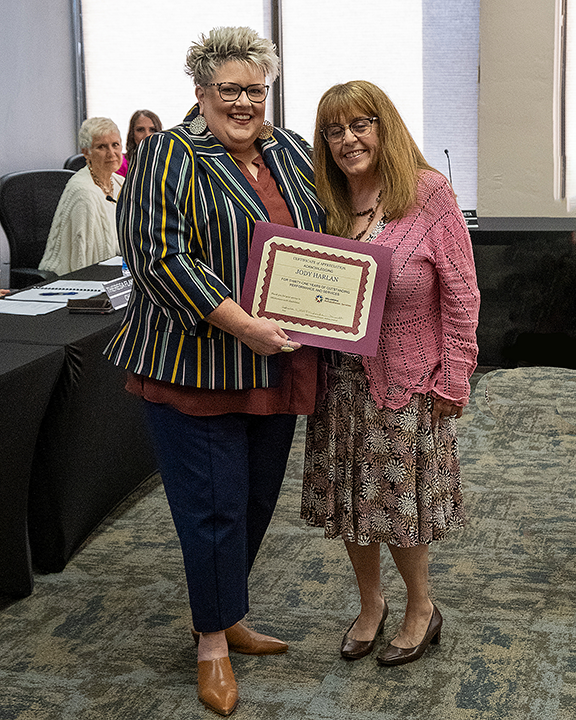 DRS Executive Director Melinda Fruendt presnts Jody Harlan with a certificate thanking her for her service to the agency.
Harlan's service to agency celebrated
Jody Harlan was recognized for her retirement after 31 years of service to DRS at the Commission meeting on Sept. 11.
Harlan was the first communications director for the agency.
Congratulations on your retirement Jody. We'll miss you.
Online warriors needed to boost our work
Attention DRS employees. We are gathering more Social Media Warriors.
DRS’ Social Media Warriors leave comments and likes on DRS’ Facebook, X, LinkedIn and Instagram accounts. From Fiction Friday to holiday memes, we have had a blast interacting with DRS employees.
We are inviting you to become a warrior and have fun with the group. Raise up your swords as you hit the like button and/or leave a comment. Gather with us as we rally for DRS.
If you would like to become a Social Media Warrior, please contact Rachel McLemore at RMcLemore@okdrs.gov. Once you have joined the Fellowship of the Agency, feel free to have fun and be merry. Just don’t turn into Gollum.
DRS’ Communications team is ready to help tell your story or promote your event.
If you have a media release, publication or other related need, please contact:
Dana Tallon
Phone: 405-951-3402
Email: DTallon@okdrs.gov
Brett Jones
Phones: 405-651-4594
Email: bjones@okdrs.gov
We look forward to working with you.
Let's tell their story
Do you have a former client that is building a life of independence?
We want to share their stories with DRS Commissioners and in the DRS Annual Report.
Please email Brett Jones at bjones@okdrs.gov with the client's name and contact information. We will take it from there
Grant boosts DRS bottom line in 2010
From the DRS News Archives
By The U.S. Department of Education
Dated: Oct. 1, 2010
The U.S. Department of Education announced today that it will award more than $5.6 million in grants to support the professional development of state vocational rehabilitation staff who provide services that lead to employment of persons with disabilities.
"These funds are aimed at helping Americans with disabilities find employment," said U.S. Secretary of Education Arne Duncan. "Improving the job skills of persons with disabilities is an investment in their future — and in the country's economic future."
Of the $5.6 million, more than $4.4 million will be distributed by the Rehabilitation Services Administration (RSA) to 75 state vocational rehabilitation agencies to help train personnel in effective management and skill areas that lead to employment of individuals with disabilities.
The Oklahoma Department of Rehabilitation Services received $59,363.
Laugh it up: Making it to Friday

 Riddle Me This: Standing alone
This edition's question:
I protect. I stand tall. My purpose is to strike fear in all. What am I?
The answer:
???
Send us your answer
Last edition’s question:
What is harder to catch the faster you run?
The answer:
Your breath.
Those getting it right included:
- Alan Helmer
- Kathy Lowry
- Carolyn Bowens
- Maggie Mattox
- Melinda Frazer
- Jim Kettler
- Kristy O’Neal-Nelms
- Julie Bailey
- Krista Atkinson
- Kimberly Veron
- Vickie Wilson
|