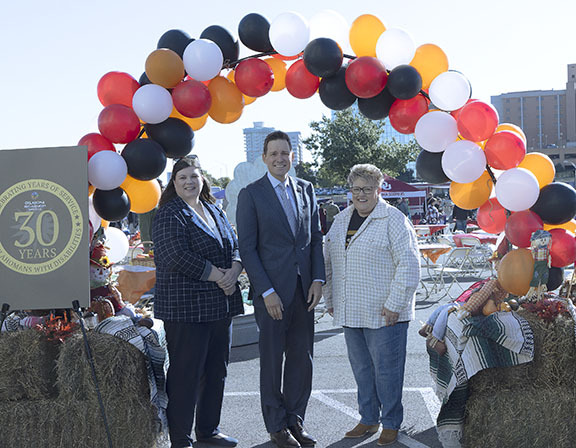
 From left, Deborah Shropshire, secretary of Oklahoma Human Services, Lt. Gov. Matt Pinnell and DRS Executive Director Melinda Fruendt.
Hundreds attend event celebrating decades
of service to Oklahomans with disabilities
 |
|
DRS staff, friends, family and partners celebrated the 30th anniversary of the agency on Oct. 17.
The theme was “Come Home to DRS: Celebrating 30 Years of Service to Extraordinary People.”
DRS staff and event partners Oklahoma Rehabilitation Council and Oklahoma ABLE Tech sponsored carnival games and provided information about DRS’ programs, food trucks and entertainment were also enjoyed by all.
Program highlights included messages from Lt. Gov. Matt Pinnell, Deborah Shropshire, secretary of Human Services executive director, DRS Executive Director Melinda Fruendt, DHS Hope Ambassador Tammy Williams and performances by OSB Jazz Band and OSD cheerleaders.
Pinnell told attendees he looks forward to serving as secretary of workforce and helping DRS continue its mission of serving Oklahomans with disabilities. He noted one in six Oklahomans has a disability.
DRS became a standalone agency on July 1,1993, when then Gov. David Walters signed Senate Bill 356, establishing DRS. It was formally part of the Oklahoma Department of Human Services. Thirty years later, DRS continues to make a difference in a client’s life while building state’s workforce stronger.
More photos from the event are available
|
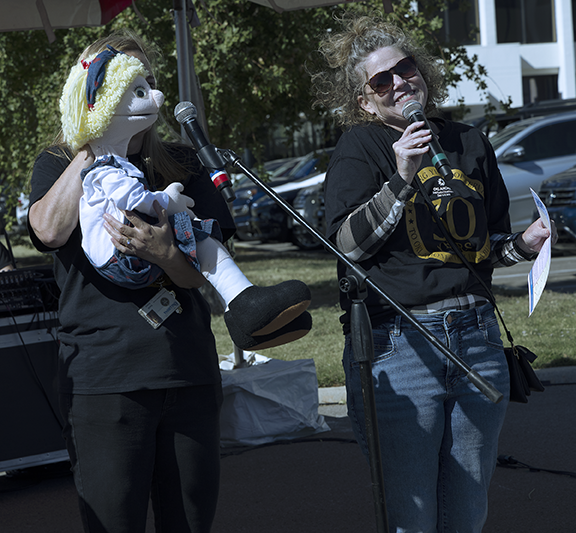 Attendees watched a puppet show on the importance of Hope Training.
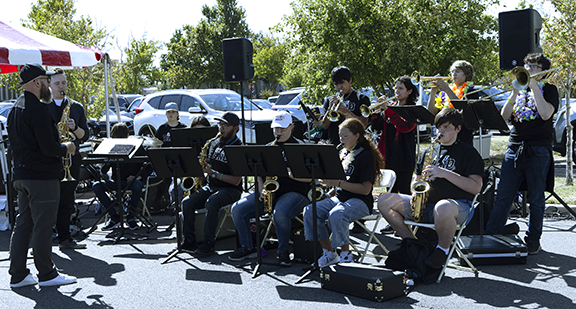 OSB's Jazz Band performed.
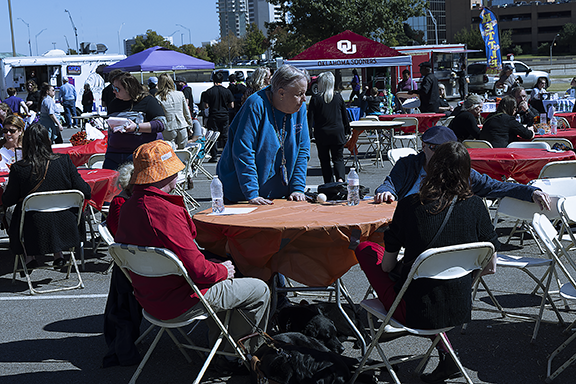 The event was a great chance to talk with old friends and former co-workers.
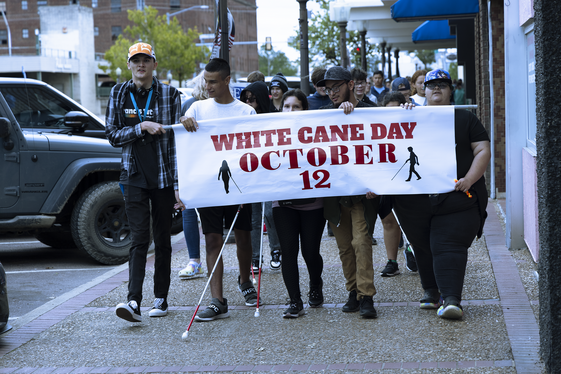 OSB students carrying White Cane Day October 12 sign.
Students gather in downtown park to mark event
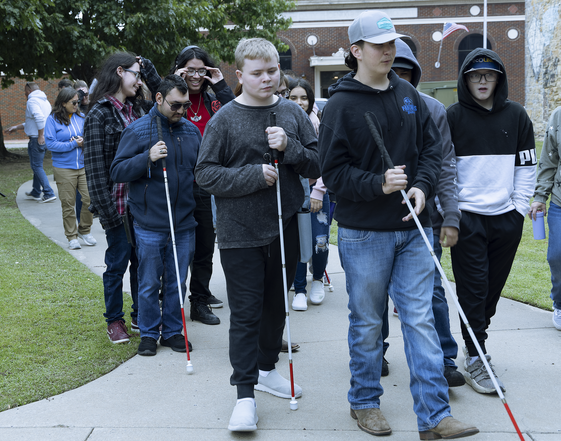
Muskogee – Oklahoma School for the Blind staff hosted white cane users and sighted supporters for National White Cane Safety Awareness Day on October 12, walking through Mural Park on Broadway Street.
White Cane Safety Awareness Day is traditionally celebrated worldwide on October 15, but OSB organizers rescheduled this year because that date fell on a Sunday.
Oklahoma law requires drivers to completely stop their vehicles 15 feet away from pedestrians who are visually impaired and identified by use of white canes, white canes with red tips or dog guides. People who violate this law are guilty of a misdemeanor punishable by imprisonment for up to three months or $100 fine or both.
Oklahoma law also stipulates that only blind people may carry white canes with or without red tips, which are internationally recognized as mobility aids for people with vision impairments.
White Cane Safety Awareness Day was first established by presidential proclamation in 1964. The first white cane laws were drafted around the same time. Today, similar laws exist in all 50 states and in the District of Columbia.
Additional photos from the event.
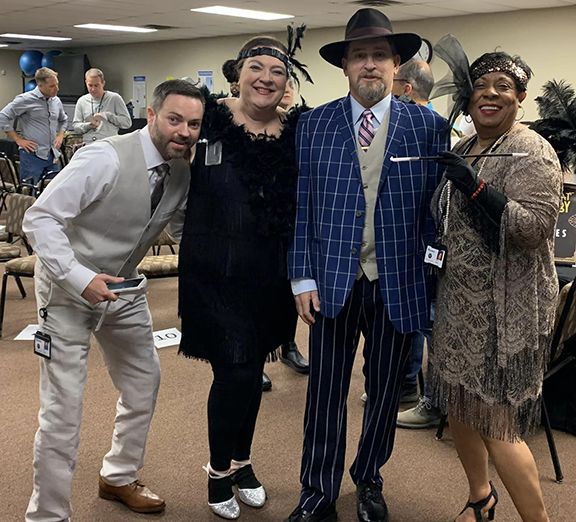 DDS staff were dressed to the nines at a recent celebration.
The Disability Determination Services staff had a fun gathering recently and the theme was Great Gatsby! Here are a couple of photos from the event.
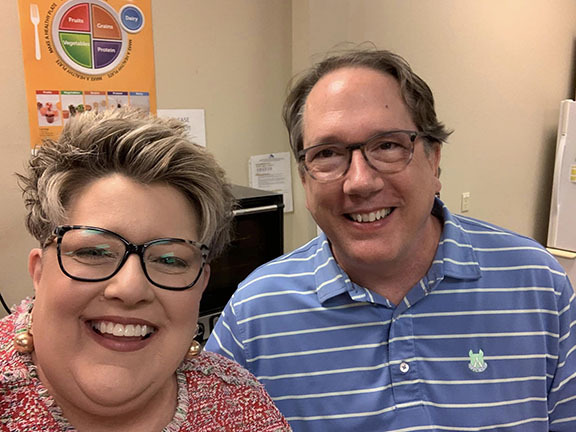 DRS Executive Director Melinda Fruendt and DDS Administrator Keith Tiller.
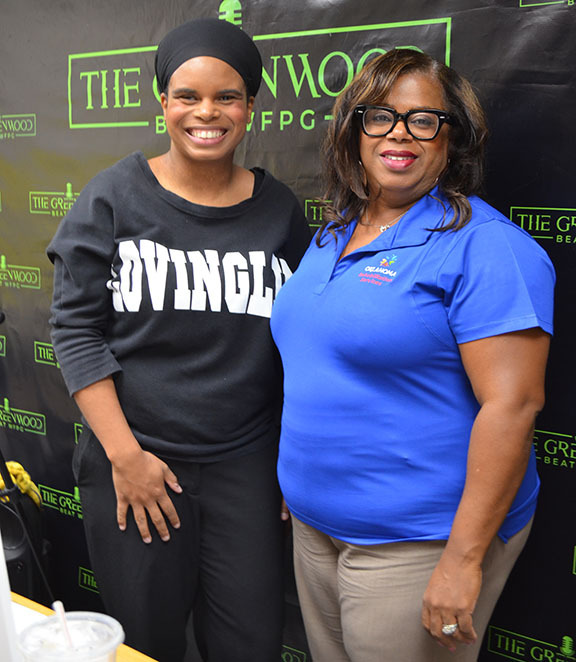
VR Programs Manager II Valyncia M. Wilson did a radio interview Oct. 19 with Zaakirah Muhammad on WFPG Black Women’s Health Radio Show in Tulsa. The program airs on WFPG Radio and Apple Music/Radio and TuneIn podcasts.
The interview focused on VR services and was DRS’ first time on this show. Zaakirah Muhammad was a VR Transition client in Tennessee who has hearing and vision loss and a speech disability.
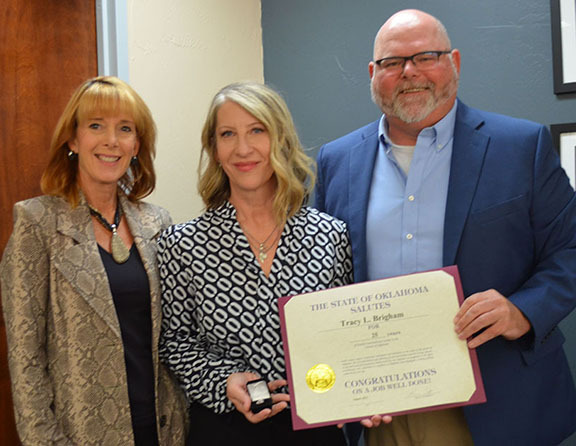 SBVI Administrator Tracy Brigham was honored for 25 years of dedicated service to the taxpayers of Oklahoma at the October Commission meeting. Brigham, middle, is pictured with Commissioners Theresa Flannery and Wes Hilliard.
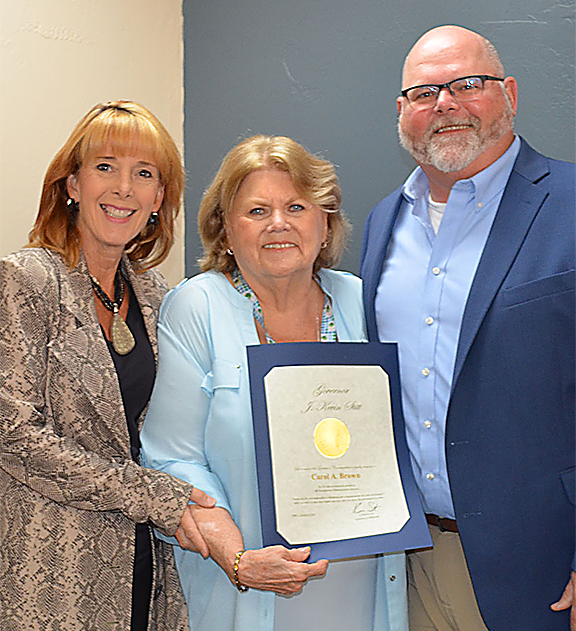 Commission Administrative Assistant Carol Brown, who will retire at the end of October was honored for her service to the taxpayers of Oklahoma. Brown, middle, is pictured with Commissioners Theresa Flannery and Wes Hilliard.
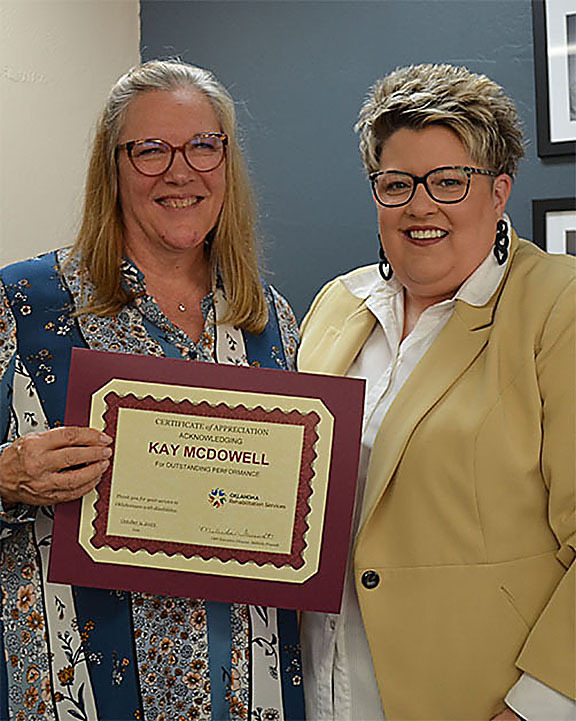 Administrative Programs Officer Kay McDowell was honored with a Director's Certificate at the October Commission meeting. McDowell, left, is pictured with DRS Executive Director Melinda Fruendt. McDowell was recognized for providing outstanding travel assistance to DRS employees.
Work with someone who is going above and beyond to serve our clients, students and Oklahoma taxpayers?
You can honor them by nominating them for Oklahoma Commission for Rehabilitation Services Award. The award recognizes outstanding job performance and productivity within the State Department of Rehabilitation Services.
Go to the nominating form to begin the process. Nominations close Nov. 1.

The correct answer was Liz Scheffe and Trey Lewis.
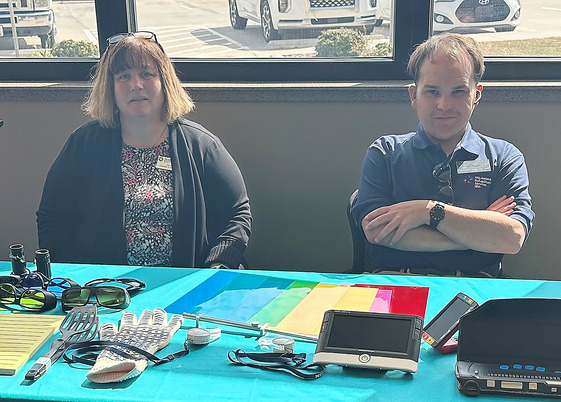 Congratulations to all the photo contest winners including:
Week 1 - Theresa Paris
Week 2 - Tiffany Davis
Week 3 - Paula Nelson
Week 4 - Amy Pebley
Taken from submitted Client Success story:
Vinita’s Ben Culp, whose disability is Megalocornea Intellectual Disability Syndrome, received services from DRS and is now employed.
DRS services offered to Culp included job placement. He was hired at Taco Bell.

Do you have a former client that is building a life of independence?
We want to share their stories with DRS Commissioners and in the DRS Annual Report.
Email Brett Jones at bjones@okdrs.gov, and tell us their story.
 Dreaming to one day play under the lights
Courtesy of The Oklahoman
From October 2011
SULPHUR - Ask Colin Larkins about the field where his football team plays, and he uses his index finger to draw an X on the palm of his other hand.
It's sign language. It means "put down.” Stand on the football field at Oklahoma School for the Deaf, and you realize why the quarterback feels so strongly. The facility is in need of serious up grades. There are no lights, few bleachers and no press box.
"It feels like we're put down, like we're a tier down,” Larkins signs through an interpreter. "It's like we're playing pee wee football, but we're a high school team.”
Truth be told, plenty of pee-wee fields are nicer than this.
School administrators and supporters have decided it's time for a change. Starting in earnest during their homecoming game on Saturday, they are launching a fundraising campaign called "Make It Right.” They want to raise between $1.5 million and $2.5 million so they can provide all the things that the football program has never had.
Some dream of a grand stadium — “Like Jenks or Tulsa Union,” OSD coach Tommy Varner said — but most believe there's a happy medium between what they have and what other eight-man programs have.
“We just want our kids here at OSD to have what everybody else has,” booster club president Wende McKenzie said. “Our kids are like anybody's kids — they just can't hear.
“We just want the best for them.”
The best of high school football is Friday night.
At OSD, there are no Friday night lights.
Tommy Varner arrived at the school on the outskirts of this south central Oklahoma town in 1998.
He wanted lights ever since.
That's because he knows the power of sport. Born with spinal meningitis that rendered him deaf when he was only four months old, Varner grew up in Stillwater. He faced struggles with no hearing in his right ear and only 20 percent in his left, but none of that mattered when he was on the baseball field.
There, he could hit and run and catch and throw just like everybody else.
Maybe better.
He played two years of baseball at East Central, where he got his start on a deaf education degree that ultimately led him to OSD.
Sports empowered him, and he wants the same for his players.
“They came here, yeah, to get an education,” said Varner, who used a sign-language interpreter but verbalized all his own words, “but sports is a valuable part of their lives, too. It's all about equal access.
“Be equal. Be fair.”
The school, a sprawling acreage that looks more like a small college than a high school, is funded by the state. Once the only option for Oklahoma's deaf children — they were not only educated but also housed at the school — it now has an enrollment of 137 in all grades, kindergarten on up.
Students come from all over the state, many of whom live in the dorms during the Monday-through-Thursday school week, then return home every weekend.
Because OSD is state-funded and not tied to a local school district, that means that it can't put together a bond issue and ask local voters to provide funds for construction and renovation. The school has received state funding during the past few decades, but most of those dollars have went to the classrooms, the library and the dorms, said Dana Tallon, spokeswoman for the Oklahoma Department of Rehabilitation Services, the umbrella organization that oversees OSD.
“We understand that some people might not see that as a priority, but our sports are part of what we do have,” she said, using an interpreter but verbalizing her own words. “We give the students an opportunity to participate in sports that they might not get in public schools.”
And you don't have to look hard to find studies espousing the benefits of participating in sports. Kids who play sports are likely to have higher self-esteem, better teamwork skills and lower dropout rates.
Having a chance to play on an all-deaf team is significant for the kids at OSD, many of whom might not play if they were in a public school. Everyone on the football team, including the three coaches, knows sign language. Communication is more manageable. Camaraderie is easier.
“They get upset with themselves when they make mistakes,” KaAnn Varner said. “There's a lot of celebration when they do things right. There's a lot of excitement when they make a touchdown.
“They learn more.”
But look around the football field at OSD, and you wonder what lessons it is teaching.
Two pairs of wooden bleachers sit on the home side of the field, one set with five rows each, the other with three.
A lot of folks bring blankets or lawn chairs so they have somewhere to sit.
A flatbed truck is parked behind the bigger pair of bleachers. A table and a couple chairs are set on the back. On game day, that is the press box.
The scoreboard is the old-school, lightbulb variety, and the H-shaped goal posts are homemade, having been welded together and repainted every year.
Yet on game day, the bleachers overflow with fans. A bass drum beats out the cadence of more than a dozen cheerleaders. A big play brings clapping, cheering and hundreds of hands raising in the air. With fingers spread, the hands shake.
It's sign language for applause.
“We make do with what we have, and we love it,” said McKenzie, the booster club president.
But they can't do with what they don't have.
Lights top that list.
OSD will play twice as many day games this season as night games, and when the Indians do play a night game, it's either a road game or a home game played in someone else's stadium. They occasionally play at Sulphur High.
A night game on their home field has never happened.
“Those were the most exciting things — ‘Oh, Friday night football' — and we can't do that,” McKenzie said.
She remembers Friday night games from her high school days. She saw how much fun they were for her oldest son, too.
But her youngest son, Austin, never got to experience it. He is deaf, the only one in the family who is, and he went to OSD from the start of his freshman year until he graduated last spring.
Wende McKenzie knows her son missed out on Friday night lights. She doesn't want that to happen to any other kids at OSD.
“That's just more excitement for us on Friday nights,” she said, “and a chance for them to experience high school the way everybody else is experiencing high school.”
OSD is willing to fight for it. Everyone at OSD has high hopes for this fundraiser.
Homecoming will draw 300 or 400 people, maybe more if the weather is nice on Saturday. It's more like a family reunion, drawing people from the deaf community from across the state. It's a homecoming like no other.
Maybe that will be a big day for the campaign.
Or maybe someone with deep pockets and a big heart will offer to help. Country music power couple Miranda Lambert and Blake Shelton live half an hour from the school.
Who knows?
Lights will cost anywhere from $90,000 to $150,000. Bleachers will be between $150,000 and $200,000.
But really, the folks at OSD aren't banking on one check to pay for everything.
“I want people to know that there's nothing that's too small,” KaAnn Varner said. “There's nothing that's too small that people can give.”
They are planning to raise the money for lights and bleachers and everything else $25 or $50 at a time. They are hoping there will come a time when this year's seniors come back for their homecoming and see the result of these efforts.
Colin Larkins hopes for it, too.
While he and six other seniors are playing their final games in the coming weeks, they have helped OSD go from a winless team three years ago to a national runner-up finish among deaf schools last year. They lost the national title game by only four points, and having already rolled through all of their deaf-school competition, they have their sights set on winning that title this season.
Larkins, a serious kid who is built like a tree trunk, has a simple philosophy that is evident in the entire team.
“Give a hundred percent,” he signs, “and don't back down.”
He raises an index finger, then makes a half circle through the air that explains the mentality of not only the football team but also the fundraising team.
“Just do it.”
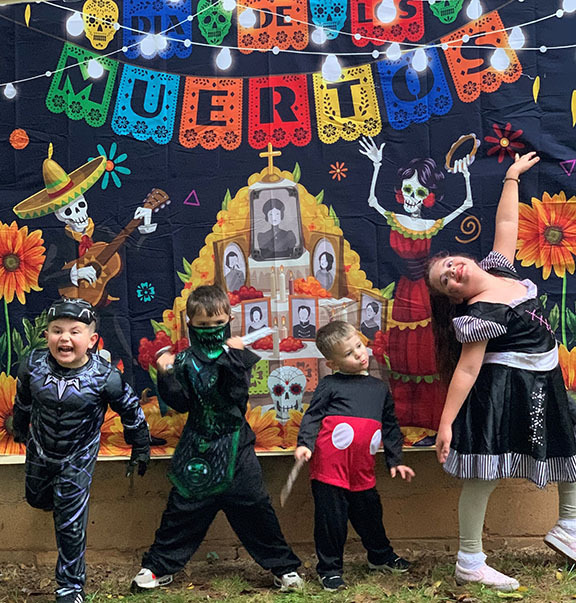
This Halloween take photos of your little ones dressing up for trick or treating. Then send them to us and we will celebrate them in November's first edition of Breaking Barriers. Send them to bjones@okdrs.gov.
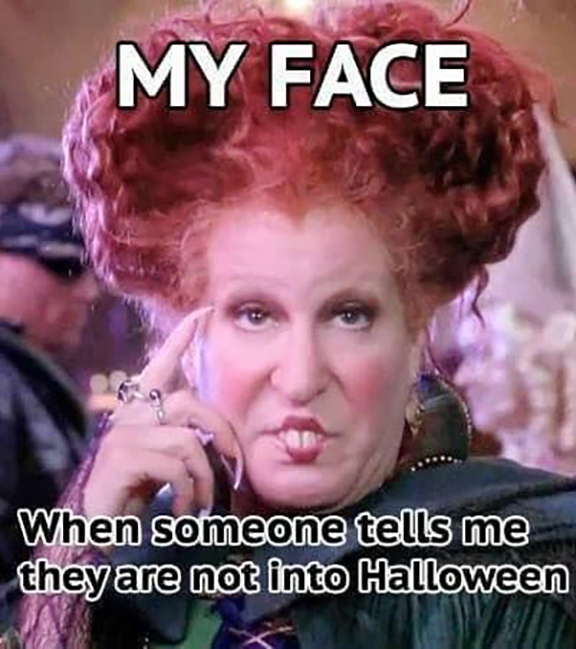

Question
I protect, I stand tall. My purpose is to strike fear in all. What am I?
Answer:
???
Last edition's question
Who makes it, has no need for it. Whoever buys it won’t use it. Who uses it, won’t care. What am I?
Answer:
A casket
Those getting last edition's question right included:
1. Renee Skocdopole
|