|
YOUTH, PARENTS, TEACHERS, AND COUNSELORS |
|
Work Adjustment Training Happening Across Oklahoma
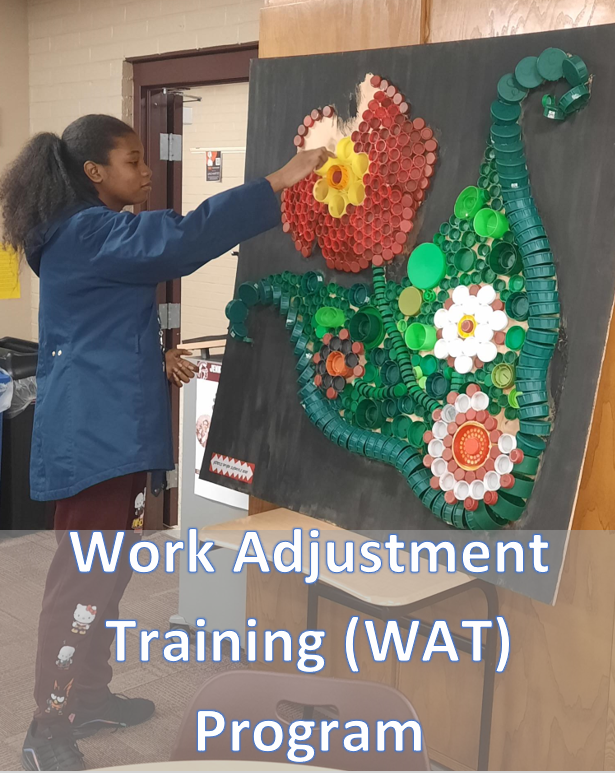
The Transition Work Adjustment Training (WAT) program is designed to prepare high school age youth with the most significant disabilities and barriers to employment by developing important work habits, attitudes, and personal and social adjustment skills. To participate, a student must be a client of the Oklahoma Department of Rehabilitation Services and have an Individualized Plan for Employment (IPE) or trial work plan in place. If their school has a contract or there is a local vendor, students may be able to participate in WAT for up to 18 months if approved by their DRS Counselor. This is an unpaid work experience program with the potential to transition from WAT into a less restrictive paid work experience program such as School Work Study (SWS).
Currently there are 15 WAT programs throughout Oklahoma. We spoke to some successful WAT teachers and coordinators about their programs seeking their input and advice for others possibly interested in starting a WAT program. When asked what makes her program successful Megan Curry with The Collective WAT program at Norman Public Schools stated “The Collective will be successful because it gives students the opportunity to gain real-life work experiences in a supportive environment. Also, it will be successful because the product being sold is popular among the students. Teachers and paraprofessionals work very well together and work very hard to make sure students are getting the best and most meaningful learning experience possible in the time that they are here”. Similarly, Ramona Roberts from Jenks High School added about her WAT program’s success “Teamwork from our Special Services Director, Principal, District Transition Coordinator, Transition Instructor, and our Employment Consultants is what helps to keep our program running smoothly and effectively. We have a monthly curriculum calendar of what needs to be taught and the instructor comes up with activities to reach that goal as well as having the Employment Consultants take our kids out in the community to gain job skills. We share ideas. We discuss what works and what we need to modify. We have developed a strong efficient way of running the class, meeting our monthly goals, and organizing our WAT files. I also focus on parent involvement. We have had monthly parent meetings where different providers presented about their business. I turned those videos into a YouTube video and when we have a parent ask about a certain resource we now have a video that we can send them with information”.
Although starting a WAT program is beneficial it does have its barriers. Here’s what Claudia Beckner a retired long time teacher/coordinator at Lawton Public Schools stated about the barriers she had to overcome and how she overcame them. “Lack of importance placed on signing of WAT contract by district level administration and the district process for contract approvals (having to periodically remind them to take care of signing the contract, resending the e-mails with the contract…even though they received the same e-mail directly from DRS). To overcome this barrier, make sure a special ed staff person at the district level is included in DRS contacts for the contract and WAT audits to ensure WAT doesn’t get lost in the shuffle, as well as to ensure oversight and follow through at the district level.” Claudia also mentioned lack of support/understanding as a potential barrier “lack of support/understanding of site-based administrators to support WAT at the same level they support/understand other activities/programs tied to post-school outcomes (i.e. internships, ICAP activities). To overcome this barrier, information can be presented at administrator meetings and/or district/site level special ed staff can meet individually with site-based administrators to introduce/explain/connect the dots on how the WAT program fits into the big picture of secondary transition in the IEP, ICAP, school district vision/mission statements, OSDE accredited course titles, etc.”.
All three teachers/coordinators were asked to share a success story from their WAT program. Megan from Norman Public Schools shared “When The Collective began there was a student who didn’t look at it as a “real job”. Because of this, he would wander off and not participate. After high school, he wants to work at On Cue as a cashier. Having this knowledge, the teacher put him as the cashier for The Collective and he is now fully engaged in his work tasks and does so for two whole hours! This will give him experience that he can take with him to get a job as a cashier at On Cue”. Claudia retired teacher/coordinator from Lawton Public Schools shared “Many students who become DRS eligible and approved for WAT, often become more independent in work skills, and are able to transition to approval for DRS paid School Work Study (SWS). This is so exciting to see, because then students have the potential to move from SWS to competitive employment. My former district had several students who made this transition, showing great promise in a SWS setting with little to no supports. One student who was Autism, ID, non-verbal, formerly physically aggressive and an eloper was able to move into a SWS job in the school cafeteria and was valued for her ability to consistently and proficiently do the tasks she was assigned”. When asked about a success story here is what Ramona from Jenks had to say “Every student has a success story from graduating, advocating for themselves, to obtaining employment. An employment example: We took our kids to a veterinarian job site in Jenks. They ended up hiring one of our students post high school and he is still working there 2 years later! We had a student that during mock interviews cry when they asked, “What is your name?”. She has since completed a couple interviews and worked with an Employment Provider post high school and learned to ride the public transportation bus to her job site”.
In addition, the teachers/coordinators added advice for anyone wanting to start a program. Ramona in Jenks stated “Meet with someone that is willing to meet with you and share what works with them and their program. Borrow what they have and modify it to fit your program needs. When reaching out to a job site to visit, go there in person, reassure them that school staff will be with the students when they come out. Be creative! A thrift store is about the easiest job that you can create at school. Students that may have behavior issues or that can't leave campus can still gain job skills while on campus. Task boxes come in handy also and teach students tons of job skills. Some examples of task boxes are matching socks, assembling screws, nuts, and bolts, folding towels, wrapping silverware! It may take a few months to get everything set up but it will be well worth it and your program will run smoothly afterwards”. Megan from Norman added “Starting a new program takes the right people. Surround yourself with people who share the vision and passion for the program you want to start. Partner with whoever is willing to work with you from outside agencies like DRS, community businesses, and school personnel. It takes a village!”.
Families and professionals interested in learning more about Oklahoma's Work Adjustment Training can email Stacey Dutton at sdutton@okdrs.gov
|
|
January 2023: Family & Community Trainings

Long-term Planning – Financial and Employment Options: January 18, 2023 at 12:00 p.m.
The Center for Learning and Leadership/UCEDD and the Oklahoma Disability Law Center invite you to the family training on Long-term Planning - Financial and Employment Options. This training is designed to help plan for the future by sharing options to insure the protection of long-term supports and benefits, including waiver supports and methods for saving money beyond the typical Medicaid asset limits. Learn about options for community integrated employment such as Ticket to Work and options to help secure funds for future needs such as OK STABLE accounts. Attendees can learn about what could be available to them or the person they care for.
Link to Register for Long-term Planning – Financial and Employment Options
|
March 2023: People With Disabilities Awareness Day
Are you ready to network? Celebrate outstanding accomplishments? If so, join us for People with Disabilities Awareness Day from noon to 4 p.m., March 7, 2023, at the Oklahoma History Center.
Let's take action! Plan on coming, bring a friend or two and network with the more than 70 disability-centric exhibitors. They bring a wealth of information and might introduce you to new programs.
Celebrate success! Stay and congratulate our Awareness Day Award Winners.
We are back at the Oklahoma History Center. The venue is ideal for talking with exhibitors and an outstanding place to showcase the award winners.
Link to Register for People With Disabilities Awareness Day
March 2023: Student Involvement in the IEP - Training

Student Involvement in the IEP process goes beyond a simple invitation to the table. In this workshop, teachers and stakeholders will understand how individualized roles impact student contributions and the steps they can take to support student involvement before, during, and after the IEP.
March 27th, 2023 from 9:00 am to 4:00 pm (Registration will begin at 8:30 am)
Location: Francis Tuttle Technology Center ROCKWELL CAMPUS, Campus Center D1750A; 12777 N. Rockwell Ave. OKC OK 73142
For more information, please email Lori Chesnut at lori.chesnut@sde.ok.gov
Link to Register for Student Involvement in the IEP - Training
|
March 2023: Joining Forces Annual Conference
 Save the date - March 31st, 2023 for the next Joining Forces Conference. Joining Forces provides learning opportunities for supporting individuals and families through partnerships of community members, agencies, and organizations throughout Oklahoma.
Registration information will be available soon. In the meantime, anyone interested can visit the Oklahoma Family Network website or call 405-271-5072.
|
|
Youth Leadership Forum
The Oklahoma Youth Leadership Forum (OKYLF) is a 5-day educational and motivational week held every June on a university campus for high school students with disabilities in the 10th, 11th, and 12th grades. Student delegates work in small and large groups, create their own personal leadership plans and work to identify resources that can help them achieve their goals. Activities are included as part of the goal to teach students about leading a well-rounded life. Students will meet with other adults with disabilities, and address topics such as disability rights laws, innovations in technology, community resources, legislative processes, and much more!
Delegates meet state and national leaders and will spend time at the state capitol meeting government officials. It is critical students with disabilities identify themselves with pride, as individuals, and as members of their community. OKYLF offers students with common experiences the opportunity to learn from each other in a framework of history and an atmosphere of encouragement. Costs are paid for by the Developmental Disabilities Council of Oklahoma.
OKYLF enables youth with disabilities to grow personally, socially and academically, and to fulfill their potential in their work and lives. Every student should have this opportunity. The upcoming OKYLF held June 13-17, 2023.
Learn more about the OKYLF and apply online. Email Bradley.Mays@okdhs.org if you need help with the application and/or have questions.
|
Oklahoma School for the Blind
Located in Muskogee, the Oklahoma School for the Blind (OSB), also known as Parkview School, provides residential and day education, and outreach programs at no charge for Oklahoma children who are blind or visually impaired from infancy through 12th grade. OSB's goal is to help students reach their maximum potential.
OSB offers a comprehensive curriculum of reading, language arts, mathematics, social studies, science, physical education, music and computer science for residential and day students. Specialized instruction includes braille, orientation and mobility, optimum use of low vision, adaptive equipment and technology, and tactile graphic skills.
The secondary school program includes college preparation, vocational training and a work-study program. In addition, students may receive assessment, counseling, physical therapy, speech and language therapy, hearing tests and health care services. Recreational activities include student organizations and interscholastic athletics.
Check out this Information for Parents document to find out about the specialized services OSB provides for Oklahoma's children who are blind or visually impaired. OSB programs serve students on campus as well as those attending school in their home communities. Open the Information for Parents PDF file or Information for Parents Word file.
|
|
CareerTech Counseling and Career Development
The division of Counseling and Career Development (CCD) at Oklahoma Department of Career and Technology Education (ODCTE) creates and distributes career development products, offers quality professional development training, and provides technical assistance and leadership for career and academic development to educators across Oklahoma. They offer Kuder Galaxy®, an elementary career awareness program, that includes games, activities, and videos that help kids discover their interests. In addition, they offer OKCareerGuide, a FREE career development platform for all Oklahomans that allows users to take career assessments, explore occupations, create a resume/cover letter, complete needs assessments, and more! Click here to schedule your Galaxy or OKCareerGuide training today. CCD also strives to serve special populations, including:
- Individuals with disabilities
- Economically Disadvantaged
- Students in non-traditional fields
- Single Parents
- Individuals who are homeless
- English Learners
- Out-of-workforce
- Foster Care
- Military Families
For more information on the Counseling and Career Development office at Oklahoma CareerTech, please click here. For questions or further assistance, please email Katlyn Hudgins, Career Development Coordinator – Special Populations, at Katlyn.Hudgins@careertech.ok.gov, or call (405) 743-5596.
|
 Oklahoma Parents Center
 is an organization that provides statewide parent training and Information. They have been advocating for children with disabilities to build a better future since 2000.
|
|
First Technology Center in Oklahoma expands Pre-ETS services to students
The Oklahoma Department of Career and Technology Education (CareerTech) oversees the statewide system of career and technology education. The system comprises 29 technology center districts and 390 comprehensive school districts. For more than 100 years, CareerTech has been connecting students and businesses with training opportunities that help Oklahomans find rewarding careers and support Oklahoma industries.
Central Technology Center (Central Tech), one of the technology centers in Oklahoma, collaborates with The National Center for Disability Education and Training, University Oklahoma Outreach and the Oklahoma Department of Rehabilitation Services, to provide Pre-Employment Transition Service (Pre-ETS) activities to high school students with disabilities. Pre-ETS Services include:
- Job Exploration Counseling
- Post-Secondary Counseling
- Self-Advocacy
- Work-Based Learning
- Workplace Readiness
During the 2021-2022 school year, Central Tech Employment Services, provided PreETS services to more than 400 students between the ages of 15 ½ and 21. The activities help students with a documented disability get an early start identifying career interests to achieve community integration, independence, post-secondary education, and/or competitive integrated employment. See the fact sheet for more details.
Questions? Email Shelly.Rentz@centraltech.edu or call 918-227-9260.
|
|
|
|
Erica Traxler is a Vocational Rehabilitation Counselor in Lawton who is originally from Michigan. She is currently studying Clinical Mental Health and Rehabilitation Counseling at East Central University in Ada and her goal is to pass the CRC exam and go into candidacy for her Licensed Professional Counselor (LPC) licensure.
A year after graduating high school Erica joined the United States Army. She made a career of it until retiring in 2013. She has said that after retiring from the Army, she felt lost.
She eventually took on a job selling Mary Kay but struggled with the feeling of not having a “why”. This was the case until she moved to Oklahoma. After moving here, Erica began attending Cameron University in Lawton, joined the Student Veterans of America and joined the Veterans of Foreign Wars.
At that point, she knew she had her why. She loved helping and working with veterans. While she was in her undergrad program at Cameron, Erica realized that her dream job would be one where she could help veterans every day. She served for a short time as a Veterans Affairs Work Study mentor until ultimately discovering her desire to be a Vocational Rehabilitation Counselor.
Erica eventually met a veteran family whose son participated in the Lawton Public Schools Transition Program. She got to watch him grow as an individual and be able to take care of himself, live on his own, and even pay his own bills. That inspired her to be the Transition Counselor.
She wants to be part of the success in other teenagers so they can live healthy, happy, and successful lives. "This program is a beautiful thing." Erica said. “I am part of an amazing team. I would not be able to do this job without them and I am very grateful every day to them for helping me be successful. Also, I ride a Harley Davidson Street Glide Special and many of my clients think that is cool.” We are lucky to have Erica on our team!
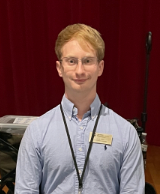
Jacob Keller is a Vocational Rehabilitation (VR) Counselor in Tulsa. He has been part of the DRS team since June of 2022.
He is from Tulsa and discovered his passion for serving youth with disabilities after working for DRS in his role as a Counselor - a job he admits he came across when simply browsing job postings online. As a VR professional, Jacob works closely with families, teachers, and youth to help them transition from school life to work life.
Jacob currently holds a Bachelor of Science in Psychology and is planning on pursuing a Masters degree in Rehabilitation Counselling. Although he did not begin his educational and professional journey with the goal of serving youth with disabilities, Jacob says he doesn't know if he could be happier and more fulfilled professionally.
We are lucky to have Jacob on our team!
|
 Erica Traxler
Vocational Rehabilitation Specialist
Vocational Rehabilitation
o. 580-585-4200
f. 580-585-4232
ETraxler@okdrs.gov
Jacob Keller
Vocational Rehabilitation Specialist
Vocational Rehabilitation
o. 918-581-2177
f. 918-581-2624
Jacob.Keller@okdrs.gov
|
|
What is Transition?
The Transition Program provides services to prepare students with disabilities for employment and life after high school. Services may include career counseling, vocational evaluation, work adjustment training, on-the-job training, work-study, and job development and placement. The Vocational Rehabilitation and Services for the Blind and Visually Impaired divisions jointly run the Transition program so the youth can easily move into adult services when it is time.
|
|
We can help create the blueprint for your youth’s success |
|
|
|
|