|
The Oklahoma Energy Security Planning team, led by the Oklahoma State Energy Office, and in collaboration with the University of Oklahoma and professionals in Oklahoma’s energy industry, is launching a quarterly newsletter series to keep stakeholders connected and informed on energy security and related topics.
These newsletters are geared towards ESF-12 stakeholders and will feature relevant news stories, upcoming events, and will highlight areas of interest such as grid stability and infrastructure vulnerability, renewables integration, and relevant policy updates.
|
|
|
Governor Stitt Signs Senate Bill 480 in Chickasha, OK
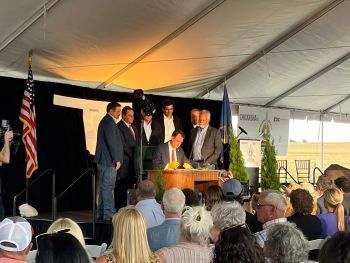
Governor Kevin Stitt joined local leaders in Chickasha to unveil plans for a major new industrial park and power generation initiative — projects representing the largest single private investment in the city’s history. During this event, a joint venture between Citizen Capital and Lightfield Energy in Chickasha was also announced. Citizen Capital’s Executive Chairman Bond Payne and Lightfield Energy Founder Billy Sorenson are spearheading the partnership, which is anticipated to produce innovative, behind-the-meter power generation solutions to meet the energy needs of high-load industries such as data centers, critical minerals processing, and advanced manufacturing. “Oklahoma continues to lead the US in energy independence by combining its all-of-the-above energy policy with pioneering behind-the-meter power solutions,” Payne said. “Our partnership with Lightfield Energy represents a strategic investment for national security, critical supply chains, energy independence and economic development.” Chickasha’s new industrial park is expected to create thousands of jobs and contribute $3.5 billion to the local economy, according to estimates.
|
|
|
|
On December 2, 2025, more than 50 key stakeholders from across Oklahoma’s energy and emergency management communities gathered at the Embassy Suites Downtown Medical Center in Oklahoma City for a collaborative planning session focused on energy security and resilience. The event brought together a diverse group of participants, including representatives from large investor-owned utilities, energy-sector partners such as Environmental Federation of Oklahoma, academic experts and emergency management professionals. Attendance reflected the broad scope and importance of coordinated preparedness efforts across the state.
The program featured a keynote address by Matt Lanza, Managing Meteorologist for CenterPoint Energy, who provided valuable insights into weather-related risk and its implications for energy infrastructure and emergency response. Participants also took part in two interactive activities designed to inform a tabletop exercise planned for early next year. In addition, attendees received training and engaged in discussion on a new mitigation-prioritization tool, the Enhanced Reliability and Resilience Score (ERRS), aimed at supporting emergency planners in strengthening preparedness and response strategies.
Stakeholders offered extensive feedback on current plans, tools, and upcoming training and exercise opportunities. The planning team will incorporate this feedback into future initiatives—most notably the upcoming tabletop exercise, which will bring together utilities, energy producers, and emergency management professionals.Check out the Upcoming Events section of the newsletter to see more information about upcoming events.
|
|
|
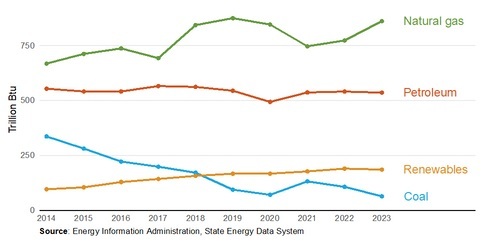
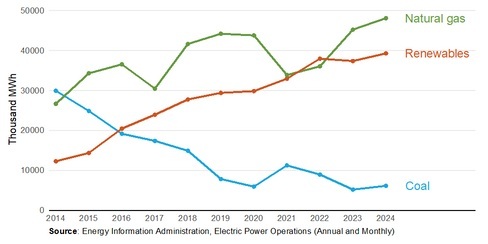
The 2025 Oklahoma Energy Security Plan includes an updated 10-year trend analysis of Oklahoma’s Energy Production and Consumption. The two graphs below are a snapshot of the analysis now included in the Plan.
Oklahoma Energy Consumption by Fuel Source
Oklahoma Total Electricity Generation by Fuel Type
|
|
|
The 2025 Oklahoma Energy Security Plan contains updates to the State Energy Profile. The Energy Security Plan was written as a complement to the State’s official Emergency Operations Plan, Energy Support Function (ESF-12), and provides detailed information and references about Oklahoma’s energy landscape. The plan also includes strategies for preventing and responding to energy emergencies.
The Oklahoma Energy Security Plan can be used by energy stakeholders, emergency responders, policymakers and public officials, and the general public to learn more about Oklahoma’s energy emergency preparedness, and response and recovery procedures.
|
|
July 19-22, 2026: National
Association of Regulatory Utility Commissioners (NARUC) Summer Policy Summit
The National Association of Regulatory Utility Commissioners (NARUC) will host their Summer Policy Summit in-person on July 19-22, 2026, in Minneapolis, MN.
Visit the NARUC website for more information.
|
Be on the lookout for future training opportunities! These include:
- A training and exploration of
Oklahoma’s newly-developed
Enhanced Reliability and Resilience Score (ERRS), a tool intended to help stakeholders weigh and prioritize resilience strategies
- A future energy security tabletop
exercise, building from the Summer 2025 southwest region activity which simulated the first 24 hours of a significant weather-induced regional power disruption
|
|
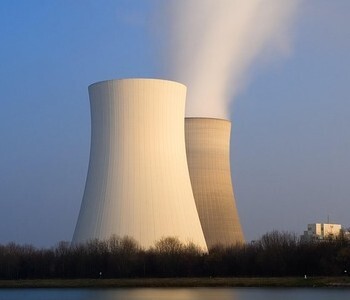
Following the passage of Senate Bill 130, the Oklahoma Corporation Commission is required to contract with an outside consulting firm for a nuclear energy feasibility study. The notice of inquiry is numbered and captioned as GD2025-000004, In re: Inquiry of the Oklahoma Corporation Commission to Study the Technical and Legal Feasibility of Nuclear Energy Generation in Oklahoma. The study, which will assess the technical and legal aspects of nuclear energy in Oklahoma, must be completed no later than March 9, 2026.
|
|
|
As required by 17 O.S. § 803(B), the Commission requests interested persons to respond to and provide comments on the following:
1. Advantages and disadvantages of generating nuclear energy in this state, including, but not limited to, the economic and environmental impacts;
2. Methods to maximize existing workforce and products made in this state for the construction of nuclear energy generation facilities;
3. Design characteristics, including recommendations for design specification and site selection;
4. Environmental and ecological impacts;
5. Land and siting criteria, including specific geographic areas that are best suited for new nuclear generation, as well as cities near military bases that may use new nuclear electric generation to meet the military resiliency requirements of 10 U.S.C., Section 2920;
6. Safety criteria;
7. Engineering and cost-related information;
8. Small modular nuclear reactor and microreactors capability; and
9. Socioeconomic factors, including, but not limited to:
a. Workforce education, training, and development,
b. Local and state tax base,
c. Supply chain capability,
d. Permanent and temporary job creation,
e. Timeline for development, including areas of potential efficiencies, and potential leveraging of existing facilities within this state,
f. Literature review of studies that have assessed the impact of nuclear energy generation, and
g. Policy recommendations to support nuclear energy generation, including a survey of federal programs to financially assist the development of a nuclear project in this state.
|
|
|
|
|