|
|
What's inside this month's email?
- Upcoming Funding Opportunity for Schools
- Introducing the Opioid Abatement Regional Field Representatives
- Free Opioid Prevention Training & Curriculum for K-12 Schools
- Community Based Prevention Services Grant Opportunity
- Priority Strategy Highlight – Naloxone Distribution
|
|
 |
|
Upcoming Funding Opportunity for Schools |
The Office of the Attorney General is pleased to announce the next funding opportunity for the opioid abatement grant program!

Who is eligible to apply?
Higher Education Institutions, Public Schools, Tech Schools
How much money is my school eligible for?
Funding is determined by the population and type of eligible political subdivision. Visit our website to see the maximum funding your school can request.
What type of projects are eligible for funding?
The Opioid Abatement Board uses eight priority strategies to guide funding decisions including school-based prevention, naloxone distribution, and family-skills training. Visit our website to learn more!
What is the timeline?
|
Applications Open
|
October 1, 2026
|
|
Applications Close
|
November 30, 2026
|
|
Review Period Begins
|
December 1, 2026
|
|
Review Period Ends
|
February 28, 2027
|
|
Award Announcement
|
March/April 2027
|
Want to learn more?
Join us for an informational webinar on Tuesday, August 18th at 2:00 PM! Attorney General staff will review eligibility, grant guidelines, and answer any questions.
|
|
|
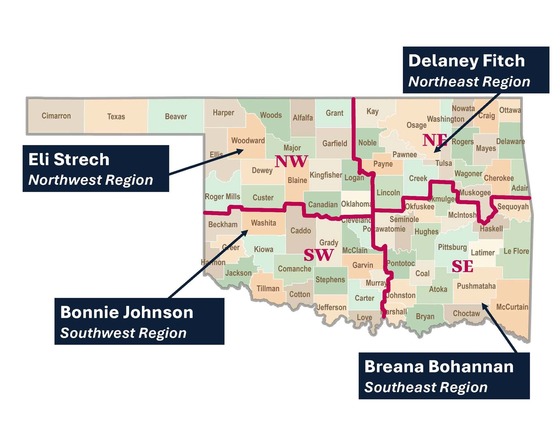 This summer our program hired four regional field representatives to serve eligible political subdivisions across the state in accessing opioid abatement grant funds. Our field representatives are knowledgeable in the priority funding strategies, grant application process, and in helping you develop a project to meet the specific needs of your community. Learn more about who represents your region below!
|
|
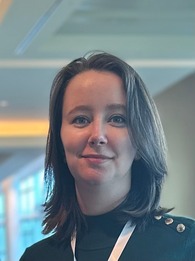
Eli Strech is the Northwest Field Representative for the Opioid Abatement Grant. Eli brings a strong background in program management, grant development, and community-focused work. Prior to joining the Opioid Abatement Grant team, she served as a Programs Manager with the Oklahoma Department of Mental Health and Substance Abuse Services and has extensive experience in grant writing. Eli holds a master’s degree in Human Relations and looks forward to working with communities and partners across the Northwest to support meaningful efforts toward opioid abatement. Outside of work, Eli enjoys crocheting and spending time with her three cats.
To connect with Eli, contact: Eli.Strech@oag.ok.gov
|
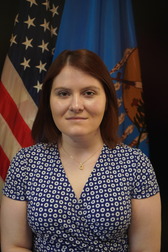
Delaney Fitch covers the Northeast Region for the Opioid Abatement Grant. Delaney is a public health professional with a strong interest in improving health outcomes in rural and underserved communities. Her experience in emergency medical services has shaped how she approaches complex public health issues, with an emphasis on the real-world needs of the communities she serves. Her work has included supporting the development of prevention initiatives, cross-sector collaboration, and grant implementation, while also focusing on making resources and programs work for the people they are meant to reach.
To connect with Delaney, email: Delaney.Fitch@oag.ok.gov
|
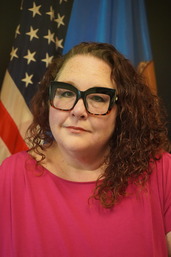
Breana Bohannan, MHR, LCDC, serves as the Opioid Abatement Field Representative for Southeast Oklahoma. With nearly two decades of experience in behavioral health and substance use treatment, she has served in clinical leadership, program development, and community-based behavioral health settings. Breana is passionate about collaborating with community partners to strengthen prevention, treatment, recovery, and harm reduction efforts while helping maximize the impact of opioid abatement funding. She enjoys connecting organizations with resources, providing technical assistance, and supporting sustainable, evidence-based strategies that improve outcomes for Oklahoma communities.
To connect with Breana, email: Breana.Bohannan@oag.ok.gov
|

Bonnie Johnson, MS, is the Southwest Field Representative for the Opioid Abatement Grant. Bonnie resides in Fletcher and brings extensive leadership experience in behavioral health, substance use disorder treatment, criminal justice initiatives, and program development. Bonnie has dual bachelor's degrees in criminal justice and Sociology, and a master's degree in Native American Leadership. As a member of the Comanche Nation, she brings specialized knowledge of cultural awareness and the importance of incorporating evidence-based, culturally responsive practices into programs and services. As the Southwest Field Representative, Bonnie is committed to fostering collaboration, strengthening community partnerships, and supporting programs that create meaningful impact. In her spare time, Bonnie enjoys collecting sports cards, rock hunting, supporting her son's college baseball career, and cheering on the OKC Thunder.
To connect with Bonnie, email: Bonnie.Johnson@oag.ok.gov
|
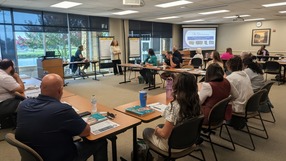
Two free training opportunities were offered this past month to K-12 educators across the state through the Oklahoma READY Initiative.
The Oklahoma READY Initiative is a statewide opioid abatement project of the Office of the Oklahoma Attorney General, funded through Oklahoma Opioid Abatement funds and supported by the Oklahoma Opioid Abatement Board.
Oklahoma READY equips students with the knowledge and skills to make healthy choices, build resilience, and avoid substance use, including the misuse of prescription medications and opioids. Participating schools receive the evidence-based Botvin LifeSkills Training project at no cost, along with training, implementation support, and stipends.
|
Schools and districts interested in participating, or in learning more, are encouraged to contact Isela Perez (Isela.Perez@oag.ok.gov) or
visit the website linked below!

Oklahoma Department of Mental Health and Substance Abuse Services is accepting bids from potential suppliers to provide a contract for the purchase of services regarding Community Based Services Program. This program will include an array of evidence-based programs, policies, and/or practices planned and implemented at the local level by representative community coalitions to prevent risk factors contributing to substance use and related consequences.
Entities interested in this funding opportunity can combine their opioid settlement funds with this resource to expand and sustain services in their community. Opioid abatement grant staff are happy to brainstorm with your team on how to braid opioid settlement dollars with other existing state or federal resources.
|

Naloxone Distribution is one of the eight priority funding strategies adopted by the Opioid Abatement Board in 2025. Naloxone is a safe, highly effective medication used to reverse opioid overdoses and save lives. It works by blocking the effects of opioids to quickly restore breathing to someone who is overdosing.
This briefing document includes an overview of the medication, who is the target population, and what to consider as a community if you are interested in naloxone distribution as an opioid abatement strategy.
|
To read more about this strategy and if it is a good fit for your community,
click the button below.
|
|
Members
|
Appointing Authority
|
|
Attorney General Gentner Drummond
|
Statute
|
|
Josh Cantwell
|
Governor
|
|
LeRoy Young, D.O.
|
State Auditor and Inspector General
|
|
Scott Martin
|
State Treasurer
|
|
Brad DeLozier
|
State Superintendent of Public Instruction
|
|
Carol Bush
|
Speaker of the House
|
|
Dr. Kelly Dunn
|
Speaker of the House
|
|
Lori Parish
|
Senate President Pro Tempore
|
|
Dr. Atul Walia
|
Senate President Pro Tempore
|
|
|
|
Title 74, sections 30.3 through 30.8 create the Political Subdivisions Opioid Abatement Grants Act. The Act’s purpose is to promote and protect the health of Oklahomans by using monetary grants to abate the opioid crisis in a comprehensive manner that includes cooperation and collaboration with political subdivisions.
Grants will fund treatment and recovery programs, assistance with co-occurring disorders and mental health issues, opioid abuse education and prevention, proper prescription efforts, and strategies to decrease the supply of narcotics across the state. Grants are rigorously reviewed and approved by the Oklahoma Opioid Abatement Board comprising of the Attorney General and appointees of the Governor, Speaker of the House, Senate President Pro Tempore, State Treasurer, State Superintendent for Public Instruction, and State Auditor and Inspector.
|
|
|
|
|