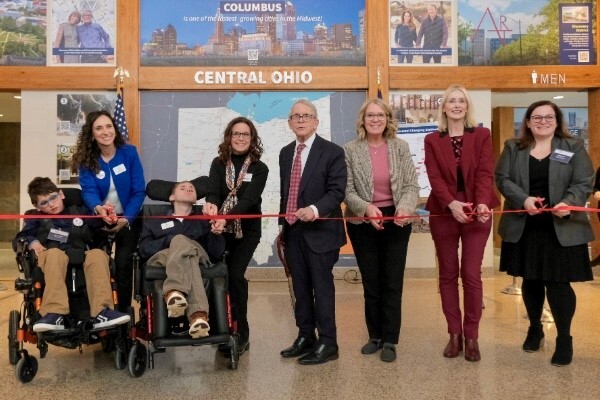
 From left to right: Aiden Boulter; Kim Kirkwood, Changing Spaces Ohio chapter co-leader and Aiden’s mother; Matthew Helton; Jennifer Corcoran, Changing Spaces Ohio chapter co-leader and Matthew’s mother; Governor Mike DeWine; Kim Hauck, Ohio Department of Developmental Disabilities Director; Pamela Boratyn, Ohio Department of Transportation Director; and Joy Bledsoe, Executive Director of the Ohio Facilities Construction Commission.
Ohio Governor Mike DeWine, Ohio Department of Developmental Disabilities (DODD) Director Kim Hauck, and Ohio Department of Transportation (ODOT) Director Pamela Boratyn last week unveiled the first of 29 planned universal changing stations at Ohio rest areas.
Located at the newly redesigned I-71 rest areas in Jeffersonville, the universal changing stations are part of a family restroom, and include an adjustable table in a clean, safe, and private area. The tables are designed to accommodate the personal care needs people regardless of height, weight, or mobility level, and are often used by people who assist individuals with disabilities and medical conditions.
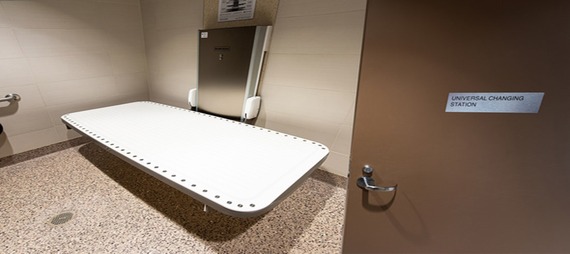 Universal changing station, located at new I-71 rest area in Fayette County.
"Our hope is that these universal changing stations and others we will be installing across the state will encourage new possibilities for people with disabilities, their families, and caregivers as they travel Ohio,” said Governor Mike DeWine. “By adding this valuable resource to more of our rest areas, we are increasing inclusion and accessibility for everyone to be able to fully experience all that Ohio has to offer.”
Both Fayette County rest areas on I-71 (northbound and southbound) now have universal changing stations currently open to the public. An additional 17 additional universal changing stations will open at Ohio rest areas in 2025, and 10 more will open by the end of 2026.
“I firmly believe that universal changing stations are a vital addition to our rest areas,” said ODOT Director Pamela Boratyn. “These accessible restrooms promote freedom and accessibility for people with disabilities and their families, enabling them to travel and participate fully in community life as well as providing a clean and safe environment.”
“By prioritizing inclusivity and accessibility, we not only enhance comfort and convenience for people of all abilities and their families, but also reaffirm our commitment to creating spaces that welcome and support the diverse populations that make up our communities,” said DODD Director Kim Hauck.
Changes Spaces Ohio leaders Kim Kirkwood and Jennifer Corcoran say Ohio leads the nation in installing these important devices. Their group advocates for more public spaces to have them. Kirkwood and Corcoran started the conversation about Ohio adding universal changing tables to new rest area buildings. Changing Spaces also offers an interactive map that highlights public spaces across Ohio equipped with universal changing tables.
“We are incredibly proud that Ohio has made this investment in universal changing tables in our rest stops,” said Changing Spaces Ohio chapter co-leaders Kim Kirkwood and Jennifer Corcoran. “This will open doors to so many more people across our state who need a safe and dignified place to change while traveling. Our sons inspired our advocacy work, but by building partnerships across the state, countless more people will benefit. We are proud that Ohio is leading the nation in investments in universal changing tables and hope other states are inspired by our success.”
The universal changing stations planned at Ohio rest areas are just part of the DeWine Administration’s broader efforts to promote accessibility for people with disabilities and their families.
Last year, DODD funded the installation of an additional 136 universal changing tables in 42 Ohio counties. These universal changing tables are available in both rural and urban communities alike, and in many different types of public spaces, including museums, libraries, community centers, airports, fairgrounds, and zoos.
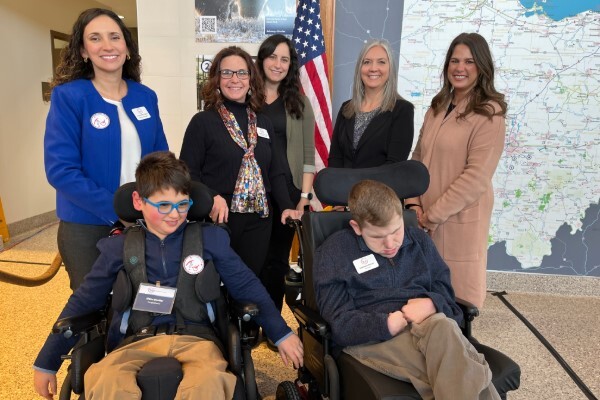 From left to right: Kim Kirkwood, Changing Spaces Ohio chapter co-leader and Aiden’s mother; Aiden Boulter; Jennifer Corcoran, Changing Spaces Ohio chapter co-leader and Matthew’s mother; Julia Wagner, Accessible Ohio Specialist; Matthew Helton; Julie Wood, Accessible Ohio Manager; and Kristen Ballinger, OOD Deputy Director of Division of Employer and Innovation Services.
Additional efforts include the Opportunities for Ohioans with Disabilities (OOD) Accessible Ohio program, which provides valuable resources – including information on installing universal changing tables – to Ohio businesses, communities, venues, and attractions to enhance accessibility.
In addition to unveiling the new universal changing station, Governor DeWine cut the ribbon on the brand-new rest area building on I-71 northbound in Jeffersonville. Inside, travelers can discover images of attractions to explore in central Ohio.
This rest area also features a vintage barber chair, barber pole, and tools from Canal Winchester’s National Barber Museum & Hall of Fame.
"We know how important first impressions are. When people stop at Fayette County’s new rest area – whether on a long road trip, visiting friends and family, or just passing through – we want them to know they have arrived somewhere extraordinary," said Ohio Department of Development Director Lydia Mihalik. "Ohio’s re-imagined rest areas welcome travelers to our great state, giving them a sneak peek at all the Buckeye State has to offer, and hopefully leave them inspired to explore even more."
Outside the new rest area, kids and their families can enjoy walking along the Storybook Trail, a path featuring the Dolly Parton Imagination Library book “There’s a Hole in the Log on the Bottom of the Lake” by Ohio author and illustrator Loren Long.
ODOT offers a map of all Ohio rest area locations, which includes new functionality allowing users to filter rest areas to find ones equipped with a universal changing station. It will be updated as more are added.
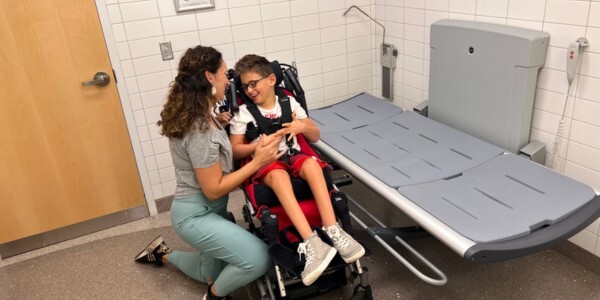 Kim Kirkwood and Aiden Boulter of Changing Spaces Ohio.
Having accessible restrooms in public spaces enables individuals with disabilities to participate more fully in the community and stay as long as they wish at an event. Universal changing tables play an essential role in this accessibility by providing a private, hygienic, and dignified way to manage personal care needs.
According to the national Changing Spaces Campaign and its Ohio Chapter, universal changing tables are adult-sized tables designed to accommodate the personal care needs of individuals regardless of height, weight, or level of mobility. They are a place where caretakers can conveniently and safely assist with bathroom needs for those who may be unable to care for themselves—individuals with disabilities, children, babies, aging adults, and people who use a catheter.
Various factors impact adding a universal changing table to a public restroom. Unsure what to consider? Check out our universal changing tables resource. OOD's team of Accessible Ohio specialists provides no-cost consultation to Ohio businesses, communities, venues, and attractions across the state. For more information about installing a universal changing table, please email AccessibleOhio@ood.ohio.gov, and one of our specialists will contact you soon.
Everyone's experience is unique and important. Tap into our Accessible Ohio resources to begin or advance your journey to accessibility.
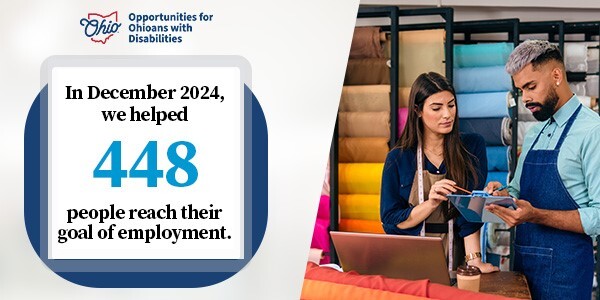
If you or somebody you know has a disability and would like to work, reach out to OOD today. Vocational Rehabilitation Counselors can help you explore your options. Visit OODWorks.com or call 800-282-4536 to get started.
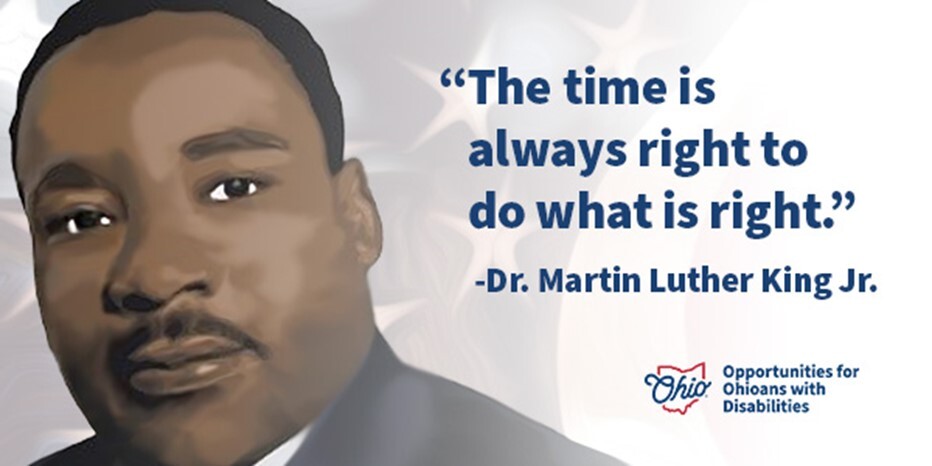
We celebrate Dr. Martin Luther King, Jr. every January on the third Monday to honor his contributions to the civil rights movement. Through his work, he broke down barriers and abolished stereotypes, resulting in the Civil Rights Act of 1964, which ended segregation in public places and banned employment discrimination based on “race, color, religion, sex, or national origin.” Many are not aware that his work also furthered disability rights.
Dr. King’s message, “separate is not equal,” was a shaping force and helped end the hiding of people with disabilities in institutions and at home. Many of the strategies he used for peaceful social change were adopted by disability activists. African Americans who bravely crossed the line and sat in restricted areas in restaurants and who refused to sit in the back of the bus encouraged those with disabilities to sit in federal buildings and block the way of non-accessible buses until Congress recognized their cause.
Without Dr. King’s example and leadership, rights for people with disabilities may not be what they are today. He inspired advocates to fight for a more accessible country. Early influencers worked toward basic adaptations like accessible parking and building codes to provide equal access. This week, we honor his memory and are grateful for his leadership in including people with disabilities as contributing members of our communities.
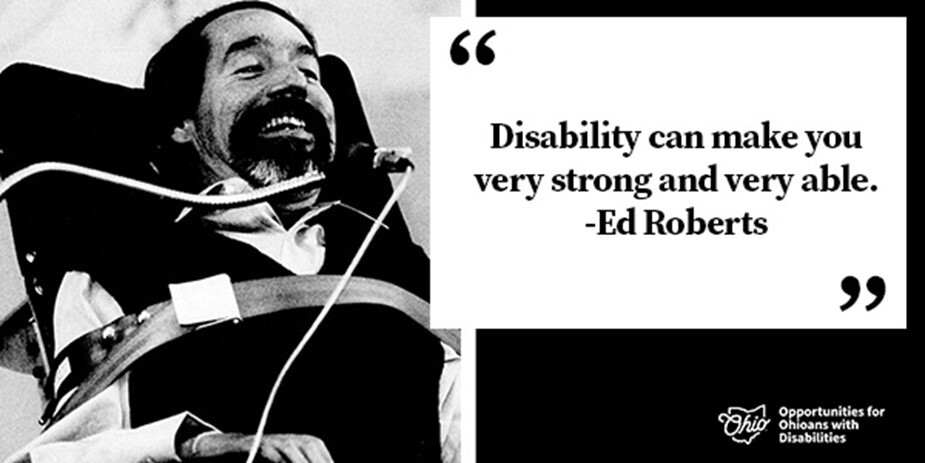
January 23rd marks Ed Roberts Day, honoring the disability rights activist often called the father of Independent Living. Roberts, who contracted polio at age 14, requiring an iron lung and the use of a wheelchair, became a fierce advocate for disability rights while attending the University of California, Berkeley. There, he founded the Rolling Quads, advocating for campus accessibility, which led to the establishment of the first student-led disability services program in the U.S.
Roberts' efforts extended beyond campus, culminating in the opening of the first Center for Independent Living in Berkeley in 1972, which became a model for similar organizations nationwide. His work was instrumental in changing societal perceptions of disability and influencing key legislation, including the Americans with Disabilities Act of 1990.
In Ohio, Roberts' legacy lives on through OOD and its partnerships with the Independent Living Network. This network, comprising the Ohio Statewide Independent Living Council (OSILC) and 12 local Centers for Independent Living (CILs), continues Roberts' mission by providing resources, advocacy, and support to empower Ohioans with disabilities to live independently in their communities. Learn more at the Independent Living Network webpage.
Rideshare Service for People with Disabilities Growing
Spectrum News, 1-14-25
Lorain and Amherst Unified Special Olympics Teams Celebrate Inclusion at Friendly Bowling Event
Cleveland.com, 1-14-25
Teens, Artists with Disabilities Collaborate on New Mural at Hamilton Center
Journal-News, 1-12-25
Meet the Trailblazing Mom Who is Making Life Better for People with Autism
ABC News, 1-13-25
How to Prioritize Accessibility in Your 2025 Digital Marketing Strategy
Forbes, 1-13-25
|