 Ohio Governor Mike DeWine’s biennial Executive Budget for Fiscal Years 2022 and 2023 reinforces his commitment to making Ohio a Disability Inclusion State and Model Employer of Individuals with Disabilities.
The proposed budget for Opportunities for Ohioans with Disabilities (OOD):
- Represents a continued state investment of $19.4 million in General Revenue Funds (GRF), in each year of the biennium, for the OOD Vocational Rehabilitation program.1
- For each $1 of state investment, OOD draws down an additional $3.69 in federal vocational rehabilitation grant funds to support efforts in Ohio.
- Continues services for students with disabilities seeking higher education and career services through the Ohio Transition Support Partnership and Ohio College2Careers programs by serving approximately 4,000 high school students with disabilities and 1,500 college students with disabilities annually through these partnerships.
- Supports OOD Jobs for Recovery, assisting Ohioans with disabilities who are court-involved, as well as the Employment First Partnership, helping individuals with developmental disabilities, find and keep employment.
- Sustains the Ohio Vocational Apprentice program, supporting Governor DeWine’s Executive Order 2019-03D, which established Ohio as a Disability Inclusion State and a Model Employer of Individuals with Disabilities, for OOD participants to secure paid apprenticeships with state agencies with the goal of permanent employment.
- Supports more than 570 Employer Partners in meeting their workforce needs by sourcing qualified candidates with disabilities for their open positions, hosting virtual hiring events, and providing webinars to promote disability inclusion and worksite accessibility.
- Establishes a Governor’s inclusive employer award to recognize Ohio businesses that demonstrate excellence in the inclusion of individuals with disabilities.
- Collectively these initiatives will allow OOD to serve approximately 30,000 individuals with disabilities throughout Ohio. OOD counselors will purchase approximately $74 million in services from more than 300 service provider partners throughout the state. It also will expand the number of businesses OOD assists in recruiting new employees and strengthening diversity and inclusion in the workplace.
- For those individuals who are unable to work due to their disability, OOD’s Division of Disability Determination will continue to determine medical eligibility for Ohioans with disabilities who apply for Social Security disability benefits. Nationally, a 22% increase in the filing of Social security disability claims is expected.
- Continues funding for Independent Living programs, including services provided by the Independent Living Services for Older Blind Ohioans program, Personal Care Assistance program, Community Centers for the Deaf, and Centers for Independent Living.
1In addition to GRF, OOD receives other state and local matching funds to draw down federal dollars.
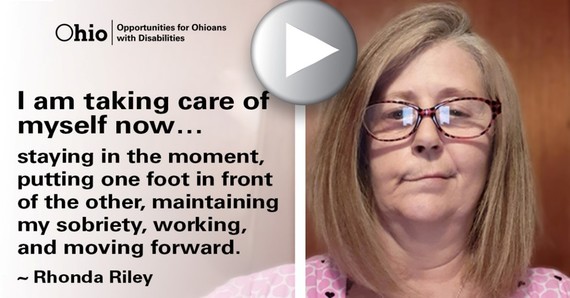
Rhonda Riley is a mother, grandmother, and animal lover from Clinton County. She sat down to speak about her struggles with substance use disorder and how a team helped her work through the obstacles she has faced.
Today, February 12, 2021, Rhonda celebrates her first sobriety anniversary. She found help through the "You-Turn" Recovery Docket, a specialized docket within the framework of the Clinton County Court of Common Pleas, which targets individuals with substance use disorders. Thanks to Jessica Herrington, Intensive Supervision Officer, Rhonda was referred to OOD for employment support.
Tune in to episode 25 wherever you listen to podcasts by searching "OOD Works." Transcripts and MP3 files are available at https://ood.ohio.gov/Podcast.
If you or somebody you know has a disability and would like to work, visit OODWorks.com or call 800-282-4536.
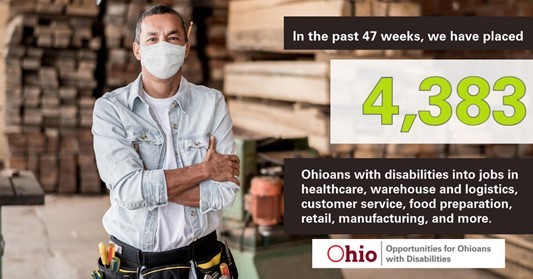 If you or somebody you know has a disability and would like to work, reach out to OOD today. Vocational Rehabilitation Counselors can help you explore your options. Visit OODWorks.com or call 800-282-4536 to get started.
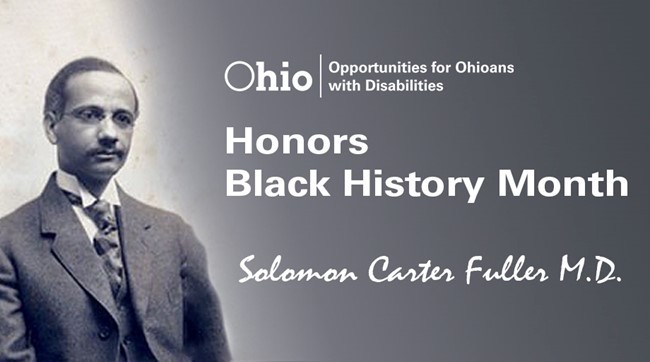 Solomon Carter Fuller was born in August 1872 in Monrovia, Liberia. In 1889, he came to the U.S. to attend Livingstone College in Salisbury, North Carolina.
Fuller pursued his medical degree at Boston University School of Medicine in 1897. He completed an internship at Boston’s Westborough State Hospital, where he became a pathologist. He also joined the faculty of the Boston University School of Medicine.
Despite an unequal salary in the medical field, Fuller persisted. He performed autopsies, which were unusual at the time, making discoveries that advanced his career and contributed to the scientific and medical communities. His major contribution was to the growing clinical knowledge of Alzheimer’s disease. In 1903,
Fuller was one of five international students chosen by Alois Alzheimer to research at the Royal Psychiatric Hospital at the University of Munich in Germany. He was the first to translate much of Alzheimer’s work into English and published what is now recognized as the first comprehensive review of Alzheimer’s disease.
Fuller also was a leader in correctly diagnosing syphilis. He trained others to accurately diagnose the side effects of syphilis, preventing black war veterans from getting misdiagnosed, discharged, and determined ineligible for military benefits.
In his honor, the Black Psychiatrists of America created the Solomon Carter Fuller Program for young black aspiring psychiatrists to complete their residency.
 OOD is pleased to launch a statewide survey to give Ohioans with disabilities a chance to provide feedback about their employment experiences. Survey responses will help OOD evaluate its effectiveness, make improvements, and enhance outreach efforts. The survey is brief (10-15 minutes) and completely anonymous.
Responses to this survey will ultimately help OOD bring positive, lasting change for other individuals with disabilities.
Take the survey
 The Ohio Department of Higher Education Aspire Adult Workforce Readiness Education (Aspire) program is accepting applications from eligible providers to implement and improve adult education and literacy activities within the state. Learn more at the Aspire Grants webpage.
 COVID-19 vaccines are now available for Ohioans age 65 and older. Ohio's area agencies on aging are ready to help older Ohioans learn about and access the vaccine. Call 1-866-243-5678.
For trusted information on COVID-19 in Ohio, visit Coronavirus.Ohio.Gov.
 Low vision affects thousands of Ohioans, including many older adults. Low vision can make it hard to do things like working, cooking, reading, or writing. This is the kind of vision that cannot be corrected with glasses, contacts, medications, or surgery.
Fortunately, OOD’s Bureau of Services for the Visually Impaired helps Ohioans with low vision and blindness. The program provides individuals, ages 14 and up, with direct, personalized services to assist them in finding and keeping meaningful work and personal independence. Get started today at OODWorks.com or call 800-282-4536.
IT Company Comes to Columbus with One Goal: Hiring People on the Autism Spectrum
Columbus Dispatch, 2-8-21
Toyota Super Bowl Commercial Features Paralympic Swimmer Jessica Long
NBC Sports, 2-7-21
Who is Warren “Wawa” Snipe? Meet the Scene-Stealing Deaf Rapper Who Performed at Super Bowl LV
ET Online, 2-7-21
Deaf Culture, Deaf Creatives, and the Quest for Language Exposure
Forbes, 2-4-21
|