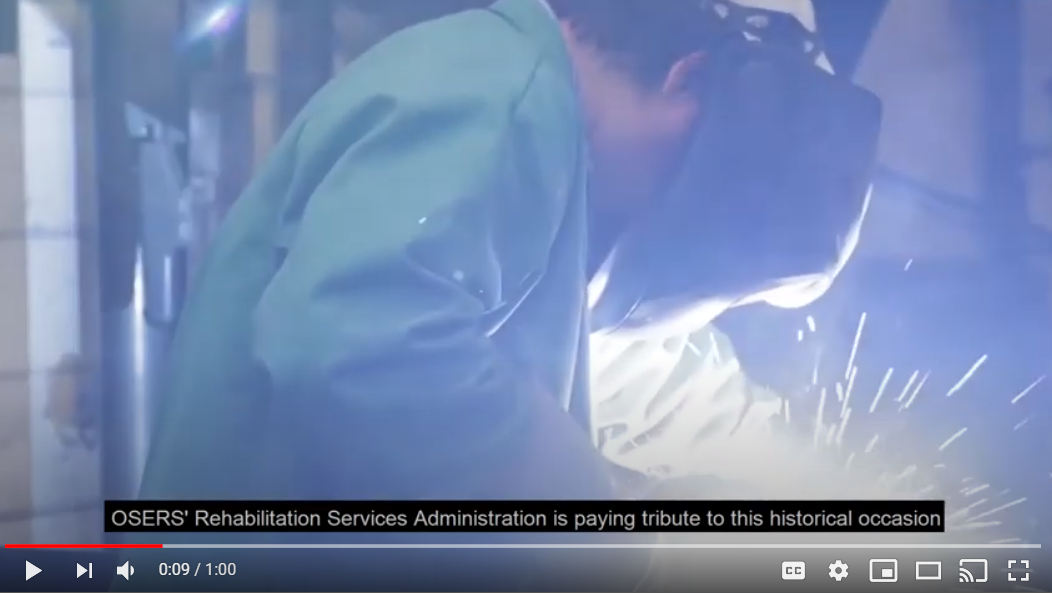
 Watch a trailer about “Celebrating a Century of Success” of the Vocational Rehabilitation program.
June 2, 2020, marks the 100th anniversary of the Vocational Rehabilitation program in the United States. The National Civilian Vocational Rehabilitation Act was signed into law by President Woodrow Wilson on June 2, 1920. This act, also known as the Smith-Fess Act of 1920 or the Industrial Rehabilitation Act, created the first federally funded program to assist civilians with disabilities. This pioneering legislation has prompted many more initiatives through the years to support people with disabilities to reach their career goals.
The U.S. Department of Education Office of Special Education and Rehabilitative Services’ Rehabilitation Services Administration (RSA) provides resources and technical assistance to state Vocational Rehabilitation programs, including Opportunities for Ohioans with Disabilities (OOD). RSA is celebrating the landmark anniversary with online offerings. “The State Vocational Rehabilitation Services Program: The First 100 Years” video offers a complete historical perspective of the Vocational Rehabilitation program. The “Celebrating a Century of Success” webinar will take place on Tuesday, June 2, 2020, from 2:30 - 3:30 p.m. Finally, the “VR Turns 100” podcast, featuring Mark Schultz, RSA Commissioner, is available now on-demand.
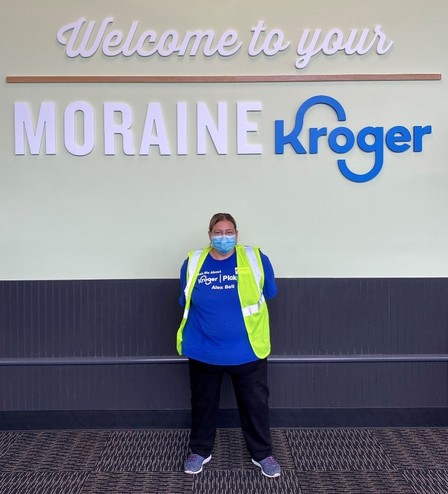 Stephanie Boyle ready to greet customers at Kroger Marketplace in Moraine, Ohio.
Stephanie Boyle is from Dayton, Ohio. In August 2019, she connected with Ayanna Glanton, OOD Vocational Rehabilitation Counselor, to develop an employment plan that would help Stephanie pursue her career goals in a way that would accommodate her mental health disability. They partnered with Pamela McCuistion, Career Specialist and Job Developer with Goodwill Easterseals Miami Valley, to work on Stephanie’s resume and interviewing skills.
In February 2020, Stephanie applied and accepted a job as an E-Commerce Clerk, filling online orders placed with Kroger Marketplace in Moraine. OOD helped her with on-the-job coaching and transportation. “Initially, I helped Stephanie with her onboarding modules and gave her a magnifier to make reading numbers easier,” said Mary Ratliff, a Job Coach with Goodwill Easterseals Miami Valley. “Together, we went through her entire day, starting with being on time and working through all the tasks necessary to do her job. During slower periods, I helped Stephanie to recognize other areas where she could lend a hand.”
Due to increased online orders placed during COVID-19, Stephanie’s supervisor thought additional assistance could help Stephanie handle an increasingly busy position. Mary provided Stephanie with additional job coaching and support to help her manage the workload while improving speed and accuracy. Currently, Stephanie works 40 hours a week and is handling an average of 125 pickup orders per day.
“I’m glad we were able to help Stephanie find the job she wanted. It is a perfect fit,” said Ayanna. “Stephanie works hard and is always upbeat.”
“I love everything about my job. I love meeting people, talking to people, and helping people. My job keeps me from having anxiety and depression and keeps my mind busy,” said Stephanie. “For the first time in my life, I am saving money and working on getting my license.”
If you have a disability and want to work, visit OODWorks.com.
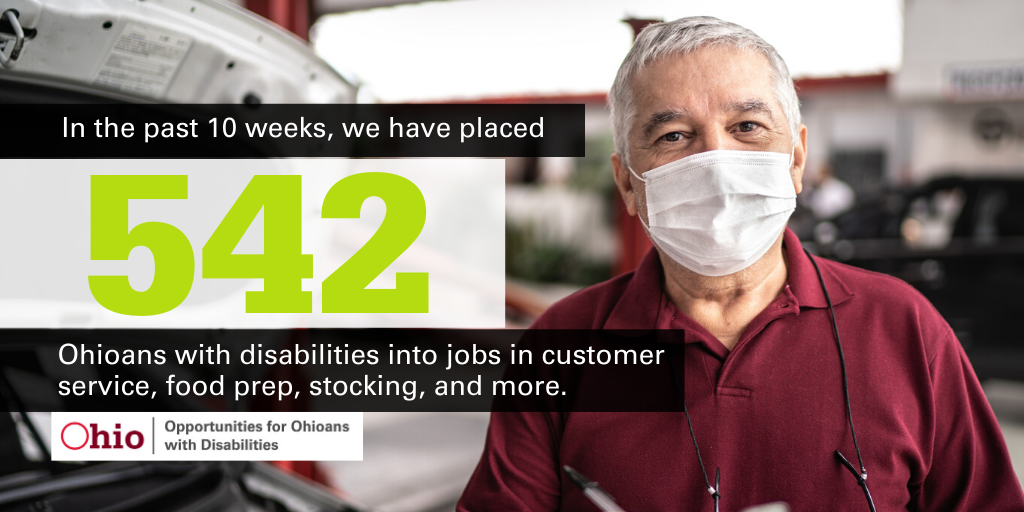 If you have a disability and want to work, reach out to OOD today. Vocational Rehabilitation Counselors can help you explore your options. Visit OODWorks.com or call 800-282-4536 to get started.
 May is Older Americans Month and celebrates countless contributions that older adults make to our communities. Their time, experiences, and talents benefit families, peers, and neighbors every day. This year’s theme, “Make your Mark,” highlights the difference everyone can make in the lives of older adults, in support of caregivers, and to strengthen communities.
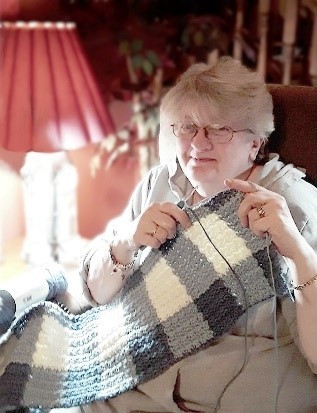 Missy Perez Clement crochets at home.
Missy Perez Clement, 59, has glaucoma, age-related macular degeneration, and is legally blind. In the fall, she found her condition had worsened. She could no longer read mail, medication labels, or her computer screen. Navigating the kitchen became dangerous. “I was trying to cook, but I was cutting myself, burning cookies, and missing cups when pouring liquid. I couldn’t read my recipes or get something out of a pan,” Missy said.
Missy’s eye doctor referred her to OOD in October 2019. Heather Young, Independent Living Older Blind (ILOB) Vocational Rehabilitation Counselor, went to Missy’s house to assess her independent living needs.
OOD provided services to support daily living activities. Kathy Moos, a certified low vision therapist with Vision Rehabilitation Practitioners, provided Missy with assistive technology and instruction, including the Smart Lux Video magnifier, which inverts colors and offers more contrast, making it easier to read. Kathy also helped Missy to use glare filters, which are worn like sunglasses, to aid navigation in different types of light. In the kitchen, Missy now uses tactile markers for her appliance settings, a cut-resistant glove, a low-vision cutting board, a talking meat thermometer, and a double spatula-turner to safely prepare food. She also uses a liquid-level indicator, which makes an audible sound when containers are full.
Tiehan Liu, Rehabilitation Engineer with Ohio Job Connection, assisted Missy in her home office. He taught her how to use accessibility features on her computer and smartphone to enlarge text. Tiehan also set up an Alexa Echo Show device to support Missy through a built-in calendar, various alarms, and the ability to manage orders through her Amazon account.
“The beauty of the ILOB program is that those with vision loss don’t have to be reliant on others, and they don’t have to be afraid because of their vision loss,” added Kathy.“My husband was always worried about leaving me home alone, and these tools have relieved his anxiety,” said Missy.
“Since receiving ILOB services, she is more confident and willing to try new things. You can hear it in her voice, especially when she talks about cooking,” Heather said. Missy’s favorite technology is an adjustable task lamp that has made it possible for her to crochet. “I am grateful that I can still make items for the people I love. I now have hope and feel so much more at ease being on my own. The technology and the tools have restored my independence,” said Missy.
ILOB helps eligible individuals, 55 and older and who are blind or have low vision, remain independent at home and in the community through activities of daily living services and adaptive aids. For more information,
visit https://ood.ohio.gov/wps/portal/gov/ood/individuals-with-disabilities/services/independent-living-services-for-older-blind-ilob-ohioans.
 For trusted information on coronavirus (COVID-19) in Ohio, visit coronavirus.ohio.gov or call 1-833-4-ASK-ODH (1-833-427-5634). Be sure to check frequently for new resources. Recent additions include Assisted Living Visitation, Congregate Care Unified Response Teams, and Responsible RestrartOhio Posters and Signs.
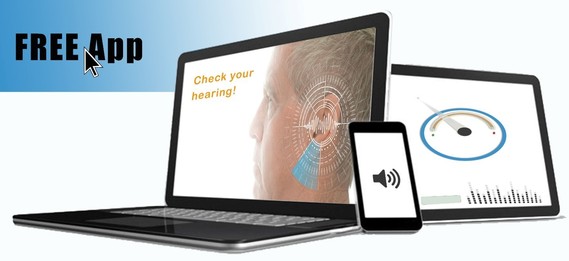 Early detection of hearing loss is a key for effective rehabilitation. In order to detect hearing loss as early as possible, everyone should periodically check their hearing.
The World Health Organization (WHO) has developed a mobile (Apple and Android devices) and web-based software application for hearing screening. A user can check their hearing status and monitor it over time. Find out more at hearWHO.
The Coronavirus.Ohio.Gov website includes a dedicated webpage with a collection of the most recent news releases from Governor DeWine, the Ohio Department of Health, and slides used in COVID-19 Daily Briefings by Governor DeWine and Amy Acton, MD, MPH, Director of the Ohio Department of Health. Also included on this page are a selection of curated news stories about COVID-19.
|