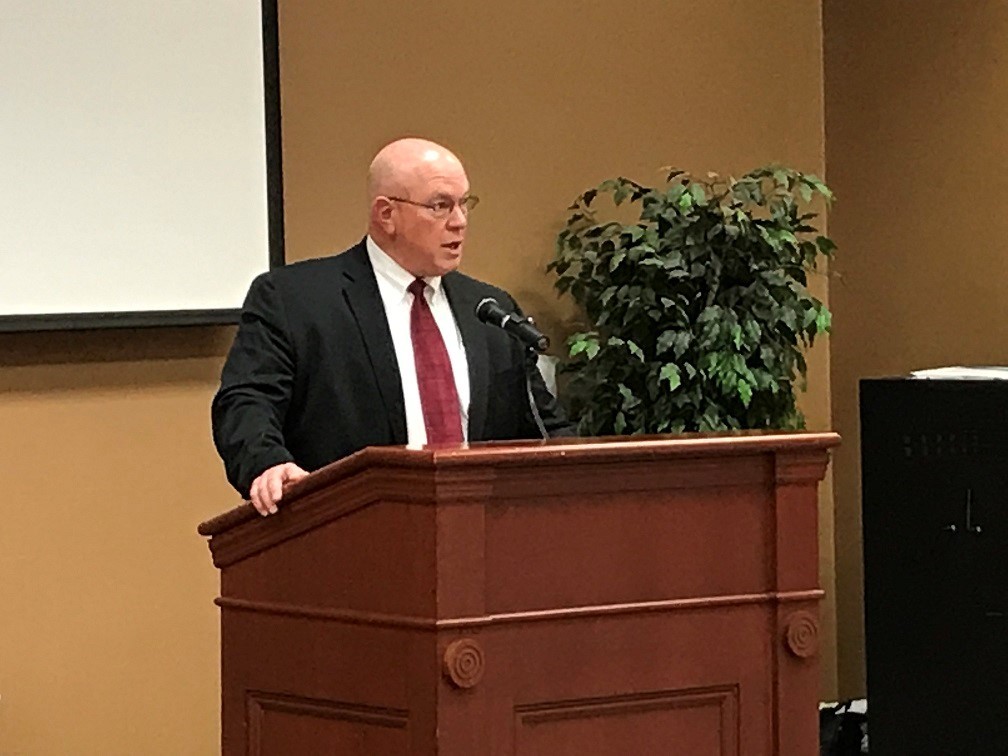
 Judge Keith Spaeth addresses the 42nd graduating class from the Butler County Drug Court.
On January 22, 2020, Judge Keith Spaeth’s Butler County Drug Court held its 42nd semi-annual graduation at the Butler County Courthouse in Hamilton, Ohio. Ten individuals, each convicted of felony drug charges, were given a choice: go to jail for their offense or take part in Judge Spaeth’s model program of recovery and work. They chose Judge Spaeth’s program.
The goal of the Butler County Drug Court Program is to improve participants’ lives by requiring them to obtain stable employment, stable housing, and pro-social relations while living a sober lifestyle.
In 2015, Opportunities for Ohioans with Disabilities (OOD) became involved with Butler County Drug Court through a contract with the Butler County Mental Health and Addiction Recovery Services Board. The board found that an OOD Vocational Rehabilitation (VR) Counselor could help people receive services more quickly, land jobs, and lower costs.
“This program is successful for participants because it brings together treatment, probation, and employment. Having everyone working together for a common goal (recovery of the individual) is what makes the difference,” said Erin Crawford, Vocational Rehabilitation Counselor for Butler County OOD Jobs for Recovery.
To be eligible for participation, the Butler County resident must be charged with a drug-related felony through the Butler County Court of Common Pleas, where court-monitored treatment and services would enhance their ability to become productive and law-abiding citizens. There are four phases to reach graduation. Phase one consists of receiving intensive inpatient treatment or partial hospitalization treatment based on needs. In phase two, the individual must reestablish relationships and engage in sober support networks. Phase three is where participants begin to put what they have learned into practice and find employment. In phase four, participants focus on maintaining self-sufficiency.
“A large part of the program is accountability,” said Jerica Kruse, Vocational Rehabilitation Supervisor for Butler County OOD Jobs for Recovery. “The judge requires every participant to keep a calendar of appointments. At any given meeting, the judge may ask them about appointments and check calendars. Throughout the process they must maintain a job. That is where OOD comes in. We can help them find a job, help with skills they need to get a job, and help them keep the job.”
"Success has many fathers and mothers, and failure is an orphan,” said Judge Spaeth. “We are all here today to be fathers and mothers and share in that pride and success. Drug court works because it is the coming together of these departments, courts and people, so all of us can have a whole life. That is what we are celebrating today, 10 people, right here, who can have a whole and happy life.”
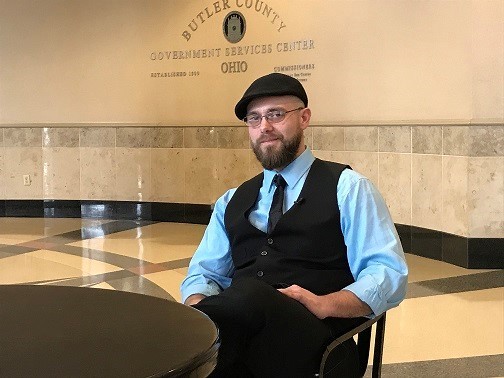 Andrew, a graduate of the 42nd Butler County Drug Court.
"I was relieved to come to this program. Instead of a two-year prison sentence, it gave me a place to get the help I needed while providing me with structure and forced accountability,” said Andrew. “OOD has been a very positive part of this program helping me with finding a job. I am grateful to have this resource.”
Judge Spaeth’s model program of recovery and work has been replicated through OOD Jobs for Recovery, an investment by Ohio Governor Mike DeWine’s budget. OOD is partnering with six additional counties with specialty courts this fiscal year: Ashtabula, Franklin, Lucas, Miami, Scioto, and Summit. Approximately 100 individuals will be served annually in each county. For more information about OOD Jobs for Recovery, visit https://ood.ohio.gov/JobsforRecovery.
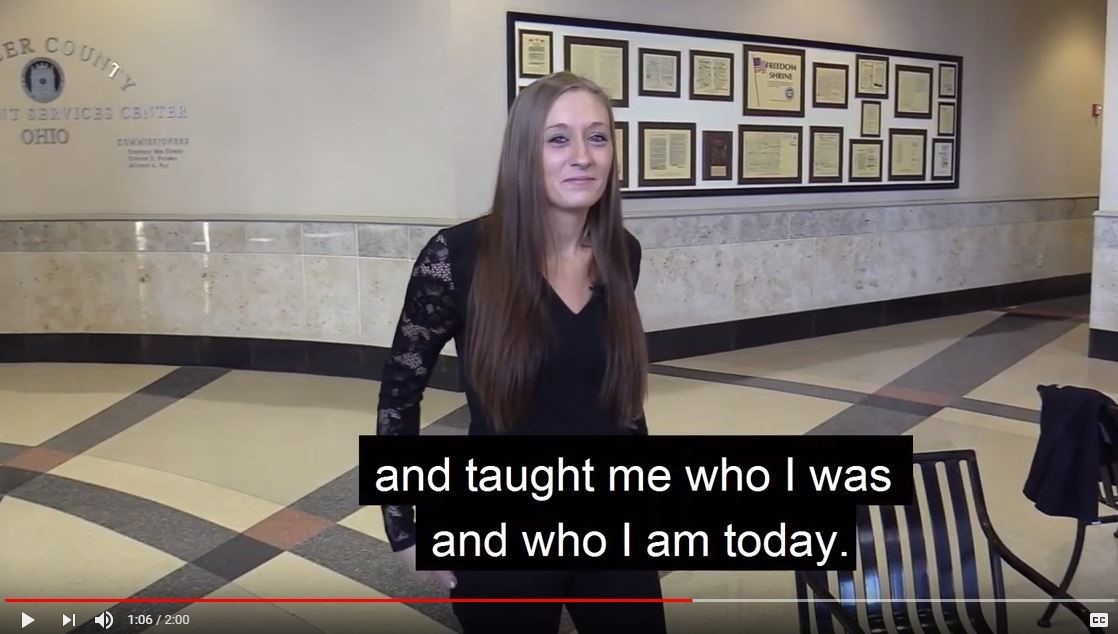
“Anything is possible, you just have to be willing to jump through hoops and chase your recovery,” said Amanda from Butler County. She recently graduated from Butler County Drug Court and worked with OOD to find employment. Watch a video to learn more.
 Ohioans who use sign language to communicate may rely on sign language interpreters to provide effective communication in all major areas of life – education, employment, medical, legal, recreational, and other community settings. While there are some established standards for the provision of sign language interpreting services in Ohio, the state has not established comprehensive standards for the education and skill level of professional sign language interpreters.
OOD is considering recommending statewide standards for the employment and use of sign language interpreters in Ohio. In order to do this, OOD needs to understand the history of standardization in Ohio, the current employment and qualifications of sign language interpreters in Ohio, the risks of and benefits from establishing standards, and the requirements for managing such a process. To ensure a transparent and inclusive process, OOD will be seeking significant deaf and sign language community engagement.
OOD is seeking an impartial research partner to conduct an assessment that includes the current state of sign language interpreter services in Ohio; a report of the sign language interpreter standards, including licensure and certification, across the United States; collection of stakeholder feedback regarding the development of standards in Ohio; and development of options for standardization in Ohio.
More information about this opportunity is available at State of Ohio Procurement. The posting will be available until February 19, 2020 at 1:00 pm.
OOD’s Statewide Youth Leadership Forum (YLF) is now accepting applications for Summer 2020. The program is a five-day career, leadership, and advocacy training for high school juniors and seniors with disabilities. The Columbus-based, statewide, overnight program will take place this summer, from July 19-23, 2020.
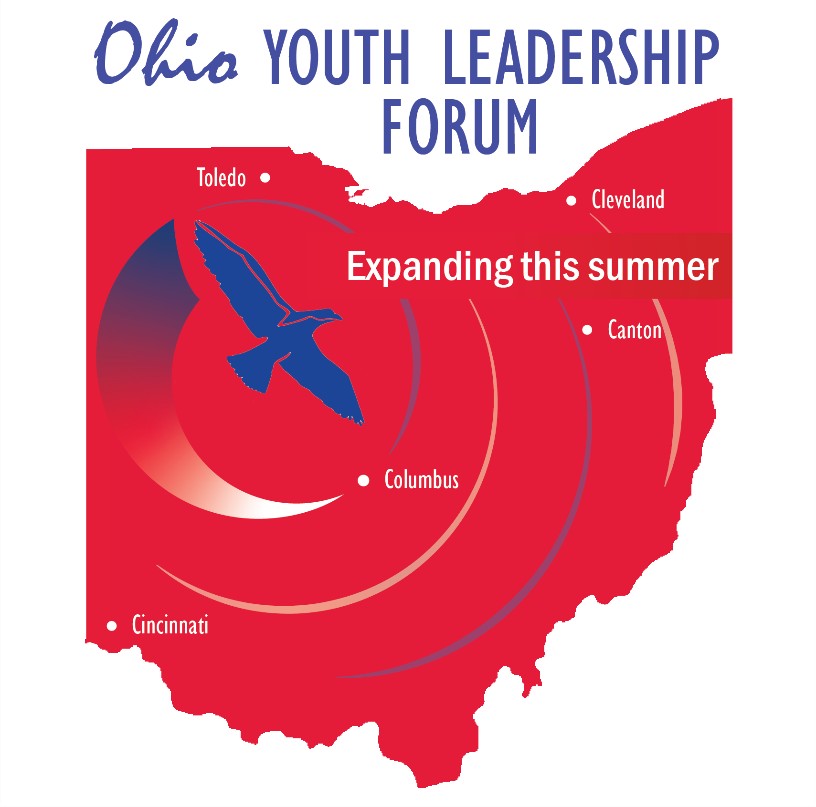
In addition to the Columbus-based statewide program, YLF will also expand regionally this year, opening opportunities for more students with disabilities around the state to participate. The regional YLF programs will be held in Cleveland, Cincinnati, Canton, Toledo, and Columbus. The regional version of the program will take place over four business days and will not have an overnight component. Dates and specific locations will be announced on the YLF website as soon as they are available.
“By expanding the program to different areas of the state, we are hoping to engage more students who are interested in developing their advocacy and leadership skills. We also want to engage local stakeholders and former YLF alumni to build local area supports and involve regional government. Many times, advocacy begins at home or within your own community,” said Donna Foster, OOD Program Administrator for YLF.
The Ohio Statewide Independent Living Council (OSILC) will coordinate the regional programs that will reach an additional 100 students (20 at each site) in the first year. OSILC works with 12 Centers for Independent Living (CILs), all charged with helping to advance the disability community and independent living in Ohio. CILs are unique, as most of the board and staff members are individuals with disabilities. This aligns with the required principles of the national Youth Leadership Forum model, which requires that all guest presenters/role models and at least 50% of the volunteer staff at every YLF are individuals with disabilities.
Regional Steering Committees, one for each area, are being formed to share information and recruit more students. Committee membership will draw from community partners, local education agencies, local employers, and OOD staff.
The YLF program is for students with any disability who have demonstrated potential to be a leader and who are interested in self-advocacy and leadership development. To attend, students will need to apply and be interviewed for a position as a “delegate” in the program. All applicants must be willing to be referred to OOD for services.
Details can be found at https://ood.ohio.gov/Students-14/Youth-Leadership-Forum/About-YLF.
Earn extra income while helping your community! The U.S. Census Bureau is still hiring for a variety of temporary jobs throughout Ohio. Pay rates range from $14.50 to $23.50 an hour. Regional Census positions are key to ensuring an accurate Census count in 2020. To learn more and apply, visit https://2020census.gov/en/jobs.html.
Tuesday, February 4 was World Cancer Day, a time when organizations and people around the world unite to raise awareness about cancer and work to make it a global health priority.
The American Cancer Society provides information to help individuals planning to work during cancer treatment or returning to work once treatment is completed. Visit the “Working During and After Treatment” webpage to learn what to expect and find tip sheets for employees with cancer, coworkers, supervisors, and employers.
Database Lets Law Enforcement Know if They Stop Someone with a Communication Disability
WEWS, 2-4-20
Celebrate Career and Technical Education Month with Hashtag, Resources and New Webpage
Ohio Department of Education, 2-3-20
I Performed at the Super Bowl – You Might Have Missed Me
New York Times (Opinion), 2-3-20
Make-Believe Mall Gives Children with Disabilities Important Life Skills
WCAX, 2-3-20
KeyBank Workers with Autism Excel Through New Program that is Model for Others
Cleveland.com, 2-2-20
Weekly Highlights: Communication Disability Law Awareness Video
Ohio Department of Public Safety, 1-31-20
Engineering Student is Helping Envision a Self-Driving Future for People with Disabilities
The Washington Post, 1-30-20
|