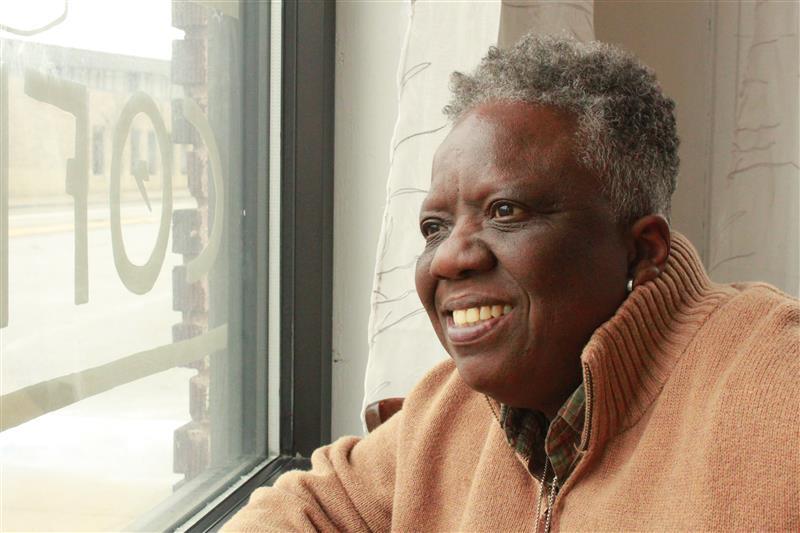
 Pictured above is Columbus resident Pristina Jackson, who shared how Maryhaven helped her overcome her gambling addiction.
You Bet: Demographics Don’t Define Risk of Problem Gambling
Phones, tablets, and apps have helped define a generation coming of age in the 21st century, allowing people to connect with friends, strangers, and food delivery. The options are endless.
Many are also finding all that technology allows them to gamble, even if their parents or the law say otherwise.
The 2022 Ohio Gambling Survey, which is done every five years, found that nearly a quarter (24.1%) of 18- to 24-year-olds were at a high risk of problem gambling, the highest of any age group.
Gambling behavior, however, can take root before a person is even legally able to place a bet. Abdullah Mahmood is a licensed social worker and clinical counselor at Maryhaven, an addiction treatment center in central Ohio. He said it can start as early as middle school.
“They start to develop behaviors around gambling, and the brain gets used to it,” he explained. “It builds a tolerance as if to say: ‘this is easy money to get.’ Gambling addiction can develop at any age, but especially among those individuals,” he explained.
Science backs it up.
“At that age, the brain isn’t fully developed, specifically the pre-frontal cortex, which is in charge of impulse control,” said Dr. Rachel Johnson, a clinical counselor and vice president of clinical services at the Center for Addiction Treatment in Cincinnati. “What we’re seeing is that they’re more likely to take part in risky behaviors. They’re chasing adrenaline and just looking for the next fun activity. It’s a normal response.”
The Ohio Department of Behavioral Health (DBH), along with its partners that make up Ohio for Responsible Gambling, countered with focused efforts on youth gambling prevention through a partnership with the Ohio High School Athletic Association (OHSAA). Through campaigns like Change the Game Ohio and Pause Before You Play, students and families are targeted through social media, promoting essential resources like time-management tools, media-literacy education, and information about the risks and effects of gambling.
“The younger someone is when they’re introduced to gambling or gambling-like activities, they’re more likely to develop a gambling disorder as an adult,” said DBH Director Tia Marcel Moretti. “It’s important to intervene early to stop it before it becomes a problem.”
Montesano Tapped to Lead DBH Bureau of Crisis Services
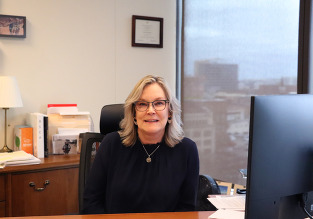
The Ohio Department of Behavioral Health (DBH) is pleased to announce the appointment of Vicki Montesano, Ph.D., as the new Deputy Director of the agency’s Bureau of Crisis Services.
The bureau was established in late 2025 to oversee all community work, including the 988 Suicide and Crisis Lifeline, Mobile Response and Stabilization Services (MRSS), and Adult Mobile Crisis Services.
Bureau priorities include:
- Unifying diversified crisis services under a single area;
- Establishing accountability and responsibility for building, managing, and evolving a unified behavioral health crisis system within Ohio's community behavioral health system; and
- Assuring interoperability and functioning for crisis services for a seamless and "invisible" experience to those in need.
Prior to her promotion, Montesano served as Chief of the DBH Bureau of Behavioral Health Treatment. She is an expert in implementation science and has decades of experience implementing statewide initiatives that impact Ohioans. She previously served as Community Services Director at the Lorain County MHARS Board, Director of Training and Clinical Practice at Felton Institute, and as Associate Director of the Best Practices in Schizophrenia Treatment (BeST) Center at Northeast Ohio Medical University (NEOMED).
Montesano earned her Ph.D. in Counselor Education from Kent State University in 2008. Her dissertation focused on the implementation of evidence-based practices in community-based mental health agencies. She has co-authored several research articles that focus on first-episode psychosis and the adaptation of Cognitive Behavioral Therapy (CBT) for psychosis.
She takes over leadership of the Bureau from Doug Day, who retires April 1 after more than three decades of dedicated public service. Day, who helped launch the new crisis services bureau and served as the primary architect for , joined the state workforce in April 1995, as a Medicaid program administrator for the former Ohio Department of Alcohol and Drug Addiction Services. DBH thanks Doug for 31 years of steadfast leadership on strategic policy matters and wishes him well in retirement!
|
Governor DeWine Announces Nearly $5 Million to Combat Drug Trafficking, Prevent Substance Use Disorder
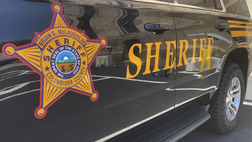
Ohio Governor Mike DeWine recently announced that two state programs will award a total of $5 million in funding to support local law enforcement's work to combat illegal drug activity and promote substance use prevention and recovery. The funding is being awarded through Governor DeWine’s RecoveryOhio Law Enforcement Fund and the Ohio Drug Law Enforcement Fund.
RecoveryOhio Law Enforcement Fund
Thirty-two local law enforcement agencies in Ohio will receive a total of nearly $2 million from the RecoveryOhio Law Enforcement Fund. Governor DeWine created the program to support the mission of the RecoveryOhio initiative, which aims to increase substance use and mental health awareness, implement age-appropriate prevention education in schools, connect those who need help with treatment, and promote recovery. Click HERE to see a full list of award recipients.
Ohio Drug Law Enforcement Fund
Forty law enforcement agencies will receive a total of around $3 million from the Ohio Drug Law Enforcement Fund. Funding will be used to support drug task forces in their work to prevent drug trafficking, pharmaceutical diversion, and other organized criminal activity associated with the drug trade. Click HERE to a full list of award recipients.
|
Members Sought
Ohio Youth Surveys User Guide Advisory Committee

The Ohio University Voinovich School of Leadership and Public Service, in partnership with the Pacific Institute for Research and Evaluation (PIRE) and DBH, is seeking education, prevention, behavioral health, and public health leaders to join the Ohio Youth Surveys User Guide Advisory Committee. Members will share their insights to ensure Ohio Youth Survey user resources are practical, relevant, and useful for districts and communities across the state.
Advisory members will provide guidance on strategic communications, implementation considerations, and tools to help districts and community partners interpret and apply youth survey data. Resources will be designed to work for districts of all sizes and contexts. Apply by April 17 to help shape statewide youth survey resources and support data-informed decision-making in Ohio. Questions? Email condrac@ohio.edu.
|
New SAMHSA Advisory
Expanding Behavioral Health Teams in Care Deserts With Community Health Workers and Peer Support Specialists
Millions of Americans live in behavioral health care deserts — areas with severe shortages of mental health providers, long wait times, high costs, and other barriers. These gaps leave countless individuals without timely care for conditions like depression, anxiety, and substance use disorders. The Substance Abuse and Mental Health Services Administration (SAMHSA) has published a new advisory that explores innovative, community-driven solutions to close these gaps and improve access to life-saving behavioral health services. One promising way to improve behavioral health care in areas with few services is to add more community health workers and peer support specialists.
|
FASD United Seeks Survey Responses to Help Students Impacted by FASD
Students impacted by prenatal exposure to alcohol and fetal alcohol spectrum disorders (FASD) often face many challenges in school. As a result, FASD United is seeking responses to its National Education Survey to better understand students' experiences with an FASD, as well as the perspectives of their parents and caregivers, and professionals involved in this field.
The survey may be completed by or on behalf of students with confirmed or possible FASD. The information collected from this survey is intended for policymakers, schools, service providers, community organizations, and advocacy groups to better understand and address the needs of students with FASD in the U.S. education system.
Please complete survey if you fall into any of the following categories:
- I am a person affected by prenatal alcohol exposure and/or an FASD diagnosis.
- I am a parent/caregiver/legal guardian of a child affected by prenatal alcohol exposure and/or an FASD diagnosis.
- I am an educator or professional who works with people affected by prenatal alcohol exposure and/or an FASD diagnosis.
For questions about the survey, please contact Krystal Starwich at starwich@fasdunited.org.
|
 MHA 2026 Mental Health Month Kickoff Webinar — April 2

Since founding Mental Health Month (also known as Mental Health Awareness Month) in 1949, Mental Health America (MHA) has led the nationwide effort every May to promote mental wellness. This year, MHA is on a mission to help people have more good days, together. Make plans to join MHA on April 2 at 1:00 p.m. for a virtual More Good Days, Together: 2026 Mental Health Month Kickoff webinar. This virtual event is designed to help participants prepare for participating in Mental Health Month. MHA staff will highlight strategies for championing mental health in your community, share new tools, and provide ideas on meaningful ways to get involved.
|
Clermont County 'Connecting the Dots' Community Forum — May 1
The Clermont County Mental Health and Recovery Board, in partnership with Clermont County Public Health, will host a "Connecting the Dots" countywide community forum on May 1 from 9:00 a.m.-Noon at the University of Cincinnati–Clermont College campus in Batavia. This event will bring together partners, residents, and local leaders to better understand the current landscape of mental health, substance use, and prevention efforts in Clermont County. Participants will learn about the latest trends impacting youth and adults, explore new data from the ISA student survey, and discover local resources available to families.
|
 New crisis center, fewer beds? How Cuyahoga County might shift emergency mental health care
Signal Cleveland, March 25, 2026
More than $200,000 awarded to Lorain County to investigate drug trafficking, address addiction and recovery
Cleveland.com, March 25, 2026
Youth Suicide Prevention Coalition shares tips for talking to kids about mental health
WLIO-Lima, March 25, 2026
Hamilton County marks lowest overdose death total since 2012
CityBeat, March 25, 2026
Columbus City Council honors city worker Charles Coleman for saving woman in crisis
WSYX, March 25, 2026
Lorain County offering free Mental Health First Aid certification in April
Cleveland.com, March 24, 2026
CelebrateOne secures $3.39M grant to fund for maternal health in Columbus
Columbus Dispatch, March 24, 2026
New coalition targets youth suicide prevention in Allen County
WLIO-Lima, March 24, 2026
Drop in opioid overdose deaths nears 50% since 2023
The Lexington Times, March 24, 2026
Tri-State student survey reveals progress, key concerns in students
Spectrum News1, March 23, 2026
Ohio programs award nearly $5 million to combat drug trafficking, addiction
Spectrum News1, March 19, 2026
|