Fellow Ohioans,
It is an honor to represent you and keep you updated on the important work being done to protect and serve our communities. I wanted to provide you with an update on legislation I've been working on to better our state and community, as well as a property tax update.
136th General Assembly Legislative Update
 District 29 Update:
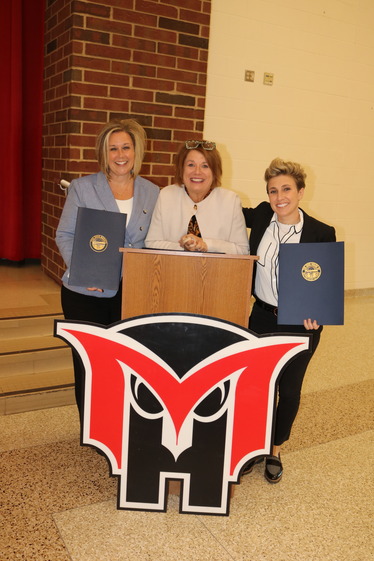
Mt. Healthy City Schools Science of Reading Champions
Governor DeWine, in partnership with the Department of Education and Workforce, created the Governor’s Science of Reading Champion Awards to recognize schools demonstrating strong, evidence-based literacy instruction and student progress. Three Hamilton County schools received the honor, including two in District 29: Mount Healthy Early Learning Center and Mount Healthy North Elementary School. On April 20, the outstanding teachers and school leaders at Mount Healthy were recognized for their commitment to ensuring students have the literacy skills they need to succeed.
Rep. Abrams' Legislation:
House Bill 88 – Drug Trafficking
Following my 2023 trip to the U.S.- Mexico border in Cochise County, Arizona, I introduced House Bill 88 to strengthen penalties for trafficking fentanyl, methamphetamine, cocaine, and heroin. With roughly 12 Ohioans dying each day from fentanyl poisoning, Ohio cannot afford to wait any longer to address this crisis.
In addition to holding drug traffickers accountable, H.B. 88 requires drug and fentanyl education for Ohio students from kindergarten through graduate school and designates August as Fentanyl Poisoning Awareness Month. The bill passed the House Judiciary Committee 8-5 and the House Floor 71-18 and is awaiting hearings in the Senate Judiciary Committee.
House Bill 141 – PPEC
Ohio is home to Cincinnati Children’s Hospital, one of the nation’s leading pediatric hospitals, yet Ohio families cannot currently access prescribed pediatric extended care (PPEC) centers. PPEC centers provide community-based care for children with complex medical needs, helping families avoid lengthy hospital stays while reducing costly emergency room visits and hospital admissions.
H.B. 141 creates a Department of Health licensure process for PPEC centers, giving Ohio families access to a service already available in 15 other states, including Kentucky. The bill passed the Ohio House unanimously and is currently before the Senate Health Committee, where it has received three hearings.
House Bill 280 – OP&F
Ohio has a responsibility to ensure its public pension systems remain financially stable. The Ohio Police & Fire Pension Fund serves more than 27,000 active first responders and over 30,000 retirees and has already undergone significant reforms and employee sacrifices to reduce unfunded liabilities.
H.B. 280 modernizes the pension system by returning it to an actuarially determined funding model and gradually equalizing employer contributions for police and fire to 24% over five years. This will help protect the long-term stability of the fund and the retirement benefits of Ohio’s first responders. The bill is currently before the House Public Insurance and Pensions Committee.
House Bill 372 – Larry Henderson Act
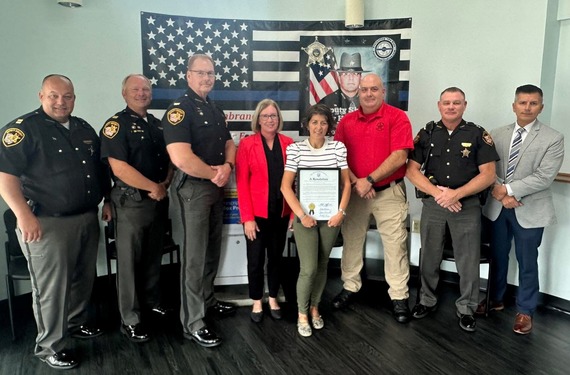
Following the tragic murder of Hamilton County Sheriff’s Deputy Larry Henderson, I made it a priority to ensure those who intentionally kill a first responder face the toughest penalties available. Deputy Henderson served Hamilton County for 33 years following his service in the U.S. Marine Corps.
H.B. 372 eliminates the possibility of parole for aggravated murder of a first responder, leaving the jury and judge to determine between the death penalty and life imprisonment without parole. The bill passed the House Judiciary Committee unanimously and the House Floor 89-4 and is currently in the Senate Judiciary Committee.
 House Bill 381 – DOITFORJACK License Plate
After losing their 23-year-old son Jack to fentanyl poisoning in 2021, Tom and Stephanie Quehl dedicated themselves through DOITFORJACK and the Jack Quehl Foundation to educating others about the dangers of fentanyl and illicit drugs.
H.B. 381 creates a DOITFORJACK specialty license plate to help expand their lifesaving educational mission across Ohio. The bill passed the House unanimously and was enrolled in Senate Bill 52, taking effect September 23, 2026.
House Bill 386 – Photo ID for Marriage Licenses
Ohio law currently requires marriage license applicants to prove their age but does not require proof of identity, creating opportunities for fraud, human trafficking, and forced marriages.
H.B. 386 requires applicants to provide current, valid photo identification, bringing Ohio’s marriage license process in line with modern identification standards and giving probate courts a reliable way to verify applicants’ identities. The bill passed the House Judiciary Committee unanimously and the House Floor 88-2 and is currently before the Senate Government Oversight and Reform Committee.
House Bill 492 – Improve Officer Safety During Traffic Stops
Traffic stops are among the most dangerous situations law enforcement officers encounter. H.B. 492 gives officers an additional tool by expanding the interference-with-arrest provisions to certain motor vehicle laws and by requiring drivers and passengers to provide their name, address, and date of birth when requested during a traffic stop, while maintaining constitutional protections.
The bill passed the House 59-21 and Senate 24-9 and was signed into law. H.B. 492 takes effect October 6, 2026.
House Bill 505 – Crowdfunding
After Deputy Larry Henderson’s murder, online fundraisers were created to support his accused killer financially. While some platforms removed the fundraisers, a loophole in Ohio’s existing “Son of Sam” laws allows individuals accused of violent crimes to raise money through crowdfunding.
H.B. 505 closes that loophole and prohibits individuals charged or convicted of vicious and violent crimes from profiting from their actions through crowdfunding platforms.
House Bill 667 – Reagan Tokes & Patrick Heringer Act
The murders of Reagan Tokes and Patrick Heringer exposed serious gaps in Ohio’s supervision of violent offenders. Both victims were killed by offenders who had previously been released from prison and were subject to monitoring.
H.B. 667 strengthens post-release supervision by requiring real-time GPS monitoring of violent offenders, giving probation and parole officers stronger warrant authority, and allowing judges greater discretion to return repeat and problem offenders to prison. The bill passed the House Public Safety Committee 12-1 and the House Floor 96-2.
 House Bill 677 – Kelsey Smith Act
After 18-year-old Kelsey Smith was abducted and murdered in Kansas, her family began advocating for legislation allowing law enforcement to obtain precise cellphone location information during emergencies when a person’s life is believed to be in immediate danger.
H.B. 677 brings the Kelsey Smith Act to Ohio while also incorporating recommendations from Governor DeWine’s Missing Persons Working Group, including stronger protections in custody-interference cases and improvements to Ohio’s Endangered Missing Child Alert.
 House Bill 678 – Auto Insurance Verification
Ohio has one of the nation’s highest rates of uninsured motorists, while current law largely relies on drivers to attest that they have insurance.
H.B. 678 requires the BMV to establish an electronic insurance verification system, allowing law enforcement and the BMV to confirm coverage and identify changes to policies. The bill also allows registration applications or renewals to be denied when proof of insurance cannot be established. This protects law-abiding drivers, families and businesses from the financial consequences of uninsured motorists. The bill is currently receiving hearings in the House Transportation Committee.
Ohio’s Post Traumatic Stress Fund Commission
Governor DeWine signed House Bill 479 in June, establishing the Post Traumatic Stress Fund Commission and creating a process for first responders to obtain and maintain treatment for post-traumatic stress injuries.
The law allows the $40 million previously appropriated for the fund to be used for its intended purpose: helping first responders receive the care they need so they can return healthy to their families and the communities they serve.
Public Safety Committee Legislation
 House Bill 44 – Law Enforcement Exams & Chief Police Training
H.B. 44 addresses law enforcement recruitment and retention by making it easier for qualified officers to transfer between departments and allowing municipal police chiefs to operate training schools for prospective officers. It also allows newly appointed chiefs to complete required training at regional Ohio Peace Officer Training Commission facilities, reducing costs while strengthening relationships among local law enforcement leaders.
H.B. 44 passed the House 95-1 and the Senate unanimously, was signed by the Governor, and took effect February 4, 2026.
House Bill 102 – Sex Offenders Residing Near Victims
Ohio’s current sex offender residency restrictions prevent offenders from living near schools and childcare facilities but do not specifically protect victims’ homes.
H.B. 102 closes this loophole by prohibiting certain sex offenders from living within 2,000 feet of their victim or loitering within 1,000 feet. The bill passed the House 89-2 and is currently before the Senate Judiciary Committee.
 House Bill 131 / Senate Bill 114 – Law Enforcement Quotas
Arrest and ticket quotas undermine officer discretion, professionalism, and public trust by requiring officers to meet arbitrary enforcement targets.
H.B. 131 and S.B.114 prohibit law enforcement agencies from using arrest or ticket quotas as the basis for officer evaluation, compensation, or discipline. S.B. 114 passed both chambers unanimously and took effect in September 2025.
House Bill 210 – Catalytic Converters
Catalytic converter theft has increased across Ohio, in part because the precious metals inside converters can be quickly sold for profit.
H.B. 210 strengthens accountability by requiring detailed records of catalytic converter transactions while protecting legitimate businesses from unnecessary burdens. The bill passed both chambers with overwhelming bipartisan support and takes effect October 6, 2026.
House Bill 217 – FIND Act
When someone goes missing, timely information sharing can be the difference between finding someone and losing valuable time.
H.B. 217 requires law enforcement to enter missing-person information into the National Missing and Unidentified Persons System (NamUs) when an individual has not been located within 30 days. It also incorporates recommendations from Governor DeWine’s Missing Persons Working Group, including administrative search warrants in high-risk cases and preservation of unresolved missing-person records. The bill passed the House unanimously and is now before the Senate.
 House Bill 247 – Avery’s Law
After 11-year-old Avery Russel was violently attacked by four dogs in 2024, she turned her experience into advocacy for stronger protections against dangerous dogs.
H.B. 247 strengthens Ohio’s laws for owners of dangerous and vicious dogs, particularly repeat offenders, and establishes greater accountability for irresponsible ownership. The bill passed both chambers unanimously and took effect in March 2026.
House Bill 346 – V.J.’s Law
The tragic abuse of a 4½-month-old infant exposed failures in the process for reporting suspected child abuse to law enforcement and county children services.
H.B. 346 strengthens mandatory reporting requirements and improves the notification process when abuse is suspected. The bill passed the House Public Safety Committee 10-0 and the House Floor 96-0.
House Bill 519 – Stealing Motor Vehicles
Vehicle theft increasingly involves electronic devices that can reprogram vehicle keys, yet Ohio law does not specifically address possession of these tools when they are intended for theft.
H.B. 519 prohibits possession or use of electronic tools under circumstances indicating an intent to steal a motor vehicle. It also establishes enhanced consequences for repeat juvenile vehicle theft offenders. The bill passed the House unanimously and is currently before the Senate Judiciary Committee.
 House Bill 533 – Vehicular Homicide & Assault
Ohio’s current vehicular homicide and assault laws do not clearly cover several vehicles, including golf carts, mopeds, and motor scooters, creating challenges for prosecutors.
H.B. 533 updates Ohio law to ensure these and other commonly used vehicles are covered. The bill passed both chambers unanimously and takes effect October 6, 2026.
House Bill 654 – Amanda Dean’s Law
Amanda Dean, a young mother of four, was murdered by her boyfriend, who later concealed and desecrated her remains. Her case highlighted the need for stronger penalties when someone abuses a human corpse, particularly to conceal another crime.
H.B. 654 creates a tiered penalty structure for abuse of a human corpse, ensuring the consequences reflect the severity and intent of the conduct and providing greater accountability for those who attempt to conceal a crime. The bill passed the House Public Safety Committee 11-2 and the House Floor 93-2.
Historic Property Tax Relief
 My Ohio House Republican colleagues and I have championed several pieces of legislation to help lower property taxes, delivering direct and meaningful relief for Ohioans.
- Over $3 Billion in Taxpayer Savings
- Tax Relief Beginning July 2026
- Putting an End to Large Unvoted Property Tax Spikes
- Empowering Voters
- Expanded Property Tax Credit for Homestead Recipients
To learn more about the slate of bills signed into law, click here.
|
Thank you for staying engaged with the legislative process. Together, we are working toward a safer Ohio. If you have questions or would like to share feedback on any of the legislation mentioned, please don’t hesitate to reach out to my office.
Sincerely,
Rep. Cindy Abrams
District 29
Ohio House of Representatives
|
|
 |
|