Fellow Ohioans,
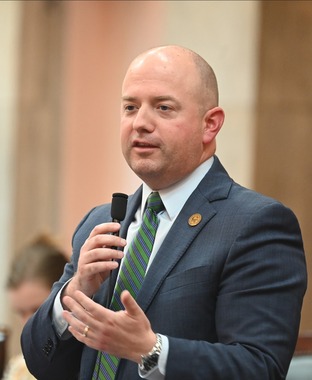
It's an honor to serve as your State Representative for the 12th Ohio House District.
Being a lifelong resident of Southern Ohio, I have the experience and understanding to work on behalf of the great people who make up our communities.
Please don't hesitate to reach out to my office with any questions or concerns you have.
Phone: (614) 466-1464
Email: Rep12@Ohiohouse.gov
Sincerely,
Brian Stewart
State Representative
|
2025 Year in Review
Legislation Rep. Stewart Championed
House Bill 96 - Ohio's State Operating Budget
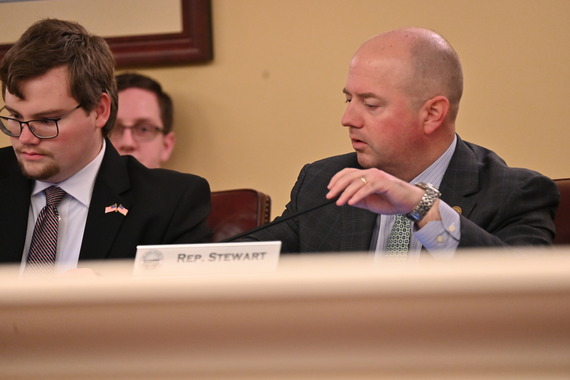
Rep. Stewart - chairman of the House Finance Committee - played a key role in developing House Bill 96, the State Operating Budget. The budget, which allocates funding for state programs and operations for the next two years, includes provisions that aim to protect freedom, family and fiscal responsibility.
Some highlights of Ohio’s State Operating Budget include the following:
-
Establishes a flat income tax, making Ohio more competitive with surrounding states, simplify the tax code, and spurring revenue.
- Ohio public schools will receive nearly $700 million more for public education over the biennium than they received in FY 25.
-
Prioritizes revitalizing local communities by increasing funding for Brownfield Remediation and continues investments for the All Ohio Future Fund.
- Further supports Ohio’s families by increasing funding for the Help Me Grow program, establishing the Child Care Choice Voucher and Child Care Cred programs, and more.
- Supports law enforcement and first responders by allocating $65 million over the biennium for local law enforcement training, and $8 million in grants for small county volunteer fire departments.
Rep. Stewart's championed amendments included in the budget:
Ohio Department of Health (ODH) Abortion Reporting Updates - Requires ODH's public report providing statistics for all abortion reports from the previous calendar year to be issued by February 28 (rather than September 30) of each year, and requires the development of a public electronic dashboard to publish on a monthly basis abortion data that includes specified information.
Rural Practice Incentive Program - Qualifies attorneys who engage in the
private practice of civil law in an underserved community for a minimum of five hundred twenty hours each service year to receive tuition and educational expense reimbursement through the program.
Online Dockets - Requires the clerk of courts to make criminal and probate dockets available online.
Landmark Property Tax Reform - Provides direct relief to low-income seniors, disabled veterans, and spouses of first responders killed in the line of duty by allowing the Board of County Commissioners the ability to provide a homestead exemption for these individuals that is applied against the resident’s total home value.
Senate Bill 56 - Updating Ohio's Marijuana Laws
Rep. Stewart led the passage of Senate Bill 56 in the House, legislation updating Ohio’s marijuana laws and addressing the issue of intoxicating hemp.
Senate Bill 56 preserves the legal, adult-use marijuana provisions approved by voters in Issue 2 in 2023, while also adding needed protections for Ohio’s children. The bill was finalized through a conference committee made up of members from the House and Senate.
Clarifying Ohio’s Marijuana Law
Senate Bill 56 includes multiple provisions that clarify the state’s adult use marijuana law, including:
- Maintaining the current tax rate of 10% on adult use marijuana.
- Clarifying the adult personal use of marijuana on residential parcels, rather than just inside a residence.
- Eliminating the cannabis social equity and jobs fund and program.
- Maintaining home-grow allowances in current law but prohibiting the cultivation of home-grown marijuana in halfway homes, recovery houses, and childcare centers.
Providing the Division of Cannabis Control (DCC) necessary authority to regulate marijuana from cultivation to sale without allowing undue burdens on these Ohio businesses.
Host Community Revenue
The bill allocates 36% of revenue from the marijuana excise tax to the Host Community Cannabis Fund, in perpetuity, to be distributed to local communities that are home to dispensaries.
Promoting Public Safety
Senate Bill 56 includes multiple provisions that will protect children and promote public safety, including:
- Prohibiting public smoking and intoxication.
- Prohibiting marijuana products from using packaging or advertising that is attractive to children, or which mimics other legal products that are consumed by children.
- Requiring ads to be at least 500 feet from schools and churches.
- Expressly clarifying marijuana OVI prohibitions, including passengers smoking in the vehicle, without enhancing criminal penalties.
- Reducing THC potency levels for marijuana to 70% for extracts as other legalization states have done, while maintaining the 35% threshold for plant material.
- Continuing to permit an employer to prohibit use of marijuana and make appropriate employment actions based on an employee’s use, possession, or distribution of marijuana.
Governor DeWine signed Senate Bill 56 into law in late December and it will go into effect March 20, 2026.
 House Bill 184 - Bill to protect Student-Athletes' Name, Image, and Likeness Rights
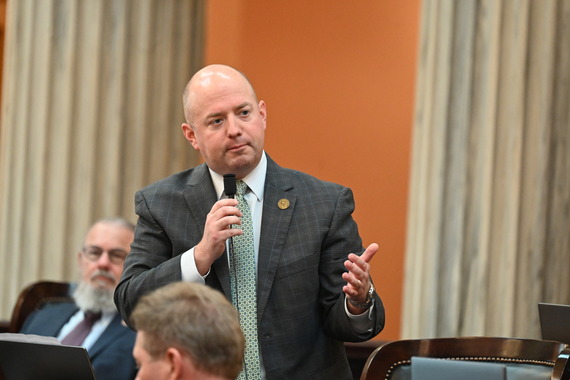
Rep. Stewart is a joint-sponsor of House Bill 184, legislation that marks a major advancement in protecting the rights and futures of Ohio’s student-athletes. The bill, which focuses on the regulation of Name, Image, and Likeness (NIL) contracts and the conduct of athlete agents, sets a new standard for fairness and accountability in collegiate athletics.
House Bill 184 ensures that NIL contracts cannot extend beyond a student-athlete’s period of eligibility for participation in intercollegiate athletics. This protection aims to help preserve athletes’ ability to control and benefit from their NIL once their college careers conclude. By prohibiting any person or agent from entering into NIL-related agreements that require future compensation or rights post-eligibility, the legislation safeguards against undue influence and exploitation, and further protects athletes by requiring that mediation is to be disputed in the State of Ohio.
House Bill 184 was also amended in the Ohio Senate to include multiple technical provisions and clarification measures related to the State Operating Budget passed earlier this year. This includes an allocation of $40 million for Post Traumatic Stress treatment for first responders.
Governor DeWine signed this bill into law in December and it will be effective March 20th, 2026.
House Bill 31 - Legislation to Increase Transparency in Parole Board Hearings
Rep. Stewart joint-sponsored House Bill 31, which will require the electronic recording of all Ohio Parole Board hearings and ensure that those records are available upon request from members of the public.
Under current law, the Ohio Parole Board is not required to record its hearings, limiting the ability for inmates, attorneys, families and stakeholders to review or appeal the proceedings. House Bill 31 addresses this issue.
Under the legislation, any party, person or entity will be able to request an electronic recording of a parole hearing from the Department of Rehabilitation and Corrections. These recordings are required to be kept confidential and are not allowed to be copied or posted to the internet.
In an effort to protect the privacy of any victims mentioned in the hearing, the bill ensures that recordings exclude personally identifiable information, such as names, contact information, social security numbers and other details about the victim or their immediate family. This bill awaits further consideration in the Senate.
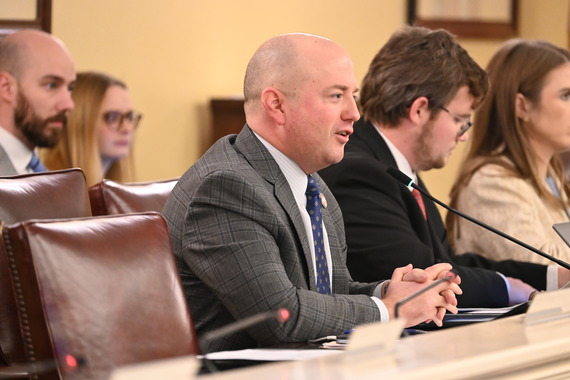
Other Legislative Highlights
House Bill 247 - Avery's Law
Rep. Stewart is a co-sponsor of House Bill 247 - also known as Avery's Law - legislation that would establish new requirements on vicious dog owners to prevent dog attacks in Ohio.
House Bill 247 will do the following:
- Impose criminal penalties on a dog owner if he or she negligently fails to keep their dog from committing, without provocation, an attack;
- Give the local dog warden the authority to seize a dog immediately following such an attack;
- Revise the investigation and enforcement requirements for when an authority receives any complaint that indicates a possible violation of any provision of the Dog Law;
- Include protections for dogs that are defending themselves, their owners, or their property;
- After receiving due process, mandate termination of the dog if it kills or seriously injures a person.
House Bill 247 is named ‘Avery’s Law’ in in honor of Avery Russell, who was severely injured in a dog attack in Reynoldsburg, Ohio in June 2024, when she was 11 years old. Governor DeWine signed this bill into law in late December.
 Property Tax Relief for Ohioans
Rep. Stewart co-sponsored House Bills 124, 129, 309, 186, and 335 – five initiatives championed by House Republicans that work to curb tax hikes and deliver direct property tax relief to Ohioans, totaling more than $3 billion in savings.
House Bill 186 - 20-Mill Floor Inflation Cap
House Bill 186 will save Ohio property owners nearly $1.7 billion over the next three years by establishing a new Inflation Cap Credit that prevents increases in school district property taxes from exceeding the rate of inflation. The initiative also includes an appropriation holding Ohio school districts harmless for actual losses over this appraisal period compared to their current property tax collections, which will help schools that are not up for reappraisal or reevaluation this year offset any actual revenue losses. Ohioans will begin to see relief through this credit as early as June 2026.
Members of the House also approved changes in the bill that would update the owner-occupancy tax credit, a move that will provide more than $800 million in relief to Ohio homeowners over the next four years. The bill phases out the nonbusiness credit – except for agricultural property owners – and expands the owner-occupancy tax credit. Ohioans will begin to see relief through the expansion of the OCC in January 2027.
House Bill 335 - Inside Millage Inflation Cap
House Bill 335 caps increases in inside millage collections to the rate of inflation. The bill requires county budget commissions to adjust the rate of each inside millage levy so that it does not grow by more than the sum of the three previous years of inflation. This happens during the county’s sexennial reappraisal or triennial update. The net effect of this provision totals between $621 million and $763 million in property tax relief over the next three years. Ohioans will begin to see relief through this cap in January 2027.
House Bill 129 - A check on tax hikes
House Bill 129 implements a check on tax hikes by counting emergency, substitute, incremental growth, conversion levies and the property tax portion of combined levies toward the 20-mill floor – closing loopholes and slowing tax spikes. This measure ultimately lifts 237 districts off the 20-mill floor over the next four years.
The bill also provides a new alternative levy option. School districts with an existing emergency or substitute levy may renew these levies indefinitely as a “fixed sum levy.” The bill also allows schools on fiscal distress, as designated by the Auditor of State, or under a disaster declaration to levy a new one-time 5-year “fixed sum levy” to cover current expenses. These options provide additional flexibility for school districts.
House Bill 309 - Minimizing unnecessary collections
House Bill 309 slashes unnecessary collections by expanding the county budget commission’s authority to modify levies and trim unnecessarily high millage rates, shielding Ohioans from overly excessive tax bills.
House Bill 124 - Flip the Script
House Bill 124, also known as “Flip the Script,” empowers county auditors to have greater oversight over determining property tax sales information used for determining property valuations.
These actions build on the legislative work already accomplished by the House Republican Caucus through the state budget, including a provision that allows boards of county commissioners to provide direct relief to seniors, disabled veterans & families of first responders through homestead exemptions, and up to 2.5% owner-occupancy tax credits. Governor DeWine signed these bills into law in late December, and Ohioans will begin to see property tax relief as early as June 2026.
Awards
Legislator of the Year
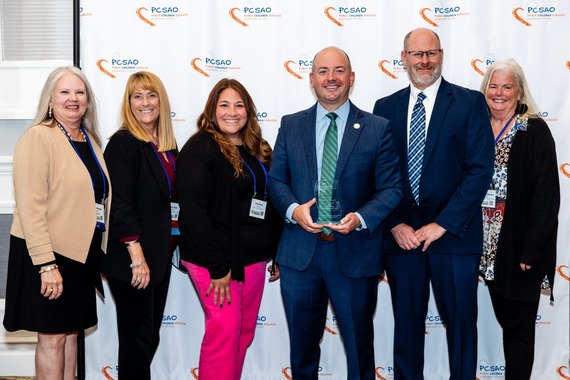 Rep. Stewart was honored with the Legislator of the Year Award by the Public Children Services Association of Ohio (PCSAO). The award recognizes Rep. Stewart’s leadership on the state budget process and workforce issues related to children services.
The PCSAO “Legislator of the Year” Award recognizes outstanding leadership – and action – by legislators on issues impacting children and families served by the children services system. Rep. Stewart received the award during PCSAO’s 2025 annual conference.
Lawyer Legislator of the Year 2025
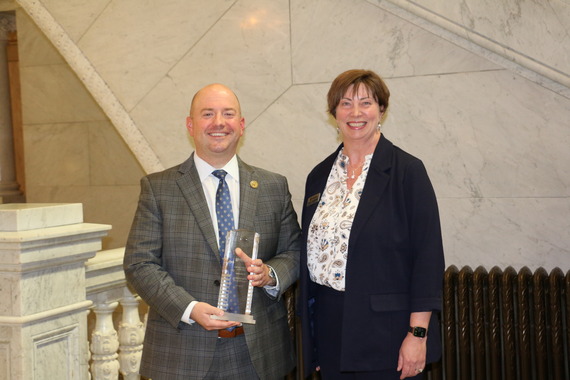 Rep. Stewart was awarded Lawyer Legislator of the Year by the Ohio Bar Association for 2025.
The Ohio Bar established the Lawyer-Legislator Distinguished Service Award in 2014 to recognize Ohio lawyers who also provide exceptional service as Ohio legislators. The award is presented at the annual meeting of the Ohio Bar Council of Delegates.
|