|
The Franklin County Overdose Fatality Review is committed to reducing the number of overdose deaths experienced by Franklin County residents. This newsletter serves to provide updates on Overdose Fatality Review work and the work of partners that support people who use drugs.
|
|
Gahanna Jefferson School District
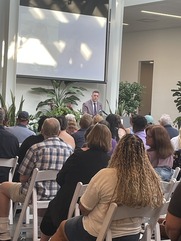
- The Overdose Fatality Review (OFR) committee recently had the opportunity to present on substance use prevention topics for Gahanna Jefferson School District’s mental health professionals. This partnership is a direct result of two OFR recommendations: supporting school districts in prevention education and educating about adverse childhood experiences (ACEs). Mental health staff learned about the warning signs of substance use for youth, what youth may be experiencing because of substance use in the home, and how ACEs play a role in substance use for youth. The most impactful part of the conversation stemmed from discussing potential prevention interventions, especially in the context of ACEs. Focusing on supportive measures for families, providing safe adult relationships for students, and incorporating self-regulation and conflict resolution tools into the school curriculum are just some of the ways schools and communities can continue to support young people and create environments that reduce substance use initiation.
- In 2024, one youth tragically passed away from overdose. One death is too many, but with supportive partnerships between school systems and the OFR, we can equip educators and staff with the knowledge needed to address problem behaviors early and often. Youth that experience four or more ACEs during childhood are at an increased risk for mental health and substance use concerns. Schools that understand and act on warning signs and work to implement ACEs prevention strategies can directly impact the incidence of substance use disorder among the students they serve.
|
|
Franklin County Overdose Fatality Review |
|
Condolence Cards

- The OFR is pleased to announce the availability of condolence cards to share with families and loved ones who have lost someone to overdose. The cards, available in English, Spanish, and Somali, include a brief note and links to resources. The cards will be distributed to families or loved ones of the decedent at scene and mailed to the decedent’s listed next of kin. The OFR is working to create a form where residents can request these cards as needed.
|
|
|
An Update on the Community Action Group
- The OFR’s community-based subcommittee, the Community Action Group, has had a busy quarter! The team attended several community outreach events to share information about harm reduction services, treatment options, and what the OFR is doing to stand up to overdose deaths in the community. Recently, the Community Action Group attended International Overdose Awareness Day, hosted by the Columbus and Franklin County Addiction Plan (CFCAP) and the Franklin County Coroner’s Office. The Community Action Group was honored to be part of the day, and members were able to share their lived experience and be supportive to others with similar experiences.
- You will find the Community Action Group at Community Safety Day, hosted by Columbus Fire RREACT (Rapid Response Emergency and Addiction Crisis Team) on October 25th. If your agency is hosting a community outreach event and would like the support of the Community Action Group, please reach out to Lauren Putz at LaurenPutz@franklincountyohio.gov.
Restoring Communities Through Action: Franklin County Jail System Debut
- The OFR is teaming up with the Franklin County Sheriff’s Office and the Office of Justice Policy and Programs to support jail residents. Community members who are released from jail are at an increased risk for overdose death in the months following their re-entry. Sometimes individuals will return to substance use after release, which can increase the risk of overdose death due to the reduced tolerance to the substance after a prolonged period of abstinence. With the support of our partners, the OFR and Community Action Group are bringing a four-part educational series to the jails to help reduce the number of fatal overdoses for individuals re-entering into the community. This series, called Restoring Communities Through Action, will focus on different aspects of substance use from stigma reduction through long-term recovery. The series will be offered to jail residents for free and presenters will consist of professionals in the substance use treatment field, including individuals with lived experience. The series is set to kick off in November and can be requested for groups outside of the jail setting as well.
|
|
Franklin County Crisis Care Center Opens |
|
-
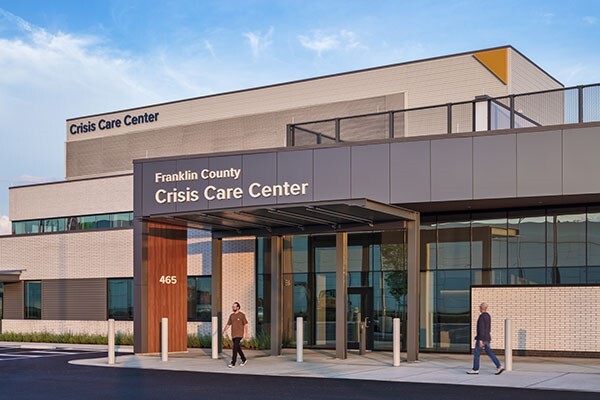
The Franklin County Alcohol, Drug, and Mental Health Board (ADAMH) unveiled the county’s Crisis Care Center in May. The Crisis Care Center is now open 24/7 to offer a variety of services for individuals experiencing mental health crises. Community members can walk in and receive immediate treatment to help regulate in the moment. The Center’s care is provided by Recovery Innovations (RI) International, and offers a variety of treatment plans, including long-term linkage to recovery resources and support services like housing and transportation. Click here to learn more!
|
|
Coroner's Corner: A message from Franklin County Coroner Dr. Nate Overmire
|
|
- The Franklin County community is on track to see the lowest number of overdose deaths in recent years. If recent trends hold true, 2025 will have a meaningfully lower number of overdose deaths than previous years. Each partnership in this coalition can celebrate the collective work being done to save lives.
- Through access to harm reduction methods, education and prevention programs, treatment and recovery services, community efforts to reduce stigma and partnerships with our public safety officials, the work of OFR member organizations is making a positive impact. Recovery is possible for all our residents.
- Statistics are a tool we use to measure progress, but we must never forget that behind each number is an important story of an individual with feelings, a person who has loved ones and a citizen whose life is worth living. It is our cooperative work to continue to tell the stories of people battling the disease of addiction. While we review reports for decision making based on data, we ultimately want to improve the quality of life so everyone can live and thrive. Every story matters.
|
|
What We're Working On: Recommendation Records |
|
- The OFR is working to update recommendations and action steps. The Franklin County OFR takes a unique approach by creating recommendations that are long-term goal oriented, instead of task based. To track their progress, every member agency shares any work being done internally that would support the long-term goal of the recommendation. Any additional work is identified and assigned to a specific sector (or sectors), depending on the scope of the needed work.
- The OFR currently has six active recommendations and is developing another aimed at addressing the needs of new American populations who may not be aware of available substance use treatment services. Below is a list of the current recommendations, and some action steps being taken to move the needle closer to zero overdose deaths in Franklin County.
- Increase the equitable engagement of African American and Black men in overdose prevention and education efforts.
- The OFR Community Action Group is in the final stages of development for a community education series on substance use. The group is forming partnerships with agencies that support the African American community in Franklin County to provide these presentations at no cost to clients/interested community members.
- Work with hospital emergency department (ED) peers/navigators, Southeast (SE) RREACT, and others to improve linkage of patients who present in the ED with a substance use disorder (SUD) diagnosis to a treatment or detox facility, especially during times when navigators are not available and/or after regular business hours.
- The OFR was invited to participate in the planning of updated best practice guidelines for emergency departments when working with individuals with SUD.
- Educate OFR committee members on special docket court offerings in Franklin County to more widely share information about offerings with those serving justice-involved individuals.
- OFR members participated in a training on offerings through Franklin County Common Pleas Court.
- Additional partnerships will be formed with Municipal Court, Hilliard Drug Court, and Upper Arlington Drug Court to further training opportunities and resource sharing.
- Engage with Franklin County and Columbus schools to provide resources and support for overdose prevention and gather data/insight as necessary.
- Developed an evidence-based presentation on substance use prevention and ACEs for the school mental health staff at Gahanna-Jefferson School District.
- The OFR is working to engage additional school districts, inclusive of charter schools, in this educational opportunity.
- Through work with school staff, the OFR plans to expand evidence-based prevention education sessions to students in Franklin County schools.
- Engage with transitional housing locations to provide harm reduction services and overdose prevention education.
- Work closely with FCPH transitional housing pilot project to implement harm reduction education and tools for residents.
- Share resources with OFR member agencies that work with or host transitional housing.
- Increase awareness on ACEs and how these experiences can contribute to substance use disorder, as well as work to support the implementation of ACEs prevention strategies.
- See above information on school staff presentations.
|
|
Central Ohio Hospital Council
- Representatives from the four Franklin County hospital systems have been working to revise a set of standards around the care and treatment of patients with a substance use disorder. The original standards, adopted in 2017, had a narrow focus for patients presenting in an ED with an opiate overdose, and was limited primarily to providing the opioid reversal agent naloxone.
- Over the past few months, the hospital systems, facilitated by the Central Ohio Hospital Council, have met to review and revise the 2017 standards to better reflect systematic changes with the community and to encourage the adoption of clinical practices shown to help residents with substance use disorder achieve optimal health outcomes. Those practices include:
- Encouraging the initiation of medication for treatment of opioid use disorder, alcohol use disorder or other substance use disorders in the emergency department and inpatient settings.
- Providing linkage coordinators to assist patients who present in the ED and in an inpatient unit with a substance use disorder. This peer/navigator level of support can engage patients, assess their level of readiness for change, support/advocate their wishes, link them to follow up care to inpatient or outpatient treatment facilities and follow up with them post discharge.
- Providing patients with a buprenorphine to-go pack, or 3-day bridge pack, to help the patient with withdraw while they are connected to follow up treatment.
- Providing patients who receive a bridge pack with more specialized navigation services to ensure they are connected to and enrolled in follow-up care.
- The standards will be vetted with hospital leadership this Fall and may be considered for approval by the Hospital Council’s governing board before year-end.
- This work is part of a COHC broader strategic initiative to reduce Franklin County overdoses and overdose deaths, in support of the Columbus and Franklin County Addiction Plan and the Franklin County OFR. Other collaborative projects of the four hospital systems include:
- Conducting post-op surveys of patients who receive an opioid prescription on number of pills/doses filled and used following certain ambulatory procedures.
- Reducing the number of opiates prescribed to individuals undergoing Cesarean Sections, outpatient GI procedures and full hip and knee replacements.
- Ensuring patients who present in the ED with an opiate overdose are provided Narcan before discharge.
-
Click here to learn more about the hospitals’ collaborative efforts around substance use disorder.
|
|
|
|
|
|