|
Franklin County Public Health Situational Update
|
|
|
January 2025
Happy New Year from all of us at FCPH! May your New Year be filled with growth, innovation, and success for you and your team. We're excited for what lies ahead in 2025 and grateful for your continued partnership.
Keep up to date with the latest information from FCPH and Franklin County, register here for the 2025 jurisdiction calls.
|
|
Immunization
Alexandria (Alex) Jones, Assistant Health Commissioner
- COVID-19 vaccine is available at FCPH for all individuals 6 months+.
- Appointments can be made here.
- Walk-ins also accepted at our Memorial hall location 8:30-4pm and during our operating hours at our offsite outreach clinics.
- Also remember to get your flu shot when you get your COVID shot.
- It is safe to get both of these vaccines at the same time.
Epidemiology Report Review
Radhika Iyer, Infectious Disease Program Epidemiologist & Supervisor
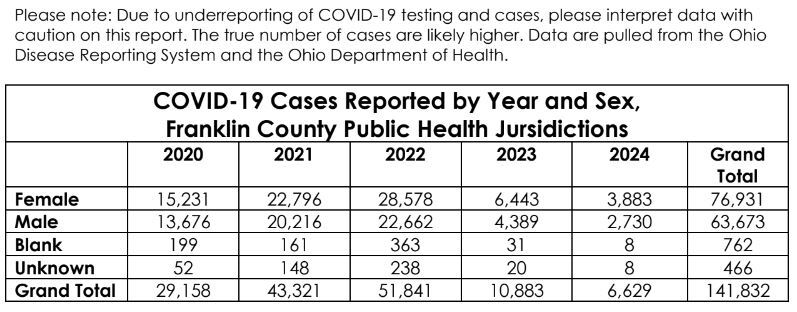
- Due to reporting changes, Epidemiology Reports are published quarterly.
- The report has been updated to reflect Quarterly community levels.
- Review the full epi report here.
- Please note: all the data shown in the report is only representative of Franklin County Public Health’s jurisdictions which exclude Worthington and the City of Columbus.
- Click here for the recent report.
|
|
Lisa Dent, Associate Director of Equity and Inclusion |
|
- Equity Advisory Council (EAC ) Monthly Meeting will be held on January 27.
- It will feature the launch of our strategic planning process with RAMA Consulting Group and members will hear developments from our Tobacco Prevention & Cessation Health Equity Workgroup.
- FCPH will support the 4th Annual Martin Luther King, Jr. Scholarship Breakfast, City of Reynoldsburg on January 18 at the Reynoldsburg Community Church.
- In partnership with Columbus Public Health and other community partners, FCPH will co-sponsor the Black History Month event on February 8 at the King Arts Complex - further details coming.
|
|
Bird Flu
-
The Current Risk to the General Public is Low
- The detections of H5 viruses in wild birds, poultry, some mammals, and in two people in the United States do not change the risk to the general public's health, which CDC considers to be low.
- However, due to outbreaks in domestic commercial and backyard poultry flocks, and infections in wild birds and some mammals, some groups of people with job-related or recreational exposures to birds or other H5 virus-infected animals, are at greater risk of infection.
- People with job-related or recreational exposures to birds or infected mammals should take appropriate precautions to protect against bird flu.
- Due to widespread circulation of A(H5N1) virus in wild birds and poultry and sporadic infections in mammals, additional sporadic human cases would not be surprising.
- Right now, the H5N1 bird flu situation remains primarily an animal health issue.
- The CDC is watching this situation closely and taking routine preparedness and prevention measures in case this virus changes to pose a greater human health risk.
- Signals that could raise the public health risk include multiple, simultaneous reports of human infections with A(H5N1) viruses following exposure to birds or other animals, or identification of spread from one infected person to another.
- No known human-to-human spread has occurred with the contemporary A(H5N1) viruses that are currently circulating in birds in the United States and globally.
- In other countries, sporadic human cases of human infections with the A(H5N1) viruses most common in birds globally have been reported since 2022 mostly following exposure to infected poultry. During past A(H5N1) bird flu virus outbreaks that have occurred in poultry globally, human infections were rare.
- Globally since 2003, 23 countries have reported rare, sporadic human infections with A(H5N1) bird flu viruses to the World Health Organization (WHO).
- Monthly case counts are available on the WHO website.
- The spread of bird flu viruses from one infected person to a close contact has occurred rarely in other countries in the past, and when it has happened, it has been limited and not sustained, and did not spread beyond close contacts.
- Visit the CDC website here for more information.
-
CDC Confirms First Severe Case of H5N1 Bird Flu in the United States
- See the news release here.
- FCPH is actively monitoring CDC reports and reviewing our pandemic flu plans.
- We will continue to keep our residents and partners informed of any new developments.
|
|
Norovirus
-
Understanding Norovirus: Symptoms, Risks, and Prevention
- Norovirus, often called the stomach flu, is a group of viruses that cause severe vomiting, diarrhea, and stomach cramping.
- Symptoms may also include low-grade fever, chills, headache, muscle aches, and fatigue.
- People often experience a sudden onset of illness, with frequent vomiting or multiple episodes of diarrhea.
- Most individuals recover within 1 to 2 days. Diarrhea is more common in children, while vomiting tends to affect adults more.
- Norovirus spreads through contact with the feces or vomit of infected individuals.
- While norovirus infections are generally brief in healthy individuals, young children, the elderly, and those with pre-existing health conditions are at higher risk for severe or prolonged illness.
- Since antibiotics are ineffective against viral infections, prevention is key. Norovirus spreads rapidly, particularly in healthcare facilities, daycare centers, schools, and similar environments where close contact is common.
-
Handwashing is crucial to preventing infection, especially after:
- Touching shared surfaces like elevator buttons or door handles.
- Shaking hands with others.
- Caring for someone who is ill.
- Changing diapers.
-
How Norovirus Spreads:
- Direct contact with an infected person.
- Consuming contaminated food or drinks.
- Touching surfaces or objects contaminated with norovirus and then touching your mouth or food.
-
Tips to Prevent the Spread of Norovirus:
- Stay home for at least two days after symptoms resolve.
- Wash your hands frequently with soap and water for at least 20 seconds.
- Wash laundry with hot water.
- Clean and disinfect contaminated surfaces thoroughly.
- Rinse fruits and vegetables carefully and ensure shellfish are properly cooked.
- By following these guidelines, you can reduce the risk of infection and help prevent the spread of norovirus.
- Visit the CDC website here for more information.
|
|
Karin Kasper, Food Safety & School Health Division Manager |
|
- The food license renewals will be mailed out at the end of January.
- Payments start Feb 1st and are due by March 1st to avoid a late fee.
- The website has been updated to reflect 2025 forms here.
- For questions, please contact Karin Kasper, Food Safety & School Health Division Manager at KarinKasper@franklincountyohio.gov.
|
|
Lauren Putz, Overdose Fatality Review Coordinator |
|
- The Overdose Fatality Review (OFR) team released its first quarterly newsletter in December which featured a recap of the group’s efforts in 2024, recommendations for addressing the root causes of overdose deaths and a message from the Franklin County Coroner.
- The group is seeking community members to join their Community Action Group to help implement local projects.
- Also, a quick reminder that you can still sign up to receive FREE naloxone by mail!
|
|
Lindsey Rodenhauser, Division Manager – Care Coordination |
|
- Care Coordination continues to accept referrals for residents who may need connection to a Community Health Worker.
- Due to being at capacity, it may take 4-6 weeks before a referred resident is contacted by a Community Health Worker.
- For more information, visit the website here.
|
|
|
|
|