|
Having trouble viewing this email? View it as a Web page.
Table of Contents:
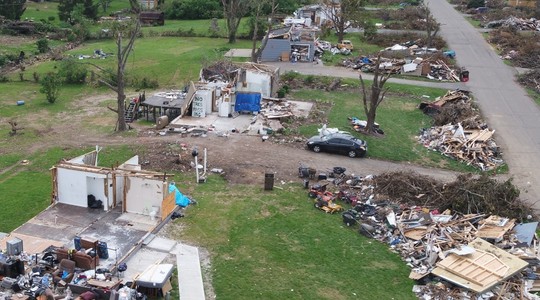 Twenty-one tornadoes caused damage in several Ohio counties in late May
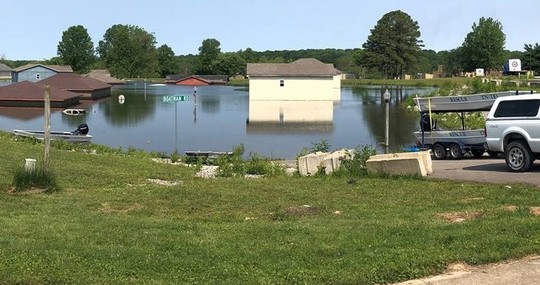
On May 27-29, severe weather moved through Ohio resulting in 21 confirmed tornadoes, affecting multiple counties. These storms affected the health, safety and welfare of Ohioans and resulted in significant damage. Both residential and commercial structures and critical infrastructure were negatively impacted, including power outages and public drinking water systems.
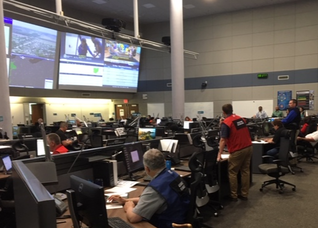
The State Emergency Operations Center (EOC) transitioned to a partial activation May 28. Governor Mike DeWine issued a state declaration for Greene, Mercer and Montgomery counties that afternoon so services from state agencies and departments could assist impacted local counties and provide resources.
Partners from 13 of the 15 Emergency Support Functions (ESFs) deployed to the State EOC during the partial activation. By mid-June, the State EOC processed 37 missions in support of local efforts. The engagement of ESFs led to the deployment of bottled water, road signage, fire equipment, generators, search and rescue, transportation assets, communications, and security to impacted counties. The State EOC also monitored response and recovery efforts in affected areas including the re-pressurization of public water systems, power restoration and shelter operations for impacted residents. Many individuals from across state government as well as non-governmental organizations were critical to the work of the State EOC during this response.
On June 11, following two weeks at partial activation, the State EOC Center transitioned to assessment and monitoring. The State EOC continues to assist with recovery efforts and debris management. State, regional and local partners continue to ascertain short and long-term recovery needs to long term housing needs, case management, and crisis response teams to those impacted. The State EOC stayed at assessment and monitoring for 15 days.
|
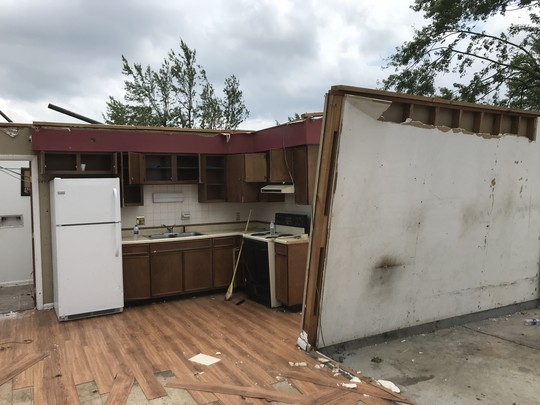 Roof and walls around a garage and kitchen in this Trotwood home in Montgomery County were destroyed by a EF 4 tornado in late May.
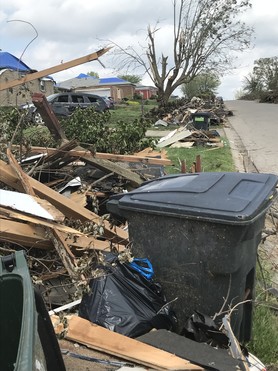
Ohio has received federal assistance for individuals in 11 counties impacted by tornadoes, severe storms, straight-line winds, flooding and landslides in late May.
President Donald Trump issued a Presidential Disaster Declaration for federal assistance for individuals and businesses after 21 tornadoes touched down during severe storms that passed through Ohio during the evening of May 27 and early morning of May 28.
Governor Mike DeWine requested the federal disaster declaration in early June. The President granted the request June 18.
“When I spoke with President Trump after these tornadoes, he vowed to provide any assistance he could, and I am grateful that he followed through today on that promise to help those impacted by these storms,” said Governor DeWine. "The Presidential Disaster Declaration will help those working to rebuild their homes and their lives."
The declaration was initially issued for Auglaize, Darke, Greene, Hocking, Mercer, Miami, Montgomery, Muskingum, Perry, and Pickaway counties. Mahoning County was added later, bringing the total to 11 Ohio counties affected by the same storm system.
Individuals and businesses impacted from the storms can register for FEMA assistance online at www.disasterassistance.gov or by calling 1-800-621-3362 (TTY 1-800-462-7585).
A preliminary damage assessment the first week of June by FEMA, U.S. Small Business Administration (SBA) and the Ohio Emergency Management Agency, identified 942 homes and buildings that were either destroyed or significantly damaged and 837 additional homes and buildings that suffered minor damage or were slightly affected.
The federal disaster declaration currently only applies to the 11 counties listed above. This declaration is time-limited to address damages from May 27-29. Four FEMA Disaster Recovery Centers were also opened in June.
Ohio requested Public Assistance for five counties (Columbiana, Greene, Mahoning, Mercer and Montgomery) in late June. That request is still pending before FEMA.
|
 |
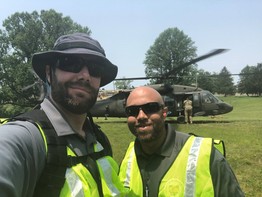
Ohio Task Force 1 (OH-TF1) and the Butler County Incident Management Team (IMT) were part of more than 1,500 trained emergency responders who took part in the nation's largest civilian based search and rescue exercise ever completed in the United States. This exercise took place at the Muscatatuck Urban Training Center (MUTC), Indiana, June 1-7.
For those unfamiliar, MUTC offers users a globally unique, urban and rural, multi-domain operating environment that is recognized as the Department of Defense’s largest urban training facility. This environment includes a physical metropolitan infrastructure; a 1,000-acre urban and rural landscape with more than 200 brick and mortar structures; a managed airspace; a 180-acre reservoir; 1.5 miles of subterranean tunnels. Everything in the mock city and surrounding property– including the people – is “in play.” The scenario for this exercise was a response to a simulated earthquake in Indiana.
Ohio EMA’s Planning, Training and Exercise Branch Chief Matthew McCrystal, and Glynn Pleasant, exercise coordinator, were able to observe the capabilities of multiple task forces, including those from California, Colorado, Indiana, Nebraska, Tennessee, Illinois, Australia and Canada. Additional participants included FEMA, North American Aerospace Defense Command, United States Northern Command, U.S. Army Corps of Engineers, Civil Air Patrol, Illinois Army National Guard, Indiana Department of Homeland Security, Tennessee Army National Guard and the Israel Defense Forces. They said it was especially exciting to see the 14 Blackhawk helicopters and three CH-47 helicopters demonstrate their capabilities including personnel and equipment transport.
Capabilities observed included water rescue, confined space rescue, medical amputation for trapped persons, heavy equipment lift, ruble pile search and rescue, sling loading, hoist operations, cribbing, bridge operations support, incident support operations, incident management operations, real time aerial imagery and other search and rescue functions.
Only one week prior, both OH-TF1 and Butler County IMT supported real-world response operations in the Ohio Miami Valley area due to the tornadoes and severe weather impacts.
|
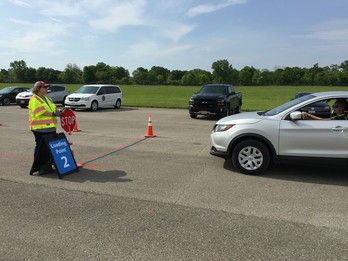
The Ohio EMA Logistics Branch was busy over the last year planning for and exercising commodity distribution. Working with the Ohio National Guard, the branch identified a state staging area for the short-term storage of commodities and other supplies before shipping them to county points of distribution (POD). The branch also built a state POD kit that can be deployed and run as a state asset to support county POD operations or loaned directly to counties who wish to run their own POD operations, but need equipment support.
For two days in May, Ohio EMA deployed the state POD kit to participate in the FEMA’s annual Eagle Rising staging area exercise conducted at Wright Patterson Air Force Base. During the exercise, Ohio Department of Public Safety Emergency Resource Team members and personnel from the Ohio Military Reserve set up and ran a type III POD, capable of serving 5,000 people per day. During the exercise, the POD received “commodities and supplies” from the FEMA staging area and distributed them to the public. The exercise provided the opportunity to train staff, practice and validate the newly developed POD operations procedures. The exercise proved timely as many of the procedures exercised were put into operation by the branch during the response to the tornadoes that struck Montgomery and Greene counties Memorial Day evening.
The state POD kit is a 24-foot trailer loaded with enough supplies to support POD operations serving up to 10,000 people per day. It is available to all counties for use during events/incidents and exercises. Counties interested in learning more are encouraged to contact the Ohio EMA Logistics Branch at 614-799-3680 or 614-799-3670 for more information.
|
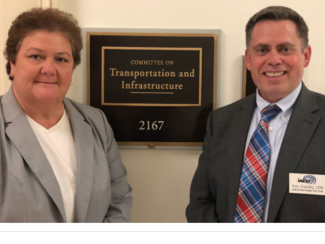
Ohio EMA Executive Director Sima Merick (left), in her role as Vice President of the National Emergency Management Association, and Hamilton County's Nick Crossley (right), USA Immediate Past President of the International Association of Emergency Managers, testified before the U.S. House of Representatives Committee on Transportation and Infrastructure’s Subcommittee on Economic Development, Public Buildings, and Emergency Management hearing on disaster preparedness; the Disaster Recovery Reform Act (DRRA) implementation; and FEMA readiness in late May.
|

Eleven Butler County school districts held a full-scale safety exercise on June 18 at the Ross Local High School and Middle School campus in Hamilton. This exercise simulated an active shooter at a board meeting, taking place in the middle school, while numerous activities were occurring throughout the campus, including sporting events, conferences and athletic practices. The safety exercise ran from 8 a.m. to noon and involved nearly 200 students and adults. This is the first time in Butler County history that a safety exercise of this scope occurred.
“This simulated a complex, coordinated event involving multiple first responders, community partners, county and state agencies, and participating school districts,” said Katharine Clayton, director of public school safety for the Butler County Educational Service Center (BCESC).
The purpose of the full-scale safety exercise is to provide a hands-on or physical test to evaluate a school district’s emergency operations plan and the district’s emergency preparedness in handling this type of event. Every district in Ohio is required to conduct at least one annual emergency management test as defined in the Ohio Revised Code. A district can conduct a different type of test within a three-year cycle, including a tabletop, functional, or full-scale exercise. The exercise met the requirements of mobilization of personnel and equipment along with activating an incident command post to coordinate all response functions. This exercise allowed these participating districts to meet the requirements of the full-scale exercise: Butler Tech, Edgewood, Fairfield, Hamilton, Lakota, Madison, Middletown, Monroe, New Miami, Ross and Talawanda.
Participating agencies included: the Butler County Emergency Management Agency and the Ohio Emergency Management Agency, Ross Township police and fire departments, Butler County Sheriff’s Office, Morgan Township Fire and EMS Department, Colerain Township Fire and EMS Department, UC-West Chester Hospital and Hamilton County Educational Service Center.
The BCESC also invited numerous school resource officers from participating school districts to participate and observe.
|
Jocelyn Fykes is the newest member of the Ohio EMA Grants Branch, serving as a Grants Specialist and Disaster Service Coordinator. Her first exposure to disasters was in Thailand after her family’s Christmas vacation was interrupted by the 2004 tsunami. After receiving her Bachelor's degree from the University of Massachusetts, she joined the AmeriCorps St. Louis Emergency Response Team where she worked a variety of disasters all over the country.
After a Master's degree in social work from Western Kentucky University, she began coordinating critical incident stress management teams in response to small and large scale incidents with the Kentucky Community Crisis Response Board. She moved to Vermont and administered federal Temporary Assistance to Needy Families grant programs with that state. In Ohio, prior to joining Ohio EMA, she served as an emergency preparedness planner at Morrow County Health Department. Fykes can be reached at jbfykes@dps.ohio.gov 614-799-3832.
To gather more comprehensive spending data, Laura Adcock, Ohio EMA’s disaster recovery branch chief, and colleagues at the State Office of Budget and Management developed a system to capture cross-agency disaster costs. Their efforts were highlighted recently by the Pew Charitable Trusts, and can be found here.
The Federal Emergency Management Agency, in coordination with the FCC, will be conducting a nationwide test of the Emergency Alert System (EAS) on August 7, at 2:20 p.m. If conditions on the day of the test require rescheduling, a secondary test date is scheduled for August 21.
The EAS Test Reporting System (ETRS) is now open for 2019 filings. EAS participants must renew identifying information required by ETRS Form One on a yearly basis and file results of the 2019 nationwide test. The ETRS is the online system in which EAS Participants must file identifying information, day-of-test data, and post-test data related to a nationwide test. ETRS provides several new features that ease the data-entry burden on EAS Participants, encourage timely filings, and minimize input errors.
- On or before 11:59 p.m. EDT, August 7, EAS Participants must file the “day of test” information sought by ETRS Form Two.
- On or before Sept. 23, EAS Participants must file the detailed post-test data sought by ETRS Form Three.
For more information, go to https://www.fcc.gov/general/eas-test-reporting-system.
|