|
Having trouble viewing this email? View it as a Web page.
Table of Contents:
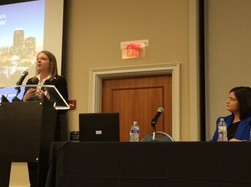 April Taylor, left, City of Orlando Office of Emergency Management, and Kathy
DeVault, Office of Orlando Mayor Buddy Dyer, gave Ohio Emergency Management Spring Conference attendees insight into hot the City of Orlando's preparedness efforts helped in their response to the shooting at The Pulse nightclub in Orlando, Florida, which became the site of
the deadliest mass shooting in U.S. history.
“In
regard to training and exercises, we always exercise for hurricanes – what to
do before, during and afterwards. But in 2013 we started conducting school active
shooter exercises,” said Taylor. “And in 2015 we had an active shooter tabletop
exercise where the scenario involved a civil disobedience incident in the
downtown corridor.”
Taylor
said the trainings and exercises got other agencies and organizations to see
how they would be involved in a non-hurricane incident.
On
Saturday night, June 11, Pulse nightclub hosted Latino Night. About 300
people were there. Just before 2 a.m., a gunman entered with an assault rifle
and handgun and started shooting. Forty-nine people were killed and more than 50 injured.
“If you
can say anything good came out of it, the Pulse was located within two blocks
of the only trauma hospital in the city,” Taylor said. People drove the injured
to the hospital before fire trucks and EMS arrived. “And because of that, many
lives were saved.”
Taylor
noted that 14 agencies were initial responders within the first
six hours of the event. The emergency operations center operated at a Level 1
activation, June 12-22. An emergency information (call) center was established.
It initially started with 12 phones and expanded to 23. Taylor said in the
course of 10 days, the center received more than 6,800 calls with more than half
of them coming in within the first 24 hours. She said the emergency info center
was later manned by American Red Cross staff who were trained in crisis
management.
The
city needed a reunification center – a place away from the hospitals and the
nightclub where family and friends could go to wait for word of their loved
ones. They first used a senior center which initially worked well, until
security and parking became a problem, especially with media crowding in.
By
Wednesday, June 15, the reunification center was moved to a family assistance center
(FAC). DeVault, who works in the mayor’s office, led operations of the FAC.
“The
FAC was a huge partnership with about 35 to 40 agencies,” said DeVault. She
said the airlines were very helpful, flying family members to and from Orlando
for funeral or hospital visits. She noted that the Attorney General’s Office
helped with the titles of the deceased individuals’ cars, issuing of death
certificates and Social Security benefit information.
“The
Family Assistance Center was to be a safe place for the families,” said
DeVault. “One thing the FAC could not do was shield them from the media. Local
media was respectful. National media, not so much.” DeVault said the FAC relocated
to the Camping World Stadium (Orlando Citrus Bowl), where there was ample
parking, better security for family members, and a designated area for media.
DeVault
noted that for every person deceased, there were about 10 to 12 people
impacted. She said it took more than 1,200 people over the course of eight days
to assist the families of the deceased and injured.
Back to Top
|
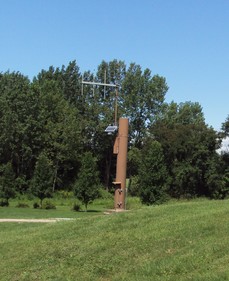 The Ohio EMA Communications Branch, in conjunction with the
City of Columbus Water and Sewer District, are working to expand the Columbus
rain gauge network. The Columbus rain gauge network works in conjunction with
the Franklinton Floodwall Project, which was designed and built in 2004 by the
U.S. Army Corps of Engineers to withstand up to a 500 year flood.
The five new
rain gauge sites will bring the total number of Columbus rain gauges to 46. These five new gauges sites are positioned in the Upper Scioto Watershed
to provide additional ground saturation data to the National Weather Service.
This additional data will aid the National Weather Service in providing
accurate flood guidance for the City of Columbus and Ohio residents along the
Scioto, Olentangy and Ohio Rivers. Locations for the new gauges include
Northmor (Morrow Co.), Caledonia (Marion Co.), Richwood (Union Co.), Mt.
Victory (Hardin Co.) and Bellefontaine (Logan Co.).
All of the Ohio EMA rain
gauges, USGS river gauges and the City of Columbus rain gauges can be viewed on
the Ohio EMA STORMS website storms.ema.state.oh.us.
Back to Top
|
|
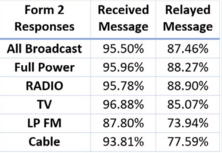
Ohio EMA's Communication Branch recently received a report about the Sept. 28 FEMA Integrated Public Alert and Warning System (IPAWS) Program Management Office's (PMO) second nationwide EAS Test. This test exercised IPAWS message distribution via the Emergency Alert System (EAS).
The test message origination was
observed by a representative from the White House Military Office, and Wade Witmer, Deputy Director
of the IPAWS PMO. Federal Communication Commission (FCC) staff were on the Test Management call as well. According to the report, test observations and reports
fell within expected norms based upon observations during previous regional testing efforts. There
are a number areas for improved performance, most of which require more attention to EAS device
maintenance and configuration by individual EAS Participants.
Both the cable and television industry
are now more aware of how their middleware and station automation products handle (or mishandle)
EAS messages and need continuing encouragement to ensure that these internal systems will properly process and pass EAS messages
to their customers/viewers.
Back to Top
|
At the Spring Directors Conference in Columbus in April, eight new county EMA directors were recognized and four retirements were highlighted.
New Directors:
- Barb Davis, Brown County;
- Jim Freeman, Champaign County;
- Melissa Havens, Fayette County;
- Roger Peterson, Geauga County;
- Cesalie Gustafson, Hocking County;
- Tim Dickerson, Pike County;
- Paul Minney, Ross County; and
- Glen Kelly, Washington County.
County Director Retirements:
- Athens County Director, Fred Davis retiring May 19;
- Fayette County Director, Fulton Terry retiring April 28;
- Summit County Director, Valerie DeRose retiring June 30; and
- Tuscarawas County Director, Patty Levengood retiring June 30.
Back to Top
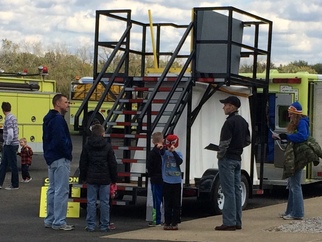 Ohio
EMA's Mitigation Branch has a mobile residential safe room display available
for use at any upcoming county fairs and festivals.
The safe room display
model was developed by the Ohio Emergency Management Agency – Mitigation Branch
to educate citizens on wind and tornado mitigation. Safe rooms are the
only way to mitigate the life safety threat posed by tornadoes.
This
display model was built using an in-ground safe room constructed of
polyethylene rotational molded plastic sitting on top of a custom built
trailer. When this unit is properly installed, only the air vent and door
are visible above ground.
Both the air vent and door are designed to meet
safety and construction criteria described in FEMA publication 320 and FEMA
publication 361 titled, Design and Construction Guidance for Community Safe
Rooms. These publications describe many alternative designs for safe room
construction. Examples of some of these designs include: above ground
exterior safe rooms, safe rooms designed specifically for basements and
garages, closet retrofits etc. Any safe room that is constructed should
comply with these design criteria to ensure that the safe room provides “near
absolute protection” for tornadoes and high wind.
If you are interested
in borrowing the display, please contact the Mitigation Branch as soon as
possible as available dates go quickly. For any questions or to schedule
the safe room display contact Steve Ferryman, Mitigation Branch Chief at
614-799-3539 or saferryman@dps.ohio.gov
Back to Top
|
 Organizations from across Summit County participated in an Integrated Emergency Management Course, specifically designed to simulate county-level emergencies in Summit County, at the National Emergency Training Center in Emmitsburg, Maryland in April.
This Federal Emergency Management Agency (FEMA) training included coordinated response activities, planning for multiple hazards and situational awareness for public officials and emergency responders.
Training included a tabletop exercise and a simulation incident allowing course members to work together in a prepared high impact situation that may be likely to affect all included entities. The class allowed members to work within an emergency operation center to increase awareness of how their agencies may interact during a crisis situation. Roles and responsibilities were highlighted and strengthened to prepare for real-life activities.
“Engaging in this type of simulation exercise provides our first responders with the knowledge to prepare solid response and recovery plans,” County Executive Ilene Shapiro said. “In order to be prepared and have appropriate responses, these types of trainings provide great benefits as we work to ready our county for possible unforeseen circumstances.”
"With advances in technology, we face new and changing threats and hazards. While we hope and pray that our community is never subjected to a large scale emergency, it is essential that we remain prepared for a wide array of possible disaster situations, both natural and man-made,” Mayor Horrigan said. “Having reviewed and tested our emergency management structure, I can say with confidence that our community’s leaders and first responders are well-prepared to address an emergency situation of any size.”
Costs for this course were covered by FEMA – Federal Emergency Management Agency training budget. Additional fees were covered by Summit County and Ohio EMAs.
Participants included Summit County Executive Ilene Shapiro, City of Akron Mayor Dan Horrigan, City of Fairlawn Mayor William Roth, Springfield Township Trustee Debbie Davis, Vito Sinopoli representing Bath Township and Akron-Canton Airport, Akron Zoo, Akron Children’s Hospital, American Red Cross, AT&T, Emergency Management personnel from both Ohio and Summit County, First Energy, Portage Path Behavioral Health, Public Safety Personnel from Akron, Cuyahoga Falls, Copley, Green, Macedonia, New Franklin, Stow, Twinsburg and Summit County Sheriff, Summit County Office of Information Technology, Summit County Educational Services, Summit County Executive’s Office, Summit County Public Health and the University of Akron.
Back to Top
|
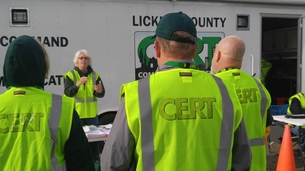 April 22, Licking County EMA, partnering with the Licking County CERT
team, conducted a damage assessment exercise
in the Village of St. Louisville.
Homes
and businesses were marked up to depict damage sustained from both flood and
wind. Village residents volunteered to
play the roles of disaster survivors.
Earlier this
year John Wieber, deputy director, Licking County EMA, reached out to the Ohio
EMA for technical assistance in developing an exercise for damage
assessment. Staff members Brigitte
Bouska, Disaster Recovery Branch, Dan Endrizzi, Regional staff and Rhonda
Meggitt, Preparedness Branch, collaborated to provide the subject matter
expertise necessary for a successful exercise.
The purpose
of the exercise was for the CERT team members to practice and apply damage
assessment skills learned in the classroom, to a field experience, during “blue
skies,” and in a non-stressful, learning environment.
Other
players included Incident Command, ARES, the Salvation Army, the St. Louisville
Police Dept. and EMS. Although a very
brisk day the exercise provided a valuable experience for all those who
participated.
If you have
any questions, please contact Laura Adcock, Disaster Recovery Branch Chief, at
614-799-3667 or ladcock@dps.ohio.gov.
Back to Top
|
This is a drill. This is a drill. This is a drill.
An influx of patients were seen in hospitals across
Northwest Ohio on April 12th, in response to a potential novel virus. Organized
by the Northwest Ohio Healthcare Emergency Management Coalition, an
organization within The Hospital Council of Northwest Ohio overseeing emergency
and disaster preparedness planning for the region’s hospitals, healthcare
systems, public health jurisdictions and public information officers, the
exercise taxed emergency departments and health departments alike. Players from
35 hospitals, 17 health departments, multiple County Emergency Management
Agencies, Ohio Emergency Management Agency and first responders participated in
the Coalition’s full-scale exercise as players, evaluators and simulation cell
actors.
Hospital infection control and public health epidemiologists
opened lines of communication on the Class A Reportable Disease and shared
information on the identification of the pathogen through laboratory
confirmation. The patient was identified and tested after patient intake
questioning and symptoms led to suspicion of the potential novel virus. After
disease identification, hospitals provided for isolation and 48 hour continuous
care of the patient(s) including the transportation of a patient in an IsoPod
unit from ProMedica Defiance Regional Hospital to St. Rita’s Medical Center
(Lima), the Region’s only Tier 1 hospital. Public Health partners also set up
Points of Dispensing (PODs) to distribute antiviral medications to the general
public.
The scenario tested changes to local and regional Emerging
Infectious Disease policies that were identified in tabletop exercises held in
the first quarter of the year. Additional target areas for evaluation included:
the healthcare systems role in community preparedness involving coordination
with emergency management and public health (among other agencies and partners);
identifying gaps and prioritizing assets, resources and services; information
sharing; sustainment of redundant, interoperable communication systems; medical
surge including operations with EMS; responder safety through pharmaceutical
protection and personal protection equipment; public health emergency
preparedness capabilities; medical countermeasure dispensing;
non-pharmaceutical interventions; and public health surveillance and
epidemiological investigation. This large-scale incident featured data entry
into state-wide patient and bed tracking programs; requesting, obtaining and
processing the Strategic National Stockpile; the opening of Hospital Command
Centers (HCC), public health Department Operation Centers (DOC) and regional
command structures; and use of the MARCS radio system.
This exercise, based on a biological event resulting in an
infectious disease impacting hospitals, health care partners, public health
departments and emergency management partners, was a true test of the Northwest
region’s capabilities to plan and execute those plans to respond to this type
of natural disaster incident.
Back to Top
On
June 8, the Ohio EMA will host the Federal Emergency Management
Agency (FEMA) Procurement Disaster Assistance Team as they instruct
Procurements under FEMA Awards: Requirements for Recipients and
Sub-recipients When Procuring Services and Supplies with Federal Funding Under
the Stafford Act.
The target audience is State, Local, and Tribal
emergency management personnel, and private non-profit agencies to familiarize
them with the federal procurement standards. The goal of this training is
to give guidance, reference materials, and links to sources of additional
information which will allow applicants to reduce common non-compliance issues
that result in the de-obligation of federal disaster assistance funds.
The course is currently open for registration at the DPS Training Campus.
Ohio EMA encourages the County EMA offices to enroll and to share this training
opportunity with potential applicants to the FEMA Public Assistance
Program. If you have any questions, please contact Laura Adcock, Disaster
Recovery Branch Chief, at 614-799-3667 or ladcock@dps.ohio.gov.
Thursday, June 8, Ohio EMA, From 08:00 AM – Noon:
EMA_PROC - Procurements under FEMA Awards: Requirements for Recipients and Sub-recipients When Procuring Services and Supplies with Federal Funding Under the Stafford Act
In this four-hour session FEMA will provide this procurement training to potential grant recipients and sub-recipients (i.e. state and local governments, and nonprofit organizations) to familiarize them with the federal procurement standards. The goal of this training is to give guidance, reference materials, and links to sources of additional information which will allow applicants to reduce common non-compliance issues that result in the de-obligation of federal disaster assistance funds. Topics discussed include the following: Procurement Standards for States; Procurement Standards for Other Non-Federal Entities and; Differences Between the New and Old Procurement Standards
** To enroll for this training enter PROC in the catalog ID block in the course catalog on the Public Safety Training Campus
Also offered that is is FEMA Damage Assessment Course, from 1 to 3 p.m.
OH607 PA Cost Documentation / Damage Assessment Course
This workshop introduces students to the FEMA Public Assistance (PA) Program by addressing the basics of damage assessment, cost documentation and procurement. The FEMA PA Program provides financial assistance to state and local governments and certain private non-profit organizations for emergency work and infrastructure repairs/replacement following disasters. This workshop is designed for records keepers, administrative and fiscal personnel responsible for cost documentation and/or procurement
** To enroll for this training enter 607 in the catalog ID block in the course catalog on the Public Safety Training Campus
Target Audience for Both Trainings: The primary participants for this class are County EMA offices, local governments (Townships, Villages, Cities), schools, authorities and special districts, and certain private non-profit organizations.
Back to Top
In a press release from The White House on April 28,
President Donald Trump announced his picks for FEMA Administrator and Assistant
Administrator.
Trump announced his intent to nominate Brock Long of North
Carolina to be FEMA Administrator. Long has more than 16 years of experience
assisting and supporting local, state, and federal governments with building
robust emergency management and public health preparedness programs. Since
2011, he has worked as Executive Vice President at Hagerty Consulting, where
he provides strategic direction and leadership to the firm’s full complement
of emergency management programs and professionals. He has served as
Project Executive for more than 50 projects in all parts of the
United States, ranging from complex attack scenario exercises to designing
multi-jurisdictional, all-hazard evacuation plans for major Urban Area Security
Initiative designated jurisdictions.
From 2008-2011, Long served as Director of Alabama’s
Emergency Management Agency (AEMA) under Governor Bob Riley. As Director,
he served as the State Coordinating Officer for 14 disasters, including
eight presidentially-declared events. Long also served as an on-scene State
Incident Commander for the Alabama Unified Command during the Deepwater Horizon
oil spill.
Prior to his position as Director at AEMA, Long was
a FEMA Regional Hurricane Program Manager, FEMA Hurricane and Evacuation
Liaison Team Leader, and statewide school safety coordinator for the Georgia
Emergency Management Agency. His areas of expertise include strategic emergency
operations planning, exercise, evacuation, school safety, recovery management,
and response logistics.
Thomas DiNanno of Florida, will be nominated as Assistant FEMA
Administrator, Grant Programs. According to last week’s news release, DiNanno
is an accomplished executive with more than 20 years of management and
consulting experience in both government and the private sector. He has
successfully worked at the highest levels of Federal government in developing
security and counterterrorism programs. DiNanno has served as a consultant to major
chemical and petrochemical companies and security system and technology
providers, including more than a dozen Tier 1 CFATS sites.
From June 2004 to March 2007, DiNanno served as Deputy
Assistant Secretary for Infrastructure Protection at the Department of Homeland
Security, where he was responsible for DHS initiatives to identify and protect
the Nation’s physical and information infrastructure. Previously DiNanno served
as Special Assistant to the Chief of Staff in the Department of Homeland
Security, and in the White House Office of Homeland Security as Director of
Corporate Relations from November 2001 to March 2003.
DiNanno received his MS in Business and Urban Planning from
Massachusetts Institute of Technology in 1999, an MA in Government
Administration & International Relations from the University of
Pennsylvania, and the Fletcher School of Law & Diplomacy in 1993. He
received a BA in Economics and Latin American Studies from Middlebury College
in 1989.
Back to Top
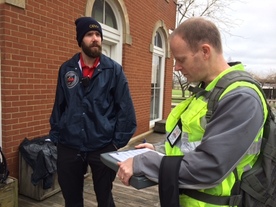 On March 28, 31 DPS-Emergency Resource Team (DPS-ERT)
members participated in the Second Annual Damage Assessment Exercise at the
Ohio History Center, Ohio Village with the purpose of enhancing and perfecting
their skills.
In addition to the DPS-ERT members, three members from the
Franklin County EMA and one member from the Fairfield County EMA joined the
team to assess damage of 18 stations.
All DPS-ERT members performed at or above expectations, said
Rhonda Meggitt Ohio EMA planner. Feedback at the conclusion of the exercise
indicated that the scenarios were applicable, the coordination and organization
was exceptional, communication was solid, and minor suggestions for improvement
was provided. Meggitt said the exercise was proven to be a great success
and reassurance that the DPS-ERT will be of great service and resource for the
local Emergency Management Agencies when called upon.
Back to Top
|
The OAKS Supplier Self-Registration module is now available, according to the State of Ohio Office of Budget and
Management. The automated process is for new State of Ohio suppliers
to register online using the module.
Helpful Resources:
-
·
FAQs are available
- ·
Training Aids to
guide new suppliers through the registration process
- ·
Training
Video to assist suppliers with the Ohio Supplier Portal.
Please direct new
suppliers to register at www.supplier.obm.ohio.gov and
click ‘Register a New Account’.
Additionally, existing suppliers
can locate the supplier change forms and any other required documentation on
the website, according to OBM.
Teresa Peters, chief of Ohio EMA's Fiscal Branch, said the new system allows counties and others an opportunity to update their contact information themselves.
"If they don't update their information in our system and the county has an address
change, the check would get mailed to the wrong
place. This web site is the way for them to update their information." Peters said. "It also provides them with Direct Deposit information if they want their county
payments going directly to their bank. "
Back to Top
The Mall Active Shooter Toolkit was
published in late January 2017 and has been downloaded over 225 times including
seven countries and 40 states. The complete
toolkit provides all the materials necessary to plan for and run a table top
exercise for malls and their first responder and emergency management
partners. To access this useful tool
please visit: http://ema.ohio.gov/Exercise_MallActiveShooterToolkitReg.aspx
IF you have any questions about the use
of the toolkit or its included materials please contact: David Nunley
(614) 799-3677 dbnunley@dps.ohio.gov or Keven Clouse (614) 889-7163 kclouse@dps.ohio.gov.
L973
Finance Administration Section Chief (FSC) Course, May 22-24, Offered by the Cuyahoga
County Office of Emergency Management at the Independence
Civic/Recreation Center, 6363 Selig Blvd., Independence, Ohio 44131.
Students must access the following link
to enroll via the Cuyahoga County Public Safety & Justice Services website:
http://ja.cuyahogacounty.us/en-US/052217-fsc.aspx.
The FEMA Application Form must also be completed. For assistance with
registration please contact Serena Steele at ssteele@cuyahogacounty.us
or call 216-348-4392 or 216-443-5700
G272 Warning Coordination, May 2-3, Licking County Regional Communications Center
Severe weather is on the way … how do you
effectively work with the National Weather Service and your local media to
develop and discriminate effective warnings your community? This 2 day course
is the latest in the hazardous weather series of courses produced in
partnership with the National Weather Service (NWS). This course is intended to
help facilitate that process. Course topics include: The Social Dimensions of
Warning Response; Developing Effective Warning Messages; Developing an
Effective Community Warning Process; and Working with the News Media to Create
a Weather Warning Partnership. In addition to lecture and discussion, the
course includes case studies, exercises, and an opportunity for interaction
with representatives of the local news media.
Target Audience: Emergency
management personnel, municipal and corporate, who share some responsibility
for or play a role in planning for a disaster. This is
an “Elective” course for the FEMA Advanced Professional Series (APS)
L449 Incident Command System (ICS) Train-the-Trainer
Course, May 2-5, Ohio EMA
L-449 Incident Command System (ICS)
Curricula Train-the-Trainer (MGT906) prepares participants to deliver EMI's ICS
curricula. Enhance your instructional skills and prepare to deliver FEMA's
Incident Command Systems (ICS) curriculum. While ICS-100 and ICS-200 courses
are addressed, the major emphasis is on ICS-300 and ICS-400. Students will
learn from training professionals how to use adult-learning techniques to get
the best out of the classes you teach. Students will develop and deliver a
training module during the course. This course is 32 hours (four days) and is scheduled
through the State Administrative Agency in cooperation with the Emergency
Management Institute.
OH197
Planning for Access and Functional Needs in Emergencies, May 10-11, Ohio EMA
This two-day course provides participants with the information necessary to utilize
disability and access and functional needs-inclusive practices during emergency
planning. Course objectives include:
- Define access and functional needs and disabilities and
how they differ.
- Define key terms related to inclusive planning.
- Identify appropriate resources to assist in planning
for, and with, adults and children with disabilities
and others with access and functional needs.
OH278 Benefit Cost Analysis (BCA) Workshop,
May 10-11, Ohio EMA
Ohio
EMA is hosting a Federal Emergency Management Agency (FEMA) Benefit Cost Analysis (BCA) Workshop. The workshop goal is to educate participants
on the software and information needed to perform a BCA on a potential
mitigation projects using FEMA’s current BCA software (version 5.2.1). This course will assist participants in
developing quality BCAs to use when developing grant applications for the FEMA
Hazard Mitigation Assistance (HMA) grant programs. Additional information on FEMA’s BCA tool can
be found at: https://www.fema.gov/benefit-cost-analysis. Individuals that are considering applying for
HMA funds this year are strongly encouraged to attend this course.
G557 Rapid Assessment Planning Course, May 11, Stark County
This “free” course provides information and
resources to enable participants to develop an effective Damage Assessment
Program and conduct rapid and effective needs assessments. A good assessment
allows community leaders to prioritize response actions ensuring the greatest
life-saving and life sustaining benefits. Since resources are often limited in
the first few hours of a disaster or emergency an effective rapid needs
assessment allows for the efficient and effective use of those resources.
Likewise, it allows local officials to evaluate their needs and request those
resources that are not available in their jurisdiction to support life
sustaining and life saving measures. This is a “Required” course in the Advanced Professional Series
(APS) program.
G358 Evacuation and Re-Entry Planning, May 18-19, Cuyahoga County
This 12-hour course provides participants
with the knowledge and skills needed to design and implement an Evacuation and
Re-Entry Plan for their jurisdictions. It uses a community’s Vulnerability
Analysis and Evacuation Plan. It also addresses evacuation behavior and
recommends methods to make evacuation and re-entry more efficient. This course
does not address the decision to evacuate or re-enter. This is an “Elective” course in the Advanced Professional Series
(APS) program.
L973
Finance/Administration Section Chief (FSC) Course, May 22-24, Independence, Ohio
This course is designed to provide local
and state-level emergency responders with a robust understanding of the duties,
responsibilities, and capabilities of an effective FSC on an All-Hazards
Incident Management team. These
responsibilities fall into two categories: FSC duties (1) managing the
Finance/Administration Section personnel and (2) managing the finances and
administrative responsibilities during an incident. Exercises, simulations, discussions, and a
final exam enable students to process and apply their new knowledge. Please note: ICS-400 is not required for this
course.
L110 National Emergency Management Basic
Academy (TtT), May 22-26, Ohio EMA
The Federal Emergency Management Agency
(FEMA) recognizes the need to tie training programs to an established set of
emergency management competencies and to a career development program through a
progressive training and education system that includes the foundational-level
Basic Academy. The Basic Academy
provides a structured and progressive framework for acquiring the knowledge,
skills and abilities to meet the challenges of an ever-changing emergency
management environment.
G251 Workshop in Emergency Management
Amateur Radio Resources, June 6, Licking County
This “Free” course provides training
for local communities to prepare for and manage the Mass Care and Emergency
Assistance function effectively. The goal is to prepare community agencies,
organizations, and businesses to work in coordination with Emergency Management
and traditional Mass Care providers to plan for and provide Mass Care/
Emergency Assistance (MC/EA) services to those affected by disaster. It is
designed to develop foundational knowledge of Mass Care and Emergency
Assistance services in the community. It is not a “how to” for sheltering.
Participants will use this information to build community emergency “Action
Items” and to identify gaps in the community’s program.
L962 Planning Section Chief (PSC)
Course, June 12-15, Cincinnati, Ohio
This four-day course design provides local
and state-level emergency responders with a robust understanding of the duties,
responsibilities and capabilities of an effective Planning Section Chief (PSC)
on an All-Hazards Incident Management Team. These responsibilities fall into
two categories: PSC duties (1) managing the planning cycle and (2) tracking
resources and incident status. Exercises, simulations, discussions and a final
exam enable students to process and apply their new knowledge (there is no
charge to attend this course).
L950 Incident Commander Course, June 19-23, Ohio EMA
This five-day course provides local- and
state-level emergency responders with a robust understanding of the duties,
responsibilities and capabilities of an effective Incident Commander (IC) on an
All-Hazards Incident Management Team (AHIMT). These responsibilities fall into
two categories: (1) responding to the incident and command needs of the
incident, and (2) effectively fulfilling the position responsibilities of an IC
on an All-Hazards ICS IMT. Exercises, simulations, discussions and a final exam
enable participants to process and apply their new knowledge.
ICS300 Intermediate ICS, May 1-3, Mahoning County
G272 Warning Coordination, May 2-3, Licking County
ICS300 Intermediate ICS, May 2-4, Summit County
L449 ICS Curricula Train
the Trainer Course, May 2-5, Ohio EMA
ICS400 Advanced ICS, May 3-4, Mahoning County
OH607 PA Cost
Documentation / Damage Assessment, May 5, Portage County
ICS300 Intermediate ICS, May 6-7, Shelby County
ICS400 Advanced ICS, May 6-7, Wayne County
ICS300 Intermediate ICS, May 8-10, Medina County
OH605 IA Damage
Assessment Workshop, May 9, Columbiana County
ICS400 Advanced ICS, May 9-10, Summit County
G386 Mass Fatalities
Incident Response, May 9-10, Wayne County
L146 Homeland Security
Exercise & Evaluation Program (HSEEP), May 9-11, Hamilton County
OH197 Planning for Access
& Functional Needs In Emergencies, May 10-11, Ohio EMA
OH278 Benefit / Cost
Analysis Workshop, May 10-11, Ohio EMA
ICS400 Advanced ICS, May 10-11, Medina County
G557 Rapid Needs
Assessment, May 11, Stark County
ICS-300 Intermediate ICS, May 15-17, Hamilton County
ICS300 Intermediate ICS, May 15-17, Pickaway County
OH607 PA Cost
Documentation / Damage Assessment, May 16, Hamilton County
ICS400 Advanced ICS, May 17-18, Clark County
ICS400 Advanced ICS, May 17-18, Pickaway County
OH606 Recovery from
Disaster, May 18, Vinton County
G358 Evacuation and
Re-Entry Training, May 18-19, Cuyahoga County
ICS400 Advanced ICS, May 18-19, Hamilton County
ICS400 Advanced ICS, May 20-21, Shelby County
L973 Finance/Admin
Section Chief (FSC) Course, May 22-24, Cuyahoga County
L958 Operations Section
Chief (OSC) Course, May 22-25, Franklin County
L110 Emergency Mgmt.
Basic Academy (Train the Trainer), May 22-26, Ohio EMA
OH605 IA Damage
Assessment Workshop, June 4, Richland County
G251 Emergency Management
Amateur Radio Resources, June 6, Licking County
L962 Planning Section
Chief (PSC), June 12-15, Hamilton County
ICS300 Intermediate ICS, June 14-16, Muskingum County
L950 Incident Commander
Course, June 19-23, Ohio EMA
OH605 IA Damage
Assessment Workshop, June 20, Wood County
G290 / G291 Basic PIO Series, June 20-22, Van Wert County
G290 / G291 Basic PIO
Series, August 7-9, Warren County
G361 Flood Fight
Operations, August 8-10, Licking County
OH197 Planning for Access
& Functional Needs In Emergencies, August 14-15, Wayne county
G290 / G291 Basic PIO
Series, August 29-31, Medina County
G775 EOC Management and
Operations, September 7-8, Hamilton County
ICS300 Intermediate ICS, Sep. 12-14, Hamilton County
G428 CERT
Train-the-Trainer Course, Sept.15-17, Ohio EMA
L101 Foundations of
Emergency Management (week 1 & 2), Sept. 18-22 (Week 1) &
Nov. 13-17 (Week 2), Ohio EMA
ICS300 Intermediate ICS, Sept. 19-21, Franklin County
ICS300 Intermediate ICS, Sept. 19-21, Warren County
G557 Rapid Needs
Assessment, Sept. 20, Fairfield County
ICS400 Advanced ICS, Sept. 21-22, Franklin County
ICS400 Advanced ICS, Sept. 21-22, Warren County
G290 / G291 Basic PIO
Series, Sept. 27-29, Butler County
ICS300 Intermediate ICS, Oct. 3-5, Miami County
ICS400 Advanced ICS, Oct. 10-12, Hamilton County
ICS300 Intermediate ICS, Oct. 24-26, Summit County
ICS400 Advanced ICS, Oct. 31-Nov. 1, Summit County
OH605 IA Damage
Assessment Workshop, Nov. 8, Hamilton County
G386 Mass Fatalities
Incident Response, Nov. 30-Dec. 1, Franklin County
L102 Science of Disaster, March 19-21, 2018, Ohio EMA
L103 Planning: Emergency Operations, March 22-23, 2018, Ohio EMA
L104 Exercise Design, June 18-19, 2018, Ohio EMA
L105 Public Information and Warning, June 20-21, 2018, Ohio EMA
|