|
Having trouble viewing this email? View it as a Web page.
Table of Contents:
http://www.weathersafety.ohio.gov/CurrentWeather.aspx (Scroll down to view Ohio).
|
2 February 2017
Right Now: You might need a heavier coat this morning though temperatures won’t be quite as low as first expected. Lingering cloud cover has kept temperatures around 30. With breaks in the overcast the low should be in the upper 20s by sunrise.
Today: With high pressure taking over our weather we can expect some sunshine, but it will be colder. Today will be a partly cloudy to mostly sunny day. With the early morning temperatures starting higher there won’t be much diurnal range. Highs will be around 30.
A fast moving, dry system will bring more clouds tonight and tomorrow, but sunshine returns for Saturday. Sunday’s weather event, snow turning to rain, seems much weaker in later model runs, so not as big a deal. The first of next week will be milder. Expect the next chance of rain, possibly with thunder, on Tuesday.
Today: Partly cloudy, cold. High 31
Tonight: Partly cloudy, cold. Low 18
Friday: Mostly cloudy, cold. High 29
Saturday: Mostly sunny. 12/32
Sunday: Snow and rain, breezy. 25/38
Monday: Partly sunny. 28/42
Tuesday: Rain and showers, milder. 35/53
Wednesday: Mostly cloudy, chance of showers. 42/46
Back to Top
|

Thursday morning outlook: chance the groundhog will see his shadow.
Partly cloudy with and isolated snow shower possible this morning. It will be much colder with temperatures in the low 20s through daybreak and wind chills possibly in the upper single digits.
It will remain cold into the weekend ahead with highs near 30 degrees on Saturday. A rain and snow mix will be possible on Sunday with highs in the middle 30s.
Thursday: partly sunny, cold and breezy. Highs mid 20s.
Friday: mostly cloudy, cold and breezy. Highs mid/upper 20s.
Saturday: partly sunny, breezy. Highs low 30s.
Sunday: chance of rain and snow. Highs mid 30s.
Back to Top
|
 NORTHEAST OHIO - Cold, partly sunny and brisk today with a few scattered lake snow showers. Temperatures in the 20s! Bundle up!
TODAY: Partly/mostly cloudy. Scattered lake snow. | Mid 20s
FRIDAY: Partly sunny. | Mid 20s
SATURDAY: Partly sunny. | Upper 20s/Near 30
SUNDAY: Scattered snow showers. | Upper 30s
MONDAY: Clouds and Sun. | Upper 30s
TUESDAY: Milder! Scattered rain showers. | Upper 40s/50
WEDNESDAY: Colder, scattered snow showers. | Upper 30s
Back to Top
|
 Stretch of dry days ahead of weekend rain and snow
We'll see a few hit-or-miss clouds today but in general, we'll see more sunshine. Temperatures will be colder from start to finish as lows drop to 27 and the high only hits 35. All in all, it's a chilly Groundhog Day forecast.
We'll see more cloud cover on Friday and temperatures will be even colder, only topping out at 32 in the afternoon.
High pressure finally moves in on Saturday to ensure more sunshine and we'll even see some minor improvements in temperatures. Highs increase to 37.
Sunday is a day we've been watching because in the past few days, it has looked like snow and rain would dominate the day. Now, there's a lot less moisture showing up, which takes down our precipitation to just 30% for the day. From what I saw this morning, there was a chance for a quick dusting of snow on Sunday morning, mixing with light rain. But it wouldn't last long. Check back for more updates since this day has been changing.
THURSDAY
Turning mostly sunny
Colder
High: 35
FRIDAY
Mostly cloudy
Cold
High: 32
Back to Top
|
 NATIONAL NEWS
February 2, 2017 Fox News
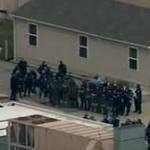
A hostage standoff that unfolded in a Delaware maximum-security prison for nearly a day ended Thursday morning when police stormed the building, rescued one prison employee, and found a guard dead.
Geoff Klopp, president of the Correctional Officers Association of Delaware, told Fox News it’s a “sad day for Delaware correctional officers.”
At least four prison employees were among the initial hostages after a large group of inmates took control of Building C at James T. Vaughn Correction Center in Smyrna. Two of the four were released within hours of the siege, and 46 inmates were freed during negotiations between police and the hostage-takers.
The rescued employee was recovering at a nearby hospital. She was "alive and talking," corrections officials said.
At least 82 inmates remained in the building early Thursday.
Delaware Gov. John Carney said in a statement: "I'm praying hard for the fallen officer's family. This serves as a tragic reminder that members of law enforcement risk their lives every day on behalf of the people of Delaware. We will stand by the fallen officer's family and fellow law enforcement officers during what is an extremely difficult time."
A preliminary investigation suggested the disturbance began around 10:30 a.m. when a correctional officer inside Building C --which houses more than 100 inmates -- radioed for immediate assistance, Delaware State Police spokesman Sgt. Richard Bratz said. Other officers responded to help, and the employees were taken hostage, he said.
One inmate who claimed he was a hostage spoke to The News Journal over the phone Wednesday afternoon, saying the hostage-takers' grievances included President Trump.
“Donald Trump. Everything that he did. All the things that he’s doing now. We know that the institution is going to change for the worse. We know the institution is going to change for the worse,” one inmate said in the call.
That caller said education for prisoners was the inmates' priority, along with effective rehabilitation and information about how money is allocated to prisons.
According to the department's website, the prison is Delaware's largest correctional facility for men, with about 2,500 inmates. It houses minimum, medium and maximum security inmates, and also houses Kent County detainees awaiting trial.
It employs 1,500 corrections officers, according to Bruce Rogers, counsel for the Correctional Officers Association of Delaware.
Bratz initially said five workers were taken hostage, but authorities at a later news conference said the number had been revised to four after one person thought to be among the hostages was found in another part of the prison.
Back to Top
|
 The Newark Advocate Updated Feb 1, 2017
Kent Mallett, Reporter
NEWARK -- Criminals attacked Licking County government, but they did not use guns, knives or explosives. Their weapons were computers. Their motive was profit.
A computer virus discovered late Tuesday night caused Licking County government to shut down its computers and phone systems indefinitely to prevent the virus from spreading, protect data and preserve evidence. The FBI and Bureau of Criminal Investigation have been notified.
The virus, accompanied by a financial demand, is labeled ransomware, which has hit several local governments in Ohio and was the subject of a warning from the state auditor last summer.
All county offices remain open, but online access and landline telephones are not available for those on the county system. The shutdown is expected to continue at least the rest of the week.
Licking County Commissioner Tim Bubb would not disclose the amount of the ransom demand, nor if it would be paid. He said they are taking the advice of cyber-security experts and law enforcement.
"It’s their call to decide if we can get this resolved ourselves,” Bubb said. ”That decision has not been made and is not our call at this point. We're dealing with a criminal element. It's a crime against the people of Licking County and its government."
The commissioner said anyone who needs to do business with county government should physically go to the appropriate office.
"The rest of this week we'll be in a manual mode," Bubb said. "And, there's no promise everything will be up and running on Monday morning."
The attack forced departments such as the Licking County 911 Center, county auditor's office and clerk of courts to perform their jobs without the use of computers or office telephones.
Sean Grady, director of the Licking County Emergency Management Agency and Regional 911 Center, did not expect an immediate resolution of the problem.
"It's going to be awhile," Grady said. "Until they identify what it was, they don't know how to fix it."
Grady said the 911 Center has been operating in manual mode since late Tuesday night. The 911 Center phones and radios work, but dispatchers do not have access to their computers. The public can still call 911 for emergency police, fire or medical response.
Back to Top
|
 By Jennifer Smola
The Columbus Dispatch Feb 1, 2017
NEWARK - Licking County's computer network will remain down through at least the end of the week as technicians continue to deal with what local officials are calling a cyberattack.
A ransomware virus has infected the county's network, and county websites, phones and computers have been taken offline, said Sean Grady, Emergency Management Agency director. The ransomware hits a network with a virus that encrypts the system and holds its information hostage until a ransom is paid, he said.
Officials wouldn't disclose the amount of the ransom demand, but "it's not an insignificant amount of money," Commissioner Tim Bubb said.
County offices were open Wednesday, but phone and computer systems were turned off while repairs were being made and the situation was evaluated.
Licking County's 911 dispatch is not affected by the cyberattack.
The county is working with its cyber insurance company and cybersecurity experts, and trying to build its system from backups. Cots were brought in Wednesday so technicians could continue to work on the problem, Bubb said during a Wednesday briefing to more than 40 county officials and employees.
"They have a war room set up," he said. "They're going to stay here 24/7 right through the weekend to fix this."
Officials will consult with the cyber insurance company to determine whether the county would pay the ransom, Bubb said.
"Obviously we have to concur, but generally speaking, they deal with this all the time, so we're going to be very thoughtful about whatever they recommend," he said.
The county has also been in contact with the Ohio EMA, Ohio Bureau of Criminal Investigation and FBI.
"You're dealing with criminals," Bubb said of the ransomware attack. "It's a criminal attack on the people of Licking County and their government to make money."
The problem was first detected Tuesday around 8 or 9 p.m., officials said. Information technology staff quickly shut down all nonessential servers once the virus was detected to preserve county data and keep the problem from spreading.
It's unclear where the virus came from. When computer forensics are completed, technicians may eventually be able to trace the source, but that could take weeks, Grady said.
As of Wednesday afternoon, there was no evidence of a data breach or that employees' personal information had been compromised, Bubb said.
Back to Top
|
|
By Jennifer Smola
The Columbus Dispatch Feb 1, 2017
NEWARK - Licking County will ask voters this spring to approve a tax increase to support its 911 dispatch.
The May 2 primary election marks the first time the county has placed a 911 levy on the ballot.
The five-year, 1-mill levy would generate nearly $4 million annually and would cost $35 per $100,000 of home valuation. The county commissioners approved the ballot issue Tuesday.
Licking County and others in Ohio are having a difficult time dealing with ever-increasing costs of 911 services and technology, but it's a necessary expense, said Licking County Commissioner Tim Bubb.
"You can't be without the technology. It's a huge cost," he said. "(But) when it's Sunday night at 3 a.m. and your house is on fire, you want the full response … and you expect it 24/7, 365 (days a year)."
Newark merged its police dispatch with the county last year, agreeing to pay the county an annual fee of $515,000. Utica also started paying the county $11 per call, beginning in June, to dispatch village police after it discontinued its own dispatching.
But the county dispatch center continued to handle calls for free for many other townships and municipalities, including Pataskala and Hebron.
The county has been considering ways to offset the cost of handling an increasing number of calls. A previous proposal to charge local fire and police departments $6 per call was met with resistance from smaller police and fire departments.
With the levy, the taxpayers would offset the costs, and no individual departments would be charged a fee.
"We've got to find some fair way for all the agencies to participate," Bubb said. "None of them want to dispatch themselves."
Many local fire and law enforcement departments support the levy, said Licking County Emergency Management Agency Director Sean Grady.
"They're on board with it," he said. "They believe that that's the way it's going to have to go, because we all know their opinion regarding individual departments being billed."
Newark in particular stands to benefit from the levy, should it pass, because the city would no longer have to pay the county a dispatch fee.
In 2016, nearly 110,000 calls came into the county 911 dispatch center, a more-than 4 percent increase from the year before, Grady said. The addition of Newark's calls were a large part of that increase, but continued development in western Licking County is also leading to more calls, he said.
Back to Top
|
 Feb 1, 2017
COLUMBUS — Non-profit organizations around the state have an opportunity to enhance their security with a Security Improvement Grant from the Ohio Emergency Management Agency (EMA).
With the authorization from House Bill 384 of the 131st General Assembly, Ohio EMA will provide grant funding to qualified nonprofit organizations for eligible security improvements that assist the organization in preventing, preparing for, and responding to acts of terrorism.
Each eligible nonprofit may apply for up to $100,000 to be used for: eligible physical security enhancement equipment or inspection and screening equipment in and/or attendance fees and associated materials, supplies, and equipment costs for security-related training courses and programs regarding the protection of critical infrastructure and key resources, physical and cyber security, target hardening, or terrorism awareness or preparedness.
“With this grant, the Ohio Legislature has made it possible for organizations to improve their security posture,” said Ohio EMA Executive Director Sima Merick. “Preventative measures are most often the best way to protect people and to provide a safer environment.”
Each applicant must include a vulnerability/risk assessment (conducted by experienced security, law enforcement, or military personnel) and describe how the award will be used to address the vulnerabilities identified in the assessment. Guidance and application documents will be available beginning today with the deadline for submission set for March 15, 2017. To determine eligibility and application details, interested applicants can visit: http://ema.ohio.gov/PreparednessGrants_SecurityGrantsForNonProfits.aspx.
Grants are expected to be awarded by April 19, 2017, on a competitive basis based on criteria and eligibilities established in H.B. No. 384. The performance period for these grants is April 19, 2017, to June 30, 2018.
Back to Top
|
 Submitted information Feb 2, 2017
COLUMBUS — Non-profit organizations around the state have an opportunity to enhance their security with a security improvement grant from the Ohio Emergency Management Agency (EMA).
With the authorization from House Bill 384 of the 131st General Assembly, Ohio EMA will provide grant funding to qualified nonprofit organizations for eligible security improvements that assist the organization in preventing, preparing for, and responding to acts of terrorism.
Each eligible nonprofit may apply for up to $100,000 to be used for: eligible physical security enhancement equipment or inspection and screening equipment in and/or attendance fees and associated materials, supplies, and equipment costs for security-related training courses and programs regarding the protection of critical infrastructure and key resources, physical and cyber security, target hardening, or terrorism awareness or preparedness.
“With this grant, the Ohio Legislature has made it possible for organizations to improve their security posture,” said Ohio EMA Executive Director Sima Merick. “Preventative measures are most often the best way to protect people and to provide a safer environment.”
Each applicant must include a vulnerability/risk assessment (conducted by experienced security, law enforcement, or military personnel) and describe how the award will be used to address the vulnerabilities identified in the assessment.
Guidance and application documents are available now, with the deadline for submission set for Wednesday, March 15. To determine eligibility and application details, interested applicants can visit: http://ema.ohio.gov/PreparednessGrants_SecurityGrantsForNonProfits.aspx.
Grants are expected to be awarded by April 19 on a competitive basis based on criteria and eligibilities established in H.B. 384. The performance period for these grants is April 19 to June 30, 2018.
Back to Top
|
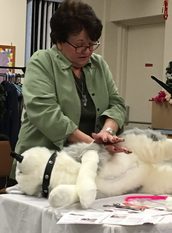 Mingo Woman’s Club gets demo on administering ‘mouth-to-snout’ technique
Herald-Star February 2, 2017
MINGO JUNCTION — The January meeting of the GFWC Woman’s Club of Mingo Junction welcomed one of its own as the guest speaker who explained how to respond in emergency situations involving pets.
Stephanie Rouse was introduced. She presented a CPR class on using CPR on your pets. She also passed out flyers on what to do for sick pets.
“Your pets are like family, so you need to know what to do in an emergency when something happens to them,” explained Rouse, who started working for the Jefferson County Red Cross 26 years ago as its blood services consultant and administrative assistant, then worked 11 years as the Wheeling chapter’s health and safety director.
Rouse had been a CPR and first aid instructor, but she became trained in Pet CPR while in Wheeling, conducting many classes across the state. She said she brought that enthusiasm with her when she returned to the Jefferson County Chapter where “Pet Manikins” were bought with personal donations from pet lovers. They are used in training people how to administer, for example, CPR to an animal.
The German Shepard, Rouse explained, was named “Zeus” as requested by the donor. The cat and huskie were donated next and named “Clara” and “Barton,” respectively.
“These animals are equipped with a mechanism and disposable airway where you can actually perform CPR,” Rouse said in explaining the steps. “First, you lay them on their side; check to see if they are breathing or showing any signs of life; open the airway and check the throat and mouth for foreign object; if not breathing, bring the tongue between the front teeth and hold the mouth closed as you breathe through their nose four or five rapid breaths,” she said.
“It’s called mouth-to-snout breathing,” Rouse continued. “If they do not breathe on their own, then you begin chest compressions about where their front elbow would be when you bring it toward their chest. Speed of compressions and breaths vary depending on the size of the pet.”
Rouse also shared how to make a muzzle and Elizabethan collars and how to bandage and transport an injured pet. “Make sure your pet always has your up-to-date information on its collar and consider placing a chip in case they get lost.” Another thing to have available is a pet first aid kit which should have a current photograph, list of medications, veterinarian’s contact information and the location of the nearest 24-hour pet emergency room.
“Have a plan for your pet if you have to be evacuated from your home due to a disaster,” Rouse added. “Do you know hotels that are pet friendly and maybe a place that can kennel your pet?”
Rouse said pet manuals with DVDs and first aid kits are available on loan at the Red Cross Store. Rouse recently retired for the third time from teaching classes but remains active as a chapter volunteer and a member of the Disaster Action Team.
President Janet Petrella gave the welcome at the meeting held at the Mingo Senior Citizens Center. Joanne Gorney gave the invocation.
Reports were given on the lottery tree fundraiser, Grand Theater project and See’s Candy sale.
The club received a thank-you for its donation to Urban Mission Ministries.
Joanne Gorney is working on the scholarship.
A meeting will be held to review reports. Members will be contacted.
Legislation Day will be held March 18 in Morristown, Ohio, and is being sponsored by the Junior Women’s Club of Barnesville. The state convention will be held April 21-22 in Dublin, Ohio, at the Embassy Suites.
Hostesses for the evening were Gorney and Rouse, chairmen of the Public Issues-Emergency Preparedness Committee.
The next meeting will be held Feb. 9 at the Mingo Senior Citizens Center. Members of the Public Issues Committee will be the hostesses. Clara Sue Milewsky and Petrella are co-chairmen. Guest speaker Beth Rupert-Warren from Coleman Professional Services will present a program on mental health.
Back to Top
|
 NBC4 - Columbus Feb 2, 2017
PUNXSUTAWNEY, Pa. (AP) – From Buckeye Chuck to Punxsutawney Phil, the groundhogs are ready for their big day.
The handlers of Pennsylvania’s most famous groundhog announced Phil saw his shadow and predicts six more weeks of winter.
Members of Punxsutawney Phil’s top hat-wearing inner circle plan revealed their forecast at sunrise, just before 7:30am Thursday.
Buckeye Chuck, from Marion, Ohio, made his prediction at about 7:40am, and agreed with Phil about the extension of winter. This was Buckeye Chuck’s 38th year of predicting.
The festivities have their origin in a German legend that says if a furry rodent casts a shadow on Feb. 2, winter continues. If not, spring comes early.
In reality, Phil’s prediction is decided ahead of time by the group on Gobbler’s Knob, a tiny hill just outside Punxsutawney. That’s about 65 miles northeast of Pittsburgh.
Records dating to 1887 show Phil predicting more winter 102 times while forecasting an early spring just 18 times – including last year. There are no records for the remaining years.
Back to Top
|
|