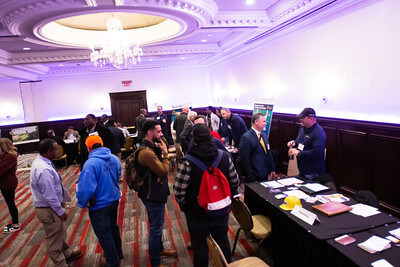
As public employees, we have many responsibilities. Some tasks we do more often than others. One which you may not do very often is running a public meeting. LTAP’s newest Training Program Manager, Matthew McGuire, formerly the ODOT District 6 Public Information Officer (PIO) has lots of experience with public meetings, so we asked him to put together some tips and best practices to help make your next public meeting a success!
- Before the meeting – Prepare for Success!
- Meet with everyone who will be staffing the meeting 2-3 days ahead to review the run-of-show and final materials (handouts, exhibits). This should be close enough to the meeting date for the information to stay fresh in everyone’s minds but far enough out to make any last-minute adjustments, such as minor revisions to materials or changes to equipment setups.
- Identify and anticipate common or difficult questions and develop talking points or identify subject matter experts to direct attendees to for assistance.
- If there will be a formal presentation, rehearse with the speaker. Arrive early to set up/test A/V equipment and have a backup plan in place in case of equipment failures or malfunctions.
- During the meeting – Stay Focused and Engaged
- Actively meet guests as they arrive to capture sign-ins for accurate attendance records, as well as to set expectations for meeting flow.
- Take notes either during or immediately after the meeting: Common questions or concerns, names/contact info of attendees that may need follow-up, insights or other takeaways.
- Have some snacks/drinks on hand for meeting staffers. If your meeting location has sufficient space, have a separate break area for staff to get a quick rest and refresh.
- After the meeting – Review, Refine, Improve
- Hold a debrief meeting – this could be immediately after the formal meeting ends, or it could be a day or two later. Sooner is generally better while the experience is fresh in everyone’s mind. Discuss what went well, what could have been improved, compare and summarize notes.
- Identify follow up items from the meeting – create a list if needed
- Review and ensure any after action items have been completed (posting meeting materials publicly, ensuring any project webpages are up to date, channels for public comment are open and working correctly, etc.)
In addition to Matt’s great tips and best practices, LTAP also offers eLearning on Public Involvement through the Environmental series of courses. There are currently six courses available:
- Public Involvement Training
- Public Involvement Training – Effective Presentations
- Public Involvement Training – Public Websites and Public Comment System
- Public Involvement Training – Social Media Use
- Public Involvement Training – Writing for the Public
- Virtual Public Involvement
To learn more about these courses, please visit our website at: Environmental eLearning Courses | Ohio Department of Transportation.
All LTAP eLearning is available at no cost, 24 hours a day, 7 days a week. You can utilize your transcript once you have finished your training to document completion for continuing professional development credits for various professional licenses (see the terms of your professional licensing body for information on if the topic(s) will qualify for credits).◇
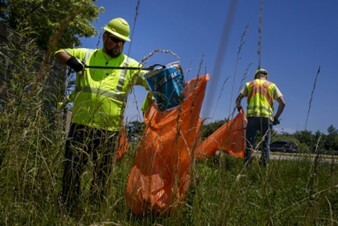
Road construction is a sign of progress, but for the men and women working on the roadways, it is one of the most dangerous environments imaginable. Work zones can be dynamic and unpredictable. In this setting, comprehensive training isn't just a checkbox on a form—it is the literal line between a successful shift and a life-ending or life-altering tragedy.
Protecting the Boots on the Ground
The primary goal of work zone training is the immediate safety of the crew. Workers are often positioned just inches away from distracted drivers traveling at high speeds. Effective training programs, such as those focusing on the Manual of Uniform Traffic Control Devices and OSHA standards, teach employees how to:
- Maintain situational awareness in high-noise environments.
- Position equipment to create a physical buffer between themselves and traffic.
- Understand the specific hazards of night work and low-visibility conditions.
Navigating the Human Element
Training isn't just about where to stand; it’s about how to communicate with the public. Flagger training is a critical component of work zone safety. A well-trained flagger acts as the brain of the site, directing the flow of motorists. Without standardized training, inconsistent signaling can lead to driver confusion, resulting in collisions or incursions into the work area.
Efficiency and Professionalism
A trained crew is an efficient crew. When every team member understands the flow of the site and the No-Go zones for heavy machinery, the project stays on schedule. Training fosters a culture of professionalism where safety is integrated into the workflow rather than seen as a hurdle.
In the end, every person who enters a work zone deserves to return home at the end of their shift. By investing in robust training, we ensure that the people building our future stay safe while doing it.
LTAP Work Zone Training Resources
Ohio LTAP provides several resources for your local agency to properly train staff. One is the day-long training sessions being offered this spring throughout Ohio. While a few of the early sessions have filled, there are still seats available for later sessions in May and June. Please check the LTAP enrollment webpage at the following link for more information: Class Schedule
There are also three replays scheduled for the Ohio Safe Flagger and PPE Training Webinar in April, May and June. Information about the webinars can be found in this newsletter to the right of this article in the Upcoming Training column. If you are interested in having a hosted version of the webinar at your site with a sign-in sheet for your participants to receive certificates for each of them, please contact Kara Smith, our webinars manager, for more information. Kara.Smith@dot.ohio.gov or 614-644-8565.
The same video is also available on our YouTube channel at the following link: https://youtu.be/Nz7wo16ssPM?si=MCcMkmerdfHfiIkA If the webinar replay times are not convenient for your crew, you could host your own viewing of the webinar video at your agency, along with a sign-in sheet to document attendance. You will not receive certificates of attendance from LTAP, but your crew will still receive the benefit of the training.
If you are interested in having a session of work zone training offered at your agency, you can contact the Ohio LTAP Center Safety Circuit Rider, Gary Browning, to request a session. Work Zone Circuit Rider Training is offered at no cost, but you will need to have a minimum of fifteen (15) participants, a room where the training can be held that is good for a training course, a way for the instructor to setup a laptop and projector to provide the training and a screen or blank wall where the projector can display the information. The training is a half (1/2) day session and Gary will custom tailor the topics to the typical applications used most by your crew. Please contact Gary at 614-466-1920 or Gary.Browning@dot.ohio.gov .
|