Treatments We Love: Enhancing Safety Through Thoughtful Design
The ODOT Multimodal Design Guide includes a variety of context-sensitive treatments and design considerations to improve active transportation safety. This month, we’re highlighting four treatments that have a big impact on safety. The following treatments help to manage traffic speeds, make shared roadways safer for vulnerable road users, and improve visibility of pedestrians at street crossings. Click on each treatment to view the detail drawings from the Multimodal Design Guide.
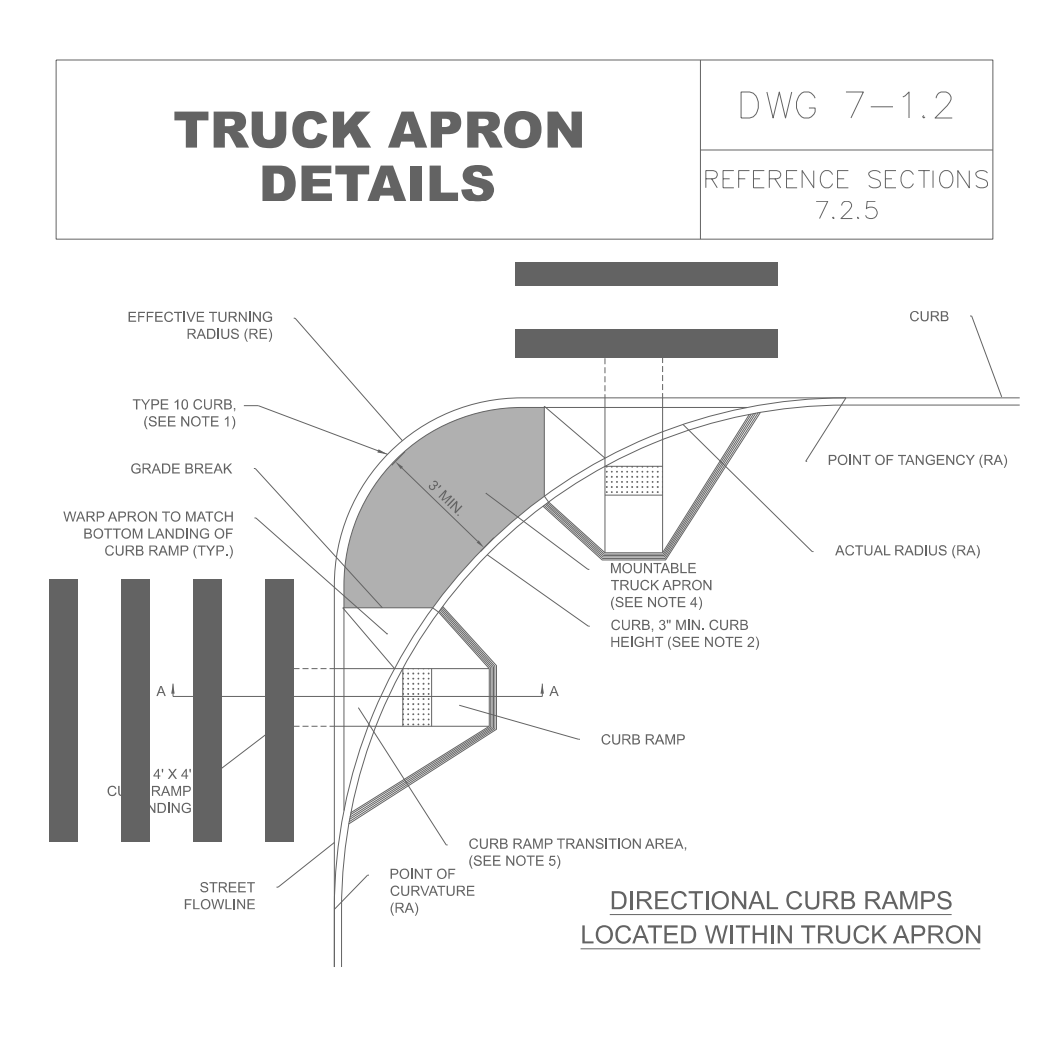
Truck Apron: Balancing Safety and Mobility
Truck Apron (Source: Toole Design)
Truck aprons are designed to accommodate large vehicle turns without allowing passenger vehicles to turn at high speeds. These raised sections help slow passenger vehicles, making streets safer for pedestrians and cyclists. Truck aprons encourage safer movements without negatively impacting emergency response times.
Benefits:
- Accommodates large vehicle turning movements.
- Slows vehicle speeds to enhance pedestrian and cyclist safety.
- Helps create more compact, pedestrian-friendly intersections.
Winter Maintenance Tip: Use low-profile curbs and durable materials, such as concrete, to minimize wear from plows.
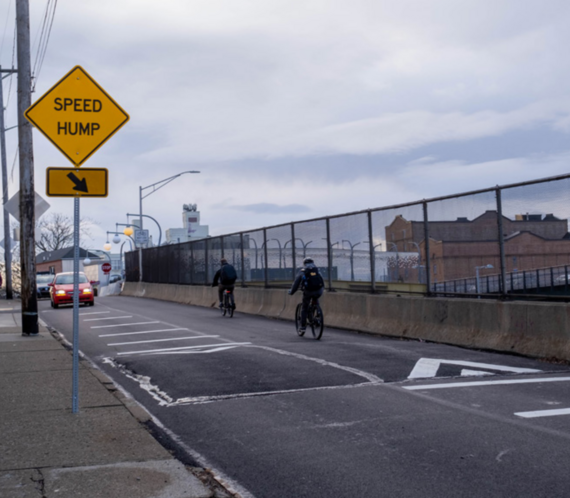
Speed Hump: Smoother Traffic, Safer Streets
Speed Hump (Source: ODOT)
Speed humps provide gradual elevation changes to calm traffic without causing abrupt jolts. They are particularly effective in residential and commercial areas, reducing vehicle speeds while maintaining smooth traffic flow. Research in the Multimodal Design Guide supports their role in improving pedestrian safety.
Benefits:
- Encourages safer driving speeds.
- Enhances pedestrian safety, particularly at crossings.
- Reduces crash severity by slowing vehicles before conflict points.
Winter Maintenance Tip: Use durable materials, such as asphalt, to withstand plow impact.
Curb Extension (Source: ODOT)
Curb extensions, also known as bulb-outs, extend the sidewalk into the roadway, shortening pedestrian crossing distances and improving sightlines. They also slow down turning vehicles, making intersections safer. As noted in the Multimodal Design Guide, these treatments are particularly useful in urban and suburban areas with high pedestrian activity.
Benefits:
- Reduces crossing distances, making crossings safer and faster for pedestrians.
- Improves visibility between pedestrians and drivers.
- Slows turning vehicles, reducing crash risk at intersections.
Winter Maintenance Tip: Use reverse curves (instead of straight tapers) on the approach to a curb extension to reduce the chance of a plow edge getting caught.
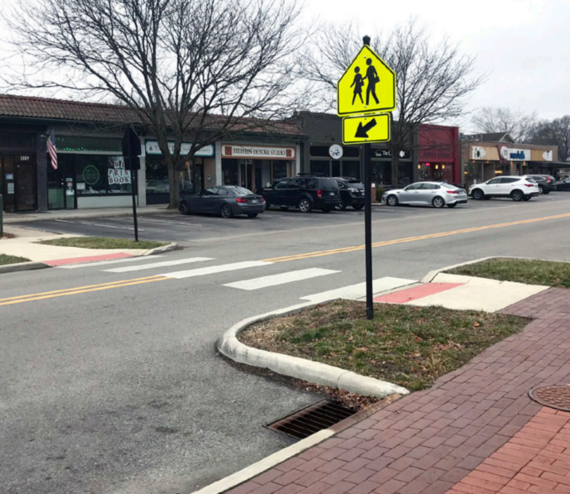
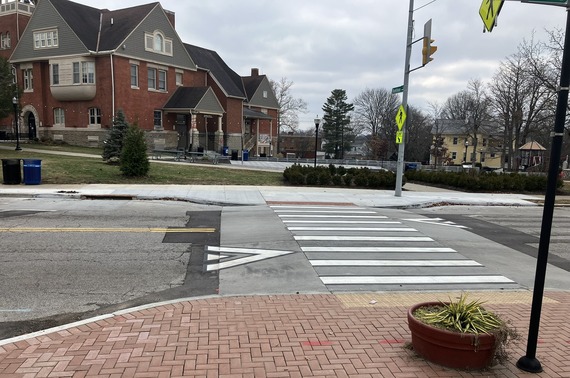
Raised Crosswalk (Source: We Move Cincy)
Raised crosswalks help slow down turning passenger vehicles, making intersections safer for pedestrians. They elevate pedestrian crossings to sidewalk level, increasing visibility. They are especially effective near schools, parks, and transit stops. The ODOT Multimodal Design Guide emphasizes proper drainage and material selection for durability.
Benefits:
- Improves pedestrian visibility and increases drivers’ awareness of the crossing.
- Slows down vehicles at key crossing locations.
- Can be installed without impacting existing drainage patterns.
Winter Maintenance Tip: Use the slopes recommended in the standard detail to ensure that your raised crosswalk can be plowed.
If you’re interested in exploring additional in-person active transportation trainings, be sure to check out the offerings scheduled through the Active Transportation (AT) Academy this year. These trainings are a great way to continue learning and stay engaged with best practices in pedestrian and bicycle planning and design.
Here’s the list of trainings scheduled so far this year:
-
Conducting a Walk Audit Training on July 29, 2025
-
Multimodal Design Guide Training on July 30, 2025
-
Creating an Active Transportation Plan on August 5, 2025
-
Multimodal Design Guide Training on August 26, 2025
-
Multimodal Design Guide Training on September 25, 2025
 Announcements
-
Bicycle Friendly Community applications are open and due by June 25, 2025. The Bicycle Friendly Community program provides a roadmap to improve bicycling conditions and helps communities achieve their vision for a more bike-friendly environment.
|