Introducing the ODOT Multimodal Design Guide
We’re excited to announce the release of the ODOT Multimodal Design Guide (MDG), the first of its kind in Ohio. Bringing together the latest research and best practices in bicycle and pedestrian facility design, the guide can help communities take the next steps in creating multimodal transportation networks that meet the needs of all roadway users, especially the most vulnerable.
Whereas guidance for bicycle facilities, pedestrian facilities, protected intersections, and traffic calming are often published in separate documents, the MDG combines this information into a single guide. It also combines research and guidelines from the latest and best national manuals and reports on facility design.
Read on to learn more, and access the full guide here.
What is the Multimodal Design Guide?
The Multimodal Design Guide serves as a consolidated resource for planners and designers implementing pedestrian and bicycle facilities in the state of Ohio.
Communities (local public agencies) can apply this guidance to the development of their local and regional transportation networks to create uniformity across the state’s multimodal transportation system. The MDG will be used by ODOT to review local agency designs for state and federally funded projects. The MDG can also be a reference for community members, advocates, elected officials, and other stakeholders interested in advancing multimodal transportation planning and design practices in Ohio.
Why is ODOT publishing this guide?
By providing comprehensive state-of-the-practice design guidance, the MDG aligns with ODOT’s current vision, mission, and goals related to walking and bicycling:
- It advances the Department’s overall mission of improving safety across
the state
- It aligns with ODOT’s Statewide Bicycle and Pedestrian Plan’s vision that walking and biking will be a safe, convenient, and accessible transportation options for everyone
- It supports the Strategic Highway Safety Plan’s goal of achieving zero deaths on Ohio’s roadways.
The guidance provided will help planners and designers make decisions about where pedestrian and bicycle facilities are needed across the state, and identify what facilities are appropriate to improve the comfort and safety of vulnerable roadway users.
What is included in the guide?
The guide includes 12 chapters covering a variety of topics related to planning and designing for multimodal networks.
- Introduction
- Multimodal Planning & Design Scoping Process
- Elements of Design
- Pedestrian Facilities
- Shared Use Paths
- On-Road Bicycle Facilities
- Motor Vehicle Facilities Supporting Multimodal Accommodation
- Signals, Beacons, and Signs
- Multimodal Accommodations at Interchanges & Intersections
- Transit Facilities
- Rail Crossings
- Maintaining Pedestrian and Bicycle Facilities
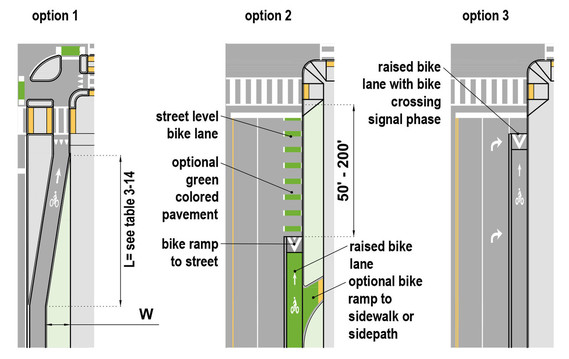
Each chapter includes descriptions, guidance, and diagrams of a comprehensive list of facility types and treatments, including discussions of context-sensitive design to fit the wide range of contexts and needs on Ohio’s roadways. The guide consolidates and updates bicycle and pedestrian transportation guidance across the Ohio Department of Transportation and is intended to supplement resources such as the Ohio Traffic Engineering Manual, Location and Design Manual, Bridge Design Manual, Ohio Manual of Uniform Traffic Control Devices, and State Highway Access Management Manual.
How can local public agencies use this guide?
Local public agencies can refer to the MDG when planning their local and regional transportation networks to make sure they are following best practices in accommodating all roadway users. Communities may similarly adopt this guidance, or portions of this guidance, as their local design criteria, such as through a Complete Streets Policy or other local plan.
To help local public agencies apply the MDG’s guidance in their own communities and regions, ODOT will be presenting a series of live and recorded trainings to help explain what’s in the guide and how to use it. Stay tuned for more information.
 Announcements

|