|
Issue 42: September 2, 2025 |
|
For Your Awareness
New Grant Opportunity for Pediatric Cancer Research
DCY is pleased to announce a new grant opportunity seeking applications for pediatric cancer research grants, after the biennial state budget made a historic $5 million investment in pediatric cancer research. This grant opportunity seeks to advance much needed research into the causes, diagnoses, prevention, and treatment of pediatric cancer in Ohio. Applicants must be an Ohio-based hospital, university, research organization, or other not for profit organization engaging in pediatric cancer research.
Applications may be submitted through the Ohio Grants Portal by October 9, 2025. The opportunity can be viewed here: Ohio Grants : Funding Opportunity
|
|
Maternal & Infant Wellness |
|
|
Programs focus on eliminating health disparities, improving birth outcomes, and improving the health status of pregnant women, infants, and children to ensure moms and babies celebrate the child’s first birthday.
|
|
Honoring Every Life: Infant Mortality Awareness Month & Stillbirth Awareness Day
September marks Infant Mortality Awareness Month, a time to elevate the importance of preventing infant deaths and ensuring healthy pregnancies and births across Ohio. This observance closely aligns with DCY's mission to help all children thrive, beginning with strong investments in maternal health, safe sleep practices, and community-based initiatives that support families from the very start.
Stillbirth Prevention Day on September 19 offers a solemn reminder of the families who have experienced the loss of a baby before birth. Stillbirth remains a significant, and often silent contributor to infant mortality. This year marks the first official recognition of Stillborn Prevention Day in Ohio, established through House Bill 4 with the support of the Governor DeWine and General Assembly. Acknowledging these losses and raising awareness is essential to both prevention and healing, and this new observance reflects Ohio’s commitment to breaking the silence, offering support to grieving families, and advancing prevention efforts.
To guide these efforts, DCY uses Ohio’s Infant Mortality Scorecard, which tracks statewide and community-level data to identify disparities, measure progress, and drive targeted action. Ohio’s infant mortality rate has reached its lowest level in two decades, reflecting the collective impact of prevention strategies, community partnerships, and data-driven solutions.
These observances underscore the critical role DCY plays in shaping the conditions that support healthier outcomes for Ohio families. Through strategic partnerships, data-informed programs, and community engagement, we are advancing a future where every baby has the opportunity to reach their first birthday and beyond.
Learn more about DCY’s maternal and infant wellness efforts: https://childrenandyouth.ohio.gov/for-providers/maternal-infant-vitality-data/maternal-infant-fetal
|
|
Early Childhood Development |
|
|
The Early Childhood Development programs provide technical assistance, education, and referrals for families and youth with evaluations regarding specific needs and disabilities.
|
|
Free Micro-Learnings Available: Strategies for Infant and Toddler Development
Do you work with young children (age birth-three) and their families? Would you like to know more about infant and toddler development? You can boost your knowledge by taking the new micro-learning bundles titled Strategies for Infant and Toddler Development on Ohio’s Education Station with OCALI, which are FREE and available on demand.
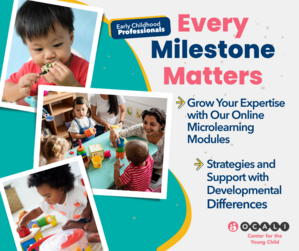
These bite-sized modules are designed to enhance your understanding of key developmental areas and provide resources and strategies to support the development of infants and toddlers. Each module in the series is Ohio Approved and approved for Early Intervention Service Coordinator (EISC), EISC Supervisor, and Developmental Specialist continuing professional development units (CPDUs)*. To learn more and enroll, click here.
*To obtain OA credit and/or EI CPDUs, ensure that your Ohio Professional Registry OPIN is programmed into your OCALI Education station profile. For assistance, please contact support@ocali.org.
|
AAC and Young Children: Supporting Communication in Infants and Toddlers
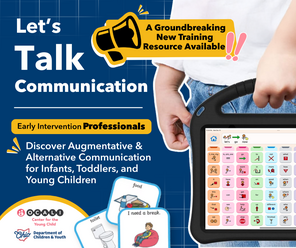
Every child deserves a voice. Unlock the power of Augmentative and Alternative Communication (AAC) to support infants and toddlers with complex communication needs.
This engaging course will help you:
✔ Recognize when AAC may be needed
✔ Explore simple strategies to introduce AAC in routines and play
✔ Dispel common myths with evidence-based practices
✔ Support families and teams in building strong early communication foundations
💡 Learn how AAC can make a difference in the earliest years—and give children every opportunity to connect, learn, and grow.
👉 Access this module now on Ohio’s Education Station and start making an impact today!
|
Growth Through Early Intervention: A Story of Communication and Connection
At approximately 18 months old, this child was referred to Early Intervention by a hospital Child Find Specialist due to concerns about potential hearing loss and limited expressive language -- only using about three words.
During the assessment process, several developmental concerns emerged. The child avoided eye contact, cried or became upset when the TV was turned off, did not point or use hands to complete tasks, and often screamed to communicate. There was little interest in toys, and the child was not consistently leading family members to desired items, relying instead on crying as the primary form of expression.
Registration Open for Early Intervention Forum
Join the Ohio Association of County Boards (OACB) and DCY, along with Part C providers, partners, and families throughout Ohio to hear the latest topics and research on best practices for Early Intervention! All Part C Providers and families are welcome to attend!
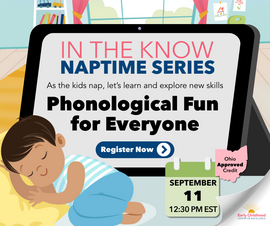
In the Know Naptime Series: Phonological Fun for Everyone
Parents and educators, get ready to boost your literacy toolkit! Join us on September 11 at 12:30 p.m. for a special "Naptime Series" session.
While the little ones nap, we'll dive into the key skills of phonological awareness that are crucial for reading success. Discover practical strategies to help all children build strong foundational literacy skills.
Don't miss out on this valuable learning opportunity!
➡️ Register now!
|
DCY Memos and Resources
|
|
|
Initiatives work to connect educators, families, and youth to education
services and supports.
Child Care Program Increases Access to Affordable, Quality Child Care for Military Families in Ohio
Ohio Department of Children and Youth (DCY) Director Kara Wente announced a new partnership between DCY and the U.S. Department of Defense (DoD) to ensure that while our country’s military personnel are keeping us safe, we are providing a healthy, safe, high quality educational environment for their children.
|
|
Infant and Early Childhood Mental Health Team Offers "Back to School" Trainings
The Infant and Early childhood Mental Health (IECMH) Master Trainer Team is offering a day of free virtual training for all early care and education professionals. All sessions offer OA credit. The deadline to register is Monday, September 8. Click on this flyer for more details.
Understanding SUTQ: Who Needs to Be Rated?
Additional Information Added
Step Up To Quality (SUTQ) is Ohio’s quality rating and improvement system for early care and education programs. It’s designed to recognize and promote programs that go above and beyond health and safety licensing requirements, in providing high-quality care and education to young children.
As part of ongoing efforts to ensure excellence in early learning, it’s important to understand which programs are required to participate in SUTQ and which may choose to voluntarily opt in.
Who Is Required to Be SUTQ Rated?
Programs must be rated if they meet any of the following criteria:
-
PFCC Participation: If a program provides Publicly Funded Child Care (PFCC) to 25% or more of its licensed capacity, it must be rated.
-
ECE Grant Recipients: Programs that receive an Early Childhood Education (ECE) grant are required to maintain a high rating, either Silver or Gold.
-
Multiple Classrooms or Funding Types: If any classroom within a licensed program receives PFCC or ECE funding, the entire program must be rated and meet all applicable standards.
Who May Voluntarily Choose to Be Rated?
Some programs are not required to participate in SUTQ but may voluntarily opt in and demonstrate their commitment to quality:
- Type A or Type B Family Child Care Homes
- Programs that receive preschool special education funding but do not receive PFCC or ECE grants
- Programs that serve less than 25% of their licensed capacity through Publicly Funded Child Care (PFCC)
- A program that operates only during the summer and for not more than fifteen consecutive weeks
- A program that operates only during school breaks
- A program that operates only on weekday evenings, weekends, or both
- A program that holds a provisional license issued under section 5104.03 of the Revised Code
Participating in SUTQ is a meaningful way to showcase your program’s dedication to providing exceptional early learning experiences. Whether required or optional, being rated helps families make informed choices and supports continuous improvement across Ohio’s early childhood system.
Teaching Strategies® Tips and Tricks
Getting Started with the PD Teacher Membership: The Hub

Teaching Strategies® offers many professional development resources through the PD Teacher Membership, PDTM. Professionals will have exclusive access to over 500 hours of CEU-bearing On-Demand Courses, Ohio Approved training, training required to earn a CDA credential, Live Virtual Classes and Courses, dedicated onboarding support, a community of your peers, and so much more!
Once you’ve established access to your SmartTeach® account, we encourage you to explore available resources found within the Hub.
|
 |
|
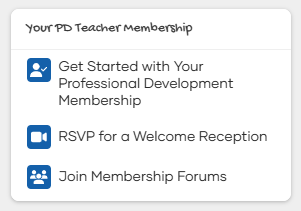
To get started, log into your SmartTeach® account and select “The Hub”, found on the right-side panel. Once on the Hub’s landing page, you will be able to RSVP for an upcoming PD Teacher Membership: Welcome Reception & Tour. The Welcome Reception provides a detailed overview of the professional development membership, including key features and resources. Please see Getting Started in The Hub for step-by-step directions. |
|
|
Supporting Every Child’s Preschool Educational Journey
In Ohio, we’re committed to ensuring that every child, regardless of ability, has access to quality preschool education. The Department of Children and Youth (DCY) Preschool Special Education (PSE) program, in partnership with the Ohio Department of Education and Workforce, serves children aged three to five with disabilities, offering accessible services that promote growth, learning, and inclusion alongside their peers.
Whether you work with or have a child with unique learning needs, DCY can offer guidance through the entire special education process, ensuring you understand key aspects such as confidentiality, Free Appropriate Public Education (FAPE), and the Ohio Individualized Education Program (IEP). DCY’s Preschool Special Education 101 videos are designed to answer all your questions and provide you with a comprehensive understanding.
The PSE team will walk you through the IEP process, ensuring you have the in-depth knowledge needed to support every child's educational journey. These videos will provide you with key takeaways, including:

Back to School Tips to Share with Families
It is important for young children’s development that they feel safe and secure. Feeling safe and secure helps young children learn, build confidence, and supports their mental health. Some ways that parents and caregivers can help young children feel safe and secure are:
- create a safe, predictable environment
- make adequate sleep time a priority
- establish clear boundaries and limits
- show unconditional love and acceptance
- respond to children’s needs
- create consistent routines
Now is a great time for families to create reliable routines for children. Getting back to a school routine or starting a new one can be a big adjustment for young children. Some suggestions to make the transition easier are:
- Make sure the children are getting enough sleep. The American Academy of Pediatrics (AAP):
o details how many hours of sleep children need on their healthy children.org website: www.healthychildren.org/Healthy-Sleep-Habits-How-Many-Hours-Does-Your-Child-Need.aspx.
o recommends that children keep the same bed time and wake time
o suggests establishing and sticking to a bedtime routine, such as taking a bath, brushing teeth, reading a book, and going to sleep.
o in addition to keeping the same bed and wake up times, try to keep mealtimes and other daily events, such as play time and chore time, consistent.
o create a visual chart with the children that is simple and easy to understand. For example, ask the children what picture on the chart will help them think of dinner time.
o let children make a checkmark on the chart after an activity is completed.
o include chores on the schedule for children old enough to complete them. Some examples are: feeding a pet, watering a plant, putting away shoes and coat, and lay out clothes for the next day.
o this can be a quiet space in a room
o use a bin or a shoebox to hold crayons, pencils, papers, and other art materials
o ask the children to decorate the bin or box with stickers or drawings
For additional information on helping children transition back to school see:
|
|
|
Family Support & Stabilization |
|
|
Focuses on enhancing the resources and supports available to parents and families.
|
|
Former Foster Youth's Story of Determination and Resiliency Inspires Her Community
Mary aged out of foster care and has experienced struggles during and after care. She has been working with Richland County Family and Children First and her Richland County Children Services, Independent Living worker. Through her resiliency, she has continued to move forward and has a steady job and apartment. In early May, she participated in a panel discussion hosted by The Richland County Youth and Family Council, in collaboration with Richland Children Services. During the panel, she mentioned that she has a job and rides her bike to work at 2:30 a.m. to make sure she gets to work on time.
The news covered the story, and a local car dealership called the FCFC and stated they have a nice jeep they would like to donate to her. The owner of the car dealership said they couldn’t solve the world’s problems, but they could help her https://www.wmfd.com/article/car-dealer-gifts-car-to-emancipated-foster-youth-who-has-been-biking-to-work/20709
Governor DeWine Appoints Citizens to Serve on DCY Boards
Governor Mike DeWine’s office announced on Friday his appointments for several boards and commissions, including the Ohio Commission on Fatherhood (OCF) and the Ohio Children’s Trust Fund (OCTF).
Dr. Randy Leite (Appalachian Children’s Coalition), Scott Neely (Children’s Hunger Alliance), and Ann Ream (Summit County Children’s Services) were each reappointed for two-year terms.
OCF statutorily seats 20 members to include the Ohio Department of Children and Youth Director Kara Wente. She has designated both Assistant Director Jeff Van Deusen and Ohio Government and External Affairs Officer Joel Potts to represent DCY.
For more information about OCF’s commissioners, click here.
Dr. Angel R. Rhodes of Dublin, Dr. Kelly S. Liker of Centerville, and Doug Wolf of Bexley have each been reappointed to three-year terms on the Board of Directors of OCTF.
For more information about OCTF’s Board of Directors and when meeting occur, click here.
|
|
Children Services, Foster, Kinship, and Adoption |
|
|
Children Services, Foster, Kinship, and Adoption programs provide caregivers with support via resources for their individualized needs.
|
|
Calling All Children Services Workers: Send in Your Group Photos
In our last issue of Tuesday Times, we shared a Child Welfare Worker Appreciation Week toolkit so that counties and agencies could show their children services workers how much they contribute to their operations.
In this issue we are asking children services workers to send us photos of your teams so we can feature them in our newsletters and on social media. Just gather a group, big or small, take a photo, and send it to communications@childrenandyouth.ohio.gov, with a short description of what county and/or agency you are from, and it could be included in our Child Welfare Worker Appreciation Week slideshow during the week of September 8.
September Marks National Grandparent/Kinship Month
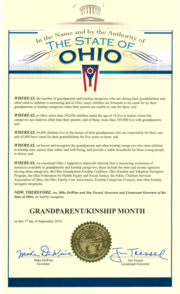
Ohio Governor Mike DeWine and Lt. Governor Jim Tressel signed a proclamation naming September Grandparent/Kinship Month in Ohio to highlight the importance of kinship caregivers (especially grandparents) in the lives of children.
As DCY partners and providers, knowing the benefits of kinship care, as well as the programs the state of Ohio offers to help kinship caregivers find support, you can help spread this important information throughout your networks and encourage people your know to provide stable environments for children whose parents are unable to do so.
Kinship offers stability for children and a connection to the child’s family and support network which can be difficult to maintain in a traditional foster care situation when strangers are caring for the child. A kinship caregiver provides many important parts of that child’s life.
|
Upcoming Preliminary Title IV-E Federal Review – August to October 2025
The Department of Children and Youth (DCY) teams from the Title IV-E Unit and the Consulting & Monitoring Services Unit within the Division of Contracts and Monitoring will collaborate to conduct the Preliminary Title IV-E Foster Care Eligibility Review from August through October 2025.
A random sample of at least 80 cases will be selected for review. Counties included in the sample will be notified in advance to allow sufficient time for case preparation. This will be an electronic review; no hard copy files will be needed.
The review will include cases with at least one (1) federal foster care maintenance claim between October 1, 2024, and March 31, 2025.
A summary of the review will be provided, including identifying strong practices and any disallowed expenses. Please note:
- If a finding is identified, the responsible county must repay any disallowed amount.
- Additional guidance regarding disallowances will be provided, as applicable.
- If necessary, payment arrangements may be discussed and established.
Thank you for your attention and cooperation as DCY prepares for this important review process.
Kinship, Adoption, and Foster Programs See Changes with House Bill 96
The following programs have been impacted by the enactment of Amended Substitute House Bill 96 (HB 96) of the 136th General Assembly. The following provides a highlight of some of the children services policy changes:
Kinship Support Program (KSP)
The Department of Children and Youth (DCY) is removing state hearing rights for recipients of Kinship Support Program (KSP) payments. Ohio Administrative Code (OAC) rule 5180:2-42-18.2 “Kinship Support Program” has been revised to remove state hearing rights and is undergoing the rule promulgation process. Additionally, the rule is being renumbered to OAC 5180:3-13-18.2.
Ohio Adoption Grant Program (OAGP)
Key revisions regarding OAGP include:
- Applicants must reside in Ohio at the time of the adoption finalization.
- Confidential documents provided to DCY remain confidential documents.
- Consequences to be issued for falsifying documents.
- Copies of court documents are to be certified.
- The courts are to provide any document requested by DCY related to the adoption.
- The Ohio adoption grant is contingent on available state funds.
Ohio Administrative Code (OAC) rule 5180:2-44-15 “Administration and Eligibility for the Ohio adoption grant program,” has been revised and is undergoing the rule promulgation process. Additionally, the rule is being renumbered to OAC 5180:7-3-15.
Foster Child Adoption by Foster Caregiver
The six-month minimum placement requirement before a foster caregiver is permitted to apply for approval to adopt a foster child currently placed in the home has been removed. This change allows any foster parent to apply to adopt a foster child currently placed in their home. Ohio Administrative Code (OAC) rule 5180:2-48-11 “Approval of a foster home for adoptive placement” and OAC rule 5180:2-48-11.1 “Foster caregiver adoption of a foster child or sibling group who has resided with the caregiver for at least six consecutive months” are being rescinded. OAC rule 5180:7-1-11 “Foster caregiver adoption approval” has been created. The above rules are undergoing the rule promulgation process.
|
|
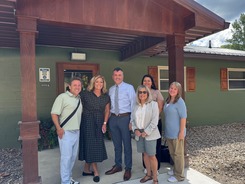
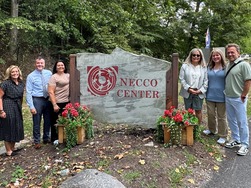
DCY Leadership Visits Necco Center
Located on a 34-acre campus within the Wayne National Forest in southern Ohio, Necco provides 24/7 residential care for male youth ages 9-21.
The Necco team invited DCY Director Kara Wente and Assistant Director Jeff Van Deusen to visit their facility.
This specialized facility serves young people with borderline intellectual functioning, pervasive developmental disorders, and learning disorders that traditional educational settings cannot adequately support.
|
|
What impressed the DCY team most was their comprehensive approach - combining supervision, education, social activities, and on-site behavioral health services to address the unique needs of each resident.
Thank you to the Necco team for the warm welcome and for the important work you do every day!
|
|
 |
|
|
|
Programs are designed to provide support for teens and young adults who either are in foster care or have aged out of foster care systems and need assistance.
|
|
Final Countdown: NYTD Survey Deadline Approaching
September 30, 2025, marks the final day to submit survey data for 19-year-olds selected to participate in the National Youth in Transition Database (NYTD) survey. This federally mandated survey is a vital tool for assessing the experiences and outcomes of youth who are currently in or have transitioned from foster care.
The NYTD collects critical data on education, employment, housing, health, and other key indicators of well-being. These insights inform both state and federal policy decisions, help evaluate the effectiveness of services, and support continued funding for transition programs.
To ensure Ohio remains in compliance with federal participation standards, all survey responses must be entered into the NYTD database by close of business on September 30, 2025. Submissions received after this deadline will not be counted toward Ohio’s compliance for the current reporting period. Meeting the participation benchmarks is essential for maintaining federal support and demonstrating the impact of Ohio’s transition services.
Agencies are strongly encouraged to make every effort to locate and engage all selected 19-year-olds to complete their surveys. For questions or technical assistance, please contact the Transitional Age Youth Programs team.
DCY extends its sincere appreciation to agency staff for their continued dedication and tireless efforts in supporting foster youth. Your work is instrumental in shaping a brighter future for youth across the state.
Independent Living Regional Meetings – Fall 2025
DCY's Independent Living & Transition Age Youth (IL TAY) team will be holding five in-person regional meetings on the dates and locations below. Topics will include updates on NYTD, independent living funding, updates on the Bridges, Ohio Education and Training Voucher (ETV) and Youth Navigator Network programs, an overview of the independent living practice, and a discussion on Young Adult Services (YAS).
DCY’s Technical Assistant Specialists (TAS) will also attend to support public children services agencies in identifying ways to strengthen independent living practices in their counties. Please see the Independent Living Regional Meeting memo below for additional details and registration. (Please note corrected email address.)
|
|
|
|
|