|
For Your Awareness
Next Stronger Together Explores OhioRISE
Ohio's collaborative informational series, Stronger Together, will take place on Monday, July 14 and will feature information about OhioRISE.
Bridget Harrison with the Ohio Department of Medicaid will share information about the program.
Stronger Together is a bi-monthly webinar series designed to increase awareness of program supporting Ohio's children and families.
To join the webinar, use this link.
|
|
Maternal & Infant Wellness |
|
|
Programs focus on eliminating health disparities, improving birth outcomes, and improving the health status of pregnant women, infants, and children to ensure moms and babies celebrate the child’s first birthday.
|
|
Help Determine Mother/Child Health Priorities:
ODH Wants to Hear from You
The Ohio Department of Health (ODH) invites you to provide feedback on the Title V Maternal and Child Health Services Block Grant Program through their public comment survey.
The federal Maternal and Child Health (MCH) Services Block Grant Program is authorized under Title V of the Social Security Act to ensure the health and well-being of women, mothers, infants, children, including children with special healthcare needs, adolescents, and their families. ODH is the authorized Title V agency in Ohio. Title V initiatives play a leading role in improving maternal and child health, such as reducing infant mortality, increasing access to care, and improving coordinated care for children and youth with special healthcare needs (CYSHCN). This State Profile provides a snapshot of Title V MCH in Ohio.
ODH is currently engaged in the fifth year of the five-year block grant cycle (federal fiscal years 2021 -2025) and is submitting its plans for the first year (October 2025 - September 2026). The 2025 Maternal and Child Health Needs Assessment provides the foundation for the development of priorities and the five-year action plan.
To further strengthen ongoing stakeholder and partner engagement, each year the Ohio Title V program solicits feedback and input via a public comment survey regarding priorities and strategies across the life course population domains: women, infants, children, adolescents, and children and youth with special health care needs. Results are used to help inform priorities and strategies that frame the work conducted throughout the five-year cycle to improve health outcomes for the MCH population.
This survey is an opportunity for you to provide input and will be open until July 6, 2025.
If you would like further information or have questions, please contact: titlevmch@odh.ohio.gov.
|
|
DCY Memos and Resources
No updates at this time.
|
|
Early Childhood Development |
|
|
The Early Childhood Development programs provide technical assistance, education, and referrals for families and youth with evaluations regarding specific needs and disabilities.
|
|
Developmental Specialists Encouraged to Allow 60 Days for Renewals
Effective March 3, 2025, the Early Intervention Developmental Specialist (DS) certification process transitioned to the Ohio Child Care Resource and Referral Association’s (OCCRRA) Ohio Professional Registry (OPR). Applying for a Developmental Specialist (DS) certification now requires two separate steps:
- Completing a profile in the OPR
- Submitting a DS application
Each of these steps may take up to 30 days to complete.
If a DS does not yet have a completed profile in the OPR, it is critical that the process be started at least 60 days prior to expiration of their certification. This timeline is necessary to allow 30 days for verification of education and a current credential (if applicable) in the DS’s user profile. See Step 1 of the DS Application User Guide for instructions for completing an OPR profile.
Once the necessary user profile documents have been verified, the DS is then able to submit a DS application. Registry staff need up to 30 days from the application date to process the application to allow for any questions or to request additional materials that are needed. When the OPR profile process is started fewer than 60 days prior to a DS certification expiration date, the renewal date may be late and result in a period of time when the professional cannot serve as a DS. To prevent potential gaps in certification, professionals are encouraged to complete the profile process in the OPR as soon as possible so that their requirements are verified well before the expiration of their certification.
New DSs also need to allow 60 days to complete the two steps of the application process. To plan for this, please instruct new DSs to complete their OPR profiles as soon as possible. See Step 1 of the DS Application User Guide for New DSs for instructions for completing an OPR profile.
|
|
|
Initiatives work to connect educators, families, and youth to education
services and supports.
|
|
Revised Ohio Classroom Observation Tool Is Available Now
Early care and education providers may notice some changes to the Ohio Classroom Observation Tool (OCOT.) Revisions included updates to elements and indicators within the OCOT and the overall scoring.
The OCOT is completed during on-site verification visits for Step Up To Quality (SUTQ). Details of the revisions are available on the meeting slide deck Early Care and Education Stakeholder Meetings
To get a silver or gold rating, early care and education programs must pass the observation, which is part of the SUTQ standard for Child/Adult Interactions. To pass the observation programs are to have no more than three failed indicators and no more than one failed indicator in any element. To access the revised tool, click on Guidance and Implementation.
Looking for ECE Contacts?
Handy Guidance Document Can Help
DCY is pleased to share a new resource designed to support early care and education (ECE) providers and programs across Ohio. This guidance is now available to help providers understand who to contact, when to seek support, why technical assistance is beneficial, and how to access technical assistance from key partners.
Whether you are seeking help with program quality, compliance, professional development, or other operational needs, this guidance outlines the pathways to connect with the right resources at the right time.
Thank you for your continued commitment to high-quality early care and education in Ohio.
|
|
DCY Memos and Resources
No updates at this time.
|
|
Family Support & Stabilization |
|
|
Focuses on enhancing the resources and supports available to parents and families.
|
|
Ohio Commission on Fatherhood Celebrates the Power of
Dads During "June is Responsible Fatherhood Month"
Anyone can be a father, but it takes someone special to be a dad.
Fatherhood is celebrated and cherished year-round, but Governor DeWine traditionally proclaims June as Responsible Fatherhood Month. This month, we recognize and celebrate dads and father-figures and their vital parental role in their children's lives.
A responsible father's presence offers stability, emotional support, and guidance that helps children feel secure. When fathers are involved, families are stronger, and communities become more stable. Their influence can help reduce preventable challenges in childhood and open more opportunities for success later in life. Every child deserves the chance to thrive—and that often starts with a dad who shows up.
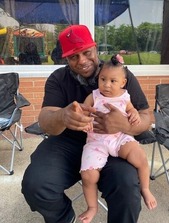
That’s where the Ohio Commission on Fatherhood (OCF) steps in. Throughout June, the Commission supports events across the state through mini grants to uplift fathers and families in recognition of the importance of involved, committed, and supportive fathers
You don’t have to be a dad to make a difference. This month, take a moment to encourage the fathers you know, or even attend a community event near you. When we uplift dads, we strengthen families and create brighter futures for Ohio’s children.
For more information, Click here.
Pictured: A dad and his daughter enjoying a father-child event in Stark County. The Greater Stark County Urban League applied for and was awarded a OCF mini grant to host the event.
|
|
|
DCY Memos and Resources
No updates at this time.
|
|
Children Services, Foster, Kinship, and Adoption |
|
|
Children Services, Foster, Kinship, and Adoption programs provide caregivers with support via resources for their individualized needs.
|
|
Interstate Compact on the Placement of Children Not Impacted by House Bill 315
The Department of Children and Youth (DCY) issued procedure letter 14 on May 1, 2025, to provide clarification regarding the responsibilities of a public children services agency (PCSA), private child placing agency (PCPA), or residential facility related to the changes due to HB 315. While preparing the rules for clearance that were affected by House Bill 315, it was determined that the Interstate Compact on the Placement of Children (ICPC) rule was not impacted. As a result, references to rule 5180:2-52-04 have been removed and ICPC-related requirements for face-to-face visits with children will revert to processes put in place prior to the issuance of the procedure letter. A revised version of the procedure letter has been posted and can be accessed at the following link: Procedure Letter 14.
Traverse 101 Webinar Training
New or existing Traverse users at public children services agencies are welcome to register for the next monthly Traverse 101 Training Webinar on July 10 from 11 a.m.–12 p.m. During this 60-minute session, you’ll learn the basics of Traverse, your content management system designed for human services agencies. On the web platform, we’ll add finished content (scans, uploads, and virtual prints) to the system and work with forms. On the mobile platform, we’ll collect information in the field.
At the end of the webinar, we’ll have a bring-your-own problem (BYOP) session where participants can ask questions about how Traverse can improve their business processes.
Live Event on June 26 Will Explain New Medicaid Interface
The Ohio Department of Medicaid (ODM) is retiring the Medicaid Information Technology System (MITS). DCY is implementing a new interface with Ohio Benefits (OB) where Medicaid eligibility will be determined by OB. To join the live event on Thursday, June 26, from 10 a.m. to 12 p.m., click here.
Assistance Available for Eligible Families Through the PASSS Program
Those who have adopted a child with special needs may be eligible for financial assistance through the Post Adoption Special Services Subsidy (PASSS) program. PASSS is designed to help cover the cost of services that are not paid for by other adoption subsidies, insurance, or Medicaid. PASSS can be used for a wide range of services to support families, including:
- Medical and surgical services
- Psychiatric, psychological, and therapeutic counseling
- Residential treatment
- Respite care
Eligible families may receive up to $10,000 per fiscal year, or up to $15,000 in certain circumstances. Families must reapply for PASSS funding each state fiscal year, which begins in July. Applications for state fiscal year 2026 are now open. You may apply online or download the forms by visiting the OhioKAN PASSS website. You may also request a printed application packet by mail.
For more information, call OhioKAN at 1-844-OHIOKAN (1-844-644-6526) to speak directly with an OhioKAN Navigator. Assistance is available Monday through Friday, 8:30 AM to 6:30 PM to guide families through the application process. To learn more and apply, please visit: ohiokan.ohio.gov/passs
|
|
|
Programs are designed to provide support for teens and young adults who either are in foster care or have aged out of foster care systems and need assistance.
|
|
Ensuring Every Voice Counts: Strategies to Connect with
19-Year-Olds to Complete Surveys
The National Youth in Transition Database (NYTD) 2025 Group B review period is officially underway, making early action crucial for success. A strong start ensures that selected 19-year-olds are identified promptly and supported in completing their surveys. Proactive engagement is key to achieving the best outcomes.
Public children services agencies (PCSAs) play a vital role in ensuring that each selected 19-year-old has the opportunity to participate in this important process. The NYTD Statistical Report in OHIO CCWIS lists the 19-year-olds who need to complete the NYTD Survey between April 1 and September 30, 2025. With these lists in hand, now is the time to implement outreach strategies and encourage participation!
To further support engagement, PCSAs can utilize their Chafee or TANF independent living funding to provide incentives.
Your commitment to outreach ensures the success of this review period. Please reach out with questions or for additional support.
|
|
DCY Memos and Resources
No updates at this time.
|
|
|
|
|