Governor DeWine Advocates for Ohio Families
Governor announces launch of initiative to reduce infant mortality; discusses family tax cut proposal
Ohio Governor Mike DeWine and Ohio Department of Children and Youth (DCY) Director Kara B. Wente were in Toledo on April 30 announcing an effort to improve birth outcomes and reduce infant mortality rates.
Through the DeWine-Tressel Administration’s newly announced Partner for Change initiative, DCY is teaming up with several organizations across the state to take a highly effective model, pioneered by Hamilton County-based nonprofit Cradle Cincinnati, and expand it into new communities throughout Ohio.
"Our children and our families are at the heart of everything we do as a state,” said Governor DeWine. “Ohio recently hit its lowest rate of infant mortality in two decades, but we know more needs to be done. Expanding this model through our Partner for Change initiative is another example of how we are continuing to seek new and innovative ways to protect our children and families."
|
Governor DeWine Delivers 2025 State of the State Address
Ohio Governor Mike DeWine delivered his 2025 State of the State address on March 12 during a joint session of the Ohio General Assembly.
Speaking before a crowd of legislators and members of the public, Governor DeWine pledged to continue making Ohio the best place in the nation to live, work, and raise a family.
"Since taking office, my administration has worked each day to help ensure that every Ohioan has the tools to live up to their full potential and the opportunity to live their version of the American dream," said Governor DeWine. "For the truth is, we cannot achieve our full potential as a state unless each Ohioan first achieves theirs."
|
During his Address which focused on education, workforce, and more, he included initiatives included in his proposed budget for fiscal years 2026 and 2027 that are important for Ohio’s families.
One of the DCY programs he featured is Ohio’s Child Care Choice Voucher Program, which expands access to financial support to assist working families earning up to 200% of the federal poverty level. As of April, Ohio is supporting 5,300 more families and 8,000 more children. (An increase even since the Governor made his speech.)
Additionally, Governor DeWine’s proposed child tax credit would provide eligible families up to $1,000 per child age 6 or younger. This will help working parents pay for child care, health care, food, formula, and clothing along with many other expenses associated with raising children and supporting their families.
First Lady Fran DeWine Celebrates 20 Million Book Milestone in Ohio's Imagination Library Program
On March 20, Ohio First Lady Fran DeWine celebrated 20 million books mailed to Ohio children from Dolly Parton’s Imagination Library of Ohio by hosting a book reading at the Greene County Public Library in Beavercreek.
“When Mike first ran for Governor, I knew I wanted to bring Dolly Parton’s Imagination Library to Ohio so every family could have access to the program’s high-quality, age-appropriate, free books,” said Ohio First Lady Fran DeWine. “With financial support from the Ohio General Assembly, our program has grown from only being available in pockets of Ohio to currently reaching 70 percent of households with children under the age of five.”
|
Ohio Department of Children and Youth and Ohio Children’s Trust Fund Mark National Child Abuse Prevention Month, Encouraging Support and Awareness
April was National Child Abuse Prevention Month, a time to raise awareness about preventing child abuse and neglect. The Ohio Children’s Trust Fund’s (OTCF) theme, “Ensure They Shine,” emphasizes the importance of creating environments where Ohio's children can grow up safe, supported, and ready to thrive.
OCTF, a resource within the Ohio Department of Children and Youth (DCY), works year-round to strengthen families and prevent child abuse. While April offers opportunity to bring additional focus, OCTF works every day to fund programs that support families and protect children from harm.
“We all have a role in preventing child abuse,” said Kara Wente, Director of DCY. “The OCTF helps families access resources before crises happen, creates lasting change in children's lives, and supports families staying together.”
|
Governor/Ohio House Recognize Child Abuse Prevention Month
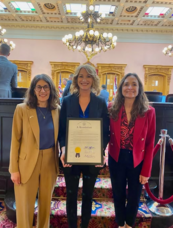
On April 1, Governor Mike DeWine proclaimed April as Child Abuse Prevention Month in Ohio. On April 3, OCTF Executive Director Nicole Sillaman, was honored at the Statehouse with a resolution recognizing Child Abuse Prevention Month. The resolution was presented by OCTF Board Chair Rep. Andrea White (right) and Board Member Rep. Karen Brownlee (left), reinforcing Ohio’s commitment to protecting children and strengthening families.
Preventing child abuse starts with awareness, action, and advocacy—and we are grateful for leaders who champion this cause. Let’s continue working together to ensure every child grows up in a safe, supportive environment.
|
Governor DeWine Announces Plan for Statewide Expansion of Youth Mobile Behavioral Health Service
Ohio Governor Mike DeWine held a press conference at Hopewell Elementary School in Dublin today to lay out plans for the statewide expansion of Mobile Response and Stabilization Services (MRSS).
MRSS is a service that provides immediate help for children and young adults 20 and under who are experiencing overwhelming mental, emotional, or behavioral distress. With MRSS, when a crisis like this occurs, a team of trained professionals responds within 60 minutes directly to the young person’s home, school, or any other location to de-escalate the crisis and provide ongoing support – all at no cost to the young person or their family.
DCY On The Move
DCY On The Move highlights our team members' travels across Ohio, visiting diverse programs, centers, and organizations. Through these strategic stops, we dive deep into local initiatives, learning about innovative approaches to child and youth services, and building collaborative partnerships that strengthen our understanding of community needs and opportunities.
 Now More Than Ever, We’re ‘Here for Ohio Kids’
The DCY team is proud to announce the recent launch of the new “Here for Ohio Kids” awareness campaign. In support of our mission to DO WHAT’S RIGHT FOR KIDS, the campaign invites families in every corner of Ohio to learn about and use the life-changing programs and services available through DCY.
Campaign advertisements highlight important topics such as early childhood education, foster and adoption services, mom and baby wellness, and more for Ohio families and children from prenatal care through age 21. Visit the campaign’s related web page at childrenandyouth.ohio.gov/here anytime for fast, easy connections to DCY information, resources, and experts.
Helping DCY make Ohio the best place in the nation for families
DCY is proud to be a trusted resource for Ohio parents and caregivers. This new campaign boosts awareness of available programs and services while emphasizing DCY’s readiness and ability to help Ohio families thrive. Look for us in your Meta feed and other online adventures!
Telehealth Services Support Behavioral and Mental Health
Behavioral and Mental Health Telehealth is now available to better meet the needs of Ohio’s children, youth, and families. This telehealth service provides immediate virtual mental and behavioral health support. It can help fill gaps, such as waitlists, that may exist until ongoing services can be provided.
To access Behavioral and Mental Health Telehealth, a child, youth, or family must be referred by a Public Children Services Agency (PCSA), Family and Children First Council (FCFC), or Infant and Early Childhood Mental Health (IECMH) consultant.
Once the referral is made, through access to telehealth sessions, short-term behavioral and mental health concerns can be stabilized while long-term services are being established for the family.
Urgent Maternal Warning Signs: Family and Friends Can Be on the Lookout
DCY acknowledged Black Maternal Health Week (April 11-17), founded by the Black Mamas Matter Alliance (BMMA), to highlight the maternal health crisis and bring attention to the disparities affecting Black women.
It is important for everyone in a pregnant woman's life to learn and recognize urgent maternal warning signs before and after the birth so that she can get the care she needs.
Pregnancy complications can occur during pregnancy and up to one year after childbirth. It is important for all healthcare providers, pregnant and postpartum women, and their families to be aware of the urgent maternal warning signs, listen, and act when women say something isn't right.
If a woman is pregnant or has given birth within the last year, it is essential for her to speak with her healthcare provider about any symptoms that don't feel right. She knows her body best. These symptoms may be physical but could also include feelings of sadness, anxiety, or fatigue that make it difficult to carry out daily activities for herself, her baby, or others.
Home Visitors Help Families Succeed
DCY Recognized April 21-25 as National Home Visiting Week.
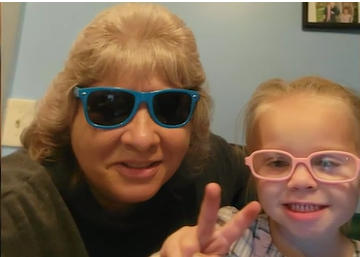
Wendy, a grandmother, has been working with Home Visitor Roxanne since her granddaughter was born. Click the photo at right to hear their story.
For more Home Visiting success stories and to learn more about how a Home Visitor may be able to help you. Click here.
|
Special Occasions Like Prom Even More Special for Youth in Care
May is National Foster Care Month: Click the video to hear Lyric, a member of the Ohio Youth Advisory Board talk about normalcy for foster youth.

Prom season is a good time to encourage, or even initiate, normalcy opportunities for youth in custody. Normalcy activities, like prom, are not only a cultural rite of passage, but also prompt life lessons and help build self-sufficiency.
As a young person, it is easy to just think about the prom outfit, the food, pictures, and dancing with friends. But there are many life skills that are practiced in preparation. Youth can practice developing a budget for prom expenses, learn to place an order for a boutonniere or corsage, research finding an outfit they like in their price range, research a place to get hair/nails done within their budget, coordinate logistics with friends on where to eat and learn to make reservations, navigate peer relationships, and practice time management skills.
Caseworkers can use Independent Living (IL) funding for normalcy activities for youth in foster care age 14 and older. IL funds are allocated to counties and are to be used to support the youth’s independent living goals, which includes normalcy activities. IL funds are flexible and must be used in a way to support a goal in the independent living plan.
Foster parents and foster youth are encouraged to ask their caseworker about using IL funds for normalcy activities.
|
Success Story: Youth Navigator Network (YNN)
In March 2024, a young person contacted the Youth Navigator Network asking for help. The young person reported that she was on leave from work, on doctor-recommended bed rest, and, without a paycheck, she didn’t know how she was going to pay her rent for the month of March.
The YNN navigator explained how the YNN program works, the services offered, and the eligibility criteria. The young person confirmed that she was both interested and eligible, the navigator worked to connect her with rental assistance programs in her area. The young person, was placed on several waiting lists, but was unable to obtain any immediate support. After numerous rejections, this young person was rightfully discouraged.
Around this time, the Youth Navigator Network introduced the YNN Flex Fund program, a funding opportunity that helps provide financial support to emancipated 21- and 22-year-olds. The navigator noted that this young person was eligible for this support and worked with her to complete a YNN Flex Fund funding request for rent. It was approved for not just March, but through the end of May, allowing her time to truly recover with the assurance that she wouldn’t lose her home.
It’s entirely possible that this young person would have found this support elsewhere because young people are resourceful. It’s also possible that she could have lost it all without the guidance, empathy, and financial support from the Youth Navigator Network.
|
Parent and Youth Ambassadors Hold First In-Person Meeting
 |
|
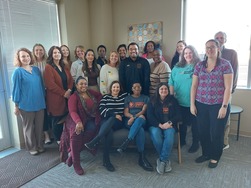
On March 18 the statewide Parent and Youth Ambassador (PYA) team had their first in-person team meeting. Parent and Youth Ambassadors work within Ohio’s Child Care Resource and Referral Agencies (CCR&Rs) supporting families throughout the state. This was a special day for PYAs to meet in-person outside of their daily team huddles, where they support one other in their tireless effort to assist children and families’ requests for support across Ohio. |
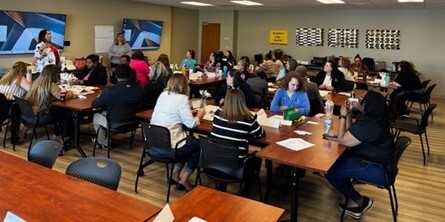
The PYA team spent the day planning for Spring 2025 Family Listening Sessions, engaging in a Mock Parent and Café, and meeting with DCY Director Kara Wente. PYAs left feeling connected, inspired, and heard. PYAs had this is say:
- “We are going to do many great small things that will amount to such a BIG DEAL for so many.”
- “It was a great day and it was so lovely to be together in person. We are an awesome team, and I am so proud to be a part of it!”
- “I loved the day. The information, the excitement, and all of you! Very thankful to be a part of this!”
- “This was amazing! The whole PYA team is amazing”
|
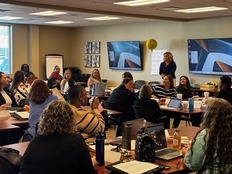
PYAs are a support available at no cost to children and families across Ohio to help answer questions and connect them with state and local supports. PYAs have lived experience navigating many of Ohio’s social service systems and offer support around any type of request for any population. PYAs are part of a larger network of growing peer support in Ohio and can connect a child or family to specific supports as needed.
If you know someone that could benefit from support you can contact a PYA by calling the DCY Family and Customer Support Call Center at (844) 234-5437 (KIDS) or by email Ambassadors@childrenandyouth.ohio.gov.
If you have questions about PYA work, contact DCY Project Manager, Melissa Palmer.
|
Save the Date: Ohio Commission on Fatherhood Meeting
The Ohio Commission on Fatherhood will hold its regular meeting on Thursday, May 8, 2025 from 10 a.m. to 12 p.m. at the Vern Riffe Building, 77 S. High St., Columbus, Ohio 43215
The meeting will be on the 31st Floor in Conference Room West B and C.
The public is welcome to attend either in person or virtually. In-person attendees need to bring a government-issued ID.
To attend virtually, use this Zoom link and passcode 1999.
|
New Unclaimed Funds System Will Help Ohioans Connect to Their Money Faster
You might have money you didn't know you had! The Ohio Department of Commerce has $4.5 billion that belongs to individuals, businesses, and non-profit organizations and the amount continues to grow.
This money is called unclaimed funds, lost or forgotten money that businesses and banks report after accounts become inactive, typically 3-5 years.
The money comes from:
- Inactive bank accounts
- Credit balances & refunds
- Uncashed checks
- Stocks & bonds
- Last paychecks, and more!
Enhancements on the Ohio Department of Commerce website will allow claimants to be able to:
- Search and claim funds
- Upload documents
- Check the status of a claim
- Receive more frequent communications about the status of their claim and any documentation needed.
To learn more about this new system, visit unclaimedfunds.ohio.gov.
|