|
Issue 28: February 18, 2025 |
|
For Your Awareness
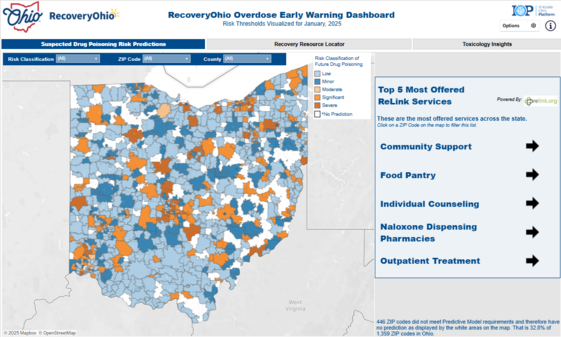
Governor DeWine’s RecoveryOhio Initiative Launches Groundbreaking Dashboard to Help Communities Predict, Prevent Overdoses
RecoveryOhio’s Overdose Early Warning Dashboard is a first-of-its-kind resource, designed to predict when a community is at heightened risk for drug overdoses.
Ohio Governor Mike DeWine’s RecoveryOhio initiative has launched a groundbreaking new online dashboard, designed to predict when communities may be at heightened risk for a spike in drug overdoses, so local leaders can take action in time to save lives.
The first-of-its-kind tool uses a variety of data to pinpoint ZIP codes at increased risk for overdoses up to 30 days in advance.
Next Stronger Together Session Set for March 10
Team members from the Ohio Department of Health's Bureau of Maternal, Child, and Family Health programs will present information on programs that directly serve Ohio's women, mothers, infants, children, families, and local agency staff during the next installment of Stronger Together on Monday, March 10.
Stronger Together is a bi-monthly webinar series designed to increase awareness of programs supporting Ohio's children and families.
The presentation will take place from 10 - 11 a.m. and will include information on eligibility requirements, available services, and how to access them. This session will highlight WIC, Complex Medical Assistance, Early Childhood Health, School Nursing, Children’s Hearing and Vision, Adolescent Resiliency, Pediatric Mental Health, Youth Homelessness, Oral Health, and much more.
Click here for the flyer which includes the Team Live link.
|
|
Maternal & Infant Wellness |
|
|
Programs focus on eliminating health disparities, improving birth outcomes, and improving the health status of pregnant women, infants, and children to ensure moms and babies celebrate the child’s first birthday.
|
|
Ohio Council to Advance Maternal Health Releases Toolkit
The Ohio Council to Advance Maternal Health (OH-CAMH) has released a document addressing specific challenges identified by Ohio community-based organizations in accessing state funds.
Empowering Community-Based Organizations: A Toolkit for Accessible and Equitable State Funding provides practical solutions and best practices for government entities to boost the effectiveness and equity of state funding processes.
It was co-designed with OH-CAMH and informed by feedback from Ohio’s community organizations.
|
|
DCY Memos and Resources
No updates at this time.
|
|
Early Childhood Development |
|
|
The Early Childhood Development programs provide technical assistance, education, and referrals for families and youth with evaluations regarding specific needs and disabilities.
|
|
Child Care/Child Health Professionals Invited to Collaborate
The Ohio Department of Health (ODH) Early Childhood Health Program is launching a Community of Practice later in 2025 for professionals working in the fields of child care and/or child health to facilitate collaboration and promote healthy child growth and development from birth to age 10. If you're interested, please take 10 minutes to complete this survey from contracted external evaluator Professional Data Analysts, to help create opportunities for meaningful collaboration. Responses must be received by Feb 28.
Free On-Demand Training for Professional Early Childhood Inclusion Credential
Expand your professional knowledge of inclusion and earn Levels 1, 2, and 3 of the Professional Early Childhood Inclusion Credential (PECIC). For more information on how to get started, check out the PECIC Resources Page.
|
|
 |
|
|
|
Initiatives work to connect educators, families, and youth to education
services and supports.
|
|
Foster Care, English Learners, and Homelessness Topics at Summit
Educators, child protective services staff, and court personnel are invited to participate in "A Conversation About All Things Education" on March 13, 2025, from 9 a.m. - 12 p.m.
The summit is sponsored by the Ohio Departments of Education and Workforce and Children and Youth and will be held at the Montgomery County Business Center.
View the flyer to register.
DCY Memos and Resources
|
|
Family Support & Stabilization |
|
|
Focuses on enhancing the resources and supports available to parents and families.
|
|
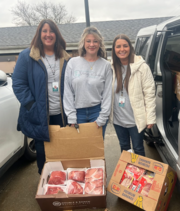
Community Partner Assists Family & Children First Council with Donation
Recently the Tuscarawas County Family and Children First Council received a $5,000 donation from OGM Partners to assist families. With this donation, the Tuscarawas County Family and Children First Council was able to purchase 46 boxes filled with a variety of meat for each of the families they are serving. OGM Partners lease and buy oil and gas minerals in Tuscarawas County and consider themselves a hometown energy partner who enjoys giving back to the community. Save A Lot of Uhrichsville assembled each of the boxes. Staff from the Tuscarawas County Family and Children First Council and Jefferson County Family Support Specialist Program delivered the boxes.
Pictured, left to right: Liz Thomas, Service Coordinator, Tuscarawas County FCFC, Angela Henary, HFW Facilitator, Tuscarawas Count FCFC, and Christi Otte, Manager, Tuscarawas County FCFC.
|
Housing Webinar Provides Info on Rental Subsidy and Supportive Housing
CSH Ohio and representatives from the Ohio Department of Mental Health and Addiction Services will host a webinar about the HUD 811 rental subsidy program and how supportive housing residents who are ready to transition can integrate this opportunity into their Moving On efforts.
The webinar will take place on Tuesday, March 11, 2025, from 10 to 11 a.m. Topics include:
- How the HUD 811 program works
- Eligibility criteria
- Becoming a HUD 811 referral agent
- Utilizing the HUD 811 program as part of your Moving On strategy
- Key components of a Moving On strategy
One of the main reasons supportive housing residents remain in supportive housing is the lack of access to affordable housing. The HUD 811 program ensures affordability for low-income residents with disabilities, aged 18-62, for qualifying properties funded with Low Income Housing Tax Credits.
Register for the webinar by clicking this link.
|
|
DCY Memos and Resources
No updates at this time.
|
|
Children Services, Foster, Kinship, and Adoption |
|
|
Children Services, Foster, Kinship, and Adoption programs provide caregivers with support via resources for their individualized needs.
|
|
Recruiting Underway for Citizen Review Panels
Ohio Citizen Review Panels (CRPs) are tasked with submitting an annual report to the Ohio Department of Children and Youth (DCY) with recommendations for the improvement of the child protective services (CPS) system in Ohio. The CRPs conduct an annual review and evaluation of an identified issue relevant for the CPS system and make actionable and measurable recommendations to the state on how to improve this issue. The CRP program is prescribed by federal statute detailed in the Child Abuse Prevention and Treatment Act (CAPTA).
Follow this link to express interest in participating in Ohio's CRPs reviewing the work of child welfare in Ohio. The panels are a great opportunity for local citizens to review information from child welfare agencies and other collateral agencies to ensure that the needs of children in the state are being met. These panels have the unique opportunity to drive child welfare policy in the state. Staff and faculty from The Ohio State University College of Social Work in collaboration with DCY facilitate this program. We are currently recruiting for new members in all areas of the state. Please leave your name, email address, phone number, and location. We will reach out to you about the process for becoming a member.
|
|
DCY Memos and Resources
No updates at this time.
|
|
|
Programs are designed to provide support for teens and young adults who either are in foster care or have aged out of foster care systems and need assistance.
|
|
Webinar Teaches Messaging Strategies to Encourage Investment in Young People
On February 26, the Annie E. Casey Foundation is hosting a webinar entitled, Thriving Youth: Messaging Strategies to Encourage a Brighter Future for Young People, offering guidance on how to leverage data and messaging to compose positive, asset-framed narratives about young people. This one-hour session will offer people in youth-serving organizations — especially those with public-facing roles — data-driven strategies to shift harmful narratives, including:
- understanding public perception about young people’s challenges and potential;
- learning asset-based frames and messages about what helps youth thrive, including the opportunities, guidance and connections to positive adults that local youth-serving organizations provide; and
- discovering how to bolster positive storytelling about young people to counter pervasive negative narratives.
The one-hour webinar will begin at 2 p.m. on Wednesday, February 26. Visit this link for more information or to register.
|
|
Complete the NYTD Survey Before the Deadline
As the survey period for the National Youth in Transition Database (NYTD) rapidly comes to an end on March 31, 2025, we want to emphasize the importance of assisting former foster youth in completing the survey. The National Youth in Transition Database (NYTD) is a federal initiative that collects data on youth transitioning out of foster care. It tracks various aspects of their lives, including education, employment, housing, and health outcomes. This valuable data helps us understand the needs and outcomes of youth transitioning out of foster care in the state of Ohio and is crucial for developing programs and services that support these young adults as they move toward independence.
The current survey population consists of former foster youth who took the survey at age 17 and are currently 19 years old. If your agency has been notified about former foster youth selected to complete the NYTD survey for Group A, please make every effort to engage them and encourage their participation.
To increase participation, consider offering Chafee or Temporary Assistance for Needy Families Independent Living (TANF IL) incentives to those who complete the survey. A suggested incentive range is $50 to $100, preferably provided in the form of a check.
Thank you for your dedication to improving the lives of Ohio’s foster youth. Let’s work together to ensure that we meet the federal participation standards. Every effort counts! Reach out to our former foster youth and help them complete the survey on time.
For any questions or further assistance, please contact the Transition Age Youth Programs mailbox.
|
|
DCY Memos and Resources
No updates at this time.
|
|
|
|
|