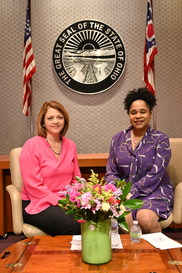
In recognition of Older Americans Month, DAS hosted a conversation May 30 with Ursel J. McElroy, Director of the Ohio Department of Aging (ODA), about the work of her agency and the resources available for older Ohioans and caregivers.
“There are 2.8 million older Ohioans who live, contribute – and we’d like to see thrive – within our own state,” said McElroy.
The population ODA serves continues to grow. Between 2010 and 2020, the population aged 65 years or older saw the largest and fastest growth of any decade since 1880. About one in six people in the United States today are aged 65 and older. Just 100 years ago, this proportion was less than one in 20.
“For the first time in our history, demographers predict that we will have more older adults than we will have young children,” she added. “So having this conversation is incredibly timely for a lot of reasons. Having a thriving older adult population is great for our economy, it’s great for our health, it’s great for so many facets of our everyday life.”
McElroy addressed the theme for Older Americans Month, “Powered by Connection,” which aims to show how vital it is for older adults to avoid the risk of isolation that increases as families move away and opportunities and mobility become more limited.
“It is so incredibly important that we continue to be connected,” McElroy said. “We know that having social connections does reduce the risk of premature mortality.”
She also shared details about several initiatives of the DeWine-Husted administration to support aging Ohioans.
The Program of All-Inclusive Care for the Elderly (PACE) consists of centers that offer a comprehensive set of medical and ancillary services. PACE is designed to empower Ohioans to age well on their own terms and in their preferred environment, as well as help those family members or others who are serving as their caregivers. Though there is just one PACE facility in Ohio currently, the number will be expanding to seven locations over the next two years.
The Healthy Aging Grants Program is providing $40 million to help Ohioans 60 and older stay healthy, live longer, and maintain their independence. The 2020 Summary Assessment of Older Ohioans found there is a 29-year gap in life expectancy in Ohio based on a resident’s ZIP code. The program targets investments in services known to impact healthy aging, such as home modification projects and food and housing assistance.
During his 2023 State of the State address, Governor DeWine called for action in the area of nursing home care. The Nursing Home Quality and Accountability Task Force he created worked quickly to collect data and resources to develop recommendations. Among the task force’s many actions was the release of the Ohio Nursing Home Quality Navigator, a user-friendly dashboard which helps Ohioans find a nursing home for themselves or their loved ones.
“We really want to expand the narrative within the state to appreciate what it means to age. It’s in our best interest that we have a system, that we have an understanding, that we have resources available for people to thrive as long as possible in the places that they choose to thrive in,” said McElroy.
DAS hosted the event as part of its Perspectives Series which features agency leaders and experts from across state government discussing topics related to diversity and highlighting programs or initiatives of partner agencies. The entire event is available for viewing at The OhioChannel.org.
Above: DAS Perspectives host Kathleen C. Madden (left), Director of the Ohio Department of Administrative Services, welcomed Ursel McElroy, Director of the Ohio Department of Aging, to the May 30 discussion held in recognition of Older Americans Month.
|