Ohio Safety Congress Registration Now Open
Registration is now open for the 2021 Ohio Safety Congress & Expo (OSC21)! Due to the ongoing COVID-19 pandemic, OSC21 will be a completely online event, including our first-ever digital expo.
Visit the OSC21 website for more information and to register for the event, which will stream live March 10-11. Now in its 91st year, the Ohio Safety Congress & Expo is the largest and longest-running free work-safety conference in the U.S.
More than 4,000 representatives from Ohio businesses and government are expected to attend the event to discover the strategies and tools needed for a healthy, safe, and productive workforce. The event offers topics on organizational behavior, safety leadership, emerging trends, and mental health. Participants can visit the digital expo marketplace, compete in a scavenger hunt, download resources, earn attendance credit, and chat with others.
Register today, invite your colleagues and tag us @OhioBWC #OSC21. We’ll see you online for OSC21!
|
Final Month for Indoor Air Quality Assistance Applications!
The deadline to apply to our new COVID-19 Indoor Air Quality Assistance Program is March 31. This reimbursement program is aimed at improving indoor air quality for certain facilities that serve older Ohioans (eligibility details below). The program is funded through the Coronavirus Relief Fund as part of the greater Coronavirus Aid, Relief, and Economic Security (CARES) Act.
Through this program, eligible employers can receive 100% reimbursement (up to $15,000) for qualifying indoor air quality assessment, improvement, and maintenance costs. Eligible costs include inspections, assessments, maintenance, and improvements to indoor heating, ventilation, and air conditioning (HVAC) systems to control the spread of COVID-19. The program also provides reimbursement for secondary devices designed to destroy bacteria, mold, and viruses. Applicants may apply for reimbursement for any qualifying purchases made from March 1, 2020 through March 31, 2021.
Eligible employers include:
- Nursing homes and assisted living/residential care facilities licensed by the Ohio Department of Health.
- Adult day centers that are Medicaid providers and are known to the Ohio Department of Aging.
- Adult day support programs that are Medicaid providers and are known to the Ohio Department of Developmental Disabilities.
You're Invited to Attend the 2021 Virtual Medical & Health Symposium
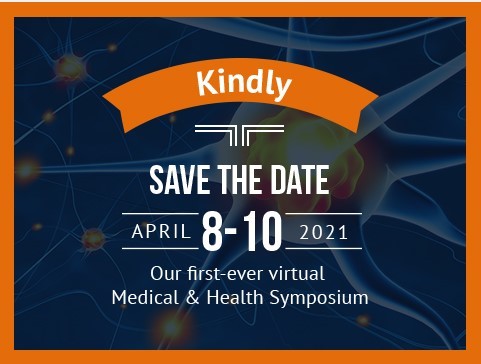
Join other attorneys and health care practitioners from around Ohio for our free virtual Medical & Health Symposium April 8-10! We designed three online educational tracks with continuing education opportunities.
This year’s symposium offers national and state experts covering the latest topics impacting patient care and providers. Session topics will cover a wide variety of issues such as opioid addiction and substance use disorder, where legal and medical worlds intersect, stories of triumph after tragedy, clinical insights to COVID-19, and violence in the workplace.
Enjoy the symposium from the comfort of your home or office and be sure to get your questions answered live at the end of each session.
Continuing education credit is being requested for the following professions:
- Athletic Trainers.
- Attorneys (CLE).
- Chiropractic Physicians (DC).
- CME Physicians (DO, DPM, M.D., and PA).
- Counselors (LPCC, LPC).
- Medical Assistants.
- Nurses (CNP, LPN, and RN).
- Occupational and Physical Therapists.
- Pharmacists.
- Professional Coders (CPC).
- Psychologists.
- Social Workers (LSW, LISW).
- Vocational Rehabilitation (CCM, CDMS, and CRC).
Register now to secure your spot at this year’s symposium!
Questions? For more information about this event, visit our website. If you have questions, please call our provider contact center at 1-800-644-6292, options 0-3-0 or email medsymposium@bwc.state.oh.us.
We look forward to seeing you virtually in April.
|
Fill Out Your Applications Completely!
Please be sure you are completing BWC applications with claim numbers, current address information, including apartment numbers or P.O. boxes when applicable, telephone numbers and injured workers’ email address. This information helps us better serve our injured workers.
C-92 Reminders
As a reminder, you can submit supporting medical documentation of an increase of impairment online with your Application for Determination or Increase of Percentage Permanent Partial Disability (C-92) through BWC’s website. If you are filing the C-92 for newly allowed conditions, please be sure you are listing all the additional condition(s) in which you are applying for an increase.
Also, if you have any questions regarding a C-92 payment or need additional information regarding the process, you can find the C-92 representative’s contact information in the initial C-92 processing claim note on BWC’s website. You can also request the C-92 representative’s contact information or additional information by emailing: BWCRegionalC92Supervisors@bwc.state.oh.us.
Ensuring Accuracy of Information on C-256 for Self-Insured Claims
When a self-insuring employer’s injured worker files an Application for Determination or Increase of Percentage Permanent Partial Disability (C-92), we schedule an exam or review to determine the current level of impairment. Prior to scheduling this exam, we will send you a Self-Insuring Employer Notice and Request for Information for C-92/C-92A Application (C-256) form requesting information about the claim to ensure the exam is accurate.
We prefill the allowed conditions based on our records and ask you to confirm the listed allowed conditions are accurate and complete. We also ask for a compensation payment history to confirm the injured worker is eligible for the award. Please ensure that you agree with the prefilled conditions and add any conditions that are not included on the form. We use this information to ensure the exam addresses all allowed conditions.
If our information is incomplete or inaccurate, we will have to reschedule the exam, which will delay the resolution of the application. We may also file a self-insured complaint if we do not receive a timely response to our request to complete the C-256. We appreciate your attention to these forms so we can promptly address your injured worker’s applications
Updated Timeframe for Contacting Parties by Letter
BWC’s Motions policy and procedure were updated recently. The updates include a revision to the response timeframe when the non-filing party is notified of the request by letter and a response is requested. Previously, the response was requested within 10 days of BWC mailing the letter or contacting the non-filing party by phone.
The new response timeframes are as follows:
- Three full business days when a letter is sent by fax or e-mail (or when the non-filing party is contacted by phone).
- Seven calendar days (plus four days for mailing) when a letter is sent by mail.
BYBO! Referral Process Change
BWC claims services staff will now be referring interested injured workers to the Better You, Better Ohio! (BYBO!) health and wellness program. In the past, this referral was made by Managed Care Organizations (MCOs). This year we are bringing the process in-house and are lucky to have the support and dedication of the claims services staff. Improvements have been made to our internal processes for referrals, making it easier for interested injured workers to participate in the program. These improvements will lead to changes in data collection that can better inform how to engage with injured workers, as well as enhance BYBO!, possibly allowing injured workers to return to work faster.
|
Medical Services Policy Alert Releases
In response to Ohio’s coronavirus (COVID-19) state of emergency, BWC Medical Services adopted several emergency policy changes to facilitate flexibility and safety when providing care for Ohio’s injured workers. The relevant policy modifications maintain providers’ ability to deliver services to injured workers while preventing unnecessary COVID-19 exposure for both parties. These changes are effective until the COVID-19 state of emergency is lifted within the state where the injured worker resides. Below is a comprehensive list and overview of policy alerts announcing emergency policy changes, along with a link to the associated policy:
Temporary Telehealth Policy
Policy Alert #2020-01 recognizes the need for sheltering in place. Thus, an injured worker’s home may temporarily serve as an originating site for a telemedicine visit.
Additionally, cell phone and other non-secure audio/video platforms may be used to facilitate a telemedicine visit. Expansion of services delivered telephonically, audio only, also provide an opportunity to check in with the injured worker or determine if emergency treatment is needed during this state of emergency.
Temporary Telehealth Vocational Rehabilitation Services Policy
Policy Alert #2020-02 addresses selected vocational rehabilitation services. Under this policy alert, BWC will permit vocational rehabilitation providers to use telephone connections in lieu of face-to-face visits for selected services.
Temporary Telehealth Policy for Check-In Services
Policy Alert #2020-03 reflects BWC’s expansion of the providers eligible to bill virtual check-in and telephone codes. In addition to the providers previously eligible to bill these codes, the following providers are now also able to bill these codes:
- Physical Therapists.
- Occupational Therapists.
- Speech-Language Pathologists.
- Athletic Trainers.
BWC continues to monitor and evaluate additional changes that may be necessary in response to this state of emergency.
Pre-Surgical COVID-19 Lab Testing
Policy Alert #2020-04 supports timeliness in scheduled surgeries for injured workers. The policy became effective May 1, which coincides with the date Governor DeWine permitted the scheduling of elective surgeries in Ohio to resume. The policy provides guidance about reimbursement of a pre-surgical COVID-19 test. During the state of emergency, a test may be approved when an injured worker is scheduled for an inpatient or outpatient surgery at a hospital or ambulatory surgery center.
Payment for Disposable Masks or Facial Covering and Payment for Personal Protective Equipment (PPE)
Policy Alert #2020-05 and Policy Alert #2020-7 were developed in response to BWC receiving inquiries regarding whether disposable masks provided to injured workers can be billed to BWC, as well as several inquiries to determine if BWC reimburses for PPE. The policy alerts indicated that due to the nature of these supplies, they are considered “incidental to” the course of diagnosis or treatment of a condition (e.g., furnished as an integral, although incidental, part of the physician’s personal professional services.) Therefore, this equipment is not separately reimbursable.
Post-COVID Syndrome
As the global COVID-19 pandemic continues, the medical community continues to evaluate the potential long-term health effects caused after being positive for COVID-19. It is not yet known if new issues may be presented, or the level of impact on any pre-existing conditions. Policy Alert #2020-06 provides clarification for applicable testing for Post-Acute COVID-19 Syndrome, also referred to as Post-COVID Syndrome or “Long COVID”.
Ohio Workplace Injury and Illnesses Below National Average
Recently released statistics from the U.S. Bureau of Labor Statistics (BLS) show that the rate of non-fatal workplace injuries and illnesses in Ohio are below the national average. The 2019 Survey of Occupational Injuries and Illnesses (SOII) results show 91,800 nonfatal workplace injuries and illnesses were reported among Ohio’s private industry employers, resulting in a total recordable cases (TRC) incidence rate of 2.4 cases per 100 full-time equivalent workers. Ohio is one of only 14 states with a TRC incidence rate that is significantly less than the national rate of 2.8. If Ohio’s incident rate were the same as the national average, Ohio’s private employers would have reported 15,300 more cases.
Additionally, for private industry employers, Ohio’s TRC rates are lower than national rates in all major industry sectors. This includes industry sectors such as manufacturing, construction, healthcare, wholesale, retail, and transportation. Ohio’s private industry also had a lower incidence rate of non-fatal injuries and of illnesses than all neighboring states.
For Ohio’s public sector employers, the combined TRC rate for Ohio state and local government workers was lower than the national rate, with 3.6 cases per 100 full-time equivalent workers in Ohio, as compared to the national rate of 4.6.
These results show the commitment of Ohio’s employers to provide a safe working environment for workers and the value of BWC’s investment in helping employers realize this goal.
Sample Written Safety Program Templates
BWC’s Division of Safety and Hygiene (DSH) has created sample written safety program templates for employers to download and to customize to their operations. DSH utilized our safety experts from Loss Prevention Field Operations, including specialized consultants from the OSHA On-Site Consultation Program, and the Public Employment Risk Reduction Program to create an assortment of branded sample written program templates to share with employers.
Each template is laid out identically and has a welcome page with information on how to use the template. DSH Assistant comments provide added guidance, best practices, or links to resources or reference standards. Additionally, each sample written program template offers supporting documents for training, checklists, definitions, and more. Specific program elements and training information are located in separate sections of each template.
For free consultative assistance in creating and reviewing workplace safety policies, employers can reach out to DSH on our website, or by phone at 1-800-644-6292.
Check back soon for sample written safety program templates on additional topics!
Available Options for Distance Learning about Safety Topics
BWC’s Division of Safety and Hygiene (DSH) now has a full array of distance learning options available through its Education and Training Services Center (ETSC).
Beginning in October 2020, virtual training classes (VTCs) have been conducted for approximately 1,000 customers. These classes cover a wide range of safety topics such as developing a driver safety program, emergency preparedness planning, effective safety teams, and more. Classes are conducted completely online using the WebEx system and mirror the content of BWC’s in-person safety classes, which are currently on hold due to the COVID-19 pandemic. Eight VTCs are scheduled for March, and 24 are planned from April 1 through June 30.
DSH is also committed to having at least two safety webinars a month. These short informational sessions are typically one hour long and provide online training credit for BWC discount programs.
For a listing of upcoming scheduled VTCs and webinars, refer to the upcoming events calendar on our website.
Online e-courses also provide BWC program credits, and these are available to take at any time. In the next few months, the ETSC will roll out several e-courses, including an update to the Accident Analysis (online) course, which can be used to satisfy the requirements of the Drug Free Safety Program (DFSP).
Online training is changing with the needs of our customers. It will continue to change. The ETSC is committed to providing as many options to BWC customers as feasible, now and in the future.
Safe Handling of Dry Ice
Shipments of COVID-19 vaccines are arriving at Ohio hospitals and pharmacies and will continue to be distributed into 2021 and beyond. Several of the vaccines are transported and stored at ultra-cold temperatures. Dry ice (solid carbon dioxide) keeps the vaccines cold. Handling dry ice can be hazardous and requires special precautions by hospitals, pharmacies, and others that may handle the vaccines. Other industries, including industrial cleaning and artificial fog production, also use dry ice, so its hazards are not just limited to the medical sector.
For tips and resources on the safe handling of dry ice, see our Dry Ice Safety Bulletin, and watch this video to learn more.
Have questions? Our safety consultants can provide answers at no cost. You can request services on our website, or by phone at 1-800-644-6292.
Note: Due to COVID-19 safety protocols, we are conducting consultations virtually or by phone.
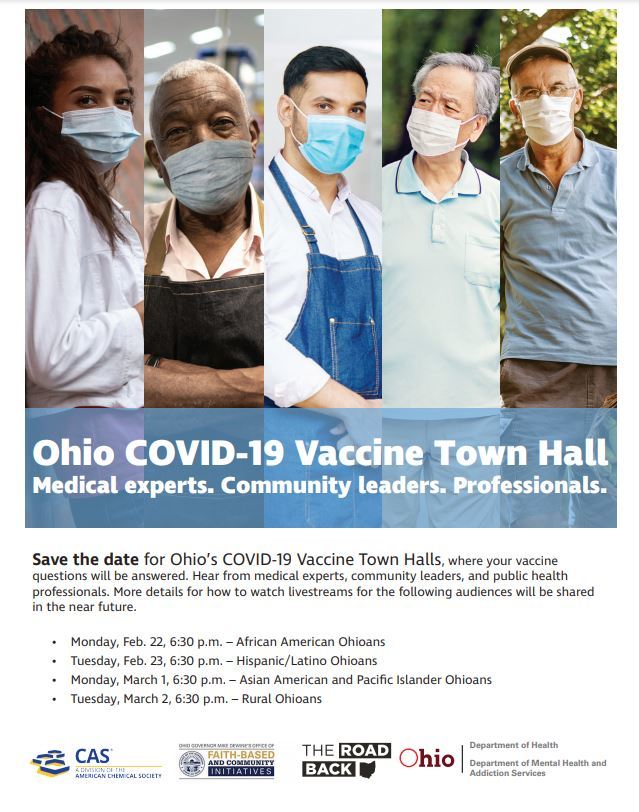
COVID-19 – The road back
 |
|
|
|
|
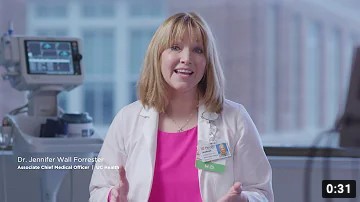
Click the image to learn how our road back is just beginning. We need your help. Please continue to social distance and wear a mask until we're all protected and back to the way we remember. #InThisTogetherOhio
Brought to you by the Ohio Department of Health
|
|
|