|
BCI Scientists Tested Rape Kits Associated with 13,931 Sexual Assaults
from 1971 – 2014
(COLUMBUS,
Ohio) – Ohio Attorney General Mike DeWine announced today that his special
initiative to test evidence from thousands of once-forgotten rape kits is
complete.
Forensic
scientists with the Ohio Bureau of Criminal Investigation (BCI) have now
analyzed all 13,931 rape kits submitted by local law enforcement for DNA
testing as part of Attorney General DeWine’s Sexual Assault Kit (SAK) Testing
Initiative. A total of 8,648 DNA profiles have been uploaded to the
Combined DNA Index System (CODIS) as a result of the testing, and
5,024 matches to offender DNA and/or DNA collected from the scenes of other
crimes have occurred to-date. Charges have been filed against hundreds of
attackers.
“The testing of
these nearly 14,000 kits has changed the culture surrounding rape
investigations in Ohio,” said Attorney General DeWine. “The culture today is that every single rape kit needs to be tested. Because of the
spotlight on these cases and the results that have followed, the value of testing
these kits has been accepted. When agencies submit kits for testing
without delay, suspects can be identified faster, future attacks can be
prevented, and other crimes can be solved.”
After learning
about the accumulation of untested rape kits in 2011, Attorney General DeWine
formed a commission to study the problem. The group determined that any kit
associated with a crime should be submitted to a crime laboratory for DNA
testing in an effort to identify offenders and ensure that DNA potentially relevant
to future investigations is included in the CODIS database. Attorney General
DeWine requested that local law enforcement voluntarily submit any unanalyzed
kits to BCI for forensic testing at no cost to them, and between 2011 and 2016, 294 law
enforcement agencies from 75 counties submitted previously untested rape kits
connected to 13,931 crimes for analysis. To handle the increased workload,
Attorney General DeWine expanded BCI’s forensic science division by 10 new
positions to help analyze the kits without slowing down the
testing of current casework.
The nearly
14,000 sexual assault kits submitted as part of the initiative were connected
to attacks that occurred between 1971 and 2014. The Cleveland Police Department
submitted the largest number of kits (4,418), followed by the Toledo Police
Department (1,802), Akron Police Department (1,432), Columbus Police Department
(482), Springfield Police Department (367), and Cincinnati Police Department
(338).
A full list of
submitting agencies and CODIS hits per agency can be found on the Ohio Attorney
General’s website.
The majority of CODIS hits obtained as a result of the
DNA testing linked two cases together, but 300 DNA profiles were linked to between three and 18 cases. In total, those 300 serial offenders were linked by DNA to 1,127 crimes in the CODIS database.
"If you look at the people who we have been able to convict as a result of this initiative, many of them were serial rapists," said Attorney General DeWine. "It's scary to think they were running loose."
While there are
examples of prosecutions connected to these cases throughout the state in places such as Franklin, Lucas, Summit, and Muskingum counties, Cuyahoga County has charged the largest number of defendants as a result of the
initiative. According to Cuyahoga County Prosecutor Michael C. O’Malley, 656
defendants have been indicted in connection with more than 700 cases following DNA testing conducted as part of the
SAK Testing Initiative and follow-up investigation conducted by
the Cuyahoga County Sexual Assault Kit Task Force.
Examples of convictions in Cuyahoga County as a result of the initiative include:
-
Johnnie Paige: Paige was identified as the person who raped a 19-year-old in 2003 and a 16-year-old in 2004 after rape kits connected to the Cleveland attacks were submitted to BCI in 2014. Both victims were held at gunpoint. Paige was sentenced to 18 years in prison for the crimes.
-
Delbert Buckwald: Buckwald was sentenced to serve a minimum of 30 years in prison for raping two women, as well as a 12-year-old girl who was walking home from school when she was attacked. The crimes happened in 1993 and 1994.
-
Carlin Powell: DNA testing conducted as part of the SAK Testing Initiative helped identify Carlin Powell as the person who raped a 25-year-old woman in 1995 and a 15-year-old girl in 1998. He will be sentenced in Cuyahoga County for those rapes, plus a third sexual assault, next month.
“I commend Attorney General Mike DeWine for his leadership
on the rape kit initiative,” said Prosecutor O’Malley. “Today’s announcement represents the collaborative work of law
enforcement from all parts of Ohio. It is also an important reminder that each
victim’s allegation of sexual assault needs to be thoroughly investigated so we
can bring them justice and keep our communities safe.”
In an effort to
identify even more attackers, the Cuyahoga County Sexual Assault Kit Task Force and BCI have also begun
re-examining many other rape kits that were tested in the past, but did not yield a DNA profile at the time. DNA-testing technology in use today is more advanced and has
demonstrated success in locating DNA that could not be found in the past.
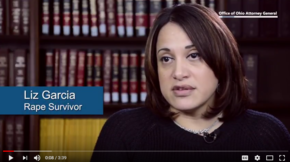
"I was happy because I was able to get closure for my case," said Liz Garcia, a sexual assault survivor whose kit was re-examined by BCI. "I remember crying in the office when I was told that they had DNA, and they opened my case and tested those kits."
Ms. Garcia was one of 18 victims linked to a single offender by DNA. More information on her story can be found below.
"When I look back on this initiative, I'll be able to look back and know that we made a difference," said Attorney General DeWine. "And it wasn't just me, it was the great scientists and investigators we have at BCI, the local investigators and victim advocates, and the prosecutors who have taken these cases to trial. We all accomplished something that really mattered to sexual assault survivors and really made a difference in their lives."
“The Ohio Alliance to End Sexual Violence (OAESV) is honored
to recognize and celebrate the important work of Attorney General DeWine’s
Sexual Assault Kit Testing Initiative," said Becky Perkins, Communications Director for the Ohio Alliance to End Sexual Violence. "OAESV is committed to continuing our
partnership with the Attorney General’s Office, rape crisis centers, and allies
across Ohio in providing trauma-informed support to survivors affected by the
rape kit backlog, and advocating for policies that promote justice and
healing.”
The Attorney General's Sexual Assault Kit Testing Initiative also helped influence several new laws in Ohio. Law enforcement agencies are now required to submit all rape kits collected in association with a crime to a laboratory for testing within 30 days. The statute of limitations for prosecuting rape was also expanded from 20 to 25 years, with five additional years for prosecuting a case where DNA identifies a suspect after 25 years.
The Attorney General's Office will hold a symposium in 2018 to share strategies with local law enforcement on how to efficiently and successfully investigate and prosecute rapes that occurred years or decades in the past.
–30–
|