In this issue:
New This Week
If you notice any damage or hazardous areas not listed below, please report to info.r5@dec.ny.gov.
Last Week
-
High Peaks Wilderness: A stringer is broken on the bridge over the Opalescent River along the trail to the Feldspar Lean-to. This bridge serves the Lean-to and Campsites and is accessed off the southern end of the Lake Arnold Trail. Please use caution if utilizing the bridge. DEC is starting the planning process to replace the bridge and will share updates as they are available.
Fire Danger: Check the fire rating map for daily updates.
Sunrise/Sunset: Sunrise = 5:13 a.m.; Sunset = 8:42 p.m. Pack at least one headlamp (two headlamps recommended) even if you expect to finish your activity before sunset. Phone batteries drain quickly and are discouraged.
Temperatures: These are forecast temperatures (Fahrenheit) for base elevations throughout the region.
Weekend temperatures in the region at BASE elevations are expected to have highs in the 90s and lows in the mid-50s. Be aware: There is a heat advisory, and heat index values between 95 and 104 are expected!
Check the National Weather Service’s Mountain Point Forecast for more accurate forecasts at elevation on or near your intended route.
Reminder: These forecasts are for low elevations. Anticipate losing 5 degrees Fahrenheit for every 1,000 feet of elevation gain.
Remember – hypothermia is always a risk in these conditions and can happen easily with improper layering. Be prepared with extra dry layers and keep an eye on the weather, which can change rapidly.
Conditions and Pertinent Reminders:
- Heat advisory in place until Friday evening, with heat index values between 95- and 104-degrees Fahrenheit expected and high humidity. Stay hydrated with enough water and a water filter in case you run out (and remember your water filter is useless if you are not on a trail with access to water, so plan accordingly!), and stay cool with sun protection/a hat.
- Bring salty snacks or electrolytes to help with hydration.
- Think about your dogs’ paws on rocky trails in these high temps! Consider a less rocky trail or leaving Fido at home.
- Choose a trail less traveled. The Adirondacks boasts over 2,000 miles of hiking trails. There are lots of hidden gems, and choosing one will help reduce impact on the trails this holiday weekend as well as ensure a more peaceful, less crowded hiking experience!
- The Adirondacks is home to lots of rare alpine vegetation species that can withstand extreme weather but be destroyed by a single footprint. Don’t let yours be that footprint. Do the rock hop- stay on rocky surfaces above treeline/on mountaintops and off the vegetation!
- Ticks are active– wear light, long, tucked-in sleeves to prevent and detect them.
- The Avalanche Pass trail remains closed due to the July 2025 slide.
For weekly updates on specific trail conditions or closures, visit Backcountry Information For The Adirondack Park.
Check the Weather: Check the forecast for your destination and pack and plan accordingly. Check the National Weather Service Northern Adirondacks and Southern Adirondacks Mountain Point Forecasts for select summit forecasts. Check both daytime and nighttime temperatures and remember that temperatures will drop as you gain elevation.
Check the Air Quality Index (AQI) Forecast: If the AQI is forecast to exceed 100, DEC and the New York State Department of Health (DOH) will issue an Air Quality Health Advisory with precautionary recommendations for affected areas. View DEC’s current AQI forecasts and real-time air pollution data from DEC’s monitoring network.
Visit the main Adirondack Backcountry page for more trip-planning resources.
Adirondack Mountain Reserve: From May 1 through October 31, reservations are required to access the parking lot, trailheads, and trails located on the privately owned 7,000-acre AMR property in the town of Keene in the Adirondack High Peaks region. For a list of frequently asked questions, visit AMR's website. NOTE: This program is managed directly and exclusively by AMR, not DEC. For questions or concerns about the reservation system, please directly contact AMR using the Contact Us section of their website.
Bear Canisters, Required Dates: NYSDEC requires the use of bear-resistant canisters by overnight users in the Eastern High Peaks Wilderness between April 1 and November 30. NYSDEC encourages campers to use bear-resistant canisters throughout the Adirondack backcountry. Bear canisters should be used to store all food, food garbage, toiletries, and other items with a scent. Canisters should be stored a minimum of 100ft from tents, lean-tos and cooking sites and kept closed whenever they are not being accessed. Learn more about bear canisters and avoiding human-bear conflicts.
Rock Climbing Route Closures: Every spring into mid-summer, DEC closes certain rock climbing routes that have peregrine falcon nesting sites, in order to prevent disturbances of this endangered species and to protect climbers. Beginning April 1, updated rock climbing route closures for the season have been posted. They are listed at Adirondack Rock Climbing Route Closures.
Ticks: Ticks are active! Wear light-colored clothing with a tight weave to spot ticks easily. Wear enclosed shoes, long pants and a long-sleeved shirt. Tuck pant legs into socks or boots and shirt into pants. Check clothes and any exposed skin frequently for ticks while outdoors. Consider using insect repellent. Stay on cleared, well-traveled trails and walk in the center of trails. Avoid dense woods and bushy areas. Additional tips for tick prevention.
Adirondack Rail Trail: The Adirondack Rail Trail is a multi-use trail allowing for various types of recreational activities. To ensure safety for all while sharing the trail, all users should travel on the right side of the trail unless passing others. Groups should move in single file on the right when other users are passing. Cyclists should pass on the left and inform others prior to and while passing. Snowmobilers should pass slowly on the left and travel in single file, paying extra attention to those nearby at turns, intersections, and popular/congested areas. Lastly, pet owners must ensure that all waste is picked up and dogs are kept on leashes. For more information, visit the Adirondack Rail Trail webpage.
Mount Colden Trapdike: The trapdike is considered a technical climb and not a hike. Climbers should be prepared with helmets, ropes, and climbing gear to ascend this route. Hikers looking to summit Mount Colden should do so via the hiking routes. Attempting to climb the trapdike unprepared can result in a rescue operation, serious injury, or death.
No Overnight Camping at Trailheads: Overnight camping is not permitted at trailheads or other roadside locations where a camping disc is not present. This includes individuals sleeping in cars, vans, and campers. Campers should seek out designated roadside campsites marked with a "Camp Here" disc or open campgrounds. When camping, always carry out what you carry in and dispose of trash properly. Use designated bathroom facilities, pack out human and pet waste, or dig a cat hole.
Lake Colby: Lake Colby recreators, please be advised that public use of the Camp Colby grounds is prohibited. Follow all posted “do not enter” and “restricted area” signs along the property border. Due to frequent public use of the restricted area, DEC will provide increased ECO presence throughout the weekends.
If you are going hiking in the Adirondacks for this holiday weekend, first of all- consider the heat! This weekend might be better suited for visiting swimming holes, waterfalls, going boating or fishing.
But second, if you do decide to hike, opt for a lesser-travelled trail. On holiday weekends, there is extra foot traffic on the trails which can increase impact and lead to trail erosion, widening, and damaged vegetation. For example, some of the most popular mountains in the Adirondacks have fragile alpine vegetation at the summit. These plants have evolved to survive extreme conditions like thin, acidic soil and fiercely harsh winds. But a single human footstep? That can cause irreversible damage.
So with that in mind, do the rock hop when you’re above treeline. Avoid stepping on the vegetation- it might not look like much but that vegetation is extremely unique and rare. And more importantly: choose a trail less traveled.
The Adirondacks has over 2,000 miles of hiking trails. Get yourself a map and see what peaks (no pun intended) your interest. Here are some options!
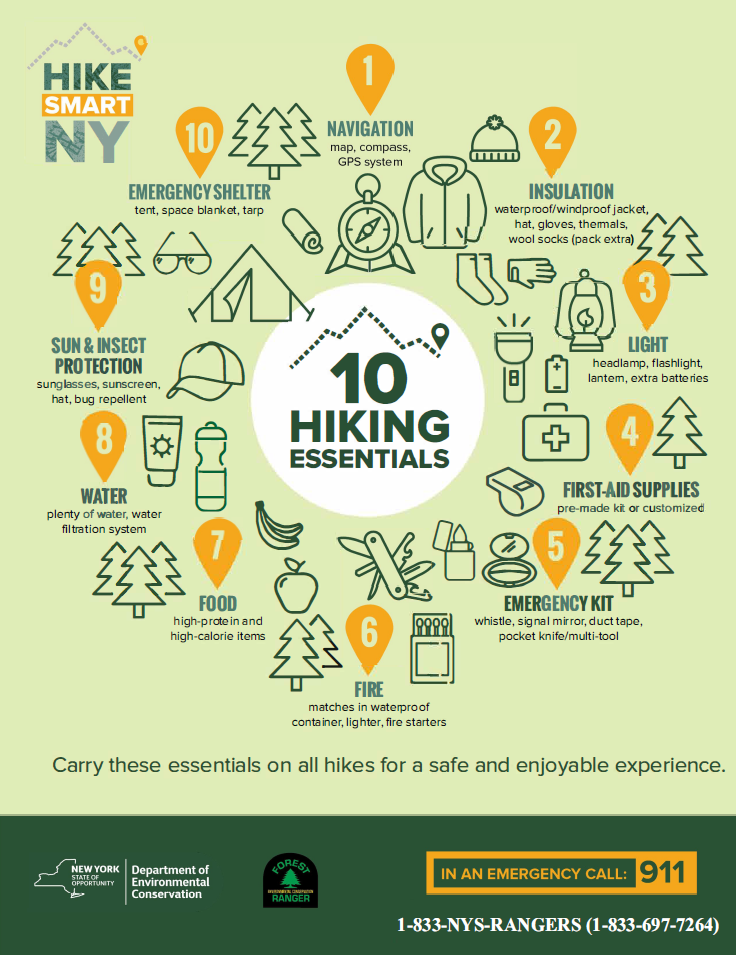
No matter what form of outdoor recreation you enjoy, Hike Smart NY can help you prepare with a list of 10 essentials, guidance on what to wear, and tips for planning your trip with safety and sustainability in mind.
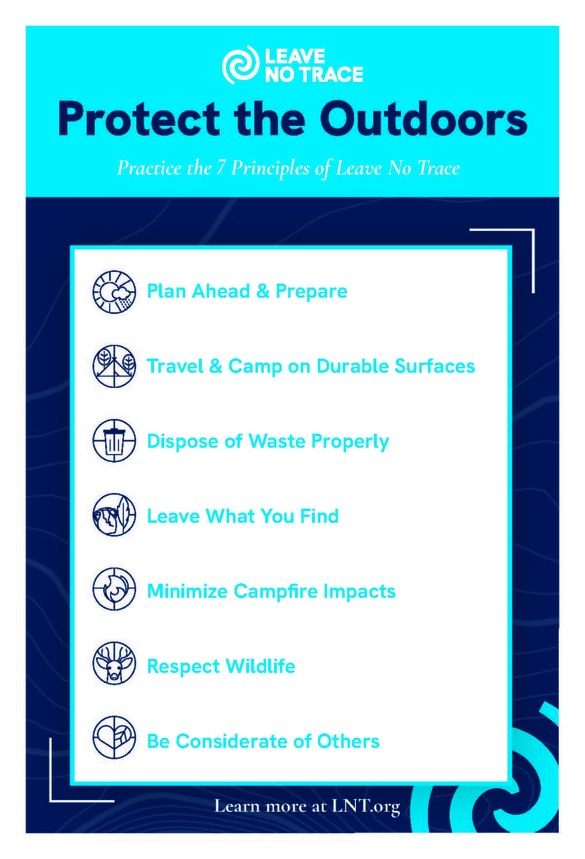
As always: Follow the Seven Principles of Leave No TraceTM to help maintain minimal impact on the environment and the natural resources of the Adirondacks.
- Plan ahead and prepare
- Travel and camp on durable surfaces
- Dispose of waste properly
- Leave what you find
- Minimize Campfire Impacts
- Respect Wildlife
- Be considerate of others
Graphic from LNT.org showing the Leave No Trace 7 Principles of Outdoor Ethics
|