This bulletin provides only the most recent notices. Check the Adirondack Backcountry webpages for more detailed information on access, outdoor recreation infrastructure, and conditions. Whenever you are planning your next outdoor adventure, plan on arriving at your destination early and have several back-up plans in place in case parking at your desired location is full.
Emergency Situations: If you get lost or injured; keep calm and stay put. If you have cell service, call 911 or the DEC Forest Ranger Emergency Dispatch, 833-NYS-RANGERS.
Welcome to the Adirondacks. The Welcome to the Adirondacks webpage provides information about the Forest Preserve, conservation easement lands, outdoor recreation, and Leave No Trace™.
Love Our New York Lands: All New Yorkers and visitors should be able to access, enjoy, and feel welcome on state lands. While enjoying these shared spaces, be respectful of other visitors. Share trails, treat people with kindness, and leave things as you found them for others to enjoy. All of us have a responsibility to protect state lands for future generations. Learn more about how you can Love Our New York Lands.
In this issue:
The following are only the most recent notices pertaining to public lands in the Adirondacks. Please check the Adirondack Backcountry webpages for a full list of notices, including seasonal road statuses, specific trail conditions, and other pertinent information.
NEW THIS WEEK
If you notice any damage or hazardous areas not listed below, please report to info.r5@dec.ny.gov.
- Visit the New York State Snowmobile Association’s website for an up-to-date list of trail openings and closures.
-
Weekly Snow Report: As of Wednesday, 1/14, snow depths were recorded to be 34” (86 cm) at the stake at the Lake Colden Interior Cabin (~2,750 feet elevation).
REMINDER: Attention Lake Colby (north of the Village of Saranac Lake) recreators – please be advised that public use of the Camp Colby grounds is prohibited. Follow all posted “do not enter” and “restricted area” signs along the property border. Due to frequent public use of the restricted area, DEC will provide increased ECO presence throughout the weekends.
LAST WEEK
-
Weekly Snow Report: As of Tuesday, 1/6, snow depths were recorded to be 28” (71 cm) at the stake at the Lake Colden Interior Cabin (~2,750 feet elevation).
Fire Danger: Check the fire rating map for daily updates.
Drought Warnings: Check the drought conditions map to stay updated on which counties are currently under a drought watch or warning.
Avalanche Risk: Investigate carefully before venturing into avalanche terrain, and ensure you have proper avalanche rescue equipment. You should always have an avalanche transceiver, shovel, and probe. You should practice frequently to be proficient in using your beacon. However, you should not take extra risk just because you have rescue equipment. Always carry a day pack with enough equipment to spend the night. For more information on avalanche safety, visit the Avalanche Safety webpage.
Sunrise/Sunset: Sunrise = 7:28 a.m.; Sunset = 4:42 p.m. Pack at least one headlamp (two headlamps recommended) even if you expect to finish your activity before sunset. Phone batteries drain quickly and are discouraged.
Water Crossings: Water levels are average to below average for this time of year throughout the Adirondack region. Expect water levels to rise with rainfall. Check the USGS Current Water Data for New York for stream flow of selected waters. (Personal Flotation Devices - PFDs aka lifejackets - are required from November through May.)
Temperatures: These are forecast temperatures (Fahrenheit) for base elevations throughout the region.
Weekend temperatures in the region at BASE elevations are expected to produce highs in the 20s and lows in the single digits.
Check the National Weather Service’s Mountain Point Forecast for more accurate forecasts at elevation on or near your intended route.
Reminder: These forecasts are for low elevations. Anticipate losing 5 degrees Fahrenheit for every 1,000 feet of elevation gain.
Even with sunny skies, inclement weather is always a possibility and can change very quickly. Remember – hypothermia is always a risk in wet conditions, even when it feels warm outside. Be prepared with extra dry layers and keep an eye on the weather.
Conditions:
- Temperatures are getting colder once again, as cold as 5 degrees Fahrenheit this weekend. We’ll see mild winds at base elevations and new layers of snow on the ice pack. Some areas are likely to be windswept and extremely icy after the warmer temps from last week – remember your traction devices.
- Reminder that snowshoes are required for all hikes in the High Peaks Wilderness at this time as there is far more than 8 inches of snow everywhere.
- It’s cold out there! Layer properly with the three types of layers to prevent frostbite and hypothermia: moisture-wicking inner layers (avoid cotton!), insulating mid-layers of wool or fleece, and wind/waterproof shell layers. Bring dry layers to replace wet ones immediately.
- No matter where you’re hiking, bringing traction is a must. Be prepared to switch from spikes/crampons to snowshoes as conditions dictate. (Snowshoes or skis are required in the High Peaks Wilderness when snowpack exceeds 8 inches.)
- Note: The Avalanche Pass trail is still closed due to the July 2025 slide.
- For weekly updates on specific trail conditions or closures, visit Backcountry Information For The Adirondack Park.
Check the Weather: Check the forecast for your destination and pack and plan accordingly. Check the National Weather Service Northern Adirondacks and Southern Adirondacks Mountain Point Forecasts for select summit forecasts. Check both daytime and nighttime temperatures and remember that temperatures will drop as you gain elevation.
Check the Air Quality Index (AQI) Forecast: If the AQI is forecast to exceed 100, DEC and the New York State Department of Health (DOH) will issue an Air Quality Health Advisory with precautionary recommendations for affected areas. View DEC’s current AQI forecasts and real-time air pollution data from DEC’s monitoring network.
Visit the main Adirondack Backcountry page for more trip-planning resources.
Bear Canisters, Required Dates: NYSDEC requires the use of bear-resistant canisters by overnight users in the Eastern High Peaks Wilderness between April 1 and November 30. NYSDEC encourages campers to use bear-resistant canisters throughout the Adirondack backcountry. Bear canisters should be used to store all food, food garbage, toiletries, and other items with a scent. Canisters should be stored a minimum of 100ft from tents, lean-tos and cooking sites and kept closed whenever they are not being accessed. Learn more about bear canisters and avoiding human-bear conflicts.
Adirondack Rail Trail: The Adirondack Rail Trail is a multi-use trail allowing for various types of recreational activities. To ensure safety for all while sharing the trail, all users should travel on the right side of the trail unless passing others. Groups should move in single file on the right when other users are passing. Cyclists should pass on the left and inform others prior to and while passing. Snowmobilers should pass slowly on the left and travel in single file, paying extra attention to those nearby at turns, intersections, and popular/congested areas. Lastly, pet owners must ensure that all waste is picked up and dogs are kept on leashes. For more information, visit the Adirondack Rail Trail webpage.
Mount Colden Trapdike: The trapdike is considered a technical climb and not a hike. Climbers should be prepared with helmets, ropes, and climbing gear to ascend this route. Hikers looking to summit Mount Colden should do so via the hiking routes. Attempting to climb the trapdike unprepared can result in a rescue operation, serious injury, or death.
No Overnight Camping at Trailheads: Overnight camping is not permitted at trailheads or other roadside locations where a camping disc is not present. This includes individuals sleeping in cars, vans, and campers. Campers should seek out designated roadside campsites marked with a "Camp Here" disc or open campgrounds. When camping, always carry out what you carry in and dispose of trash properly. Use designated bathroom facilities, pack out human and pet waste, or dig a cat hole.
Lake Colby: Lake Colby recreators, please be advised that public use of the Camp Colby grounds is prohibited. Follow all posted “do not enter” and “restricted area” signs along the property border. Due to frequent public use of the restricted area, DEC will provide increased ECO presence throughout the weekends.
Are you an ice water person? Do you prefer lukewarm water? When you’re recreating outside in the winter, chances are you aren’t going to have either option unless you plan ahead and prepare. Let’s evaluate some options. Which one do you winter hike with?
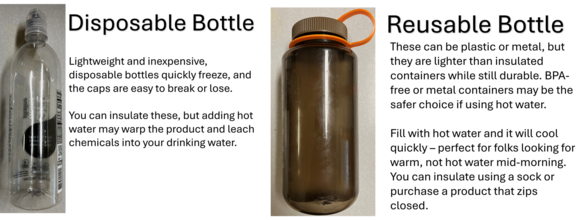 Disposable Bottle
Lightweight and inexpensive, disposable bottles quickly freeze, and the caps are easy to break or lose.
You can always insulate these, but adding hot water may warp the product and leach chemicals into your drinking water.
Reusable Bottle
These can be plastic or metal, but they are lighter than insulated containers while still durable. BPA-free or metal containers may be the safer choice if using hot water.
Fill with hot water and it will cool quickly - perfect for folks looking for warm, not hot water mid-morning. You can insulate using a sock or purchase a product that zips closed.
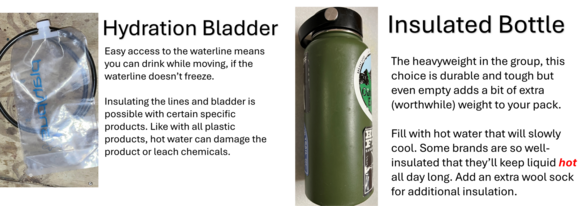 Hydration Bladder
Easy access to the waterline means you can drink while moving, if the waterline doesn't freeze.
Insulating the lines and bladder is possible with certain specific products. Like with all plastic products, hot water can damage the product or leach chemicals.
Insulated Bottle
The heavyweight in the group, this choice is durable and tough but even empty adds a bit of extra (worthwhile) weight to your pack.
Fill with hot water that will slowly cool. Some brands are so well insulated that they'll keep liquid hot all day long. Cover it with an extra wool sock for additional insulation.
Choosing the right bottle for your adventure can help keep you hydrated, prevent your water containers from freezing, and keep that water flowin’!
Some more tips:
- Adding salt, sugar, or electrolyte products is not a feasible option – you’d need so much product that you wouldn’t want to drink the water anyway.
- Sleep with a few full bottles (sealed tight!) inside your sleeping back – this will help prevent frozen bottles in the morning. You can also fill them with hot water at night to help keep you warm.
- Certain lightweight water filter / drinking combo options are not functional if they freeze, so consider boiling water to purify water or keep filters in your pockets where they can stay warm.
- Drink from your accessible containers regularly, especially if using bladders with hoses. That will help keep the lines or caps from freezing.
- Remember that it’s easy to be dehydrated in the winter – you may feel less thirsty and less motivated to drink, but the cold dry winter air zaps up fluids faster than you think.
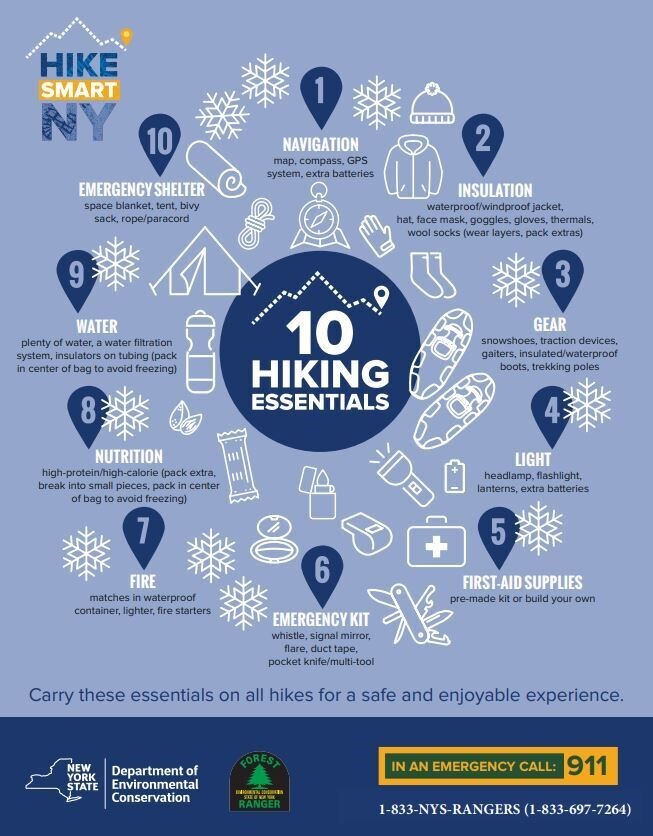
No matter what form of outdoor recreation you're partaking in, Hike Smart NY can help you prepare with a list of 10 essentials, guidance on what to wear, and tips for planning your trip with safety and sustainability in mind.
It’s so important that we’re doubling down and doubling up on our emphasis on water this week! Review the water bottle types above and consider their pros and cons. Part of winter preparedness is learning from our own mistakes or gear issues, so take a minute to reflect on winter adventures you’ve done in which drinking water was a problem. Was your bottle buried so deep in your pack that you chose to stay thirsty? Did the bottle or hose freeze? Did you run out of clean water and find yourself without a filtration option? Is there a product and system that works best for you?
There is no “right” water bottle choice, but there are significant benefits to having access to warm or hot water (from an insulated bottle), having a reusable sturdy bottle that you can fill with hot water at night and put in your sleeping pack, and using a hydration bladder that provides easy access throughout the day. Sometimes, having a few options is best. Consider bringing at least one insulated thermos-type container with you, along with a few filled reusable bottles. Try out different ones and pick the system that keeps you drinking water all day long.
As always: Follow the Seven Principles of Leave No TraceTM to maintain minimal impact on the environment and the natural resources of the Adirondacks.
|