|
Peconic Estuary Partnership: Interview with Executive Director, Joyce Novak
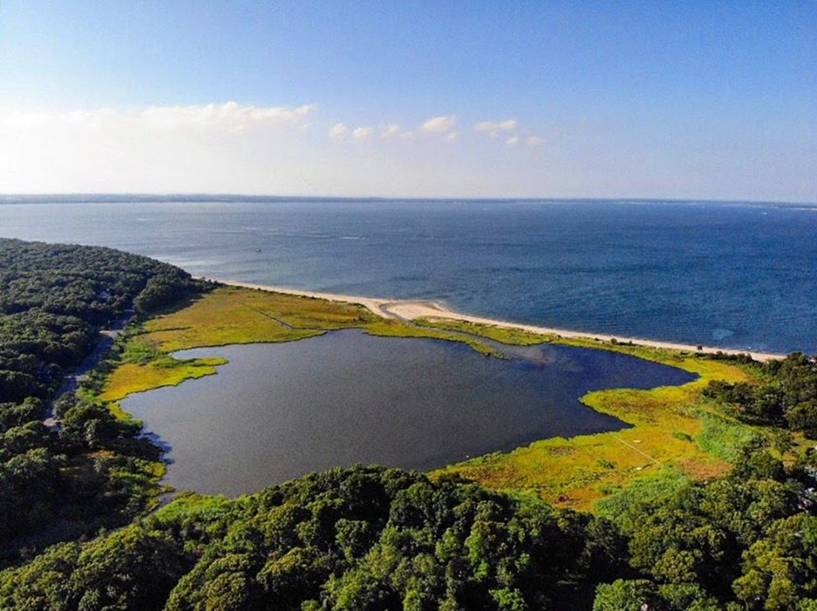
The Peconic Estuary, nestled between Long Island’s North and South Forks, is both an ecological treasure and a cultural landmark. Spanning more than 158,000 acres of surface water and 125,000 acres of land, its bays, harbors, and tributaries sustain fisheries, rare habitats, and wildlife. The Peconic Estuary also provides recreation opportunities and supports local economies while shaping the identity of East End communities. As one of only 28 estuaries designated under the U.S. Environmental Protection Agency’s National Estuary Program, the Peconic is recognized for its national significance—but it faces growing pressures from nitrogen pollution, habitat loss, warming waters, and harmful algal blooms.
For decades, the Peconic Estuary Partnership (PEP) has been at the forefront of addressing these challenges, uniting federal, state, local, and community partners and serving as a model for collaborative watershed management. At the center of this effort is Joyce Novak, PEP’s Executive Director. “National estuary programs are the epitome of watershed-based planning,” Joyce explained. “They take into account all water users—not just conservationists, but fishermen, marina owners, boaters, people who live and work on the water.”
In this edition of the Long Island Watershed Program Newsletter, we sat down with Joyce to explore the Partnership’s work, its successes, and the road ahead for the Peconic Estuary.
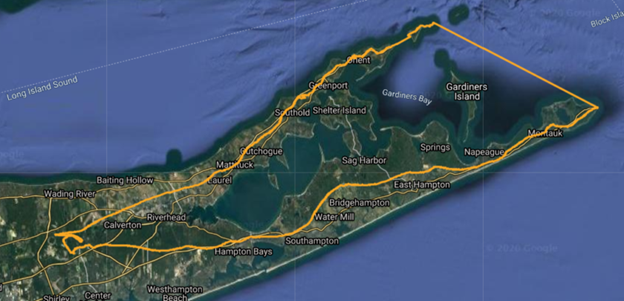
Peconic Estuary Watershed Boundary. Image Credit: Peconic Estuary Partnership.
Building the Foundation
In the early 1990s, Suffolk County spearheaded the effort to secure National Estuary Program designation for the Peconic, recognizing both its ecological significance and the urgent threats it faced. That designation brought federal support and a mandate to create a long-term plan for estuary protection. For decades, the County hosted PEP, laying the groundwork for research, planning, and restoration.
In 2021, the Partnership transitioned to the School of Marine and Atmospheric Sciences (SoMAS) at Stony Brook University, expanding opportunities for collaboration with researchers and academics, while Suffolk County remained a key partner. “The move gave us more freedom and direct access to researchers. But Suffolk County remains one of our biggest supporters. They’re still at the table with us, and their groundbreaking water quality work is central to our success,” Joyce said.
A Blueprint for the Future
Like all National Estuary Programs, the Peconic is guided by a Comprehensive Conservation and Management Plan, or CCMP. The plan is updated every ten years and sets out long-term goals based on scientific research and community input. PEP’s most recent update, finalized in 2020, organizes its work under four themes: clean water, healthy habitats, engaged communities, and coastal resiliency. These themes provide a framework that now guides restoration projects, monitoring programs, and public engagement initiatives across the estuary. By bringing together municipalities, state and federal agencies, nonprofit organizations, and residents, the program embodies a true partnership model.
Joyce recalls the collaborative process of drafting the plan as one of the most rewarding parts of her work. “We had fishermen in the same room as town officials, scientists next to civic leaders. That’s what makes the estuary program model so powerful. It’s not top-down. It’s a coalition.”
Tangible Progress
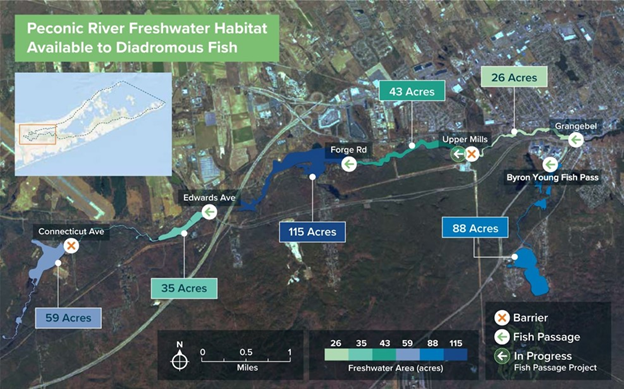
One significant example of progress made under this plan has been restoring fish passages. Dams and culverts once cut off alewife and American eel from historic spawning grounds in the Peconic River system. These species are vital to the food web, sustaining larger predators like striped bass that support both ecosystems and recreational fishing. In 2020, the watershed had only two fish passages; today, there are four, with a fifth on the way. “By the end of this ten-year period, we will have opened up all of the spawning habitat in the Peconic River and Little River systems for alewife and American eel,” Joyce said. “The effect is tremendous and supports both our recreational fishing economy and the cultural traditions of this region.”
PEP’s work has also helped identify new fish passage sites across Long Island, sparking a regional trend in habitat reconnection. “We helped Suffolk County identify a site at Big Reed Pond in Montauk, where they installed a new culvert that fish can now pass through. Southampton is working on two more. Public entities are investing in fish passages and recognizing their importance. That has been a huge highlight for us.”
Graphic of PEP Fish Passage Projects. Image Credit: Peconic Estuary Partnership.
Combating Nitrogen Pollution
Clean water remains the heart of PEP’s mission. Close to 400,000 cesspools and septic systems on Long Island discharge nitrogen into groundwater, which flows into bays and harbors, fueling algal blooms, depleting oxygen, and threatening shellfish and seagrass.
PEP’s decades of water quality monitoring contributed to the Suffolk County Subwatersheds Wastewater Plan, a roadmap for reducing nitrogen through septic upgrades, sewering, and land-use changes. Central to that plan is the County’s Septic Improvement Program, which provides grants and low-interest loans to help homeowners replace aging cesspools with advanced nitrogen-reducing systems. Thousands of residents have already participated, making it one of the largest local water quality investments in the region.
Still, for many homeowners, replacing a septic system can be challenging. “The number one thing a homeowner can do is upgrade their system. Nobody wants to deal with it—but it’s the most important step to improving water quality. That’s why we’re providing financial support to make it easier,” Joyce remarks. New funding through the Federal Infrastructure Investment and Jobs Act has made it possible for PEP to pilot grants that cover the first years of maintenance costs for upgraded systems. This support is designed to help families not only install but successfully operate new technologies over time.
Even as upgrades move forward, nitrogen that has already entered the groundwater continues to move slowly toward the bays. To better understand this “legacy nitrogen,” PEP has worked with partners to build a Solute Transport Model, first developed in the Peconic and now being applied island-wide. “The model helps us understand legacy nitrogen pollution. It shows why change takes time, and it also highlights where positive steps are making a difference,” said Joyce.
Restoring Habitats
Habitat restoration remains central to PEP’s work. Projects like the Indian Island Wetlands Restoration have reconnected tidal flow and improved ecosystem function. But eelgrass decline is among the estuary’s greatest challenges. Since the 1930s, more than 85 percent of eelgrass beds have disappeared.
“When I first took this job, it seemed hopeless. But eelgrass is too important to give up on—it supports fisheries, habitat, and water quality,” Joyce said. Today, PEP works with Stony Brook University and national experts to identify cold-water refuges where eelgrass may be more resilient, ensuring that future restoration is science driven. “We’re not rushing into restoration that fails. This is about science-led solutions.”
Image Credit: Peconic Estuary Partnership
Community Engagement
While infrastructure and modeling are critical, PEP has also invested in programs that directly engage residents in the estuary. The Homeowner Rewards Program provides grants of up to $500 to offset the cost of installing green infrastructure on their properties including native plantings, rain gardens, and rain barrels. “Homeowner Rewards has been so successful because it gets people involved at a personal level,” Joyce said.
The program has grown through partnerships with nonprofits like the Center for Advocacy Support and Transformation (CAST), who have created a demonstration garden and expanded community education. The program has also been used as a model for the Long Island Garden Rewards Program, a partnership between the NYS Department of Environmental Conservation, NEIWPCC, and the Long Island Regional Planning Council that provides reimbursement for native plantings, rain gardens, and rain barrels for those who reside outside the Peconic Estuary.
At the same time, PEP’s Mini-Grant Program has inspired innovation among grassroots organizations and community groups. The program provides small but critical amounts of funding to schools, nonprofits, and civic associations to pilot new approaches, build stewardship, and expand public engagement in estuary protection. Joyce highlighted two projects in particular: “Two favorites come to mind. One is Half Shells for Habitat, which recycles oyster shells from restaurants to build coastal resilience and counter acidification. Another is research on terrapin turtles, our only brackish-water turtle species, which are a keystone for both seagrass and salt marsh habitats.” Other funded projects have ranged from native plantings and community cleanups to educational programs that connect residents—especially students—with the estuary. By seeding these efforts, the Mini-Grant Program creates ripple effects that extend well beyond the initial investment, strengthening a culture of stewardship across the watershed.
To read about more of PEP’s accomplishments and ongoing projects, visit the webpage here.
Looking Ahead
The road ahead is not without challenges. Warming waters are driving new types of harmful algal blooms and altering ecosystems. “What concerns me most is the evolution of harmful algal blooms,” Joyce said. “Warming waters are changing our ecology, and we’ll see new challenges in our embayments. But with strong science, engaged communities, and collaboration across partners, I’m optimistic we can meet them.”
Over the next five years, PEP plans to complete its fish passage network, expand eelgrass and shellfish restoration, and launch at least two fully scaled nature-based nutrient removal projects modeled on successful efforts in Shinnecock Bay.
The Peconic Estuary Partnership’s success is evident not only in healthier habitats and improvements in water quality, but also in the way its approaches are replicated across the Island. “Change is hard, but don't lose hope. There's always something you can do and anything good is worth fighting for. I really hope that people see that we put in the time to make true science-based decisions to make fundamental change in the Peconic watershed,” said Joyce.
Interested in staying involved with the Peconic Estuary Partnership? Visit their webpage here to learn how to connect with their community science programs, citizens advisory committee, and subscribe to their newsletter.
Connect with Us!
|