In this issue:
Clams, oysters, and other bivalve shellfish are filter feeders, which means they feed on plankton and microorganisms they strain from the water. As temperatures rise, naturally occurring bacteria found in New York’s marine waters can potentially grow to unsafe levels in shellfish. A common bacteria that is found in our coastal waters is Vibrio parahaemolyticus (Vp), which generally thrives during warm water conditions and can rapidly increase in shellfish during warm air temperatures.
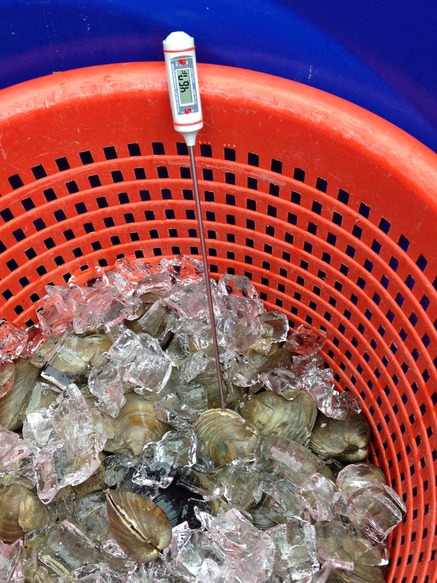
DEC's Vibrio Control Plan promotes proper postharvest handling of shellfish, during the warm weather months between May 1 through October 31 to ensure shellfish are kept cool after harvesting to protect the public health of shellfish consumers.
To ensure the safety of shellfish for consumers, follow the guidance below:
- Keep shaded or out of direct sunlight while harvesting.
- Never keep shellfish in standing water—only keep them over ice and make sure to remove melted ice regularly or in a container that is self-draining.
- Once harvested, keep shellfish in a cooler or refrigerator as quickly as possible.
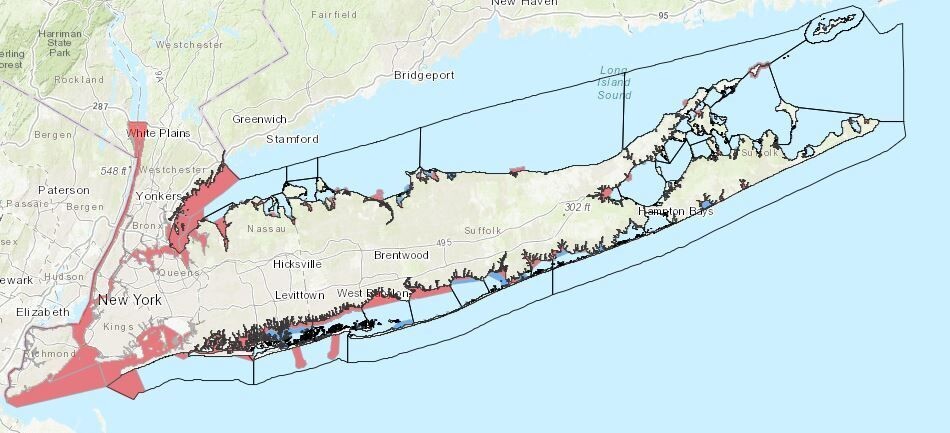
Before going shellfishing, use the DEC Public Shellfish Mapper to know where shellfish harvesting areas are open. This interactive map shows regulatory closures, temporary closures, conditional harvesting programs, shellfish harvest zones, aquaculture lease sites, and water sampling stations.
The ocean is full of phytoplankton, small plant-like organisms (algae) that are invisible to the human eye and form the basis of the aquatic food chain. Most are harmless and play an important role as food for certain marine species. Yet, there are some species that, if given the right conditions, can grow rapidly, creating a widespread "bloom" that overwhelms marine habitats and wreaks havoc on the ecosystem. These are referred to as harmful algal blooms (HABs). Additionally, of the various species that may cause these HABs, there are a handful that can produce dangerous toxins (marine biotoxins) that are harmful to the health of marine organisms and humans.
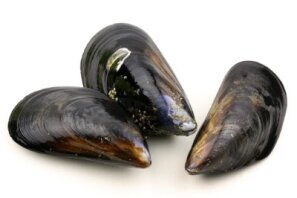
The algae, Alexandrium spp. produces saxitoxin, a dangerous neurotoxin. Shellfish like oysters, scallops, mussels, and clams, are known as mollusks and filter particulates out of the water for food which may include these toxic Alexandrium cells from the water. Saxitoxin can then be concentrated in the body tissues of these shellfish and make them very dangerous for human consumption.
The Division of Marine Resources Shellfisheries Bureau conducts marine biotoxin monitoring of local waters to identify toxic HABs and where they may be occurring in order to protect human health. Closures resulting from the presence of toxins are reported on the Temporary Shellfish Closures page. Information about marine biotoxins and paralytic shellfish poisoning is also available on DEC's website.
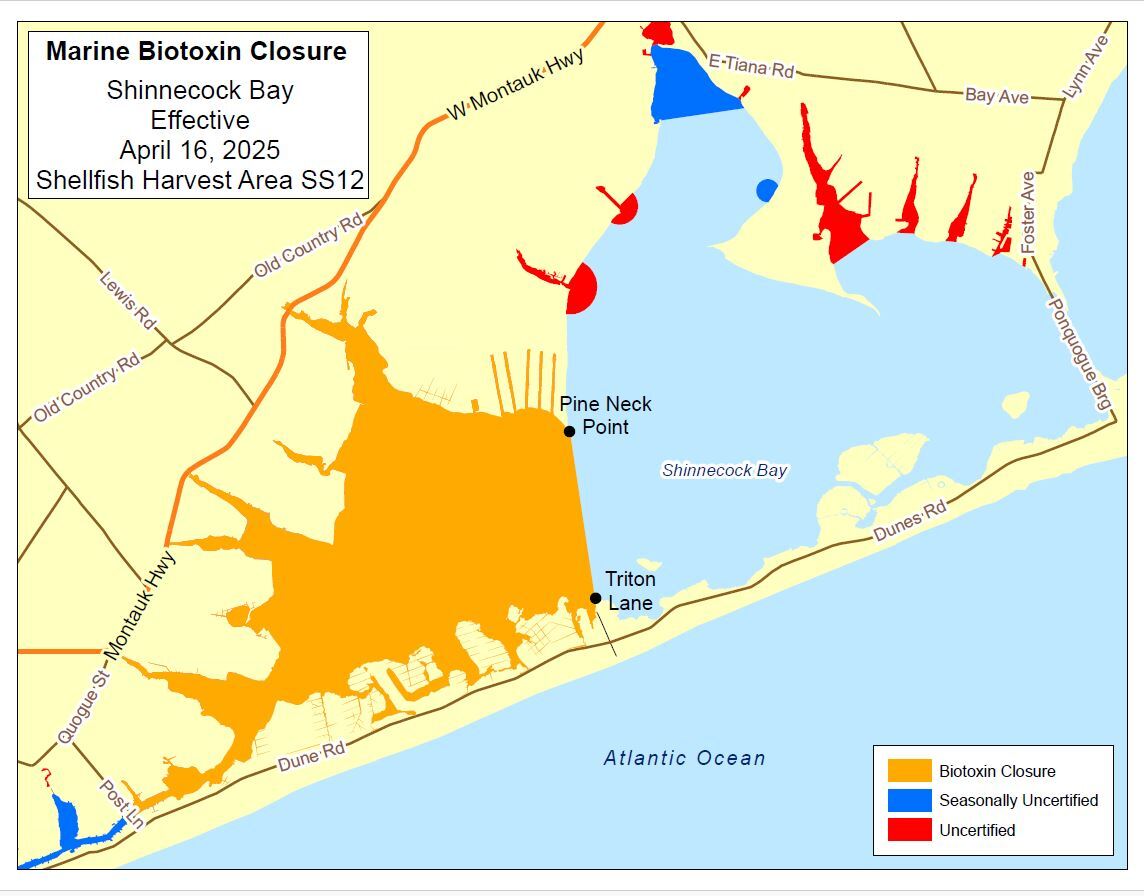
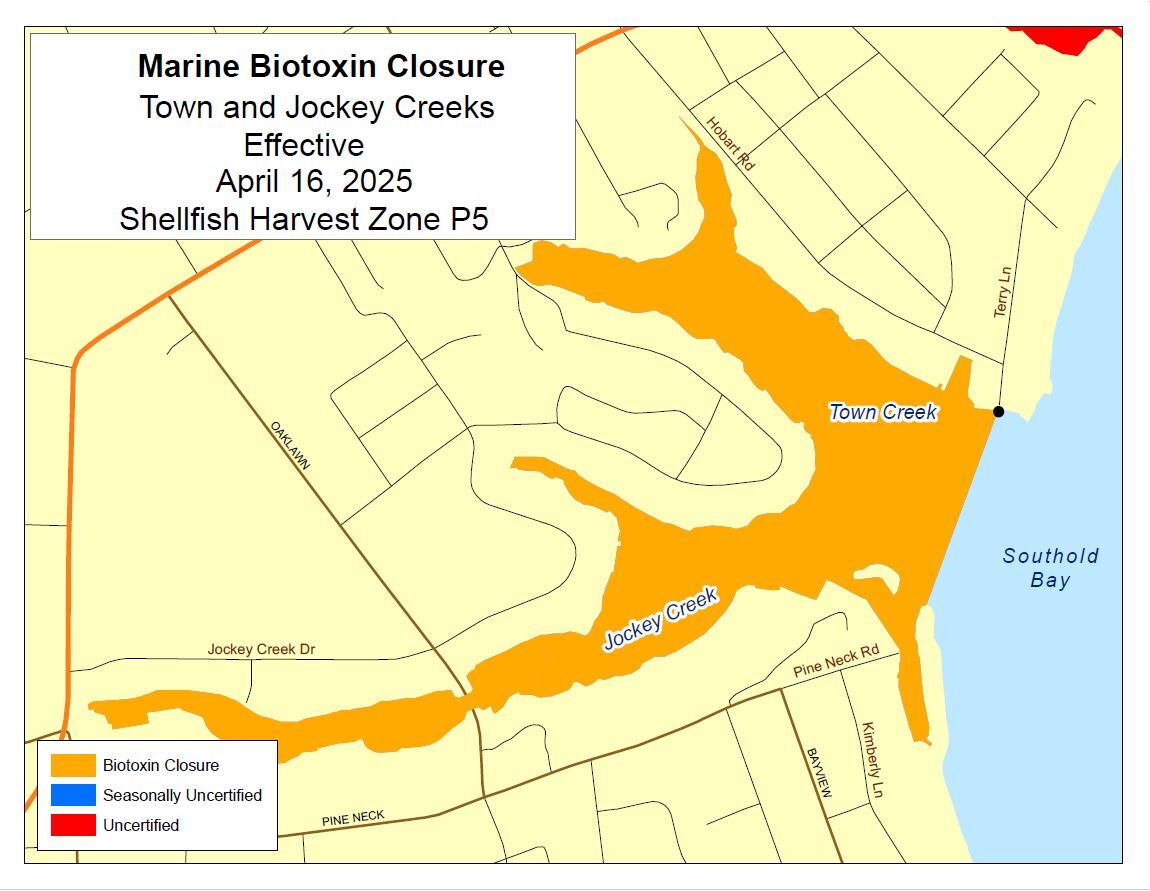
Effective immediately, on Wednesday, April 16, 2025, in the areas described below the harvest of shellfish and carnivorous gastropods (conchs, whelks, moonsnails) is prohibited.
-
Town of Southampton: Shinnecock Bay and its tributaries lying west of a line extending southerly from the southernmost point of land at Pine Neck Point to the northernmost point of land at the end of Triton Lane.
-
Town of Southold: Town and Jockey Creeks (both tributaries of Southold Bay) in their entirety.
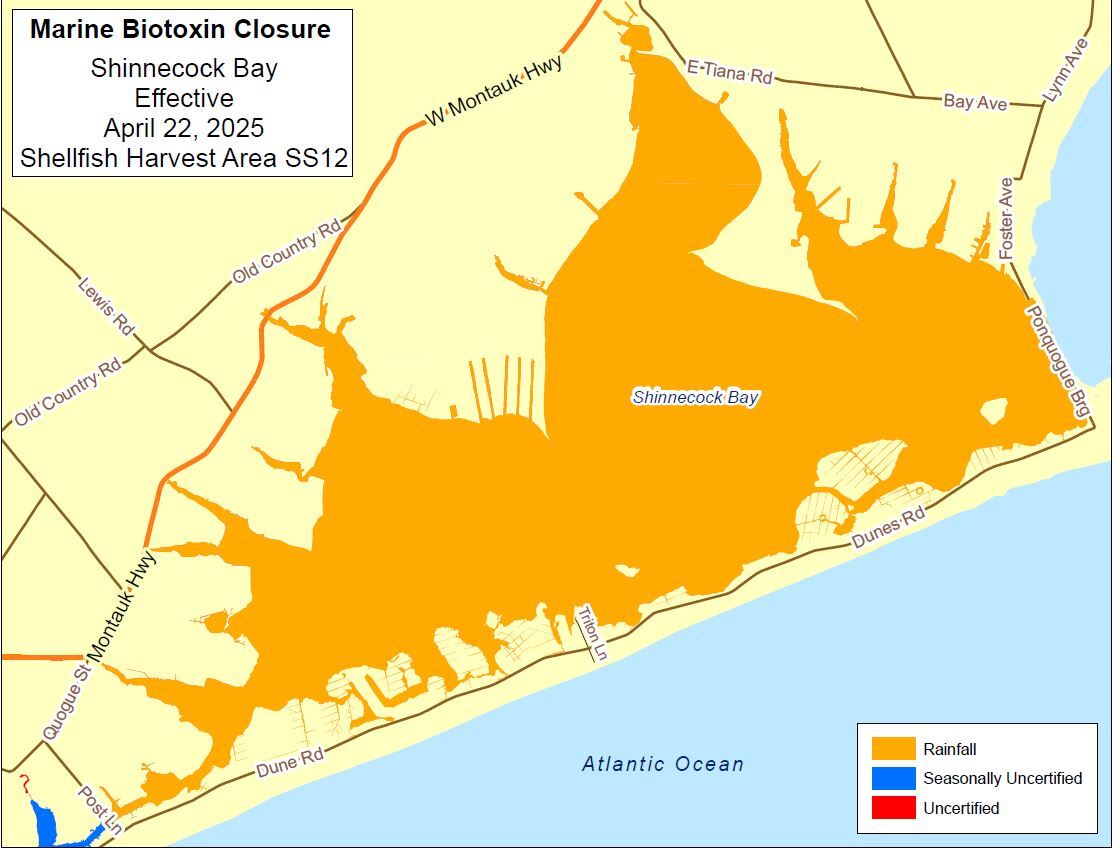
Effective immediately, on Tuesday, April 22, 2025, Due to the potential presence of elevated levels of marine biotoxins in shellfish, the DEC is issuing a precautionary closure for the harvest of shellfish and carnivorous gastropods which expands the existing biotoxin closure in Western Shinnecock Bay. This expanded closure includes the following area
-
Town of Southampton: Shinnecock Bay and its tributaries lying west of Ponquogue Bridge.
This action is taken as a precaution to protect public health due to the potential presence of marine biotoxins in shellfish and the potential presence in carnivorous gastropods which feed on shellfish.
Information about temporary closures and re-openings will be available on a recorded message available at: 631-444-0480 and on DEC's Temporary Shellfishing Closures page.
You may also call the DEC-Bureau of Shellfisheries at 631-444-0492 during regular office hours Monday through Friday 8:00 to 4:00.
Before going shellfishing, use the DEC Public Shellfish Mapper to know where shellfish harvesting areas are open. This interactive map shows regulatory closures, temporary closures, conditional harvesting programs, shellfish harvest zones, aquaculture lease sites, and water sampling stations.
|