|
Certain grant programs (e.g., WQIP, Non-Agricultural Non-Point Source) offer higher points for communities who are working within the critical and/or source water area of their accepted DWSP2 Plan. Review the scoring rubric specific to the project type(s) of interest to determine whether an accepted DWSP2 plan could collect more points for your community.
Grant Opportunities Now Available
The NYS Consolidated Funding Application (CFA) is accepting grant applications now until 4:00 p.m. on July 31, 2024, for many funding programs. The State’s largest funding opportunity collects multiple grant programs under the umbrella of a single application. The grants are available for municipalities, not-for-profits, or other qualified groups to improve water quality and the environment.
Accessing and utilizing grant funding can be essential to implement source water protection actions at the local level. This month’s Drinking Water Source Protection Program (DWSP2) newsletter highlights the funding opportunities available through the CFA. Many of these funding opportunities may be helpful to your community as you work to protect your source of drinking water.
Be sure to review the grant announcement and all associated materials thoroughly before applying.
Do you want to learn how to be successful at securing and managing grants? Check out DEC Division of Water’s webinar, Navigating Grant Funding: Municipal Success Stories to learn strategies and methods from your peers on accessing grant funding.
Each presenter either works directly for a municipality or partners with municipalities to support them in applying and managing grant funds. They provide examples on how grant funding helped solve problems in their community and reduce costs.
Additionally, DEC’s Funding Finder is a helpful tool designed to simplify the process of finding grant opportunities. The tool enables grant seekers to filter grant opportunities based on criteria (e.g., eligible applicants, project type, project phase, etc.) that meets their specific needs.
Another great way to stay up to date is to sign up for newsletters that often include these grant program announcements such as MakingWaves and the DWSP2 Newsletter.
The Water Quality Improvement Project (WQIP) grant program funds projects to directly improve water quality or aquatic habitat, promote flood risk reduction, restoration, and enhanced flood and climate resiliency, or protect a drinking water source. There are eight eligible project types in Round 20 with maximum award amounts ranging from $100,000 to $15,000,000.
If you would like to know more about how to access funding from the eligible project types below, please register for the WQIP Land Acquisition for Source Water Protection Funding webinar on Thursday, June 6, 1 p.m. - 2 p.m.
Eligible Project Types:
For full program details and requirements, or information about webinars on this funding program, visit the WQIP Webpage.
Through the WQIP Land Acquisition for Source Water Protection (PDF) program, municipalities, and land trusts can acquire land and/or conservation easements in crucial areas surrounding active public drinking water sources. This strategy can be a powerful tool for protecting water quality. By strategically purchasing land and establishing riparian buffers, the program helps prevent pollutants (e.g., from stormwater runoff) from entering water supplies, leading to potentially reduced water treatment costs and higher-quality drinking water for communities.
To date, WQIP Land Acquisition for Source Water Protection grants have funded 61 projects totaling over $85 million to protect source water across the state.
- Maximum grant amount: $5,000,000;
- Required local match: 25% of requested grant amount;
- Advance Payment: Awardees may request advance payment of transactional and purchase costs;
- Riparian Buffer: Variable riparian buffer width depending on parcel location;
- Eligible project costs include buying land or development rights;
- transactional costs such as surveys, appraisals, transfer taxes, and title reports; and
- riparian buffer or wetland costs.
There is a wealth of information available to learn more about the WQIP Land Acquisition Program and its impact on communities. The video Protecting New York's Drinking Water Resources offers valuable insights into how communities are successfully utilizing this program to achieve their source water protection goals. Watch the video to hear from 5 organizations on how the program funding helped them achieve source water protection goals while also providing co-benefits including passive recreational opportunities for their communities. Don’t hesitate to share the video as well to raise awareness about this crucial initiative and its role in securing clean drinking water and a healthier environment for all.
 |
Previously, the Town of Brookhaven was awarded a $360,000 grant through WQIP to acquire approximately four acres within the Compatible Growth Area of the Central Pine Barrens. The Central Pine Barrens are a state-designated special groundwater protection area. The underlying aquifer provides the Town with all its public drinking water. Preserving this parcel will protect an area of deep water recharge that is crucial for protecting their drinking water source.
In addition to their efforts to protect their drinking water through land acquisition, the Town of Brookhaven also completed a DWSP2 plan. The development and implementation of this DWSP2 plan is intended to protect the long-term viability of Brookhaven’s public water supply and safeguard public health and the environment. DWSP2 provides communities with an actionable plan to protect their drinking water source(s) which includes a step-by-step process to implement selected methods using available funding sources, like those provided in this newsletter.
The Non-Agricultural Nonpoint Source Planning and MS4 Mapping Grant (NPG) funds planning reports for nonpoint source water quality improvement projects and mapping of Municipal Separate Storm Sewer Systems (MS4s). The program aims to prepare nonpoint source projects for construction and application for implementation funding, and to encourage and support cooperation among regulated MS4s to complete mapping of their stormwater system. Many communities in DWSP2 experience stormwater and nonpoint source issues and could maximize their benefits by working with a technical assistance provider to apply for this grant program during the implementation phase of DWSP2.
For full program details and requirements, including project type descriptions, visit DEC's Non-Agricultural Nonpoint Source webpage.
The Local Waterfront Revitalization Program (LWRP) provides for more accessible, sustainable, and resilient waterfront communities. LWRP funds municipalities to advance the preparation or implementation of strategies for community and waterfront revitalization through several grant categories. Past LWRP projects have reduced nutrients and pollutants getting into source waters and protected critical areas vital to sustaining water quality. Close to $14 million is available for LWRP grants, with a maximum award of $2,000,000.
For full program details and requirements, review the Local Waterfront Revitalization Program Request for Applicants (PDF).
The Climate Smart Communities (CSC) grant program provides funding for municipalities to address greenhouse gas (GHG) mitigation and climate change adaptation at the local level. A total of $22.5 million is available through this request for applications (RFA). Funds are available for two broad project categories, implementation and certification. Implementation projects have a maximum award of $2 million and certification projects have a maximum award of $200,000 and both have a required match of 50% of total eligible project costs. Eligible applicants include all municipalities within NYS. Additionally, Climate Smart Communities offers up to 10 points for municipalities that develop and implement their DWSP2 plan.
For information on what projects qualify as implementation or certification, visit DEC’s Climate Smart Communities Grant Program webpage.
Source Water Buffer Program
The goal of the Source Water Buffer Program is to protect public drinking water and to enhance water quality protection. The Program funds the purchase of conservation easements and the implementation of buffer systems, which filter surface runoff or shallow groundwater to protect the water quality of New York State's aquifers, watersheds, reservoirs, lakes, rivers, and streams. Over $4 million is available for conservation projects with a required match of 25% of total eligible costs. Eligible applicants are Soil and Water Conservation Districts. Applications are accepted on a rolling basis and are funded on a first-come, first-served basis.
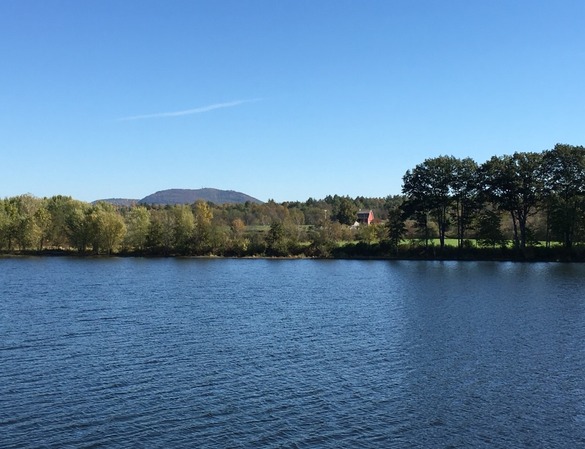
Small buffer area along Hudson River with barn. Photo Credit: New York State Department of Agriculture and Markets
Hudson River Estuary Source Water Protection Funding
The Hudson River Estuary Program announced approximately $750,000 in Local Stewardship Planning (Round 43) funding. This funding includes three available categories of local projects and programs to support planning for source water protection conservation of natural resources, watershed-based stewardship and more. The maximum award is $75,000 with a local match of 15% to implement a restoration or source water protection strategy. The deadline for all applications is July 17, 2024, at 3:00 p.m.
Hosting an event, webinar, or conference in 2024? Reach out to us at source.water@dec.ny.gov to schedule a presentation or tabling event. If you would like to learn more about DWSP2 and how it could help your municipality, fill out our Interest Form and a member of the DWSP2 team will contact you to discuss further.
Was this newsletter forwarded to you? Sign up so you don't miss an edition.
Missed the previous edition? Visit the DWSP2 Newsletter Archive to stay up to date.
Have you begun the DWSP2 process? Or do you have a program or are you aware of a program relevant to source water? Send in any helpful hints or information at source.water@dec.ny.gov and we may highlight them!
Follow DEC on Instagram to see what more you can learn about Connecting Climate Change to Drinking Water.
|