|
In this issue:
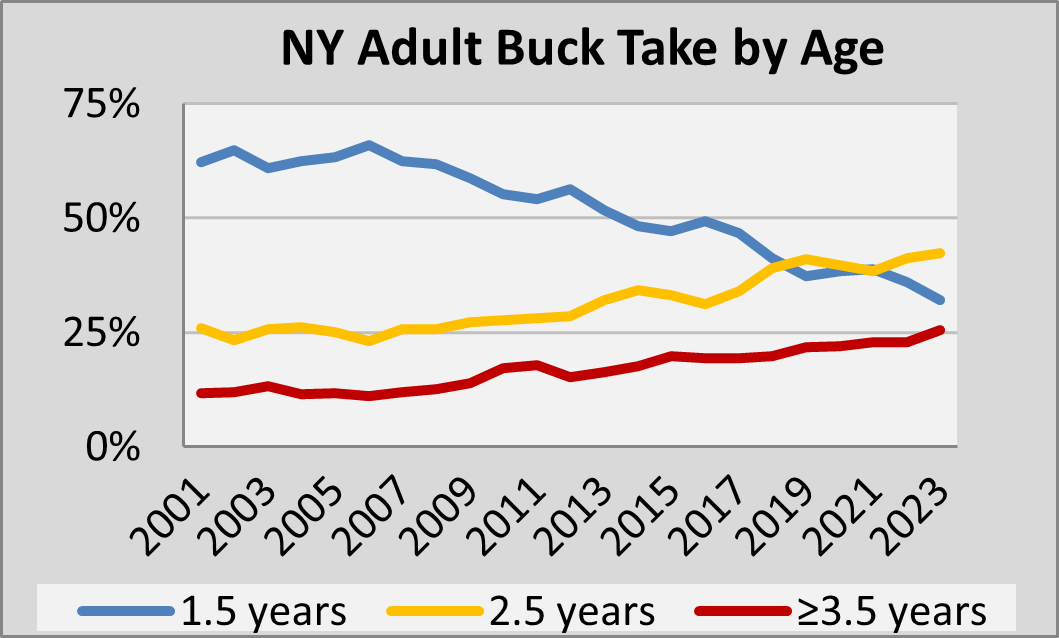
Hunters in New York harvested an estimated 209,781 deer during the 2023-24 hunting seasons, including more older bucks (2.5 years old or older) than ever before. The deer harvest included more than twice as many older bucks than were harvested in the early 1990s, and nearly five times as many than were harvested in 1969 when DEC first began monitoring the age structure of New York’s deer herd. This demonstrates the continued effectiveness of DEC’s Let Young Bucks Go and Watch Them Grow campaign and the willingness of hunters to voluntarily pass up opportunities at young bucks to improve their future opportunities to harvest older bucks.
However, in some areas of the state, especially in Wildlife Management Units (WMUs) 1C, 3M, 3R, 3S, 4J, 6P, 7F, 7H, 7J, 8A, 8C, 8F, 8G, 8H, 8J, 8R, 8S, 9A, and 9F, hunters are not harvesting enough antlerless deer (i.e., adult females and fawns of either sex) to manage deer populations effectively. The 2023-24 antlerless deer harvest was nearly 15% lower than the five-year average. Harvesting antlerless deer helps ensure deer populations remain in balance with available habitat and do not exceed levels of public acceptance that can lead to increased crop damage, deer-vehicle collisions, and other potentially negative deer-related impacts. Harvesting antlerless deer also helps ensure deer are able meet their nutritional demands for antler development, fawn recruitment, and body growth. DEC is evaluating various regulatory and non-regulatory alternatives to increase harvest of antlerless deer during future hunting seasons and encourages all deer hunters in these WMUs to harvest at least one antlerless deer during the upcoming 2024-25 deer hunting season.
DEC’s 2023-24 Deer Harvest Summary report (PDF) provides tables, figures, and maps detailing the deer harvest around the state. Past harvest summaries are also available on DEC’s website.
NY Adult Buck Take by Age
Rabbit Hemorrhagic Disease (RHD) is a fatal virus that affects rabbits and hares. A new strain, RHDV2, was identified in 2010. In 2020, RHDV2 jumped to wild rabbits and hares in the southwestern U.S., where it spread to six states within four months. The virus can infect wild rabbits and hares in addition to domestic rabbits. RHDV2 is extremely hardy, easily transmitted, and highly lethal to rabbits and hares. It does not infect humans or other animals like dogs or cats. RHDV2 spreads easily through direct contact between rabbits or contact with contaminated environments or objects.
The most likely routes of introduction to New York are through transported domestic rabbits, internationally imported rabbit products, or people who travel to outbreak areas in the Southwest. Below are ways you can help stop the spread:
- If you keep domestic rabbits, prevent intermingling with other rabbits. If you get new rabbits, quarantine them for two weeks and use separate equipment and clothing to care for them.
- If you come across a rabbit nest in your yard, do not touch the rabbits. Replace any removed vegetation and avoid the area. The mother typically will only return to the nest once or twice overnight, so nests can seem abandoned when in reality they are being tended to. Remember: if you care, leave them there!
- If you are a wildlife rehabilitator who cares for wild rabbits, do not keep domestic rabbits as pets or have contact with domestic rabbits; maintain good disinfection techniques and change PPE between rabbit litters or individual rabbits.
- If you are a rabbit or hare hunter, avoid contact with domestic rabbits, and do not bring rabbit carcasses killed in other states to New York.
- If you are a hiker, camper, or traveler, and you have been to known RHDV2 outbreak areas, disinfect footwear with a 10 percent bleach solution (one part household bleach, nine parts water) before going afield in New York.
- Please report any unusual wild rabbit mortalities you encounter to the DEC Wildlife Health Unit at (518) 478-2203.
Read the RHDV2 factsheet (PDF) to learn more about how it spreads, ways to prevent it, and what you can do to help.
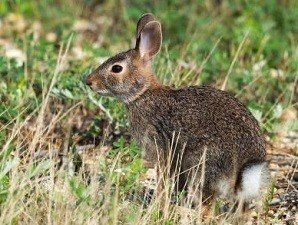
Photo of Cottontail Rabbit
The Association of Fish and Wildlife Agencies (AFWA), in partnership with Responsive Management (one of the most highly respected professional survey contractors in North America), will conduct a national survey of furbearer trappers in 2024. This will be the fourth iteration of the survey which was previously conducted in 1992, 2004, and 2015 (PDF). The goal of this study is to capture important information about trapping and trappers in the United States so that State Fish and Wildlife Agencies can better understand and promote the activity for future generations to enjoy. Information gathered in this survey will also help agencies gauge the success of current efforts to recruit, retain, and reactivate trappers, and plan future efforts to increase trapper participation.
The National Trappers Association and the Fur Takers of America are members of the AFWA Furbearer Conservation Technical Working Group. They have been important partners with AFWA for over 30 years representing trappers and assisting Agencies with understanding trapping. Additionally, all US State and Territorial Fish and Wildlife Agencies are members of AFWA, along with many Federal Fish and Wildlife Agencies, Canadian Federal and Provincial Agencies, and over 45 non-government conservation organizations.
This survey, like the previous three surveys, will be the most comprehensive national survey ever conducted on the technology and techniques used to harvest wildlife by trapping in the United States. The information gathered will allow for a continued assessment of many aspects of trapping. The objectives of this current survey project are to:
- determine which types of traps are being most commonly used by trappers for various species;
- determine which species of furbearers are of highest priority to trappers to capture on their traplines;
- determine changes in trap use (sizes, types, etc.) by trappers over time;
- quantify and assess trapper knowledge and use of Best Management Practices for trapping;
- acquire basic demographic information (age, gender, etc.) on trapping license holders; and
- increase state fish and wildlife agencies’ understanding of trapping as it is currently being practiced so efforts to recruit, retain, and reactivate trappers can be implemented to increase trapper participation.
Responsive Management began contacting trappers in early May. DEC, AFWA, NTA, and FTA would very much appreciate your participation in the survey!
For more information about the benefits of trapping and best management practices for trapping, visit the DEC website.
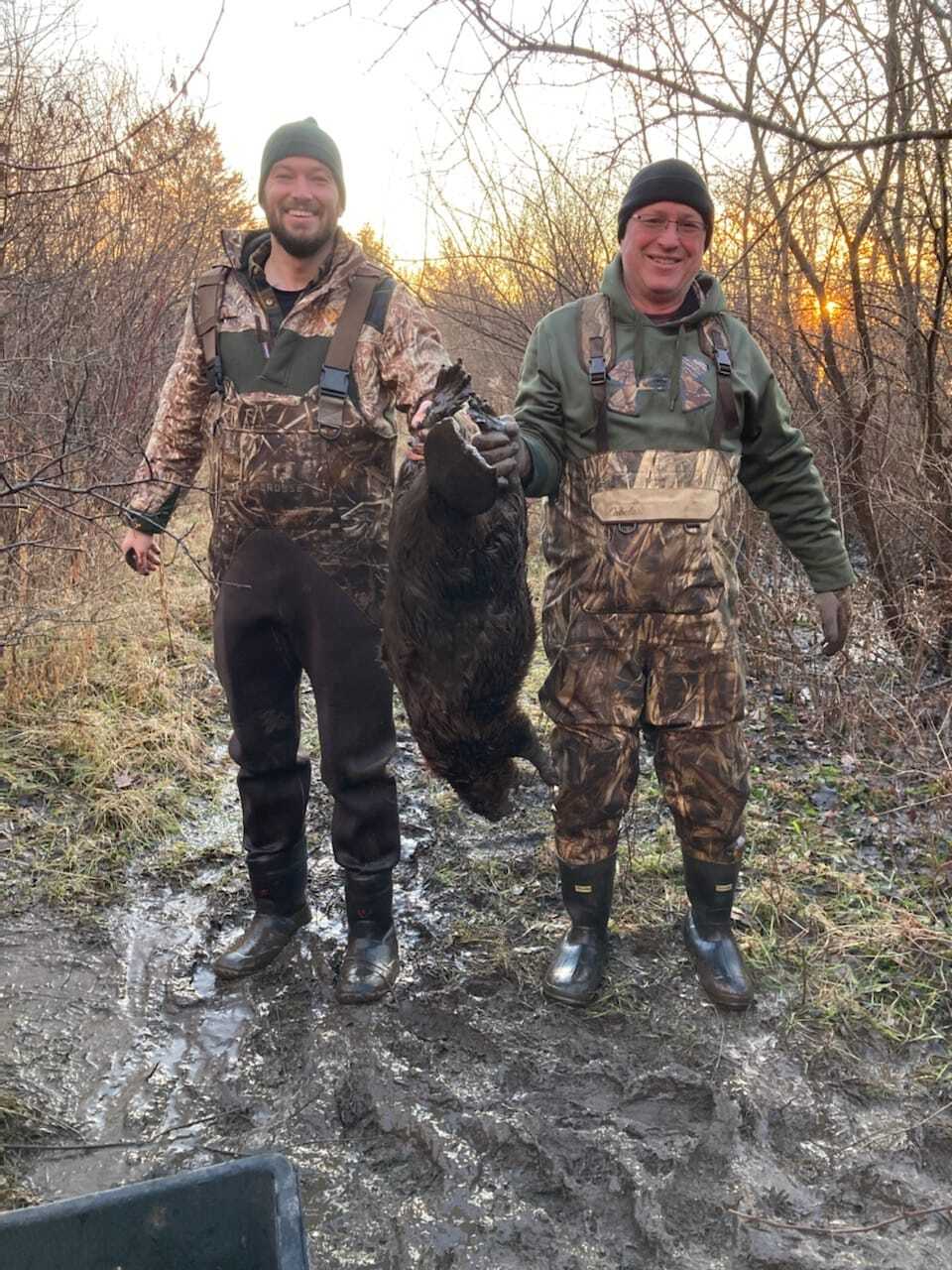
Photo of Two Trappers by Eric Riegel
|