This bulletin provides only the most recent notices. Check the Adirondack Backcountry webpages for more detailed information on access, outdoor recreation infrastructure, and conditions.
Emergency Situations: If you get lost or injured; keep calm and stay put. If you have cell service, call 911 or the DEC Forest Ranger Emergency Dispatch, 833-NYS-RANGERS.
Welcome to the Adirondacks. The Welcome to the Adirondacks webpage provides information about the Forest Preserve, conservation easement lands, outdoor recreation, and Leave No Trace™.
Love Our New York Lands: All New Yorkers and visitors should be able to access, enjoy, and feel welcome on state lands. While enjoying these shared spaces, be respectful of other visitors. Share trails, treat people with kindness, and leave things as you found them for others to enjoy. All of us have a responsibility to protect state lands for future generations. Learn more about how you can Love Our New York Lands.
In this issue:
The following are only the most recent notices pertaining to public lands in the Adirondacks. Please check the Adirondack Backcountry webpages for a full list of notices, including seasonal road statuses, rock climbing closures, specific trail conditions, and other pertinent information.
NEW THIS WEEK
-
Winter Storm Warning 4/3-4/5: Heavy snow expected. Total snow accumulations of 6 to 15 inches, locally 18 to 24 inches. Winds gusting as high as 50 mph prior to heavy snow Wednesday evening. It is strongly recommended to refrain from entering the backcountry throughout the duration of the storm and stay at low elevations to view the eclipse. Please see “Conditions” in “Know Before You Go” below for more details.
-
Snow Report (4/3): The following report describes conditions as of Wednesday, 4/3. Changing weather may affect conditions. There is 34cm (13in) of snow at the Colden Caretaker Cabin. Snow levels vary at higher elevations and snowshoes are required where snow depths exceed 8 inches. The conditions are muddy, and drainages are open.
-
Adirondack Rock Climbing Closures: DEC closes certain rock-climbing routes in the Adirondacks to protect nesting peregrine falcons. For a full list of closures, visit Adirondack Rock Climbing Route Closures. Once peregrine nest sites are determined, climbing routes that will not disturb nesting will be reopened. Routes that remain closed will reopen after the young have fledged. Thank you for your cooperation. For more information, please contact the Bureau of Wildlife at (518) 623-1250.
-
Campgrounds Remain Closed for Camping: Region 5 DEC Campgrounds are currently closed for all camping and overnight use. This means there are no restrooms, potable water, or other facilities at this time, including on April 8. Additionally, there is tree cutting and other hazardous work going on at many of the campgrounds so Fish Creek and others are likely to be gated for the safety of the public.
-
Rail Trail Construction: Phase 2 of construction from Saranac Lake to Floodwood Road began April 1st. That portion of trail is now closed for public use. The contractor will be working on a culvert near Floodwood Road this week, making that portion of the trail impassable.
-
Moose River Plains Gates Closed: The entrance gates on both sides are closed and will open for the season the Wednesday before Memorial Day, 5/22/24.
-
Hoffman Notch Trailhead South Washout: This trailhead is closed due to a washout on the access road (Lock Muller Road).
-
Mud Season Road Closures: Gay Pond Road in the Hudson River Special Management Area, Powley Road which provides access to Ferris Lake Wild Forest, West River Road which provides access to the Whitehouse Trailhead of the Northville Placid Trail, and others listed on the backcountry webpage, are closed to motor vehicles for mud season.
LAST WEEK
-
Snow Report (3/27): The following report describes conditions as of Wednesday, 3/27. Changing weather may affect conditions. There is 55cm (22in) of snow at the Colden Caretaker Cabin. Snow levels vary at higher elevations. The lakes are still in as of Tuesday the 26th. Snowshoes are required at Avalanche Camps, and wherever else snow depths exceed 8 inches.
-
Over-the-Snow Travel Only at Newcomb Lake Road to Great Camp Santanoni: Snowshoe/ski travel only as of now. Conditions remain variable with snow, ice, and possible mud. Be aware of potential washouts due to spring runoff. Be prepared to adapt or have a backup plan.
Here are some special considerations for Northern NY viewing:
-
Stick with front country locations. April weather and conditions are messy, wildly variable, and consistently unsafe in the Adirondack backcountry. Mud season can make trails difficult to navigate, potential for flooding can strand hikers and make stream crossings impassable, sun and warm temperatures at lower elevations can quickly turn into extreme cold and snow at higher elevations, and conditions are ripe for hypothermia.
-
View from lower elevation. Making the risky trek to fire towers should be avoided, due to the aforementioned dangers of backcountry viewing, combined with their limited capacities and slippery conditions during this time of the year.
-
Stay on land. Waterbodies in April are not ideal either as any that still appear to be safely frozen are likely not. Even if there’s no ice, cold water boating poses its own safety risks, emphasizing the importance of personal flotation devices (PFDs). State regulations regarding PFDs can be found at Law Enforcement FAQs or, for a more in-depth explanation, on the NYS Parks, Recreation and Historic Preservation website at Boating PFD Laws of New York (PDF).
-
Do your research and be over-prepared. Ensure a safe viewing experience for this once-in-a-generation event by following the state’s guidance on proper planning, including being aware of weather and traffic conditions, and packing plenty of patience! Visit Adirondack Backcountry Conditions for up-to-date information on closures and conditions.
-
Check out these awesome options for top-tier viewing locations! Visit 2024 Solar Eclipse Events in New York | Observatory and Museums to discover an abundance of special events being hosted throughout the Adirondacks that will help make your viewing experience unforgettable! With over a dozen options of local viewing events (and more not listed), you will be able to celebrate this once in a lifetime occasion safely and in style, with entertainment and amenities aplenty. Also check out NYS Parks, Recreation & Historic Preservation for more awesome options of eclipse viewing events in the North Country!
For more public safety information and viewing guidance, check out these tips from DEC Commissioner Seggos and I Love New York’s eclipse website.
Fire Danger:
- Adirondack Park – Low
- Champlain Region – Low
- Southern Tier – Low
Check the fire rating map for daily updates.
Temperatures: These are forecast temperatures for base elevations throughout the region.
Weekend temperatures in the region are expected to produce highs in the upper-40s and lows in the upper-20s. As of 4/3, there is a winter storm warning throughout Northern NY until Friday, 4/5. Heavy snow expected. Total snow accumulations of 6 to 15 inches, locally 18 to 24 inches. Winds gusting as high as 50 mph prior to heavy snow Wednesday evening.
Check the National Weather Service’s Mountain Point Forecast for more accurate forecasts at elevation on or near your intended route.
Reminder: These forecasts are for low elevations. Anticipate losing 5 degrees Fahrenheit for every 1,000 feet of elevation gain. Snow and ice have accumulated throughout the High Peaks, and will likely remain throughout the weekend.
Even with sunny skies, inclement weather is always a possibility and can change very quickly. Remember – hypothermia is always a risk in wet conditions, even when it feels warm outside. Be prepared with extra dry layers and keep an eye on the weather.
Conditions: This week’s forecasted Nor’easter is predicted to bring upwards of 18” of snow in high elevations as well as mixed precipitation with ice accumulations and high winds. Strong and gusty winds combined with heavy wet snow could down large tree limbs and smaller trees. Current trail conditions are already variable and unsafe so the potential addition of heavy wet snow and ice will make trails and summits extremely treacherous. Following the storm, temperatures are predicted to rise back into the 50’s, just in time for Monday’s total solar eclipse. Warmer temperatures will create even more hazardous conditions with rapidly melting snow, ice, and possible avalanche danger. Snowmelt will cause rivers and streams to rise to potential flood levels. High water conditions will make fording streams impossible, potentially resulting in hikers being stranded in the interior until waters recede. DEC strongly urges visitors to refrain from entering the backcountry throughout the duration of the storm and stay at low elevations to view the eclipse. Visitors who do make the decision to enter the backcountry should carry snowshoes, trekking poles, crampons or other traction devices, and possibly an ice axe for above tree line.
Sunrise/Sunset: Sunrise = 6:26 a.m.; Sunset = 7:29 p.m. With shorter days this time of year, it’s crucial to pick a timeline and stick to it. Pack at least one headlamp (two headlamps recommended) even if you expect to finish your activity before sunset. Phone batteries drain quickly and are discouraged.
Mount Colden Trapdike: The trapdike is considered a technical climb and not a hike. Climbers should be prepared with helmets, ropes, and climbing gear to ascend this route. Hikers looking to summit Mount Colden should do so via the hiking routes. Attempting to climb the trapdike unprepared can result in a rescue operation, serious injury, or death.
Visit the main Adirondack Backcountry page for more trip-planning resources.
Statewide Burn Ban: DEC’s annual statewide ban prohibiting residential brush burning began March 16 and runs through May 14, to help protect communities/wildland during heightened conditions for wildfires. This only refers to BRUSH burning, so backyard fire pits and backcountry campfires less than 3ft in height and 4ft in diameter are still allowed as usual with regular fire safety rules. Check out a short video about how to build a safe campfire on DEC's YouTube channel.
Adirondack Rock Climbing Closures: DEC closes certain rock-climbing routes in the Adirondacks to protect nesting peregrine falcons. For a full list of closures, visit Adirondack Rock Climbing Route Closures. Once peregrine nest sites are determined, climbing routes that will not disturb nesting will be reopened. Routes that remain closed will reopen after the young have fledged. Thank you for your cooperation. For more information, please contact the Bureau of Wildlife at (518) 623-1250.
Check the Weather: Check the forecast for your destination and pack and plan accordingly. Check the National Weather Service Northern Adirondacks and Southern Adirondacks Mountain Point Forecasts for select summit forecasts. Check both daytime and nighttime temperatures and remember that temperatures will drop as you gain elevation.
Seasonal Road Closures: See DEC’s Adirondack Backcountry Information page for specific road conditions and information.
No Overnight Camping at Trailheads: Overnight camping is not permitted at trailheads or other roadside locations where a camping disc is not present. This includes individuals sleeping in cars, vans, and campers. Campers should seek out designated roadside campsites marked with a "Camp Here" disc or open campgrounds. When camping, always carry out what you carry in and dispose of trash properly. Use designated bathroom facilities, pack out human and pet waste, or dig a cat hole.
Travel: Plan on arriving at your destination early and have several back-up plans in place in case parking at your desired location is full. Check recent notices for road closure announcements.
Water Crossings: Water levels are mostly average for this time of year in the Adirondack region. Expect water levels to rise with new rainfall. Check the USGS Current Water Data for New York for stream flow of selected waters. Personal Flotation Devices (PFDs aka lifejackets) are strongly recommended.
Ticks: We do have ticks in the Adirondacks! Wear light-colored clothing with a tight weave to spot ticks easily. Wear enclosed shoes, long pants and a long-sleeved shirt. Tuck pant legs into socks or boots and shirt into pants. Check clothes and any exposed skin frequently for ticks while outdoors. Consider using insect repellent. Stay on cleared, well-traveled trails and walk in the center of trails. Avoid dense woods and bushy areas. Additional tips for tick prevention here.
Would you like to work in New York State's beautiful High Peaks Region of the Adirondack Forest Preserve this summer?
Environmental Educators Needed!
Join our Region 5 Outreach Team and become an integral part of the High Peaks Information Station Program this summer. Educators will spend the summer educating on safe and sustainable recreation in the High Peaks. Your role as an educator is vital in protecting the Adirondack’s natural resources while enhancing the safety, experience, and wellbeing of our communities and visitors. Positions are based out of the Region 5 headquarters in Ray Brook, NY but educators will spend much of their time at their designated information station. The application period will open in April but you can send your resume anytime to info.R5@dec.ny.gov.
Summer Camps Staff Needed!
Now in its 77th year, DEC operates four residential camps for children and hires 60 seasonal employees to provide week-long adventures in conservation education for children ages 11-17.
Working at a NYSDEC camp is a great opportunity to gain practical outdoor, naturalist, teaching, leadership, and many other transferrable skills while living in a beautiful setting. Working with youth is an incomparable experience that will stick with you for a lifetime.
There are four camps:
- Camps Colby—Adirondacks;
- Pack Forest—Adirondacks;
- Camp DeBruce—Catskills; and
- Camp Rushford—Western NY.
Available positions:
- Directors;
- Assistant Directors;
- Health Directors (NYS certified EMT, Paramedic, LPN, RN, PA or MD);
- Waterfront Directors;
- Counselors;
- Cooks; and
- Camp Aides 1 and 2.
Learn more about camp and employment—including available position details and required qualifications, on DEC’s website. To apply, please send a resume, cover letter, and unofficial transcript to campemploy@dec.ny.gov.
While lots of things are blooming thanks to spring, the snow is doing the opposite. “Rotten” snow is the snow leftover from winter that melts in the spring. This type of snow is typically part wet and part icy, but all sloppy and unstable.
The rotten snow is a trademark of mud season in the Adirondacks and makes hiking potentially both unsafe and unenjoyable. Because it doesn’t support weight well, you’re more likely to post-hole, making the trail more dangerous for other users, or have wet feet, causing your body temperature to drop even more. It also requires more energy to trudge through, especially when you consider repeatedly removing and putting back on snowshoes.
With that being said, traversing through rotten snow is more tolerable for shorter hikes, but these types of conditions should be avoided if you’re planning on hiking for longer periods of time.
The snow might be rotten, but spring has sprung throughout the backcountry and fresh flora is slowly but surely coming out of winter dormancy!
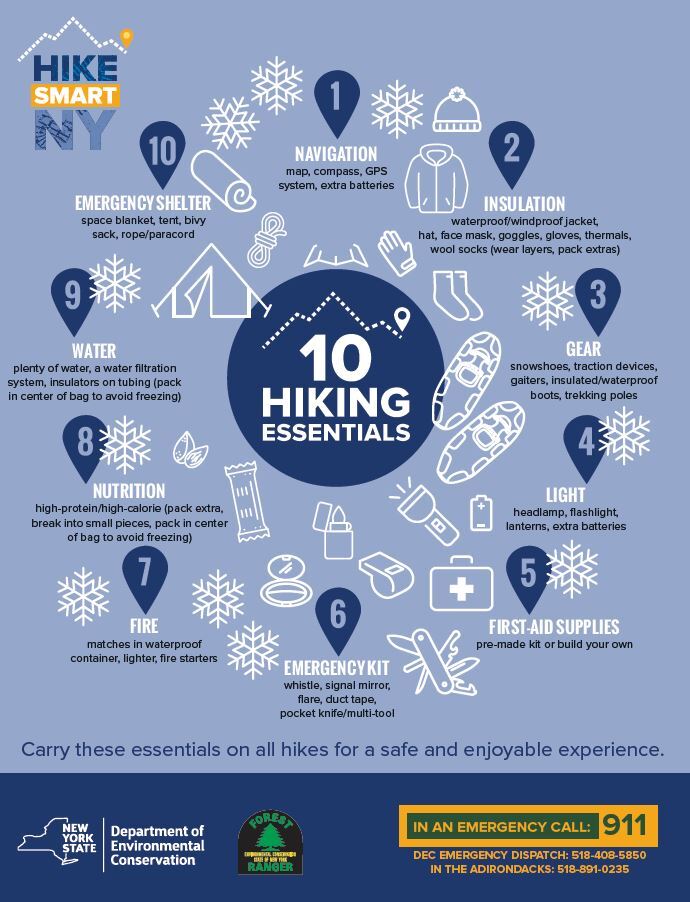
Whichever form of outdoor recreation you are embarking on, Hike Smart NY can help you prepare with a list of 10 essentials, guidance on what to wear, and tips for planning your trip with safety and sustainability in mind.
It may be mud season, but it’s also the wrap-up of maple sap collection season in the Adirondacks! NY has more tappable maple trees than anywhere else in the country, and much of the production takes place in the Adirondacks, where maple trees have long been tapped from February-March in order to collect and sugar the sap over the following couple months (now!).
While it may not be the sweetest time for mountain hiking, consider another sweet way to connect with nature by celebrating this resource that’s as important to our tastebuds as it is the ecosystem. If visiting a local maple-themed restaurant or festival isn’t quite your speed, you can get outside and explore the impact of Sugar Maple trees firsthand. Sugar Maple is a food source for wildlife including white-tailed deer, moose, snowshoe hares, red squirrels and porcupines, who eat the seeds, bark, leaves and more. The pollen is important for honeybees and other insects, it’s a caterpillar host, and birds build nests or forage for insects in it.
Paul Smith’s VIC is a watchable wildlife site recommended by DEC, and is one example of a place where you can view Sugar Maples and possibly the wildlife they nourish in abundance. With trails naturally showcasing Sugar Maples - some of which are marked with signage to help you identify them - and demonstration sugar bushes, this is one example of a way you can safely and sustainably embrace the beauty of the products of early spring in the Adirondack wilderness.
Mud season, maple season; tomato, tomahto! Just make sure to observe any wildlife from a distance, leave what you find, and walk straight through muddy sections of trails to avoid trail erosion!
Follow the Seven Principles of Leave No TraceTM to maintain minimal impact on the environment and the natural resources of the Adirondacks.
|