In this issue:
-
Effective January 26, 2024: Repeal Parts 206, 250, 256, and Subchapter C, Air Quality Classification Parts 260-317 – The Department repealed 6 NYCRR Part 206, State Aid for General Air Pollution Control Work, New York City; 6 NYCRR Part 250, Miscellaneous Orders; 6 NYCRR Part 256, Air Quality Classification System; and Subchapter C, Air Quality Area Classifications, 6 NYCRR Parts 260-317; because they are obsolete.
-
Federal EPA Permit Application: Dominion Energy’s Coastal Virginia Offshore Wind Commercial Project Permit Application – EPA announced a public comment hearing for a draft Clean Air Act Outer Continental Shelf (OCS) air quality permit for Dominion Energy’s Coastal Virginia Offshore Wind Commercial project, located off the coast of Virginia Beach, Virginia. Comments can be submitted through regulations.gov and access the rule under Docket ID No. EPA-R03-OAR-2023-0632. The public comment deadline is February 28, 2024. A virtual public hearing is scheduled for February 28, 2024, at 6:00 pm. Preregistration is requested.
-
Clean Water, Clean Air and Green Jobs Environmental Bond Act – DEC released for public comment new proposed eligibility guidelines to improve, expand, and assess the state’s forestry efforts on public and private lands under the historic $4.2 billion Clean Water, Clean Air and Green Jobs Environmental Bond Act of 2022.The public comment deadline is March 8, 2024, at 5:00 pm.
-
Climate Leadership and Community Protection Act – DEC and NYSERDA released draft guidance for State entities to inform the investments and benefits reporting on compliance with the Climate Leadership and Community Protection Act’s requirement that a minimum of 35 percent, with a goal of 40 percent, of the State’s clean energy investments benefit disadvantaged communities. The public comment deadline has been extended to March 15, 2024.
-
Ongoing Public Engagement: Statewide Community Air Monitoring Initiative Meetings – DEC is undertaking a statewide community-based air quality monitoring effort, focusing on ten disadvantaged communities with high air pollution burdens around the state. Check the 2022-23 Statewide Community Air Monitoring Initiative webpage for the latest information on upcoming community meetings, recordings of past meetings, and the status of each location's air monitoring efforts.
-
Ongoing Public Engagement: New York Cap-and-Invest Program under the Climate Act – DEC and NYSERDA are seeking feedback on a series of questions on the three regulations being developed for the Cap-and-Invest Program: Cap-and-Invest Rule, Mandatory Reporting Rule, and the Auction Rule, as well as the methods for the analysis underpinning the program. While we have encouraged comments by July 1, 2023, to inform the next phase of the process, comments will continue to be accepted, and your feedback is important to us. Check the Cap-and-Invest website for the latest information on upcoming meetings, recordings of past meetings, and the status of the process.
- Various NYS projects in the Environmental Notice Bulletin (ENB).
Air Mail! is the publication that announces public and stakeholder information about air quality topics. All NYS residents are environmental stakeholders – we welcome anyone to join the information sessions and other opportunities posted here.
Many people warm up their vehicles on cold winter mornings by running their engines and blasting the heater for long periods before driving off. Did you know this is unnecessary for your vehicle's engine and bad for our air and the environment? Vehicle idling is running a gasoline or diesel powered engine when the vehicle is parked and not moving. Sometimes idling is unavoidable, especially during extreme sub-zero weather events, but why waste fuel and pollute the air when your vehicle is ready to drive in a minute or less after turning on the ignition?
The transportation sector is one of the largest contributors to air pollution statewide. Both gasoline and diesel powered vehicles release many pollutants from their exhaust, which are known to cause adverse health effects. When emissions are inhaled, they can lead to and trigger asthma and other respiratory diseases.
Idling restrictions are in place to reduce air pollution and to safeguard human health and the environment. In NYS, heavy duty vehicles over 8,500 pounds, such as large box trucks, tractor-trailers, or buses, are prohibited from idling for more than five minutes at a time, with a few exceptions. Some municipalities may have additional restrictions, such as NYC, which limit idling to three minutes regardless of vehicle or fuel type. All drivers can still work towards lowering emissions. By maintaining your vehicle and limiting idle time, you can reduce air pollution to drive us to a cleaner future.
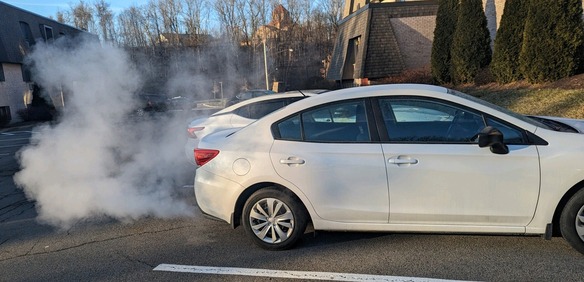 |
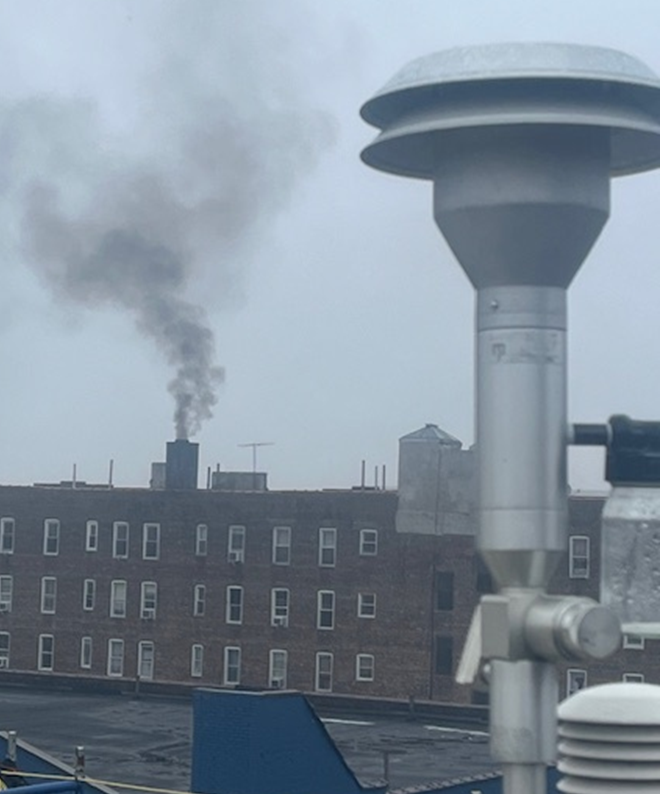
Air pollution can have severe impacts on human health. Particulate matter (PM) has been shown to cause harm all over the human body. PM is often a mixture of tiny carbon or soot particles, dust, and other pollutants. Some of these particles, known as PM2.5, are so small, 30 times smaller than the width of a human hair, that individually they are invisible to the naked eye. However, these microscopic PM2.5 particles can be seen when concentrated at a source, like emissions from a vehicle tailpipe and smoke from chimneys or fires.
PM pollution can cause several health concerns. Due to the small size of some particles, they can penetrate deep within the lungs and affect both the respiratory and vascular systems. Inhalation can lead to decreased lung function, aggravated asthma, irregular heartbeats, and more. Vulnerable populations, including children, the elderly, and those with pre-existing conditions, are even more susceptible to the effects of PM.
In February 2024, the EPA announced a new rule that will drastically reduce PM by updating national air quality standards. This change will reduce PM emissions which contribute to asthma attacks, heart attacks, strokes, and even deaths caused by air pollution. The 24-hour standard for PM remains the same at 35 micrograms per cubic meter of air. However, the new annual standard for PM is lowered to 9 micrograms per cubic meter of air. While this is the first tightening of rules in over a decade, states will have several years before they are required to meet this new standard.
Choosing clean air actions, such as biking or taking public transportation instead of driving, can help limit PM emissions and keep our air cleaner. Be sure to keep an eye on the daily Air Quality Index (AQI) forecast to know the air quality in your area. On days with poorer air quality, stay indoors when possible and limit physical activity outdoors. Capture the Valentine’s Day spirit this year by caring for our air, your health, and the health of your loved ones.
 |
-
DECinfo Locator – An interactive map that lets you access DEC documents and public data about the environmental quality of specific sites in NYS as well as outdoor recreation information.
-
DEC Delivers – Stay in-the-know by subscribing to the environmental topics that interest you. We will send you information, updates, and e-newsletters on the topics of your choosing. As an Air Mail! subscriber, you may be interested in subscribing to the Air Quality Alert topic so you know when air quality levels are a concern in your area.
-
AQI Forecasts – Check the daily ozone and particulate matter pollution forecast for your area of NYS.
-
NYSDEC YouTube – Keep up with what's going on with DEC staff by subscribing to our YouTube channel. Watch video clips of DEC public protection in action, learn about the Hudson River, or watch the latest episode of "On the Front Lines," DEC's video series.
-
Conservationist – NYS’ premiere outdoor magazine--bringing nature to your door! Published six times a year, Conservationist is a NYS-focused magazine that is packed with informative and entertaining articles, first-rate photography, and stunning artwork. Articles cover a broad range of environmental and natural history related topics. Subscribe today to get a piece of the outdoors in your mailbox.
-
Now through May 10: DEC's annual Saratoga Tree Nursery native tree and shrub seedling sale – Dozens of native tree and shrub species are available for purchase at low cost. Browse this year's selection on our website. Place your order by email form (PDF) or, for the most up-to-date species availability information, call (518) 587-1120, Monday through Friday, 8 a.m. to 4 p.m.
-
February: Black History Month – DEC celebrates Black History Month and the accomplishments of Black individuals in our home state, country, and globally. This year’s theme is African Americans and the Arts, paying tribute to Black Americans’ many contributions to visual arts, music, cultural movements, and more. This month also highlights the historic and ongoing fight against oppression, including the fight for environmental justice. To learn more about environmental justice, visit our website.
-
February 19: Presidents' Day – Presidents Richard Nixon (Clean Air Act 1970), Jimmy Carter (CAA Amendments 1977), George H.W. Bush (CAA Amendments 1990), and others have signed environmental legislation or promulgated rules that continue to protect our air and environment today.
-
February 19-25: Community Supported Agriculture (CSA) Week – Find a CSA near you to eat local, support farms in your community, and reduce transportation air pollution simultaneously.
-
March 3: World Wildlife Day – Animals and plants alike are affected by air pollution. World Wildlife Day celebrates and raises awareness for animals and plants across the globe.
-
March 16 through May 14: Annual Spring Burn Ban – Temporarily outlaws residential brush and yard debris burning.
-
March 18: Global Recycling Day – Waste in landfills can contribute to air pollution. Recycling can keep unnecessary waste from adding to landfills.
-
March 21: International Day of Forests – Trees help remove air pollution, so it is essential to maintain forests to clean our air.
-
March 22: World Water Day – As the saying goes, “What goes up must come down.” Air pollution is pulled down with rain and can harm our water resources, too
NYS' ozone season runs from April through September. DEC publishes ground-level ozone forecasts during ozone season and particulate matter pollution forecasts year-round using a scale called the Air Quality Index (AQI). DEC sends out an air quality alert when there is a high AQI value, which indicates polluted air. Individuals with pre-existing respiratory or cardiovascular conditions, and people who exercise outdoors should take caution during an air quality alert. Find out if an Air Quality Alert is in effect by calling the toll-free Ozone Hotline: 1-800-535-1345.
The AQI can be accessed in three ways:
Did you enjoy reading this issue? Perhaps your friends and family would too. Share Air Mail! by using the “Share” button below. If you would like to receive Air Mail! in your own email box, sign up now!
|