Consequences of Feeding Deer in the Winter
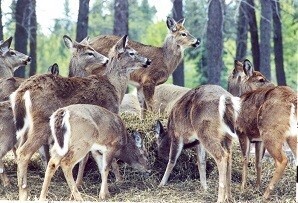
Now that white-tailed deer hunting seasons have ended throughout most of New York State, it may be tempting to begin feeding deer to “help” them through the winter. However, feeding deer during the winter or other times of the year is unnecessary, prohibited in New York, and can have very negative consequences for deer, your neighbors, and surrounding wildlife habitat.
During the winter, deer primarily rely on woody and evergreen vegetation (collectively known as woody browse) for their daily nutritional and metabolic needs. The digestive enzymes in a deer’s stomach change in the winter to better digest this browse. If deer are provided with unnatural food sources such as corn or hay after this change in diet has occurred it can result in deer becoming ill or even their death. Deer will attempt to utilize the unnatural food source, but can develop acidosis (i.e., grain overload disease) or enterotoxemia (i.e., Clostridium overgrowth) disease because they can’t digest the food properly. Both diseases occur acutely and can result in the rapid illness and death of deer in winter even though their stomachs are full.
Deer also congregate around food sources in winter which can increase the risk for disease transmission. For example, if a deer infected with chronic wasting disease (CWD) visits an artificial deer feeding site it will shed CWD prions in its saliva directly on the food, which can infect any other deer that feed from the same site. Congregations of deer around artificial feeding sites can also increase the risk for deer-vehicle collisions and deer related damage to landscape plantings, orchards, and tree farms. Inflated deer densities resulting from deer feeding can also exceed the carrying capacity of the surrounding habitat, resulting in wildlife habitat degradation.
Habitat improvement, especially the creation and promotion of early successional habitat, is the best way to ensure that deer and other species of wildlife have plenty to eat all year and avoids the negative consequences of deer feeding. Anyone interested in improving wildlife habitat on their property can contact their regional DEC deer or wildlife habitat management biologist. For a list of tree and shrub species that deer prefer to eat in winter and that you can promote on your property, visit DEC’s winter deer foods webpage.
New York State Conservation Fund Advisory Board Welcomes New Members
One of the primary ways New Yorkers support fish and wildlife management is through the Conservation Fund. The Conservation Fund is a protected state account comprised of revenue from the sale of hunting, fishing, and trapping licenses and other fees and fines. Almost 1 million anglers, 600,000 hunters, and 15,000 trappers contribute approximately $40 million annually through license sales. By law, Conservation Fund revenue may only be spent on fish and wildlife conservation programs.
The Conservation Fund Advisory Board (CFAB) is a statutorily appointed board that makes recommendations to state agencies on plans, policies, and programs impacting fish and wildlife. Members are volunteers, appointed by the Governor and NYS Legislature. The chair of CFAB is Jason Kemper from Saratoga County. A board member since 2006, Jason has a strong interest in expanding and enhancing access and opportunities for outdoor sports enthusiasts in New York State.
DEC is excited about the recent appointments of four new members to CFAB. They will join the five existing board members who represent DEC Regions, the New York State Fish and Wildlife Management Board, and the New York State Conservation Council.
In 2022, the Senate appointed Scott Faulkner to represent DEC Region 6. A resident of Oneida County, Scott is active in several conservation and sportsman organizations in his region. He’s a hunter education instructor and has coordinated mentored youth hunt programs since 2010.
In 2023, three new board members were appointed by the Governor:
- Brandon Dale, representing Region 2, is an avid hunter and angler, licensed fly fishing and hunting guide and leads multiple hunting and angling conservation organizations to coordinate mentored hunts, conservation projects and outreach events.
- Nate Galimore, representing Region 4, is a former licensed fishing guide who is passionate about aquatic education and hunter and angler recruitment.
- Shari Dann, representing Region 7, is a faculty member at SUNY ESF specializing in environmental and conservation education. Previously, she coordinated the 4-H Shooting Sports and aquatic education programs as an extension specialist at Michigan State University. Shari is an angler and especially likes fishing in the Adirondacks; she is an avid deer hunter in Chenango County.
These new board members will be a great resource for both DEC staff and conservation stakeholders in their respective regions. Additional details and contact information are available on the DEC website.
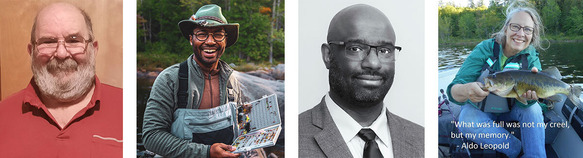
Left to right: Scott Faulkner, Brandon Dale, Nate Galimore, and Shari Dann
|