Healthy Tributaries Provide Clean Water for the Hudson
The New York State Department of Environmental Conservation sent this bulletin on 12/05/2023 10:02 AM EST |
| DEC Delivers - Information to keep you connected and informed from the NYS Department of Environmental Conservation |
| View in browser |
Hudson RiverNet
|
In This Issue:
Healthy Tributaries Provide Clean Water for the Hudson
Water quality in the Hudson River estuary and the web of life it nourishes depends on the health of the many tributary streams and rivers that flow into its waters. Tributaries provide essential habitat for fish and wildlife and drinking water for millions of people. The Hudson River Estuary Action Agenda provides a blueprint for the future protection and restoration of these tributaries and the land that surrounds them. We provide funding and technical assistance to help landowners, community leaders, municipal officials, and watershed groups carry out this important work. The Hudson River Watershed Alliance, the NYS Water Resources Institute, and NEIWPCC are key partners in this effort. Restoring Free-Flowing Rivers and Streams
Two priority barrier removal projects moved forward this year to reconnect habitats and restore free-flowing Hudson River tributaries. Both projects were funded by Tributary Restoration and Resiliency Grants administered by the Hudson River Estuary Program. On Winding Brook Road in the Town of Esopus, a culvert that created a barrier to fish movement was replaced with a bridge on a tributary to Black Creek, providing access to a half-mile of upstream habitat for American eel. The road is in Scenic Hudson’s Black Creek Preserve.
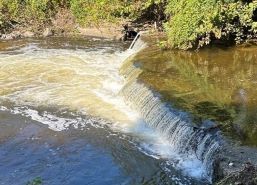
Shovel-ready engineering designs and permitting were completed for the removal of a dam on Sprout Brook. This small five-foot dam owned by the town of Cortlandt, is the first upstream barrier on the mainstem of Sprout Brook. The dam’s removal will provide easier access to 1.25 miles of additional habitat by species such as American eel, sea lamprey, river herring, and the many resident fish that live throughout this watershed. The project was conducted in partnership with the Hudson Valley Stream Conservancy. Assessing Water Quality in Tributary Streams
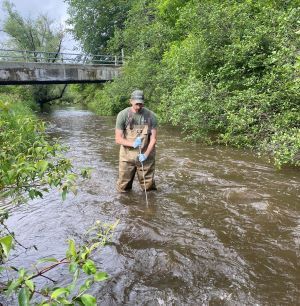
The Hudson River Estuary Program recently completed a two-year water quality monitoring project in the Upper Taghkanic Creek, Punch Brook, Upper Quassaick Creek, and Upper Tin Brook, streams which had never been assessed. These waterbodies were selected from applications received for the Monitoring Unassessed Stream Segment (MUSS) Program in early 2022. Staff collected water samples as well as macroinvertebrates. Macroinvertebrates include a wide range of insects, snails, or crayfish, and serve as good indicators of water quality in waterbodies as certain organisms can only live in cleaner water. Seventy-two water samples and 16 macroinvertebrate samples were taken from the four creeks over the two-year span. The data collected from this monitoring will provide updated conditions and determine if the waterbodies are meeting NYS standards and supporting their designated best uses. This data also helps DEC’s Division of Water (DOW) to inform permitting, develop clean water plans, prioritize water-quality improvement projects. Assessment results are reported to the U.S. Environmental Protection Agency (EPA). The monitoring also benefits the surrounding community and local partners by providing accurate water-quality data that can assist with local land-use planning and watershed management. Hudson Estuary Trees for Tribs Pollinating Partnership
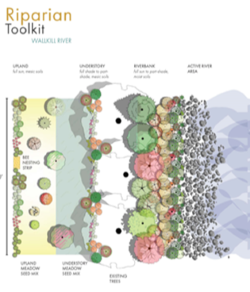
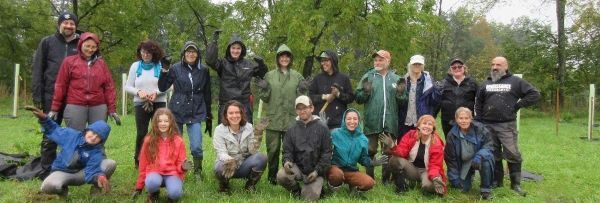
In 2023, Hudson Estuary Trees for Tribs (tributaries) worked with Partners for Climate Action - Pollinate Now and Wild Ones Mid-Hudson Valley to support a planting to enhance native pollinators along the Wallkill River in Gardiner. This riparian (stream buffer) planting area is one of four Hudson Valley demonstration sites, called Toolkit Sites, for Pollinate Now. At this site, the plant list and installation were designed to support pollinators at risk of local extinction, along with other important stream buffer functions including filtering runoff, reducing erosion, and increasing forested habitat. Wild One’s staff and 15 local volunteers helped plant 170 trees and shrubs along 300 feet (half an acre in area) of the Wallkill River. The other pollinator habitat restoration sites are in urban areas, farmland, and meadows, and demonstrate how the plantings could be replicated in areas with similar conditions. Planting details, including plant lists, plant placement, and site considerations are available in a new guide to pollinator projects in the Hudson Valley. The guide, Pollinate Now: Bioregional Strategy for Habitat Restoration in the Hudson River Estuary Watershed is available for free as a digital download.
Protecting Drinking Source WaterConducting Baseline Source Water Research
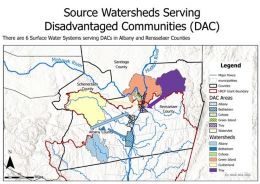
The Hudson River Estuary Program staff with assistance from Cornell’s Water Resources Institute, have identified source water locations and defined catchments for surface watersheds that supply community water systems in the Hudson River estuary watershed. The goal of this project was to determine which of these watersheds serve Disadvantaged Communities (DAC), so DEC can better support these areas in safeguarding their drinking water sources. The data will be a valuable resource for state decision-makers, providing insights on water quality and highlighting areas where more knowledge is needed to ensure everyone has fair access to clean drinking water. Preliminary results of the analysis in Albany and Rensselaer Counties was presented at the Capital District Regional Planning Commission’s recent Fall Planning and Zoning Workshop in October. Helping Implement Peekskill’s Drinking Water Source Protection Program
Indian Brook Croton Gorge Overlay Zone
Biological Monitoring in the Hudson and Mohawk Rivers
|
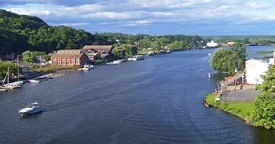
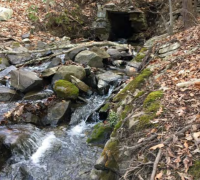
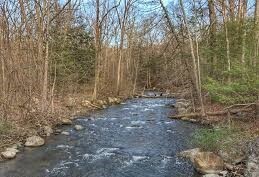 This year, an Estuary Program Local Stewardship Grant supported water quality monitoring on the Peekskill Hollow Brook. Monitoring is an implementation action identified in the City of Peekskill’s state-accepted
 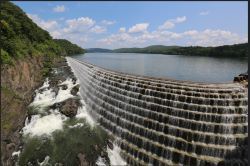 Estuary Program staff and grant funding are currently supporting a collaborative initiative among five municipalities in Westchester County. Their goal is to establish an inter-municipal conservation overlay zone, aimed at safeguarding the water quality within the Indian Brook-Croton Gorge watershed. This effort, rooted in the 2008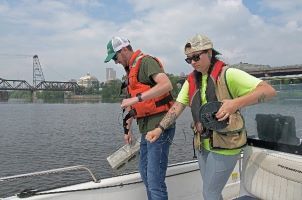
|
The New York State Department of Environmental Conservation respects your right to privacy and welcomes your feedback | Update preferences or unsubscribe | Learn more about DEC Delivers |
|
Connect with DEC:      
|
|
| Basil Seggos, Commissioner | |