Hunting and Trapping Newsletter
The New York State Department of Environmental Conservation sent this bulletin on 09/12/2023 02:06 PM EDT |
| DEC Delivers - Information to keep you connected and informed from the NYS Department of Environmental Conservation |
| View in browser |
Hunting and Trapping Newsletter |
Special Antlerless Deer, Early Bear, Canada Goose, and Squirrel Seasons ApproachingEarly bear and early antlerless deer seasons begin September 9 In 2023, the early bear season in portions of southeastern New York will begin on September 9 and run through September 24 in WMUs 3A, 3C, 3H, 3J, 3K, 3M, 3P, 3R, 4P, 4R, and 4W. The early bowhunting season for bears will open in all of the Southern Zone on Oct. 1, followed by the regular firearms season beginning Nov. 18. In the Northern Zone, the bowhunting season for bear begins September 16 in WMUs 6A, 6G, 6K, and 6N, and regular bear season in WMUs 5A, 5C, 5F, 5G, 5H, 5J, 6C, 6H, and 6J also begins on September 16. The early antlerless deer season will begin on September 9 and run through September 17 in select WMUs. In WMUs 3M, 3R, 8A, 8F, 8G, 8J, 8N, 9A, and 9F, hunters may use firearms, crossbows, or vertical bows during the early antlerless season. In WMUs 1C, 3S, 4J, and 8C, hunters may only use vertical bows. Only antlerless deer, those without antlers or having antlers less than 3” long, may be taken during this season, and hunters may only use valid deer Management Permits or Deer Management Assistance Program tags. Canada Goose Hunting Seasons Open September 1 The September Canada goose season occurs in all goose hunting zones except the Western Long Island zone. All upstate areas opened on Sept. 1 and will be open through Sept. 25. Canada goose seasons in the Central and Eastern Long Island zones began on Sept. 5 and will run through Sept. 30. In the Western Long Island zone, the season opens Oct. 7. The September season includes liberal bag limits (eight to 15 birds/day depending on zone), extended shooting hours, and other special regulations to maximize hunter success. Additional details on waterfowl hunting regulations, season dates, hunting area boundaries, and bag limits can be found on DEC's website. The September goose hunting season is designed to help reduce or stabilize resident Canada goose populations. Resident Canada geese are those that breed in the United States and southern Canada, unlike migratory populations that breed in northern Canada. Typically, resident geese are the birds commonly associated with nuisance situations in urban and rural areas. Over the past 25 years, New York's resident Canada goose population has grown from an estimated 80,000 birds in 1995, to more than 340,000 today. As the population has grown, season lengths and bag limits have been liberalized and hunters have successfully stabilized the population. The September season is an important opportunity for hunters, as regular Canada goose seasons have been restricted to 30 days and bag limits reduced to one bird in most areas to protect the more vulnerable migratory geese. Resident geese look the same as migratory geese, making it difficult for the public to distinguish between the two populations. For more information on the differences between migratory and resident geese and how these birds are managed, read the article "Canada Geese in New York--Residents or Visitors?" (PDF) in the Aug. 2019 issue of DEC's Conservationist magazine. Migratory Bird Hunters: Protect the Game, Don’t Skip HIP! All migratory game bird hunters must register annually for HIP (Harvest Information Program) through DEC's licensing system. The HIP registration is legally required and helps state and federal biologists estimate hunter participation and harvest of migratory game birds. HIP registration identifies active hunters who receive follow-up surveys from the U.S. Fish and Wildlife service. Providing a valid e-mail address during HIP registration will ensure that you can participate in hunter opinion and harvest surveys. For more information on how biologists estimate harvest and to see harvest data for New York and the rest of North America, please visit: Migratory Game Bird Harvest Survey There are two options to register with HIP: online at the DEC hunting license website, or via the automated phone system, available by calling 1-866-933-2257. At the end of either process, you will be given your HIP registration number. Migratory game bird hunters must carry this number while hunting. Safety During all hunting seasons, hunters should remember to follow the primary rules of gun safety:
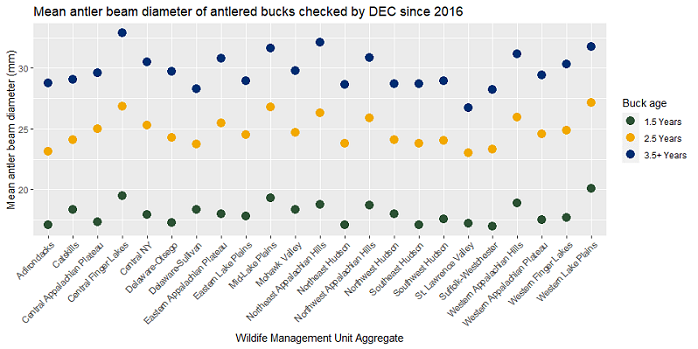
For more information on hunter safety, visit DEC's website; watch videos about hunter safety and tree stand safety for more tips on how to prevent accidents. Hunters should also be prepared to cool and process harvested game quickly to preserve meat quality. Hunters should also remember that several changes enacted in 2021 continue this year. Hunters and anyone accompanying them must wear a solid or patterned fluorescent orange or fluorescent pink hat, vest, or jacket when hunting deer or bear with a firearm. Hunting hours for deer and bear now include the full period of ambient light from 30 minutes before sunrise to 30 minutes after sunset. Finally, 12- and 13-year-old hunters can hunt deer (not bear) with a firearm or crossbow when accompanied by an experienced licensed adult. Hunter Education Program Next Step Courses - New Courses AddedThe NYSDEC Hunter Education Program (HEP) is piloting a limited number of Next Step courses for those who have already completed a hunter education, bowhunter education, or trapper education certification course and want more education and hands-on experience. Each four-hour course focuses on safety, techniques, and hands-on experience. There is no certification offered with these courses. All Next Step courses are free, but registration is required. You will need your certificate number to register for a Next Step course. The minimum age to take a Next Step course is 12 years old. Registration is now open for the following courses: DEC Region 9 (Western NY) Next Step Land Trapping Next Step Water Trapping Setting Realistic Expectations for Harvesting a Buck with “Large” AntlersAcross New York State whitetail bucks have begun shedding the velvet that has covered their growing antlers, revealing the hardened antlers that they will use for sparring, sign marking, and attracting the attention of does throughout the fall breeding season. For some deer hunters the opportunity to harvest a buck with a large set of antlers is an important component of their overall satisfaction with deer hunting. However, when it comes to a buck’s antlers, what should be considered “large” is relative to the buck’s age and location. Each hunting season DEC staff collect biological data from thousands of harvested deer that are brought to meat processors, taxidermists, and check stations. We age every deer (PDF) and, for each antlered buck, also measure the antler beam diameter and the antler width an inch above the base, which provides an index of buck health and antler size. Plotting this data demonstrates that there is considerable variation in antler size for bucks of the same age across New York State (see graph below). But why? The simple answer – variation in habitat productivity. Habitat productivity is the rate of vegetation biomass that is produced in a particular ecosystem, and is driven primarily by climate and soil conditions. For example, the Adirondacks has low habitat productivity because of its short growing season and rocky soils. Conversely, the Central Finger Lakes region has high habitat productivity because of its temperate climate and fertile soils. Since a buck’s antler development is not only driven by age but also by nutrition, it should come as no surprise that bucks that live in low productivity habitats tend to grow smaller antlers than bucks of the same age that live in high productivity habitats. Similarly, Midwestern states with high habitat productivity will always tend to produce bucks with larger antlers than Northeastern states with lower habitat productivity. There are outliers, but on average this holds true. Setting realistic expectations for what a large antlered buck is in the areas you hunt may improve your satisfaction with buck hunting opportunities in New York and prevent missed opportunities to harvest a buck this coming season. For hunters interested in increasing the antler size of bucks they see and hunt, promoting early successional habitat and harvesting a sufficient number of antlerless deer each season can also help ensure that bucks are able meet their nutritional demands for antler growth all year long. Lastly, letting young bucks go and watching them grow allows bucks to increase their antler mass as they age. Share Your Ideas: Clean Water, Clean Air and Green Jobs Environmental Bond Act
This spring and summer, the public and potential funding applicants had the opportunity to learn more about the Bond Act at a series of educational listening sessions. Missed out on attending a session? Check out the virtual session recordings. Share your ideas for how the Clean Water, Clean Air and Green Jobs Environmental Bond Act could help your community and environment. Complete a short survey to collect project ideas and other feedback. This survey will provide stakeholders and members of the public a place to share these ideas. We need your input to help the New York State team select projects and deliver funds while also ensuring a transparent and collaborative process that benefits all New Yorkers. The deadline for ideas and comments is September 15. |

|
The New York State Department of Environmental Conservation respects your right to privacy and welcomes your feedback | Update preferences or unsubscribe | Learn more about DEC Delivers |
|
Connect with DEC:      
|
|
| Basil Seggos, Commissioner | |