Living the Green Life: Food Packaging
The New York State Department of Environmental Conservation sent this bulletin on 08/23/2023 03:00 PM EDT |
| DEC Delivers - Information to keep you connected and informed from the NYS Department of Environmental Conservation |
| View in browser |
Food Packaging |
|
Choosing environmentally friendly packaged items:
*Reuse maintains the integrity of the original product, and therefore retains the embedded energy and value of the materials used, resulting in significant environmental benefits.
**Recycling diverts material from landfills and trash incinerators and makes it available to be converted into other products. Manufacturing products from recyclable materials often uses less energy and water than making them from virgin (i.e., nonrecycled) materials. To learn about the recyclability of different container types, you can review DEC's Alternative Container Reference Guide (PDF). Recycling programs vary in what is accepted, so remember to check the recycling guidelines for your own community or recycling hauler. Find your local recycling guidelines and learn more about how to properly recycle by visiting the Recycle Right New York website and following @recyclerightny on social media platforms. Photo of Sustainable food container options courtesy of Christina C. PFAS and Food Service Containers/Wrappers
What you can do to reduce packaging wastePlan ahead - Make a waste reduction kit for your backpack, handbag, or vehicle so you're prepared on the go. It can include a reusable shopping bag, water bottle, coffee mug, straw, eating utensils, and containers for leftovers. Keep a similar meal kit at your in-office desk. Avoid bottled water and other beverages - Purchase refillable and reusable water bottles. Try drink mixes instead of single bottles for sports drinks. If you can't reuse, refuse! - It's okay to say that you don't want a straw with your drink or you don't need plastic utensils or condiment packets with your takeout order. Avoid Single-Use Plastics (SUP) when possible. To protect the environment and our communities, and to support sustainable materials management in NY State, disposable food service containers made of expanded polystyrene foam (EPS) and EPS foam packing peanuts are now banned. In addition, foam containers are not accepted in most recycling programs in New York State because the foam is difficult to recycle and has a low value. For more information on environmentally friendly packaging and PFAS, visit DEC's website. Get There Green! is September 17-24. Join us next month as we talk about sustainable modes of transportation. Environmental Bond Act Listening Sessions and Survey
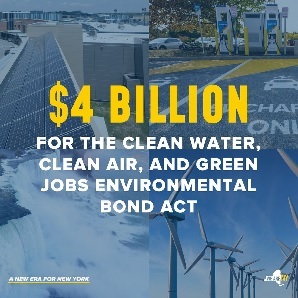
Overwhelmingly approved by voters last fall, the $4.2 billion Clean Water, Clean Air and Green Jobs Environmental Bond Act prioritizes investments in environmental justice, climate change mitigation, shoreline restoration, flood resilience, water quality, open space conservation, recreational resources, and green jobs. This spring and summer, the public and potential funding applicants can learn more about the Bond Act at a series of educational listening sessions. The last session of the series:
Sessions will feature a presentation on the Bond Act and an opportunity for one-on-one discussion with State experts. Meetings are open to the public. Missed out on attending a session near you? Check out the virtual session recordings. We Want to Hear from You! Share your ideas for how the Clean Water, Clean Air and Green Jobs Environmental Bond Act could help your community and environment. Complete a short survey to collect project ideas and other feedback. This survey will provide stakeholders and members of the public a place to share these ideas. The deadline for ideas and comments is September 15. We need your input to help the New York State team select projects and deliver funds while also ensuring a transparent and collaborative process that benefits ALL New Yorkers. |

|
The New York State Department of Environmental Conservation respects your right to privacy and welcomes your feedback | Update preferences or unsubscribe | Learn more about DEC Delivers |
|
Connect with DEC:      
|
|
| Basil Seggos, Commissioner | |