
DEC Adirondack Outdoor Recreation Bulletin - May 11, 2023
The New York State Department of Environmental Conservation sent this bulletin on 05/11/2023 01:30 PM EDT |
| DEC Delivers - Information to keep you connected and informed from the NYS Department of Environmental Conservation |
| View in browser |
DEC Adirondack Outdoor Recreation BulletinMay 11, 2023 |
|
This bulletin provides only the most recent notices. Check the Adirondack Backcountry webpages for more detailed information on access, outdoor recreation infrastructure, and conditions. Emergency Situations: If you get lost or injured; keep calm and stay put. If you have cell service, call 911 or the DEC Forest Ranger Emergency Dispatch, 833-NYS-RANGERS. Welcome to the Adirondacks. The Welcome to the Adirondacks webpage provides information about the Forest Preserve, conservation easement lands, outdoor recreation, and Leave No Trace™. Love Our NY Lands: All New Yorkers and visitors should be able to access, enjoy, and feel welcome on state lands. While enjoying these shared spaces, be respectful of other visitors. Share trails, treat people with kindness, and leave things as you found them for others to enjoy. All of us have a responsibility to protect State lands for future generations. Learn more about how you can Love Our NY Lands. In This Issue
Recent NoticesThe following are only the most recent notices pertaining to public lands in the Adirondacks. Please check the Adirondack Backcountry webpages for a full list of notices, including seasonal road statuses, rock climbing closures, specific trail conditions, and other pertinent information NEW THIS WEEK Lake George Wild Forest
Grass River Wild Forest
Pine Lake Primitive Area
Black River Wild Forest
LAST WEEK: Saranac Lakes Wild Forest:
Independence River Wild Forest:
Watson's East Triangle Wild Forest:
Silver Lake Wilderness:
Corinth Edinburg Conservation Easement:
High Peaks Wilderness:
Closures: Temporary closures of the Upper Locks on Saranac Lake and Lake Placid Boat Launch occurring over the next two weeks for routine maintenance and cleaning.
Know Before You Go:
Fire Danger (as of 5/11):
Temperatures & Conditions: These are forecast temperatures for base elevations throughout the region. Weekend temperatures range from the low-60’s to mid-70’s with overnight in the low to mid-30’s. Expect colder temperatures near freezing in higher elevations. Pack the appropriate layers and gear in case your trip goes longer than planned or an unexpected overnight occurs. Conditions: High Elevations continue to be a mix of mud and snow with some ice left over. Hikers should expect rotten snow spines with areas of deep snow above 3200’ in elevation, particularly on north-facing trails. River crossings will continue to be high due to recent rain and continued snowmelt and should be approached with caution. Snowshoes and microspikes are still needed for many 4000’ peaks. Sunrise/Sunset: Sunrise = 5:30 a.m.; Sunset = 8:12 p.m. Make a timeline and stick to it. Pack at least one headlamp (two headlamps recommended) even if you expect to finish your activity before sunset. Adirondack Mountain Reserve: Parking reservations will be required May 1 through Oct. 31 for single-day and overnight access to the parking lot, trailheads, and trails located on the privately owned, 7,000-acre AMR property in the town of Keene in the High Peaks region. For a list of frequently asked questions and to register, visit AMR's website.
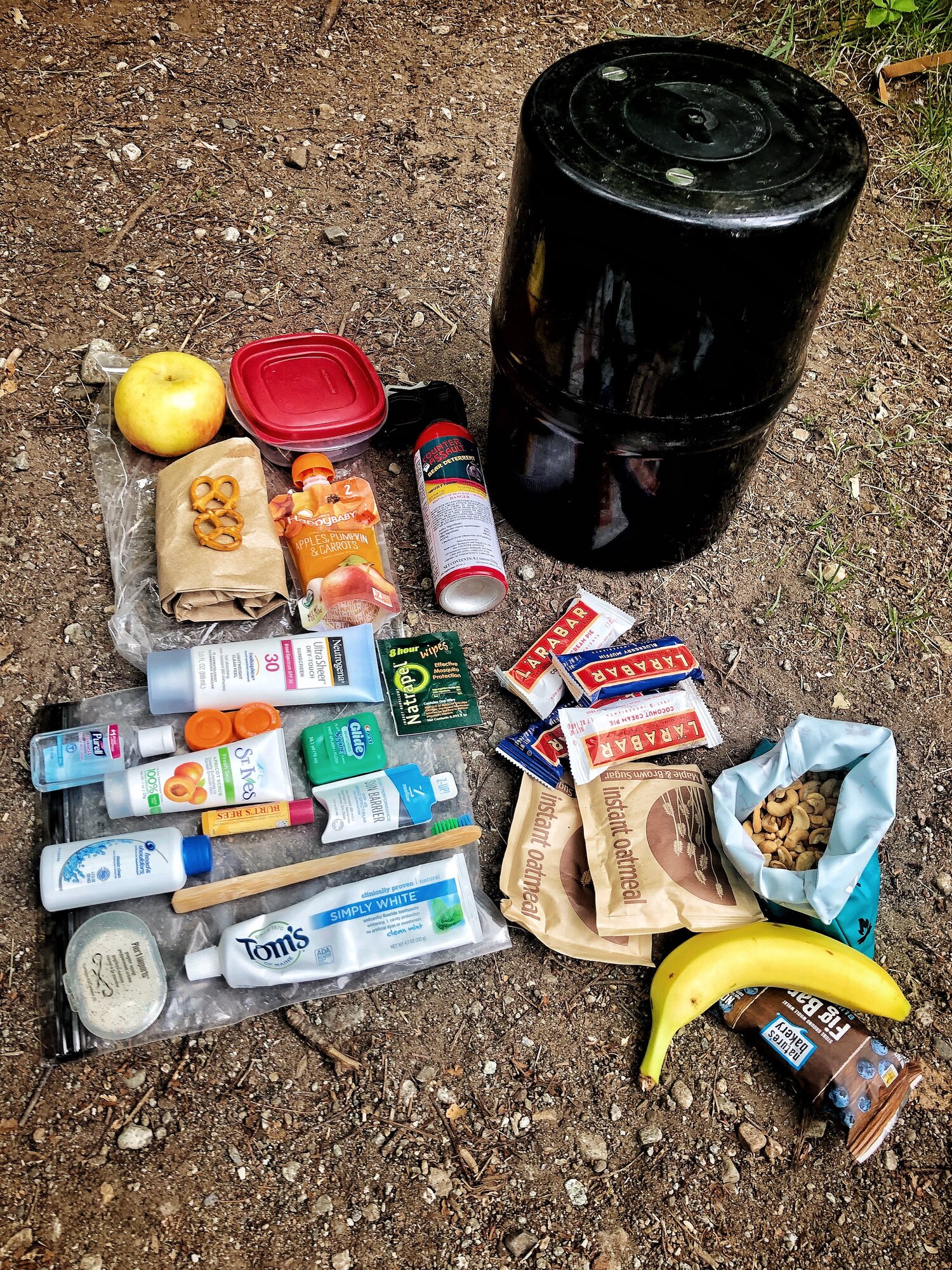
Bear Canisters Required: NYSDEC requires the use of bear-resistant canisters by overnight users in the Eastern High Peaks Wilderness between April 1 and November 30. NYSDEC encourages campers to use bear-resistant canisters throughout the Adirondack backcountry. Bear canisters should be used to store all food, food garbage, toiletries, and other items with a scent. Canisters should be stored a minimum of 100ft from tents, lean-tos, and cooking sites and kept closed whenever they are not being accessed. Learn more about bear canisters and avoiding human-bear conflicts. Adirondack Rock Climbing Closures: DEC closes certain rock climbing routes in the Adirondacks to protect nesting peregrine falcons. For a full list of closures, visit Adirondack Rock Climbing Route Closures. Once peregrine nest sites are determined, climbing routes that will not disturb nesting will be reopened. Routes that remain closed will reopen after the young have fledged. Thank you for your cooperation. For more information please contact the Bureau of Wildlife at (518) 623-1240 Cold Water Advisory: Water temperatures are freezing and falling in can lead to immediate hypothermia. Use caution when paddling and hiking. Never attempt to cross high, fast-moving water, especially following rain or significant snowmelt. If there is precipitation forecast during the day, be mindful of how water crossings might swell between your first crossing and your return trip. Use extreme caution in areas of moving water, such as inlets, outlets, and streams. Banks will be icy and currents are swift. Check the Weather: Check the forecast for your destination and pack and plan accordingly. Check the National Weather Service Northern Adirondacks and Southern Adirondacks Mountain Point Forecasts for select summit forecasts. Check both daytime and nighttime temperatures and remember that temperatures will drop as you gain elevation. General NoticesVisit the main Adirondack Backcountry page for more trip-planning resources. No Overnight Camping at Trailheads: Overnight camping is not permitted at trailheads or other roadside locations where a camping disc is not present. This includes individuals sleeping in cars, vans, and campers. Campers should seek out designated roadside campsites marked with a "camp here" disc or campgrounds. When camping, always carry out what you carry in and dispose of trash properly. Use designated bathroom facilities, pack out human and pet waste, or dig a cat hole. Travel: Plan on arriving at your destination early and have several back-up plans in place in case parking at your desired location is full. Some seasonal roads may be closed for the winter season and not all parking areas are plowed. Check recent notices for road closure announcements Seasonal Roads: Many seasonal access roads are closed for mud season. Check the Recent Notices for specific closure announcements and be prepared to turn around and take an alternate route. Water & Ice Crossings: Water levels are above average for this time of year in the eastern and central portions of the Adirondack region and below average in the western part of the region. Check the USGS Current Water Data for New York for stream flow of selected waters. Personal Flotation Devices (PFDs aka lifejackets) are strongly recommended. Ticks: Wear light-colored clothing with a tight weave to spot ticks easily. Wear enclosed shoes, long pants, and a long-sleeved shirt. Tuck pant legs into socks or boots and shirt into pants. Check clothes and any exposed skin frequently for ticks while outdoors. Consider using insect repellent. Stay on cleared, well-traveled trails and walk in the center of trails. Avoid dense woods and bushy areas. Additional tips for tick prevention. Statewide Burn Ban in Effect: The annual statewide ban prohibiting residential brush burning began March 16 and runs through May 14. The annual brush burning ban helps prevent wildfires and protects communities during heightened conditions for wildfires. Backyard fire pits and campfires less than 3 feet in height and 4 feet in length, width, or diameter are allowed, as are small cooking fires. Only charcoal or dry, clean, untreated, or unpainted wood can be burned. People should never leave these fires unattended and must extinguish them. For more information about fire safety and prevention, go to DEC's FIREWISE New York webpage. Safety & Education
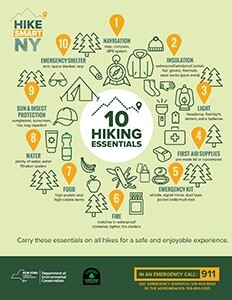
Whether you’re going for a hike, a ski, or out fishing, Hike Smart NY can help you prepare with a list of 10 essentials, guidance on what to wear, and tips for planning your trip with safety and sustainability in mind. Packing for Tricky Spring Weather Longer daylight hours and warm sun can be deceiving. Even if you plan to return before nightfall, things don’t always go as we hope. Nighttime lows in the spring can still drop below freezing. So don’t let the weather cause you to forget the essentials. Here are some important ones this season: Light – The days are getting longer, but the nights are as dark as always in the wilderness. Always pack a light source and an extra set of batteries just in case your hike takes longer than expected. Shelter – You may not want to pack your largest tent every time you go out, but a lightweight tarp or bivy sack and an emergency blanket can keep you out of the elements while you wait out the night. Food and Water – If you’re forced to stay overnight, you’ll want to stay warm, fed, and hydrated. Having enough calories is an important way that our bodies fight off the cold. Always bring along enough food and a water filtration device to last through the night. Leave No Trace™Follow the Seven Principles of Leave No Trace to maintain minimal impact on the environment and the natural resources of the Adirondacks. Use proper trail etiquette to ensure an enjoyable experience for yourself and others and tread lightly!
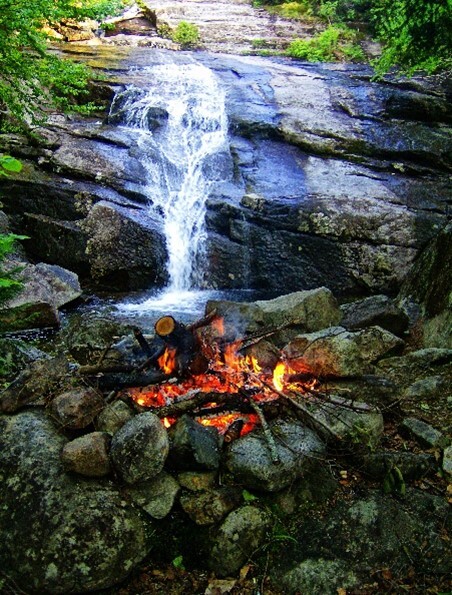
The “4 D’s” of a Good Campfire It’s almost time to get outside and go camping. Before you light up that first campfire of the season, do you know the most important rules for collecting firewood? If you don’t, an easy way to build a sustainable campfire is to follow the “4 D’s.” Dead – Firewood that is collected should always be deadwood. Not only will it burn better, it also reduces the impact that you’re having on the surrounding environment. Down – Just because a tree is dead doesn’t mean it’s a good idea to burn. Dead trees that are still standing may be providing important shelter to other animals. Always pick up wood from the ground if you can. Dinky – Don’t collect wood that is bigger than the diameter of your wrist. Like large dead-standing trees, dead trees that have fallen provide a habitat for birds and other animals. They also recycle nutrients into the ground as they decompose, supporting the surrounding ecosystem. Distant – If you collect all of the down, dead, and dinky wood within 10 feet of your campsite, the forest isn’t going to look very natural. If every group that camped at that site did the same thing, then the impact has become even greater. Try to spread the distance between each piece of firewood you collect. Before you even begin collecting firewood, the most important rule is to check your local regulations to make sure that campfires are even allowed. For more fire safety tips before you camp this season, check out the DEC YouTube Channel. Summer Employment OpportunityEnvironmental Educators Needed! Join our Region 5 Outreach Team and become an integral part of the High Peaks Information Station Program. Educators will spend the summer educating on safe and sustainable recreation in the High Peaks. Your role as an educator is vital in protecting the Adirondack’s natural resources while enhancing the safety, experience, and wellbeing of our communities and visitors. Positions are based out of the Region 5 headquarters in Ray Brook, NY but educators will spend much of their time at their designated information station. Send resumes to R5.info@dec.ny.gov Take Part in the DEC Informational Kiosk Survey
Give us your feedback and win a gift card to a sporting goods store! DEC would like your opinion on our informational kiosks. Kiosks are small, open wooden structures that provide cover for educational/informational signs. These kiosks are located at various state properties such as state forests, wilderness areas, conservation easements, wildlife management areas (WMAs), boat launches, and more. Take our survey to let us know what you think and be entered to win a $50 sporting goods store gift card and a free subscription to the Conservationist magazine! Winners will be announced each month from January 2023 through January 2024. A grand prize winner will be announced in January 2024 and will receive a $200 sporting goods store gift card and a free magazine subscription. By providing input, you can help us improve your outdoor experience! For prize rules and regulations, please visit DEC's website. Recreation Highlight: Protect the Peregrines! Rock Climbing Closures in the Adirondacks
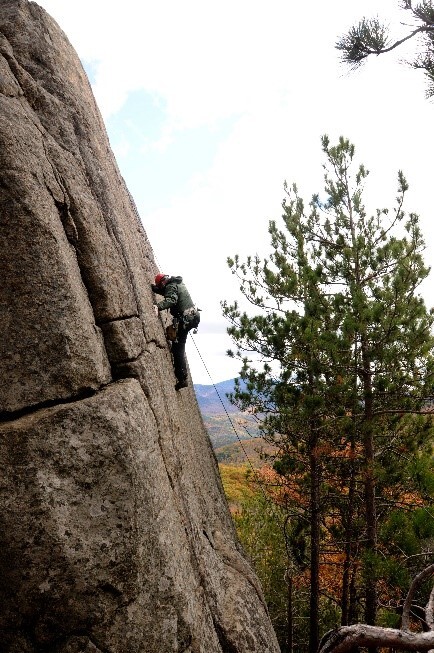
The elusive and endangered Peregrine Falcon calls the craggy cliffs and mountainsides of the Adirondacks its home. Peregrines dive at incredible speeds and can be seen sailing along the sides of high rock faces throughout the early summer. The fascinating birds are monogamous, have long lifespans, and often return to the same nests year after year with their chosen partner. Climbers sharing the cliffs are encouraged to respect their fellow rock dwellers. Pay attention to DEC closures of particular routes and crags for the safety of climbers and falcons alike. A full list of restricted routes and crags can be found on DEC's website. For more fun facts about the birds that share the wall with you, visit the Peregrine Falcons and the Adirondack Climber webpage on the DEC website. |


|
The New York State Department of Environmental Conservation respects your right to privacy and welcomes your feedback | Update preferences or unsubscribe | Learn more about DEC Delivers |
|
Connect with DEC:      
|
|
| Basil Seggos, Commissioner | |