
DEC Adirondack Outdoor Recreation Bulletin - April 27, 2023
The New York State Department of Environmental Conservation sent this bulletin on 04/27/2023 03:30 PM EDT |
| DEC Delivers - Information to keep you connected and informed from the NYS Department of Environmental Conservation |
| View in browser |
DEC Adirondack Outdoor Recreation BulletinApril 27, 2023 |
|
This bulletin provides only the most recent notices. Check the Adirondack Backcountry webpages for more detailed information on access, outdoor recreation infrastructure, and conditions. Emergency Situations: If you get lost or injured; keep calm and stay put. If you have cell service, call 911 or the DEC Forest Ranger Emergency Dispatch, 833-NYS-RANGERS. Welcome to the Adirondacks. The Welcome to the Adirondacks webpage provides information about the Forest Preserve, conservation easement lands, outdoor recreation, and Leave No Trace™. Love Our NY Lands: All New Yorkers and visitors should be able to access, enjoy, and feel welcome on state lands. While enjoying these shared spaces, be respectful of other visitors. Share trails, treat people with kindness, and leave things as you found them for others to enjoy. All of us have a responsibility to protect State lands for future generations. Learn more about how you can Love Our NY Lands. In This Issue
Recent NoticesThe following are only the most recent notices pertaining to public lands in the Adirondacks. Please check the Adirondack Backcountry webpages for a full list of notices, including seasonal road statuses, rock climbing closures, specific trail conditions, and other pertinent information NEW THIS WEEK High Peaks Wilderness:
Closures: Temporary closures of the Upper Locks on Saranac Lake and Lake Placid Boat Launch occurring over the next two weeks for routine maintenance and cleaning.
Know Before You Go:Fire Danger (as of 4/27):
Temperatures & Conditions: These are forecast temperatures for base elevations throughout the region. Conditions: Conditions will be colder and windier on summits and at higher elevations. Carry extra layers and be prepared to adapt to changing conditions. Bring microspikes or crampons and snowshoes. If you find yourself unprepared for the conditions, or weather worsens, turn back to the trailhead. Hike with a buddy or in a group and know the signs of hypothermia. Sunrise/Sunset: Sunrise = 5:53 a.m.; Sunset = 7:55 p.m. Make a timeline and stick to it. Pack a headlamp even if you expect to finish your activity before sunset. Adirondack Mountain Reserve: Parking reservations will be required May 1 through Oct. 31 for single-day and overnight access to the parking lot, trailheads, and trails located on the privately owned, 7,000-acre AMR property in the town of Keene in the High Peaks region. For a list of frequently asked questions and to register, visit AMR's website.
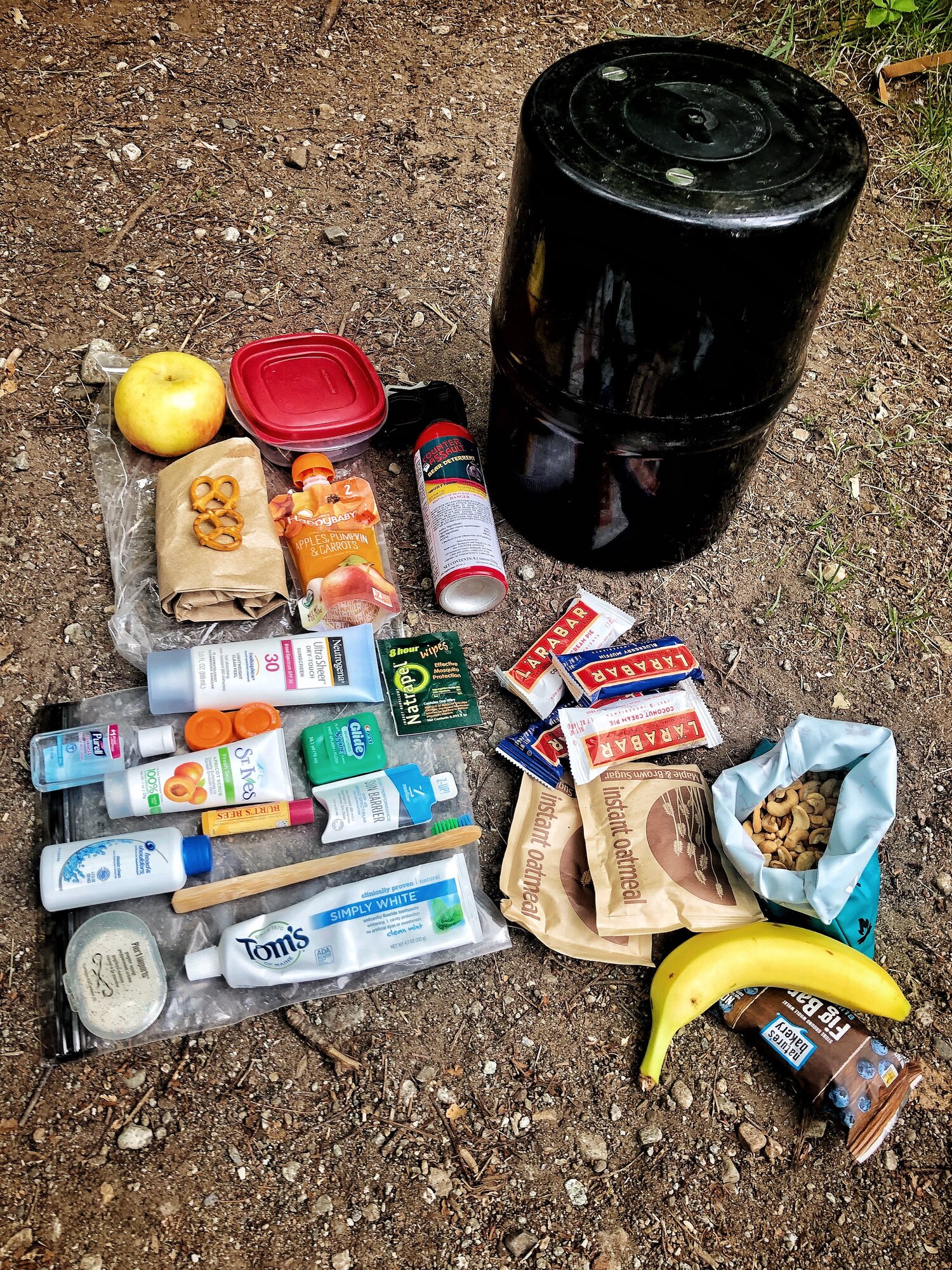
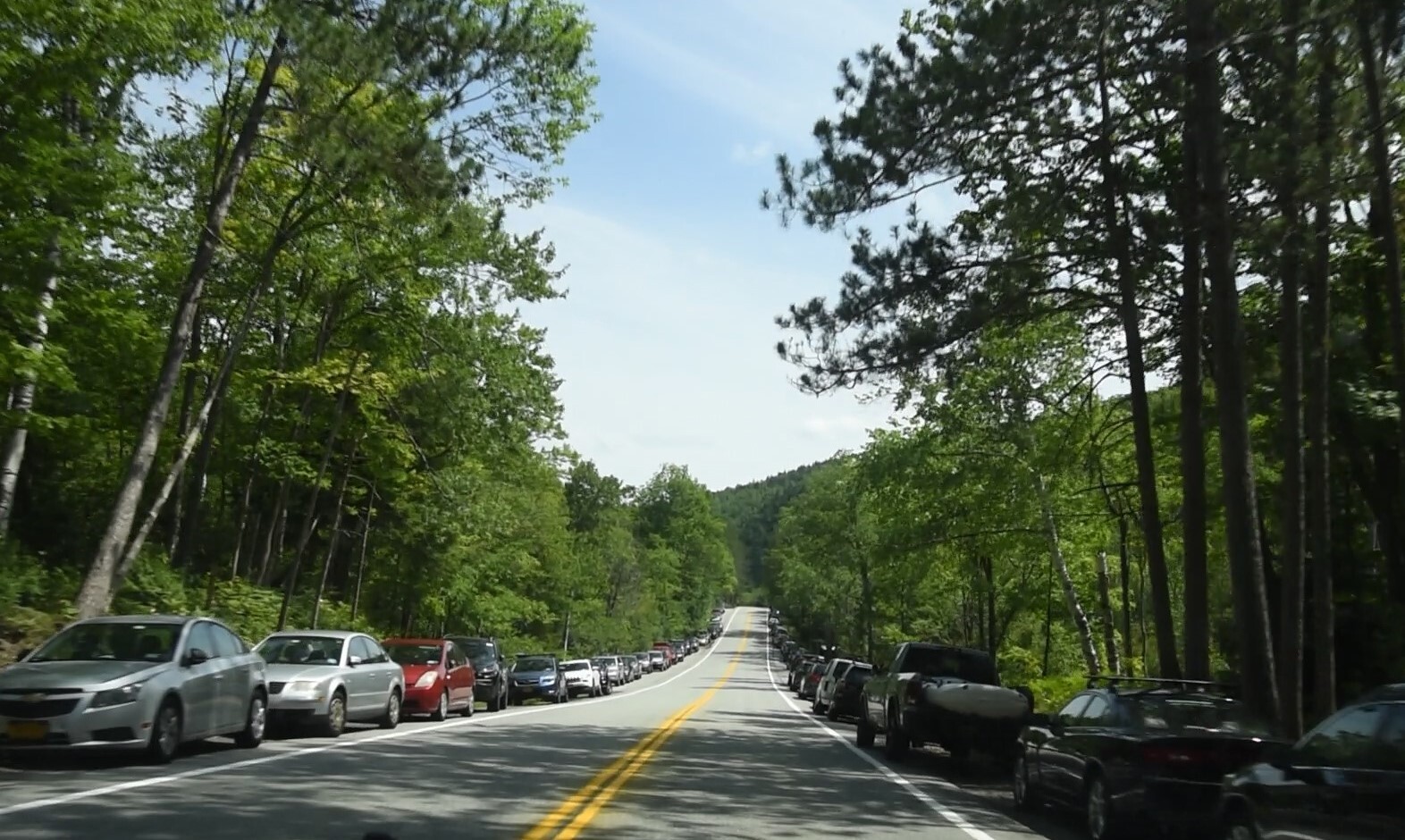
Bear Canisters Required: NYSDEC requires the use of bear-resistant canisters by overnight users in the Eastern High Peaks Wilderness between April 1 and November 30. NYSDEC encourages campers to use bear-resistant canisters throughout the Adirondack backcountry. Bear canisters should be used to store all food, food garbage, toiletries, and other items with a scent. Canisters should be stored a minimum of 100ft from tents, lean-tos, and cooking sites and kept closed whenever they are not being accessed. Learn more about bear canisters and avoiding human-bear conflicts. Adirondack Rock Climbing Closures: DEC closes certain rock climbing routes in the Adirondacks to protect nesting peregrine falcons. For a full list of closures, visit Adirondack Rock Climbing Route Closures. Once peregrine nest sites are determined, climbing routes that will not disturb nesting will be reopened. Routes that remain closed will reopen after the young have fledged. Thank you for your cooperation. For more information please contact the Bureau of Wildlife at (518) 623-1240 Cold Water Advisory: Water temperatures are freezing and falling in can lead to immediate hypothermia. Use caution when paddling and hiking. Never attempt to cross high, fast-moving water, especially following rain or significant snowmelt. If there is precipitation forecast during the day, be mindful of how water crossings might swell between your first crossing and your return trip. Use extreme caution in areas of moving water, such as inlets, outlets, and streams. Banks will be icy and currents are swift. Check the Weather: Check the forecast for your destination and pack and plan accordingly. Check the National Weather Service Northern Adirondacks and Southern Adirondacks Mountain Point Forecasts for select summit forecasts. Check both daytime and nighttime temperatures and remember that temperatures will drop as you gain elevation. General NoticesVisit the main Adirondack Backcountry page for more trip-planning resources. No Overnight Camping at Trailheads: Overnight camping is not permitted at trailheads or other roadside locations where a camping disc is not present. This includes individuals sleeping in cars, vans, and campers. Campers should seek out designated roadside campsites marked with a "camp here" disc or campgrounds. When camping, always carry out what you carry in and dispose of trash properly. Use designated bathroom facilities, pack out human and pet waste, or dig a cat hole. Travel: Plan on arriving at your destination early and have several back-up plans in place in case parking at your desired location is full. Some seasonal roads may be closed for the winter season and not all parking areas are plowed. Check recent notices for road closure announcements Seasonal Roads: Many seasonal access roads are closed for mud season. Check the Recent Notices for specific closure announcements and be prepared to turn around and take an alternate route. Water & Ice Crossings: Water levels range from average to above average for this time of year in the eastern and central portions of the Adirondack region and below average in the western part of the region. Check the USGS Current Water Data for New York for stream flow of selected waters. Personal Flotation Devices (PFDs aka lifejackets) are strongly recommended. Ticks: Wear light-colored clothing with a tight weave to spot ticks easily. Wear enclosed shoes, long pants, and a long-sleeved shirt. Tuck pant legs into socks or boots and shirt into pants. Check clothes and any exposed skin frequently for ticks while outdoors. Consider using insect repellent. Stay on cleared, well-traveled trails and walk in the center of trails. Avoid dense woods and bushy areas. Additional tips for tick prevention. Statewide Burn Ban in Effect: The annual statewide ban prohibiting residential brush burning began March 16 and runs through May 14. The annual brush burning ban helps prevent wildfires and protects communities during heightened conditions for wildfires. Backyard fire pits and campfires less than 3 feet in height and 4 feet in length, width, or diameter are allowed, as are small cooking fires. Only charcoal or dry, clean, untreated, or unpainted wood can be burned. People should never leave these fires unattended and must extinguish them. For more information about fire safety and prevention, go to DEC's FIREWISE New York webpage. Safety & Education
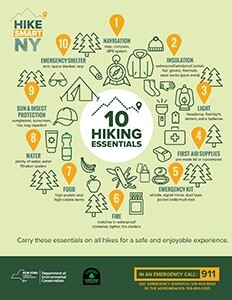
Whether you’re going for a hike, a ski, or out fishing, Hike Smart NY can help you prepare with a list of 10 essentials, guidance on what to wear, and tips for planning your trip with safety and sustainability in mind. Spring Water Safety With longer days, warmer temperatures, and open water, canoes, kayaks, and SUPs are calling us to begin summer paddling adventures. It’s important to remember, however, that spring water conditions can pose serious risks. Lakes and rivers are still extremely cold this time of year and falling in can quickly cause cold shock, loss of consciousness, and hypothermia. Consider wearing a wetsuit or drysuit until water temperatures increase. Personal Floatation Devices (PFDs) are required to be worn through May 1 and are strongly recommended to be worn in personal watercraft year-round. Between snowmelts and spring rains, be prepared for high, fast-moving waters. This can make paddling more challenging and pose significant risks to non-boaters at water crossings. Check water levels before you head out, and if the water seems risky when you arrive, make plans to return on a different day. Leave No Trace™Follow the Seven Principles of Leave No Trace to maintain minimal impact on the environment and the natural resources of the Adirondacks. Use proper trail etiquette to ensure an enjoyable experience for yourself and others and tread lightly! If You Care, Leave It There
As the weather warms up, it’s common to encounter local wildlife while walking, hiking, or biking. When you see these critters, leave them be and do your best not to disturb their natural routine. Fawns are a great example of animals that may appear around your lawn, garden, or local trails. Newly born whitetail deer spend many of their early days hidden and protected among tall grass, leaf litter, or other natural and manmade shelters. You may find them laying in a flower bed, alongside a trail, or even curled up in an open field. Mother deer will return to their fawns regularly to nurse but may delay their next visit if they detect human activity nearby. For that reason, fawns and other animals should never be picked up. Young wildlife should never be fed, kept as a pet, or transported to a different location except by trained professionals. Wild animals are poorly adapted to living in captivity and can carry diseases harmful to humans. Leaving them where they are protects both you and the animals. It’s very rare that the animals you encounter will be sick, injured, or abandoned. If you suspect something is wrong, contact your local DEC wildlife office. Opportunity for Public Input on Visitor Use Management Project In Adirondack High Peaks And CatskillsThe New York State Department of Environmental Conservation (DEC) announced today that Otak, Inc. is hosting and facilitating the first round of public meetings in the High Peaks and Catskills for the Visitor Use Management (VUM) project. Public and stakeholder input will play a key role in helping DEC and Otak develop appropriate management strategies for the High Peaks and Kaaterskill Clove project areas.
The meetings are scheduled as follows:
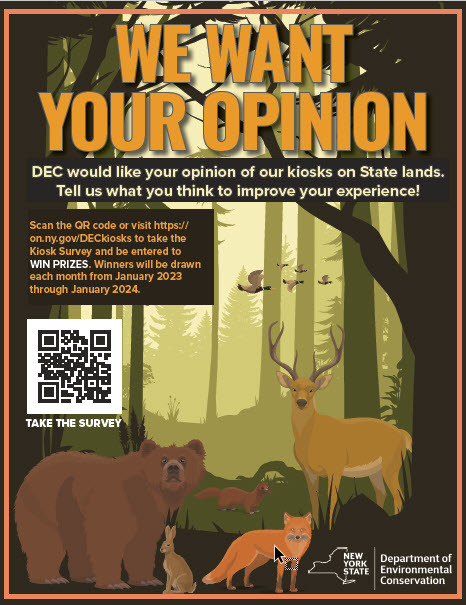
The public meetings will begin with a foundation-setting presentation that highlights the project purpose, goals, and timeline, and introduces the VUM Framework and how it will be applied in the Adirondack High Peaks and Kaaterskill Clove in the Catskills project areas. Rather than a formal comment opportunity, interactive discussion groups will follow the presentation to gain an understanding of public interests and concerns and solicit public feedback. The outcome of this initial phase will include a summary report of the process, recommended management strategies, and a monitoring plan. A second round of public meetings will be held in 2024 to present draft management recommendations. View DEC’s March 8, 2023, press release about the project for more information. Take Part in the DEC Informational Kiosk Survey
Give us your feedback and win a gift card to a sporting goods store! DEC would like your opinion on our informational kiosks. Kiosks are small, open wooden structures that provide cover for educational/informational signs. These kiosks are located at various state properties such as state forests, wilderness areas, conservation easements, wildlife management areas (WMAs), boat launches, and more. Take our survey to let us know what you think and be entered to win a $50 sporting goods store gift card and a free subscription to the Conservationist magazine! Winners will be announced each month from January 2023 through January 2024. A grand prize winner will be announced in January 2024 and will receive a $200 sporting goods store gift card and a free magazine subscription. By providing input, you can help us improve your outdoor experience! For prize rules and regulations, please visit DEC's website. |


|
The New York State Department of Environmental Conservation respects your right to privacy and welcomes your feedback | Update preferences or unsubscribe | Learn more about DEC Delivers |
|
Connect with DEC:      
|
|
| Basil Seggos, Commissioner | |