|
 This bulletin provides only the most recent notices. Check the Adirondack Backcountry webpages for more detailed information on access, outdoor recreation infrastructure, and conditions. This bulletin provides only the most recent notices. Check the Adirondack Backcountry webpages for more detailed information on access, outdoor recreation infrastructure, and conditions.
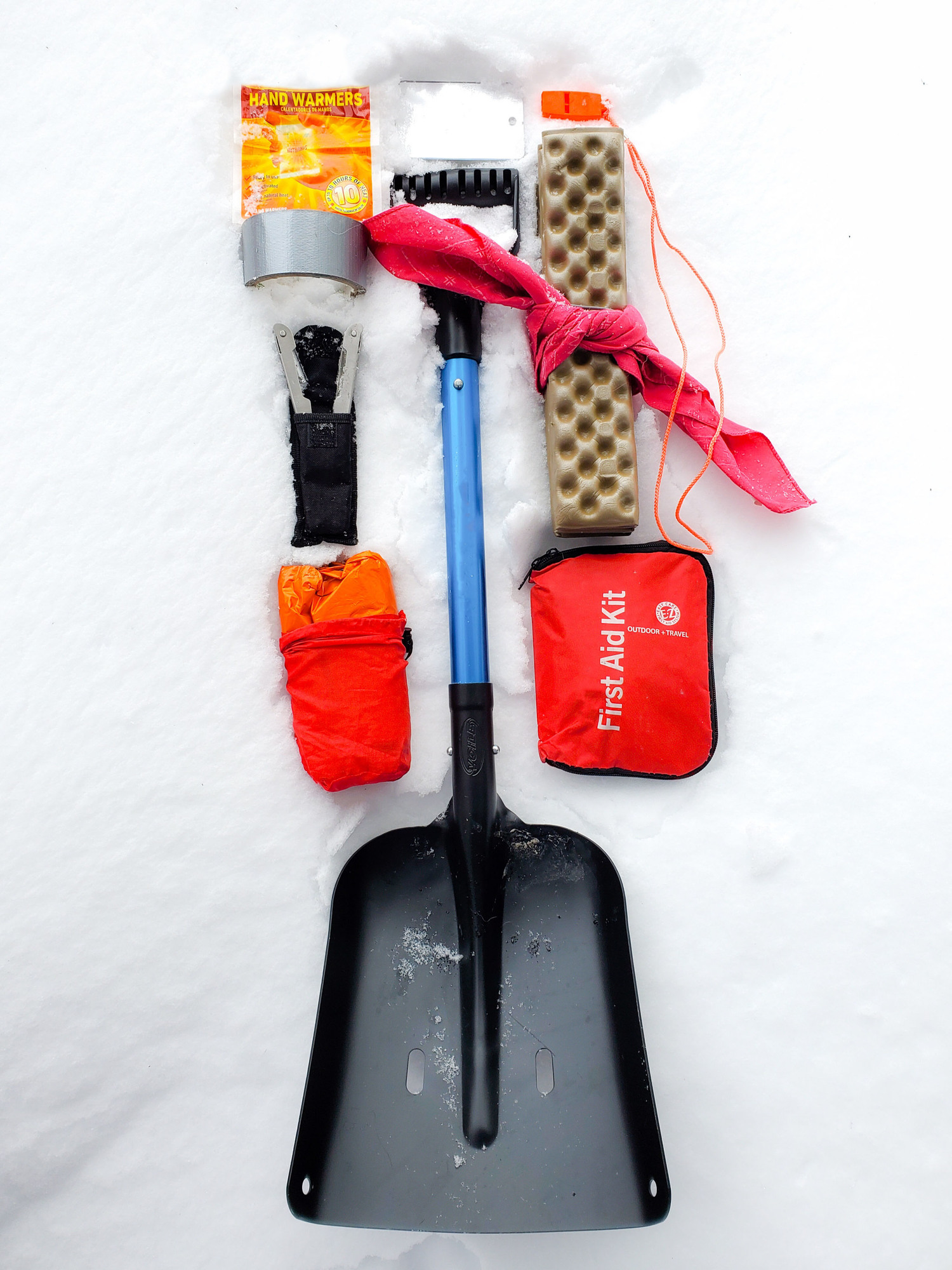
Emergency Situations: If you get lost or injured; keep calm and stay put. If you have cell service, call 911 or the DEC Forest Ranger Emergency Dispatch, 833-NYS-RANGERS.
Welcome to the Adirondacks. The Welcome to the Adirondacks webpage provides information about the Forest Preserve, conservation easement lands, outdoor recreation, and Leave No Trace™.
Love Our NY Lands: All New Yorkers and visitors should be able to access, enjoy, and feel welcome on state lands. While enjoying these shared spaces, be respectful of other visitors. Share trails, treat people with kindness, and leave things as you found them for others to enjoy. All of us have a responsibility to protect State lands for future generations. Learn more about how you can Love Our NY Lands.
In This Issue
- Recent Notices
- General Notices
- Safety & Education: Buddy Up for Fun and Safety
- Leave No Trace: Sign Up for a Leave No Trace™ Virtual Workshop
- Recreation Highlight: Winter on the Adirondack Rail Trail
- Take Part in the DEC Informational Kiosk Survey
Recent Notices
The following are only the most recent notices pertaining to public lands in the Adirondacks. Please check the Adirondack Backcountry webpages for a full list of notices, including seasonal road statuses, rock climbing closures, specific trail conditions, and other pertinent information
NEW THIS WEEK
High Peaks Wilderness:
-
Snow Report (01/26): The following report describes conditions as of Thursday, 01/26. Changing weather may affect conditions. There is 25.6in (over 2 feet) of snow at the Colden Caretaker Cabin and deeper accumulations at higher elevations. Snowshoes are required to be worn in the Eastern High Peaks Wilderness. Microspikes and crampons are needed for traction on ice. Avalanche Lake and Lake Colden are frozen – always exercise caution on or near ice. Ski trails are skiable.
LAST WEEK
Independence River Wild Forest (Stillwater Reservoir, Big Moose & Three Lakes Conservation Easement Tracts): The Three Lakes Trail (Pollack Swamp Road) has been temporarily rerouted near Big Moose Road to avoid timber harvesting. Please follow reroute signage.
Perkins Clearing/Speculator Tree Farm Conservation Easement Tracts: The Village ski trail beginning at the ballpark has experienced some flooding due to unusually high water and beaver activity. A good amount of the trail is accessible but suggested parking is now on Elm Lake Road, near the gate into the Speculator Tree Farm Tract.
 General Notices General Notices
Visit the main Adirondack Backcountry page for more trip-planning resources.
Know Before You Go (01/26):
-
Temperatures & Conditions: It’s a winter wonderland weekend in the Adirondacks. Snow is expected to let up in some parts of the region by Thursday evening, making way for clearer (but cloudy) days on Friday and Saturday and a return to snow on Sunday, while other areas may continue to see snow throughout the weekend. Check the forecast for your specific destination. Base temperatures in the High Peaks region are forecast to fluctuate from lows in the teens to highs in the upper-20s and low-30s throughout the weekend. Remember that conditions will be more severe on summits and at higher elevations. Carry extra layers, cold weather gear, and be prepared to adapt to changing conditions. Bring microspikes or crampons and snowshoes. If you find yourself unprepared for the conditions, or weather worsens, turn back to the trailhead.
-
Water & Ice Crossings: Never attempt to cross high, fast-moving water, especially following rain or significant snowmelt. If there is precipitation forecast during the day, be mindful of how water crossings might swell between your first crossing and your return trip. Follow ice safety guidelines.
-
Sunrise/Sunset: Sunrise = 7:16 a.m.; Sunset = 4:59 p.m. Make a timeline and stick to it. Pack a headlamp even if you expect to finish your activity before sunset.
-
Travel: Plan on arriving at your destination early and have several back-up plans in place in case parking at your desired location is full. Some seasonal roads may be closed for the winter season and not all parking areas are plowed. Check recent notices for road closure announcements.
Check the Weather: Check the forecast for your destination and pack and plan accordingly. Check the National Weather Service Northern Adirondacks and Southern Adirondacks Mountain Point Forecasts for select summit forecasts. Check both daytime and nighttime temperatures and remember that temperatures will drop as you gain elevation.
Be Safe in Avalanche Terrain: Backcountry downhill skiers, snowboarders, and all outdoor adventurers who may traverse slides or steep, open terrain should be aware of and prepared for avalanche conditions. If you are planning a trip to avalanche-prone territory, research the route ahead of time and contact a local DEC Forest Ranger for specific safety and conditions information, or contact a local guide. Before going into the backcountry, be equipped with avalanche safety tools and knowledge, such as participation in an avalanche safety course. Learn more about avalanche danger, preparedness, and safety precautions.
Seasonal Roads: Many seasonal access roads are closed for the winter. Check the Recent Notices for specific closure announcements and be prepared to turn around and take an alternate route.
Snowmobiles: Visitors are advised to plan ahead and check local club, county, and State webpages and resources, including the NYSSA Snowmobile web map, for up-to-date snowmobile trail information.
Water Conditions: Water levels throughout the Adirondack region range from average to above average for this time of year. Check the USGS Current Water Data for New York for stream flow of selected waters. Personal Flotation Devices (PFDs aka lifejackets) are strongly recommended.
 Safety & Education Safety & Education
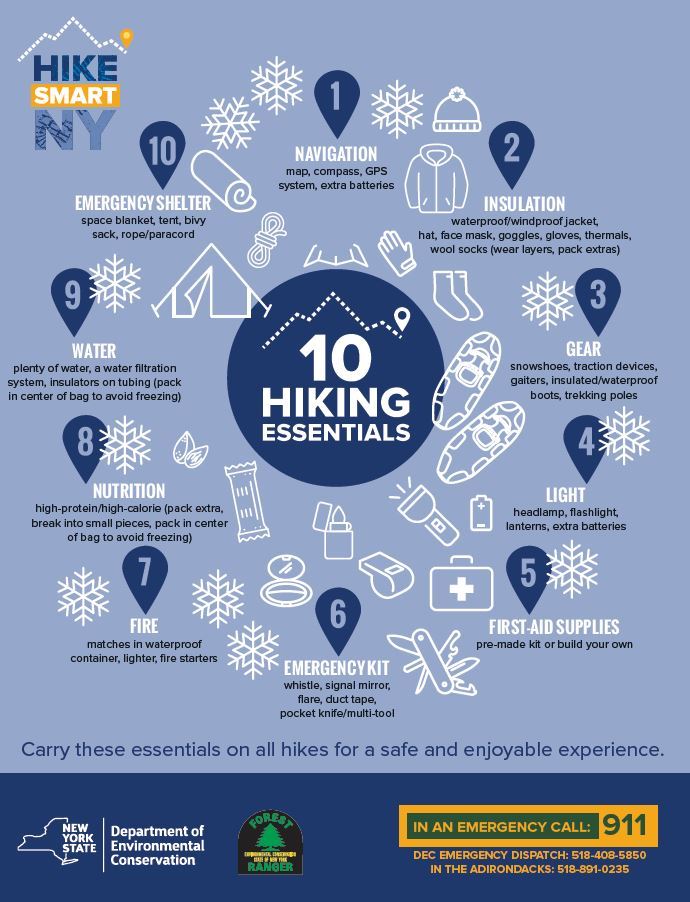
Whether you’re going for a hike, a ski, or out fishing, Hike Smart NY can help you prepare with a list of 10 essentials, guidance on what to wear, and tips for planning your trip with safety and sustainability in mind.
Buddy Up for Fun and Safety
Call your friends, your family, your co-workers and find yourself a buddy for your next Adirondack adventure. Hiking, skiing, climbing, riding, or fishing with a buddy or buddies is a great way to bond, share some laughs, and make some amazing memories. It also helps ensure safety, especially in the winter. A buddy provides:
- A sounding board when making important safety decisions and assessing risk;
- A second set of eyes to help keep track of the snow-covered trail;
- First aid and emergency assistance—someone to go for help if needed;
- A morale boost if the going gets tough;
- And someone to detect the warning signs of hypothermia, one of the primary dangers of hiking in the winter.
Keep in mind that even when hiking with a buddy, each person should carry their own gear. Teaming up on the trail is not an opportunity to split the weight. To maximize fun and safety, choose an adventure suited to the skill sets and physical limits of every person in your group and always stick together—many searches start with groups splitting up.
 Leave No Trace Leave No Trace
Follow the Seven Principles of Leave No Trace to maintain minimal impact on the environment and the natural resources of the Adirondacks. Use proper trail etiquette to ensure an enjoyable experience for yourself and others and tread lightly!
Sign Up for a Leave No Trace™ Virtual Workshop
Interested in learning more about Leave No Trace practices to help protect the outdoors? Sign up for a free virtual introductory workshop. In these workshops, provided by the Leave No Trace Center for Outdoor Ethics, participants will learn and confirm Leave No Trace principles through interactive teaching and activities. Sign up for an upcoming session:
 Recreation Highlight: Winter on the Adirondack Rail Trail Recreation Highlight: Winter on the Adirondack Rail Trail
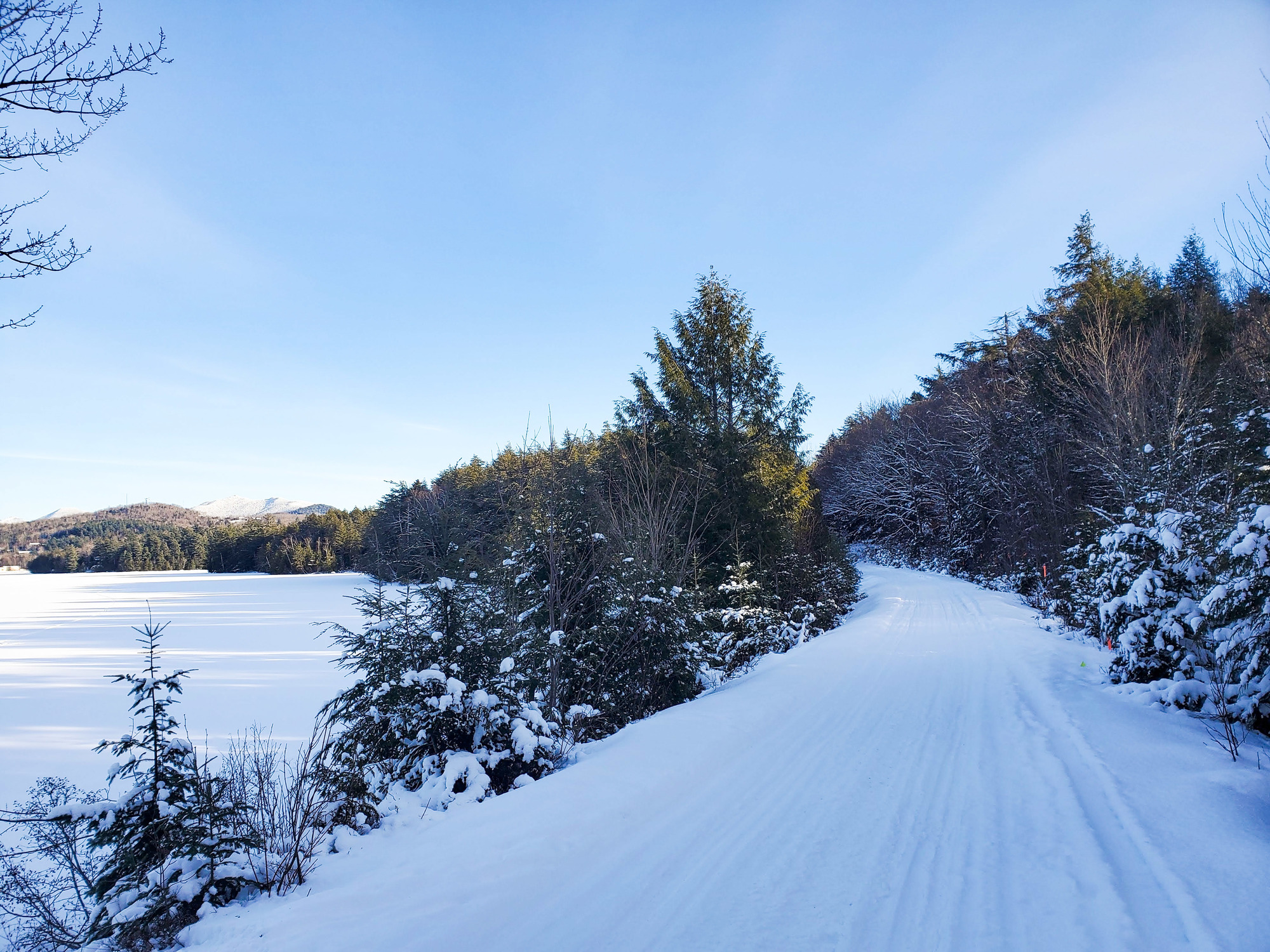
This past fall, ground was broken on the future Adirondack Rail Trail, a 34-mile multi-use recreation trail that will stretch from Tupper Lake to Lake Placid, connecting communities of the North Country and providing a world-class outdoor destination to locals and visitors alike. In December, construction on the Lake Placid to Saranac Lake segment of trail paused for the season, allowing for interim winter recreation until construction resumes in the spring. This provides an exceptional winter recreation opportunity for snowmobilers, cross-country skiers, snowshoers, birders and other winter users, and a glimpse at what the rail trail will offer year-round once it is fully completed in 2025.
Until the trail is fully constructed, interim use of the corridor requires additional caution. Always heed posted signage and be aware that trail conditions and surfaces may vary. Many “Stop” and “Stop Ahead” signs have been installed where the trail intersects with roads, but not all crosswalks and intersections along the trail itself have been marked. Slow down, look both ways, and use caution at intersections. In areas where construction is not complete, small metal fragments—the remnants of rail ties from the former track—may be present. Be sure there is adequate snow cover to safely and responsibly recreate. As always, fat tire bikers should bring the necessary equipment needed to address a flat tire or other mechanical problem in the backcountry.
Follow these tips for safe, respectful winter recreation as you enjoy the trail this winter and the communities it takes you to:
- Practice winter trail safety and etiquette. Snowmobiles should travel along the right side of the trail in a single file, using the left side to pass. Look both ways before changing your position on the trail and yield to those passing from behind. Slow down when passing pedestrian users. Yield to groomers. Keep speed and noise down in populated areas, including staging areas and road intersections.
- When stopping, pull off as far as possible on the trail edge.
- Follow Leave No Trace™ principles and Love Our NY Lands. Carry out what you carry in, dispose of trash properly, and be respectful of local wildlife and other users.
- Come prepared. While the trail connects vibrant communities, it passes through long stretches of forest preserve. Dress for the weather, bring food and water, and be prepared to handle emergencies until first responders can arrive.
- The rail trail travels through varied habitat, from boreal and alpine woodland to bogs and other wetlands. Respect posted signage and barriers and stick to the trail to minimize impacts on surrounding landscapes.
- Snowmobilers are reminded to always ride responsibly. Never drink and ride.
Before you take to the trail, check the Adirondack Rail Trail webpage on DEC’s website for the latest trail conditions, construction updates, and guidance for interim recreation.
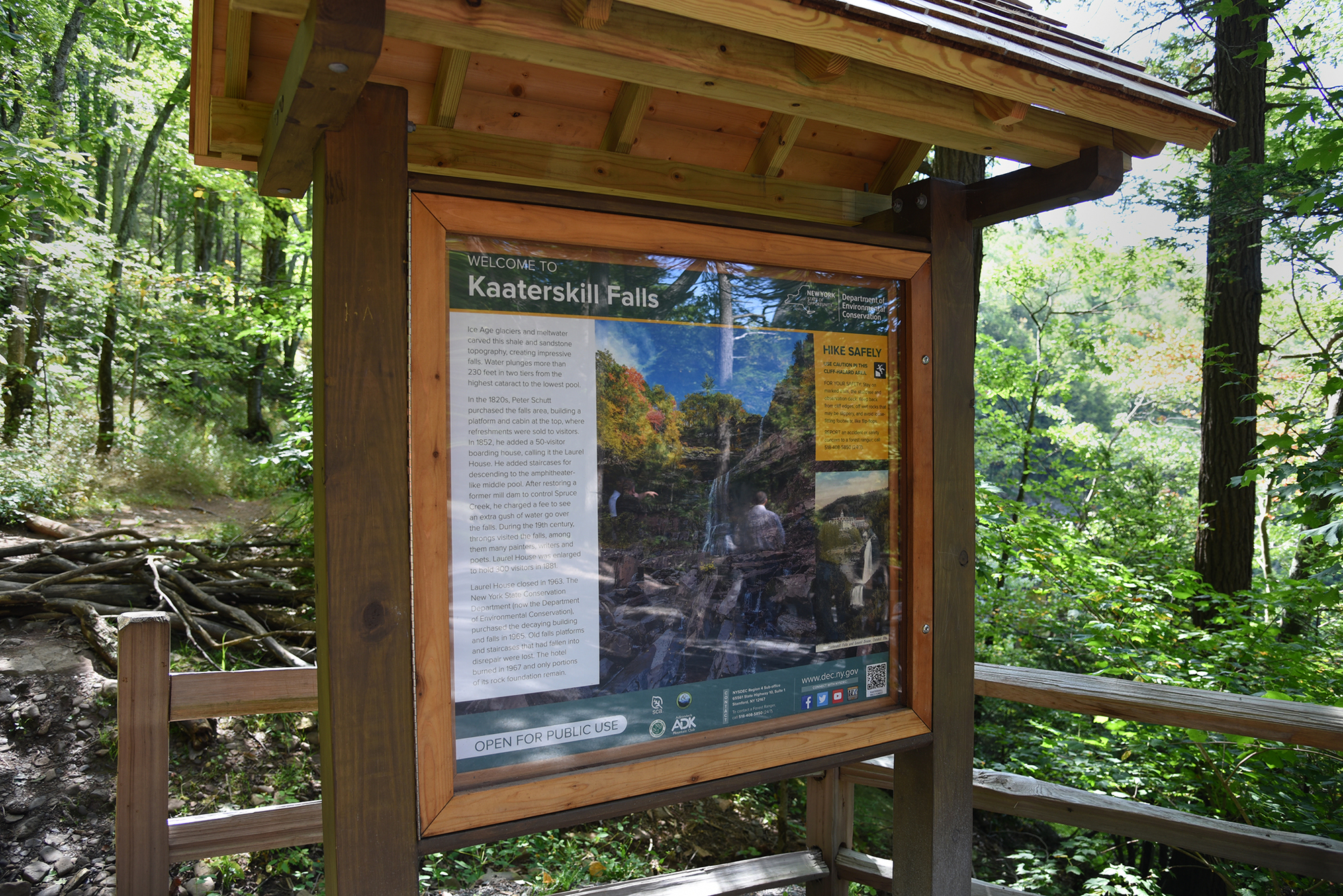 Take Part in the DEC Informational Kiosk Survey Take Part in the DEC Informational Kiosk Survey
Give us your feedback and win a gift card to a sporting goods store! DEC would like your opinion on our informational kiosks. Kiosks are small, open wooden structures that provide cover for educational/informational signs. These kiosks are located at various state properties such as state forests, wilderness areas, conservation easements, wildlife management areas (WMAs), boat launches, and more. Take our survey to let us know what you think and be entered to win a $50 sporting goods store gift card and a free subscription to the Conservationist magazine! Winners will be announced each month from January 2023 through January 2024. A grand prize winner will be announced in January 2024 and will receive a $200 sporting goods store gift card and a free magazine subscription. By providing input, you can help us improve your outdoor experience! For prize rules and regulations, please visit DEC's website.
|