A Project of the Hudson River Estuary Program
Compiled and edited by Tom Lake, Consulting Naturalist
Love Our NY Lands
State Lands Belong to All of Us
All New Yorkers and visitors should be able to access, enjoy, and feel welcome on state lands. These lands belong to all of us, our families, and our neighbors. While enjoying these shared spaces, be respectful of other visitors. Share trails, treat people with kindness, and leave things as you found them for others to enjoy. All of us have a responsibility to protect State lands for future generations. For more information, visit DEC's website.
Overview
A species of flatfish showed up in the river this week rather unexpectedly. We knew it was in the estuary but had not heard of any being encountered for decades. In the air, raptor migration was slowing as their orderly autumn sequence had reached the red-shouldered hawks. Autumn leaves had fallen in the Adirondacks and, farther south, fall color was very quicky waning.
Highlight of the Week
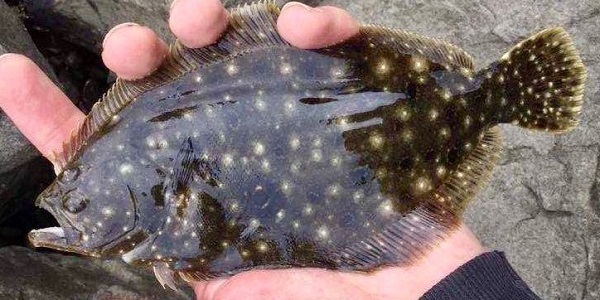
 11/3 – Yonkers, HRM 18: Students from the Children’s Environmental Literacy Foundation joined our staff at the Sarah Lawrence Center for the Urban River at Beczak to investigate the river’s life with our beach seine. Across five hauls we caught two young-of-year striped bass and two smallmouth flounder (Etropus microstomus, the first we have ever caught here. 11/3 – Yonkers, HRM 18: Students from the Children’s Environmental Literacy Foundation joined our staff at the Sarah Lawrence Center for the Urban River at Beczak to investigate the river’s life with our beach seine. Across five hauls we caught two young-of-year striped bass and two smallmouth flounder (Etropus microstomus, the first we have ever caught here.
Invertebrates dominated the catch with 15 blue crabs, 10 Atlantic silverside, as well as comb jellies, grass shrimp, and sand shrimp. The river temperature was 60 degrees Fahrenheit (F), salinity was 11.6 pars-per-thousand (ppt), and the dissolved oxygen (DO) was 8.2 parts-per-million (ppm). (Photo of smallmouth flounder courtesy of Jason Muller)
- Jason Muller, Ishika Joshi
[With three smallmouth flounder this week, Jason Muller, and his staff at the Sarah Lawrence Center for the Urban River at Beczak had, once again, struck ichthyological gold (see Lyre goby, October 25, 2021). Tom Lake]
Natural History Entries
 10/29 – Bedford, HRM 35: Among the 195 south-migrating raptors we counted today at the Bedford Audubon Chestnut Ridge Hawkwatch, red-shouldered hawk was high count with 129. Turkey vulture (315) and black vulture (3) were collectively the numerical high count among non-raptor migrants. Despite the “blue sky of death,” which cost us detections especially in the morning, it was a very good day for hawk migration. 10/29 – Bedford, HRM 35: Among the 195 south-migrating raptors we counted today at the Bedford Audubon Chestnut Ridge Hawkwatch, red-shouldered hawk was high count with 129. Turkey vulture (315) and black vulture (3) were collectively the numerical high count among non-raptor migrants. Despite the “blue sky of death,” which cost us detections especially in the morning, it was a very good day for hawk migration.
The highlight among other non-raptor migrants was three sandhill cranes headed southwest flying by at nearly eye-level. Additionally, there were 62 Canada Geese, 285 American robins, and 85 red-winged blackbirds. (Photo of sandhill crane courtesy of Jim Yates)
- Richard Aracil, Adam Bradley, Barbara Phillips
 10/29 – Hook Mountain, HRM 31: We counted 74 south-migrating raptors today at the Hook Mountain Hawkwatch; red-shouldered hawk was high count with 54. Turkey vulture (69) and black vulture (2) were collectively the numerical high count among non-raptor migrants. The highlight among other non-raptor migrants was a flock of six great cormorants (Phalacrocorax carbo), that seem to be less common than the double-crested cormorant. (Photo of great cormorant courtesy of Michael Kalin) 10/29 – Hook Mountain, HRM 31: We counted 74 south-migrating raptors today at the Hook Mountain Hawkwatch; red-shouldered hawk was high count with 54. Turkey vulture (69) and black vulture (2) were collectively the numerical high count among non-raptor migrants. The highlight among other non-raptor migrants was a flock of six great cormorants (Phalacrocorax carbo), that seem to be less common than the double-crested cormorant. (Photo of great cormorant courtesy of Michael Kalin)
- Raimund Miller, Brian Rosenstock, Tim Warren, Meryl Ackley, Tim Brew, Tom Fiore
10/29 – Essex County, HRM 284: Except for the red oak and American beech leaves, almost all our leaves were down. One more exception was some beautiful big-toothed aspens in blazes of yellow. Barred owls have been hooting in the area; I'm not sure when the last time I heard a great-horned owl — it’s been many years. I walk the dog pretty much every night and we've heard plenty of coyotes out in the hills, but not that far away. I really like listening to them harmonize. With hunting season here, most adult white-tailed deer were lurking in places away from everyone and everything. But the number of young deer (this years and yearlings from last year) were out and about, boldly crossing roads.
- Mike Corey
10/29 – Beacon, HRM 61: I caught, measured, and released five channel catfish and one common carp in a four-hour fishing Session today at Long Dock. The carp was small (15 inches) and the channel catfish ranged from 15 to 19 inches. When I quit in late afternoon, the fish were still biting. There were no other anglers about.
- Bill Greene
*** Fish of the Week ***
 10/30 – Hudson River Watershed: Fish-of-the-Week for Week 194 is the summer flounder (Paralichthys dentatus), number 223 (of 237), on our Hudson River Watershed List of Fishes. If you would like a copy of our list, e-mail: trlake7@aol.com 10/30 – Hudson River Watershed: Fish-of-the-Week for Week 194 is the summer flounder (Paralichthys dentatus), number 223 (of 237), on our Hudson River Watershed List of Fishes. If you would like a copy of our list, e-mail: trlake7@aol.com
The summer flounder is taxonomically categorized as a lefteyed flounder (Bothidae), one of five such species in the estuary. They should not be confused with similar-looking righteyed flounders (Pleuronectidae). Summer flounder, most often known colloquially as “fluke,” are found in coastal waters from Maine to Florida. In the estuary, they are considered permanent-seasonally resident marine species.
As flatfish, flounders lie flat on the bottom and the two families are easy to distinguish in the field by referencing how the flounder’s mouth opens relative to its eyes. Both eyes of a left-eyed flounder will be on the left side of its head; both eyes of a right-eyed flounder will be on the right side of its head. This odd arrangement of eyes is a wonderful and ancient example of adaptation through natural selection and favored traits.
Flounders are born with one eye on each side of their head, as with most fishes. As flounders grow from the larval to juvenile stage, through a process called metamorphosis, one eye migrates to the opposite side of their head with a bit of a skull shift. As a result, both eyes are then on the side that faces up. It is like their unique DNA is executing program code. The topside of most flounders can very intricately mimic the substrate providing excellent camouflage from predators.
The literature claims that summer flounder will eat anything it can fit into its large, tooth-studded mouth, including all manner of fish and crustacean. Large summer flounder, often referred to as “doormats,” can reach 37-inches and weigh 30 lb. (Photo of summer flounder courtesy of Asher Pacht)
- Tom Lake
 10/30 – Bedford, HRM 35: Among the 105 south-migrating raptors we counted today at the Bedford Audubon Chestnut Ridge Hawkwatch, red-shouldered hawk was high count with 53. Turkey vulture (130) was the numerical high count among non-raptor migrants. After a very slow start with almost nothing flying for the first hour or more, it turned out to be another day of good raptor movement. We had decent cloud cover to make scanning the sky a lot easier than yesterday. The highlight was our first golden eagle of the season. It was an immature that passed almost directly over the platform at a low altitude. Luckily, we had several visitors on hand at that time, and all got nice looks. Other non-raptor migrants included 390 American robins. (Photo of golden eagle courtesy of Deborah Tracy Kral) 10/30 – Bedford, HRM 35: Among the 105 south-migrating raptors we counted today at the Bedford Audubon Chestnut Ridge Hawkwatch, red-shouldered hawk was high count with 53. Turkey vulture (130) was the numerical high count among non-raptor migrants. After a very slow start with almost nothing flying for the first hour or more, it turned out to be another day of good raptor movement. We had decent cloud cover to make scanning the sky a lot easier than yesterday. The highlight was our first golden eagle of the season. It was an immature that passed almost directly over the platform at a low altitude. Luckily, we had several visitors on hand at that time, and all got nice looks. Other non-raptor migrants included 390 American robins. (Photo of golden eagle courtesy of Deborah Tracy Kral)
- Richard Aracil, Adam Bradley, Glenn Kaufman, Steve Rappaport
[golden eagle]
10/30 – Hook Mountain, HRM 31: We counted 94 south-migrating raptors today at the Hook Mountain Hawkwatch; red-shouldered hawk was high count with 53. Turkey vulture (101) and black vulture (10) were collectively the numerical high count among non-raptor migrants. Late in the day, two osprey came together, moving south over the Hudson River. Among other non-raptor migrants were Canada Geese (many), common grackle (early flyovers, 140+), and one monarch butterfly.
- Tom Fiore
 10/30 – Piermont Pier, HRM 25: I took a late morning walk today on Piermont Pier. As the tide was low, I left the road and walked on the sandy north shore where I came across a small (14-inch) dead Atlantic sturgeon. A bit further on, I came upon two Atlantic brant, almost certainly in migration, at the water’s edge. Near the end of my walk, I found a woolly bear caterpillar, the larval form of the Isabella tiger moth (Pyrrharctia isabella), on the path. I thought of the old, but perhaps not entirely discredited, folklorist belief that the wider the middle rusty-brown section, as a percentage of their total length, the milder the coming winter will be. Conversely, the wider the combined black sections, fore and aft, the more severe the winter will be. 10/30 – Piermont Pier, HRM 25: I took a late morning walk today on Piermont Pier. As the tide was low, I left the road and walked on the sandy north shore where I came across a small (14-inch) dead Atlantic sturgeon. A bit further on, I came upon two Atlantic brant, almost certainly in migration, at the water’s edge. Near the end of my walk, I found a woolly bear caterpillar, the larval form of the Isabella tiger moth (Pyrrharctia isabella), on the path. I thought of the old, but perhaps not entirely discredited, folklorist belief that the wider the middle rusty-brown section, as a percentage of their total length, the milder the coming winter will be. Conversely, the wider the combined black sections, fore and aft, the more severe the winter will be.
This woolly bear was dominated by its middle brown band (60 percent) flanked by two lesser black bands (30 percent and10 percent). Although the caterpillar moved surprisingly fast across the path, I helped it to the grass to keep it from automobile wheels and inattentive feet. (Photo of woolly bear caterpillar courtesy of Linda Pistolesi)
- Linda Pistolesi
[Is there science involved in reading the woolly bear’s bands? Beginning in 1948, Dr. C. H. Curran, curator of insects at the American Museum of Natural History, conducted wooly bear caterpillar research each autumn at New York’s Bear Mountain State Park. Dr. Curran’s data suggests that the combination of wide and narrow bands, as a percentage of their total length, can predict the severity of the winter to come. If we were inclined to believe, we would expect a somewhat milder winter this year. Tom Lake]
[Hudson River Sturgeon - Reports of dead sturgeon of either species are tracked by New York State Department of Environmental Conservation (NYSDEC) and reported to the National Marine Fisheries (NMFS)
Report sightings of dead sturgeon to DEC's Marine Life Incident Report online survey.
https://survey123.arcgis.com/share/c4a0ad629d9d464495f81802f2e4b768?
Also, visit https://www.dec.ny.gov/animals/37121.html to report a fish or to get more information.
Atlantic sturgeon (Acipenser oxyrinchus) was added to the federal Endangered Species List in February 2012. Shortnose sturgeon (A. brevirostrum) was listed by the U.S. Fish and Wildlife Service (USF&WS) as an endangered species on March 11, 1967, under the Endangered Species Preservation Act, the precursor to the Endangered Species Act. The National Oceanic and Atmospheric Administration (NOAA) assumed jurisdiction for shortnose sturgeon from the USF&WS in 1974. Both species are fully protected in New York waters.]
 10/31 – Saint Andrew-on-Hudson, HRM 80: All Hallows Eve. For many fans of the season, Halloween is a time to dress up scary and go in search of tricks-or-treats. We have our own tradition. Today was year 14 of our annual pilgrimage to the grave site of Pierre Teilhard de Chardin, a Jesuit theologian, geologist, anthropologist, paleontologist, and renowned naturalist who died in 1955 and was buried on the grounds of the Culinary Institute of America (a former Jesuit novitiate1833-1968). 10/31 – Saint Andrew-on-Hudson, HRM 80: All Hallows Eve. For many fans of the season, Halloween is a time to dress up scary and go in search of tricks-or-treats. We have our own tradition. Today was year 14 of our annual pilgrimage to the grave site of Pierre Teilhard de Chardin, a Jesuit theologian, geologist, anthropologist, paleontologist, and renowned naturalist who died in 1955 and was buried on the grounds of the Culinary Institute of America (a former Jesuit novitiate1833-1968).
Teilhard de Chardin spent much of his life searching for common ground between religious dogma and natural history, reconciling his faith with modern science. That made him a truly unique individual in his time. Amidst a hundred or more identical gravestones, de Chardin’s is easy to find. There are frequently flowers and always a collection of items — tokens of natural history — left by those paying homage.
In the spirit of both anthropology and geology — Teilhard de Chardin had a Ph.D. in geology — today’s contribution was a palm-sized piece of English flint (chert) collected at low tide along the River Thames in London (UK). After examining its attributes, it was likely an expended “core,” remnants or lithic debitage from Stone Age tool production. Flakes had been removed either by percussion or pressure flaking and then fashioned into small tools (micro-liths) such as stone knives, points, and scrapers by Neolithic artisans. (Photo of Teilhard de Chardin courtesy of Tom Lake)
- Tom Lake, Phyllis Lake
[Our Halloween tradition is a low-profile, unofficial version of such better known examples as “Roses and Cognac” to Edgar Allan Poe’s crypt in Baltimore, or “Flowers and Poetry” to Jim Morrison’s grave in Paris. In the instance of de Chardin, it is very simply a means of remembering a kindred soul. For more in-depth, albeit dense thought, on Teilhard de Chardin, see Spirit of Fire: the life and vision of Pierre Teilhard de Chardin, Ursula King (2015). Tom Lake]
10/31 – Bedford, HRM 35: We counted 28 south-migrating raptors today at the Bedford Audubon Chestnut Ridge Hawkwatch; red-shouldered hawk was high count with nine. Turkey vulture (69) was the numerical high count among non-raptor migrants. It was a slow day with turkey vulture the only species showing any significant movement. Not much happening with non-raptor migrants either with only American Robins (308) and one common loon.
- Richard Aracil, Adam Bradley, Kevin McGrath, Pedro Troche
11/1 – Bedford, HRM 35: Among the nine south-migrating raptors we counted today at the Bedford Audubon Chestnut Ridge Hawkwatch, sharp-shinned hawk was high count with six. Turkey vulture (30) was the numerical high count among non-raptor migrants. There was nothing terribly notable with non-raptor migrants except for 242 American robins.
- Richard Aracil, Adam Bradley
11/1 – Hook Mountain, HRM 31: We had just a single south-migrating raptor today — a sharp-shinned hawk — at the Hook Mountain Hawkwatch. This was an anomalous day for raptor migration on the Hook. Last week, a similar early cloud bank stifled raptor movement (at observable lower altitudes) but a small flight developed when the clouds broke. Today, the clearing weather produced only a single raptor. We heard a faint call from the low bushes on the south edge of the summit and our vigorous "pishing" attracted 6-8 dark-eyed juncos and a ruby crowned kinglet. A large, noisy flock of 60-plus common grackles wheeled close-in below the trees on the north slope and then vanished.
- John Phillips, Tom Warren
[Pishing is a term that refers to a variety of strange noises made by the mouth to attract birds. The usual pishing is done by puckering the lips, as if to plant a kiss, and blowing out while making a ‘psssh psssh psssh’ sound. The aim is to get curious birds to come closer, often out of heavy brush, to identify the source of the sound. Bird World]
11/1 – Yonkers, HRM 18: Our staff at the Sarah Lawrence Center for the Urban River at Beczak made five seine hauls today to see what was home in the river. It came as no surprise that Atlantic silverside (26) was high count among fishes. Comb jellies (17) and moon jellyfish (4) were among the invertebrates. The river temperature was 61 degrees F, salinity was 9.3 ppt, and the dissolved oxygen (DO) was 8.9 ppm.
- Jason Muller, Rachel Lynch, Kiki Quiros
11/2 – Little Stony Point Preserve, HRM 55: We arrived at the beach at the turn of the tide on an idyllic autumn day. Along the shore, fall leaves were drifting downriver in the last of the ebb; out in deeper water, a couple of large, sheared branches were heading upriver in the new flood tide. The river was flowing both ways at the same time. This phenomenon has been known for eons; Algonquian-speaking Mohican people named the river Muhheakantuck, meaning "the river that flows both ways."
The water was a delightful 62 degrees F, salinity was still reasonable (for the Highlands in November) at 2.0 ppt. The seining was only so-so. Among the fishes were Atlantic silverside (77-79 mm), a migrant from saltier waters, present since the end of August, and likely moving seaward, as were young-of-year striped bass (64-66 mm) heading downriver to wintering locations among the inter-pier areas of the Upper Bay of New York Harbor, and spottail shiners that were going nowhere — they live here.
- Tom Lake, Phyllis Lake
[Note: One-inch equals 25.4 millimeters (mm)].
11/2 – Bedford, HRM 35: We counted 33 south-migrating raptors today at the Bedford Audubon Chestnut Ridge Hawkwatch; red-shouldered hawk was high count with12. Turkey vulture (45) was the numerical high count among non-raptor migrants. During the last several days, the flights had begun slow; today turkey vultures and red-shoulder hawks peaked in the afternoon. Notable among other non-raptor migrants were Canada geese (194) and American robin (53).
- Adam Bradley, Kevin McGrath, Pedro Troche
11/2 – Hook Mountain, HRM 31: Among the 17 south-migrating raptors we counted today at the Hook Mountain Hawkwatch, Cooper’s hawk was high count with six. Black vulture (10) was the numerical high count among non-raptor migrants. A first-of-season snow bunting attempted to land on the mountain but continued out of sight.
- Steve Sachs, Ari Weiss, Chris Wiley, Nadav Snir-Zelniker
11/2 – Yonkers, HRM 18: Students from the Sarah Lawrence College Urban Ecology Class joined our staff at the Sarah Lawrence Center for the Urban River at Beczak today to make eight seine hauls that produced some surprises. The first was failing to find any Atlantic silverside, a staple all summer into the fall. Our seine was otherwise chock full; in order of abundance, we caught 33 blue crabs, 33 sand shrimp, 16 grass shrimp, six comb jellies, two moon jellyfish, and one soft-shelled clam. Fishes were few: a mummichog and two young-of-year striped bass. The river temperature was 59 degrees F, salinity was 9.7 ppt, and the dissolved oxygen was 8.8 ppm.
- Jason Muller, Christina Edsall, Katie Lamboy
11/3 – Saugerties, HRM 102: An osprey was soaring overhead this afternoon, likely the same one that had been perched on the river channel marker #93 in recent mornings. Our resident nesting pair of osprey flew south shortly after Labor Day as usual, and others often passed through in the weeks that followed. This is the latest I've noticed an osprey here, at least what I remember.
- Patrick Landewe
11/3 – Beacon, HRM 61: I caught and released four channel catfish off Long Dock today in a five-hour fishing session. The channel cats are keeping the lights on for me, as the year winds down. I weighed and measured the largest one before release: 5 lb., 3 oz., and 24 inches. The others were slightly smaller. I was the only angler there.
- Bill Greene
 11/3 – Bedford, HRM 35: Among the 33 south-migrating raptors we counted today at the Bedford Audubon Chestnut Ridge Hawkwatch, red-shouldered hawk was high count with18. Turkey vulture (69) was the numerical high count (other than grackles) among non-raptor migrants. It was a slow day with southerly winds and a tough blue sky throughout the watch. Despite the challenges, we managed to find two golden eagles and a very late-season broad-winged hawk. Notable among other non-raptor migrants were about 1,760 (extrapolated) common grackles. (Photo of common grackle courtesy of eBird) 11/3 – Bedford, HRM 35: Among the 33 south-migrating raptors we counted today at the Bedford Audubon Chestnut Ridge Hawkwatch, red-shouldered hawk was high count with18. Turkey vulture (69) was the numerical high count (other than grackles) among non-raptor migrants. It was a slow day with southerly winds and a tough blue sky throughout the watch. Despite the challenges, we managed to find two golden eagles and a very late-season broad-winged hawk. Notable among other non-raptor migrants were about 1,760 (extrapolated) common grackles. (Photo of common grackle courtesy of eBird)
- Richard Aracil, Glenn Kaufman
11/3 – Hook Mountain, HRM 31: Among the 42 south-migrating raptors we counted today at the Hook Mountain Hawkwatch, red-shouldered hawk was high count with 16. Sharp-shinned hawk (11) also showed well. This was a rather slow but still exciting day on the Hook with two late-season ospreys enjoying the updrafts from the unseasonably warm air (75 degrees F). Notable among other non-raptor migrants were small but nice flights of Canada geese (16) and double-crested cormorants (13).
- Steve Sachs, Ari Weiss, Chris Wiley, Nadav Snir-Zelniker
 11/4 – Ulster County, HRM 76: I finally got a decent photo of a fisher in my backyard in Rosendale. Their population seems rather healthy despite roadkill sightings. However, there are very few porcupines, among their favorites, in the immediate area, but racoons have rebounded as of late. I did lose my cat a few years back and found him up a downed tree a hundred yards into the woods. (Photo of fisher courtesy of Jay Snow) 11/4 – Ulster County, HRM 76: I finally got a decent photo of a fisher in my backyard in Rosendale. Their population seems rather healthy despite roadkill sightings. However, there are very few porcupines, among their favorites, in the immediate area, but racoons have rebounded as of late. I did lose my cat a few years back and found him up a downed tree a hundred yards into the woods. (Photo of fisher courtesy of Jay Snow)
- Jay Snow
[Fishers (Martes pennanti) are one of our largest weasels (river otters are similar-sized) reaching over forty-inches in length. Their stature is relatively low to the ground, with short legs, small ears, and a well-furred tail. The color of their fur varies from dark brown to nearly black. They are seen periodically in the Catskills and Adirondacks are not rare in the Mid-Hudson Valley. While the name of this fur bearer suggests an aquatic habitat and diet, they much prefer dense forests and porcupines. One of the colloquial names for fisher is “fisher-cat.” Fisher is native to New York State and a member of the Mustelidae family (mustela, Latin for weasel) along with other New York State mammals such as mink, American marten, and various other smaller weasels. Ellen Rathbone]
11/4 – Bedford, HRM 35: We counted 26 south-migrating raptors today at the Bedford Audubon Chestnut Ridge Hawkwatch; red-shouldered hawk and sharp-shinned hawk were co-high count with seven. Turkey vulture (59) and black vulture (2) were collectively the numerical high count among non-raptor migrants. The air temperature was unseasonably warm today (69 degrees F). The two golden eagles we spotted included an immature that seemed to have only white in its tail base, and an adult that did not appear to have any white at all. Both birds were very distant. Notable among other non-raptor migrants were two common loon, a pileated woodpecker, 47 cedar waxwings, and both herring gulls and ring-billed gulls, unusual sightings for us.
- Richard Aracil, Kevin McGrath, Pedro Troche
11/4 – Hook Mountain, HRM 31: Among the 31 south-migrating raptors we counted today at the Hook Mountain Hawkwatch, red-shouldered hawk was high count with 10. Turkey vulture (40) was the numerical high count among non-raptor migrants. There were no sightings at all of eagles or falcons. One surprise was a single adult broad-winged hawk flying southwest but a bit to the north of the summit.
- Tom Fiore
 11/4 – Yonkers, HRM 4: Our staff at the Sarah Lawrence Center for the Urban River at Beczak conducted our usual five seine hauls today and found the net loaded with comb jellies (153), including both Beroe's and Leidy's comb jellies. Other invertebrates included moon jellyfish blue crabs, sand shrimp, and one eastern oyster (Crassostrea virginica). 11/4 – Yonkers, HRM 4: Our staff at the Sarah Lawrence Center for the Urban River at Beczak conducted our usual five seine hauls today and found the net loaded with comb jellies (153), including both Beroe's and Leidy's comb jellies. Other invertebrates included moon jellyfish blue crabs, sand shrimp, and one eastern oyster (Crassostrea virginica).
Fishes included a mummichog, one young-of-year striped bass, and our third smallmouth flounder of the week. The river temperature was 61 degrees F, salinity was 12.0 ppt, and the dissolved oxygen was 8.0 ppm. (Photo of Beroe's comb jelly courtesy of Mark Norman)
- Jason Muller, Kinza Siddiqui
[Comb jellies (Ctenophora) are often mistaken for jellyfish but differ in that they have no tentacles and do not sting. Like true jellyfish, comb jellies are translucent, gelatinous, fragile, essentially planktonic, often drifting at the whim of the wind and current. Two comb jelly species, Beroe's (Beroe cucumis) and Leidy's (Mnemiopsis leidyi) are found in the estuary. The genus name Beroe comes from Ancient Greek mythology (Βερόη Beróē) as a nymph of Beirut, the daughter of Aphrodite and Adonis. Leidy's comb jelly (Mnemiopsis leidyi) was named in 1865 by Louis Agassiz to honor Joseph Mellick Leidy, an American biologist. Tom Lake]
Autumn 2022 Natural History Programs and Events
November 17, 7:00 p.m. The River Before Henry: First Nations Last Elephants
Glens Falls- Saratoga Chapter of the Adirondack Mountain Club
Saratoga Public Library, Saratoga Springs
Tom Lake (DEC Hudson River Estuary Program)
Hudson River Education
Teachers and students will enjoy our new Hudson River K-12 Unit of Study. This carefully curated group of lesson plans, arranged by topic and/or grade, brings together great learning tools developed by the DEC and dozens of estuary partners.
Hudson River Miles
The Hudson is measured north from Hudson River Mile 0 at the Battery at the southern tip of Manhattan. The George Washington Bridge is at HRM 12, the Tappan Zee 28, Bear Mountain 47, Beacon-Newburgh 62, Mid-Hudson 75, Kingston-Rhinecliff 95, Rip Van Winkle 114, and the Federal Dam at Troy, the head of tidewater, at 153. The tidal section of the Hudson constitutes a bit less than half the total distance – 315 miles – from Lake Tear of the Clouds to the Battery. Entries from points east and west in the watershed reference the corresponding river mile on the mainstem.
To Contribute Your Observations or to Subscribe
The Hudson River Almanac is compiled and edited by Tom Lake and emailed weekly by DEC's Hudson River Estuary Program. Share your observations by e-mailing them to trlake7@aol.com. To subscribe to the Almanac (or to unsubscribe), use the links on DEC's Hudson River Almanac or DEC Delivers web pages.
Useful Links
National Oceanic and Atmospheric Administration online tide and tidal current predictions are invaluable when planning Hudson River field trips. For real-time information on Hudson River tides, weather, and water conditions from sixteen monitoring stations, visit the Hudson River Environmental Conditions Observing System website.
DEC's Smartphone app for iPhone and Android is now available at New York Fishing, Hunting & Wildlife App.
|