
DEC Adirondack Outdoor Recreation Bulletin - November 3, 2022
The New York State Department of Environmental Conservation sent this bulletin on 11/03/2022 04:48 PM EDT |
| DEC Delivers - Information to keep you connected and informed from the NYS Department of Environmental Conservation |
| Share or view as a web page || Update preferences or unsubscribe |
DEC Adirondack Outdoor Recreation Bulletin
|
|
This bulletin provides only the most recent notices. Check the Adirondack Backcountry Information webpages for more detailed information on access, outdoor recreation infrastructure, and conditions. Emergency Situations: If you get lost or injured; keep calm and stay put. If you have cell service, call 911 or the DEC Forest Ranger Emergency Dispatch, 833-NYS-RANGERS. Welcome to the Adirondacks. The Welcome to the Adirondacks webpage provides information about the Forest Preserve, conservation easement lands, outdoor recreation, and Leave No Trace™. Love Our NY Lands: All New Yorkers and visitors should be able to access, enjoy, and feel welcome on state lands. While enjoying these shared spaces, be respectful of other visitors. Share trails, treat people with kindness, and leave things as you found them for others to enjoy. All of us have a responsibility to protect State lands for future generations. Learn more about how you can Love Our NY Lands. In This Issue:
Recent NoticesThe following are only the most recent notices pertaining to public lands in the Adirondacks. Please check the Adirondack Backcountry Information webpages for a full list of notices, including seasonal road statuses, rock climbing closures, specific trail conditions, and other pertinent information NEW THIS WEEK Adirondack Rail Trail: Construction has begun on the first phase of the future Adirondack Rail Trail. The first segment of the trail between Station Street in Lake Placid and the intersection of Cedar Street and Route 86 in Saranac Lake will be closed to public access during active construction. Construction will pause in early December, allowing for winter recreation. Details will be provided on the rail trail webpage as they become available. Please respect posted signage and barricades in work areas and email Info.R5@dec.ny.gov with questions. High Peaks Wilderness: Significant ice has accumulated on some high-elevation trails. Be prepared with appropriate traction devices, including micro spikes for use on thin ice over flat trails and crampons for thick ice and ice on steeper slopes. LAST WEEK Moose River Plains Wild Forest:
General Notices
Visit the main Adirondack Backcountry Information page for more trip-planning resources. Know Before You Go (11/03):
Check the Weather: Check the forecast for your destination and pack and plan accordingly. Check the National Weather Service Northern Adirondacks and Southern Adirondacks Mountain Point Forecasts for select summit forecasts. Check both daytime and nighttime temperatures and remember that temperatures will drop as you gain elevation. Fire Danger: As of 11/3, fire danger is MODERATE in the Adirondacks. Please use caution, follow local guidelines, and avoid open fires if possible. Check the fire rating map. Water Conditions: Water levels throughout the Adirondack region are below average for this time of year. Check the USGS Current Water Data for New York for stream flow of selected waters. Personal Flotation Devices (PFDs aka lifejackets) are strongly recommended. No Overnight Camping at Trailheads: Please note that overnight camping is not permitted at trailheads or other roadside locations where a camping disc is not present. This includes individuals sleeping in cars, vans, and campers. Campers should seek out designated roadside campsites marked with a camp here disc or campgrounds. Ticks: Wear light-colored clothing with a tight weave to spot ticks easily. Wear enclosed shoes, long pants, and a long-sleeved shirt. Tuck pant legs into socks or boots and shirt into pants. Check clothes and any exposed skin frequently for ticks while outdoors. Consider using insect repellent. Stay on cleared, well-traveled trails and walk in the center of trails. Avoid dense woods and bushy areas. Additional tips for tick prevention. Bear Canisters Required: NYSDEC requires the use of bear-resistant canisters by overnight users in the Eastern High Peaks Wilderness between April 1 and November 30. NYSDEC encourages campers to use bear-resistant canisters throughout the Adirondack backcountry. Bear canisters should be used to store all food, food garbage, toiletries, and other items with a scent. Canisters should be stored a minimum of 100ft from tents, lean-tos and cooking sites and kept closed whenever they are not being accessed. Learn more about bear canisters and avoiding human-bear conflicts. Safety & Education
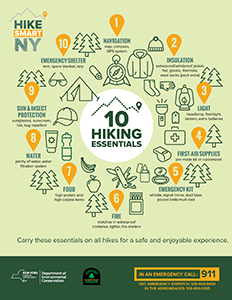
Fall is here! Whether you’re going for a hike, a bike, a paddle, or fishing, Hike Smart NY can help you prepare with a list of 10 essentials, guidance on what to wear, and tips for planning your trip with safety and sustainability in mind. Staying Safe this Hunting Season The fall season offers opportunities for many different kinds of outdoor recreation, and the Adirondacks are popular among a wide variety of users, including hunters. Everyone loves these public lands for similar reasons, and, this season, it’s more important than ever to respect fellow user groups. Our wilderness areas and public lands are open to all. To ensure the safety of every recreator, DEC encourages everyone to abide by basic hunter safety practices. Here are some things to remember:
Leave No Trace
Follow the Seven Principles of Leave No Trace to maintain minimal impact on the environment and the natural resources of the Adirondacks. Use proper trail etiquette to ensure an enjoyable experience for yourself and others and tread lightly! Trash your Trash (and your Food Scraps) Put litter – even crumbs, peels, and fruit cores – in garbage bags. Carry them home or throw them in a trash receptacle, but never leave trash or food out in the wild. Extra food, even apple cores, can be harmful to wildlife. Not only does human food lack the proper nutrients for wildlife, but it also habituates them to an unnatural food source. This can cause animals to associate humans with food and even become dependent on people as a food source, increasing the likelihood of negative interactions. Food habituation can happen with all wildlife, large or small. Whether you’re in bear country or dealing with the Red Squirrels of the Adirondacks, be sure to properly store your food and respect the wildlife. Recreation Highlight: Free Fishing Day Nov. 11
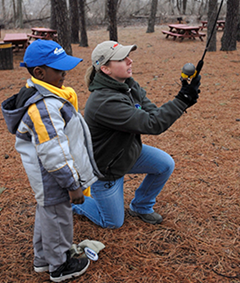
Mark your calendar, the next Free Fishing Day is November 11. During Free Fishing Days and Weekends, anyone can fish the fresh waters of New York State and no fishing license is required! All other freshwater fishing regulations still apply. Ideas for Free Fishing Days:
|
|
The New York State Department of Environmental Conservation respects your right to privacy and welcomes your feedback | Update preferences or unsubscribe | Learn more about DEC Delivers |
|
Connect with DEC:     
|
|
| Basil Seggos, Commissioner | |