Saltwater Fishing & Boating Newsletter
The New York State Department of Environmental Conservation sent this bulletin on 08/05/2022 05:35 PM EDT |
| DEC Delivers - Information to keep you connected and informed from the NYS Department of Environmental Conservation |
| Share or view as a web page || Update preferences or unsubscribe |
Saltwater Fishing & Boating Newsletter |
|
In This Issue
Shortfin Mako Shark Possession Prohibited in New York State
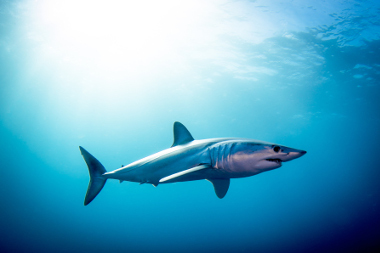
Effective July 26, 2022, all recreational and commercial possession of shortfin mako is prohibited in state waters (0 - 3 miles offshore). This rule maintains consistency with interstate and federal management plans as part of a larger rebuilding program for the North Atlantic shortfin mako. For current shark fishing limits in New York State, check DEC's Recreational Saltwater Fishing Limits. NOAA Fisheries established a shortfin mako retention limit of zero in the commercial and recreational Atlantic HMS fisheries, prohibiting all take of shortfin mako from federal waters (3 - 200 miles offshore) on July 5, 2022. Regulation changes are consistent with the management measure adopted in 2021 by the International Commission for the Conservation of Atlantic Tunas (ICCAT) recommendation based on the 2017 stock assessment. For more information, visit NOAA's website. Changes in New York State Commercial Fishing LimitsLongfin Squid
Bluefish
Summer Flounder (Summer Flounder Permit Holders Only)
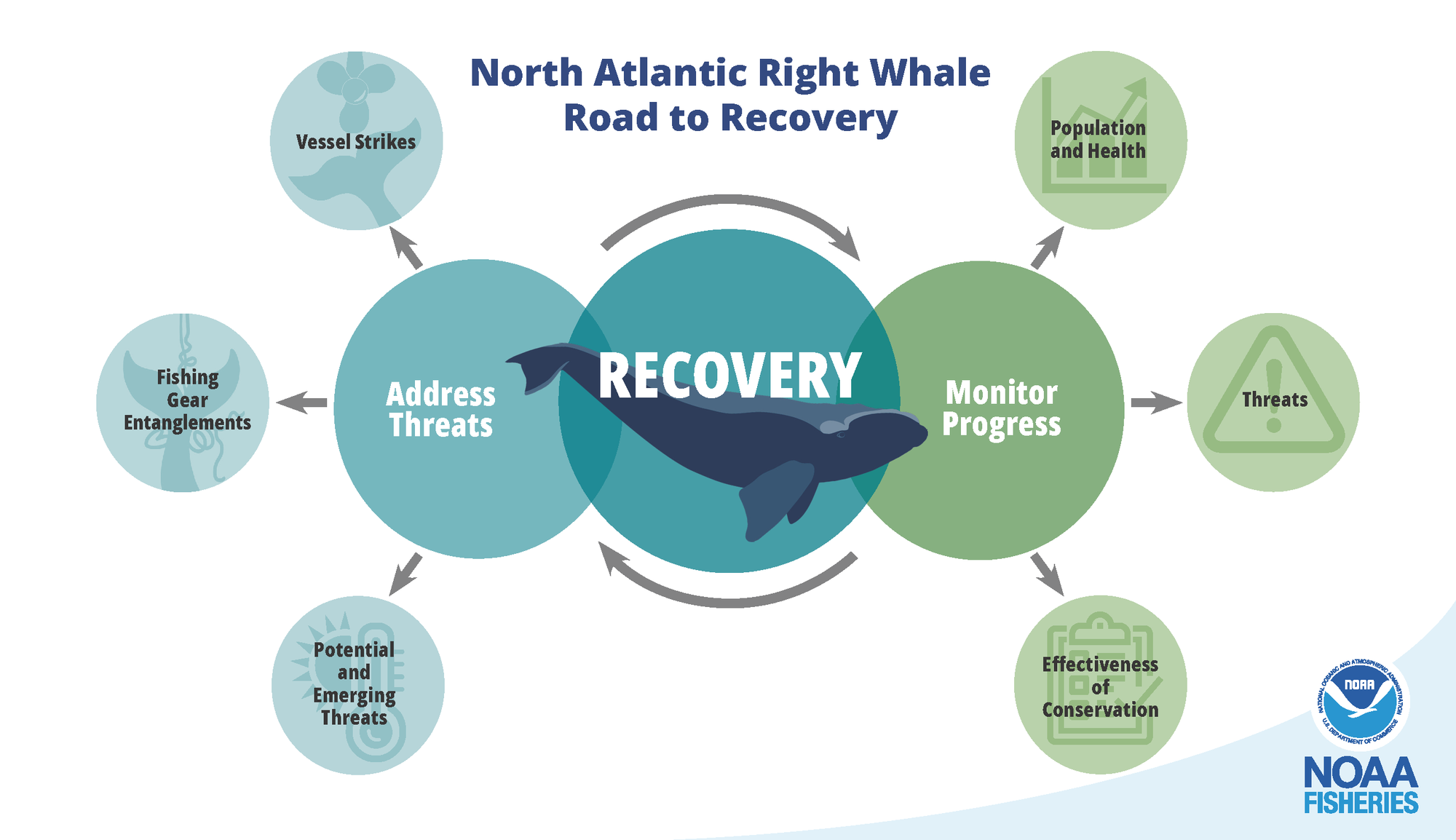
This action is taken pursuant to the quota distribution schedule of subdivision 40.1 (z)(1)(2), 40.1 (u)(1)(2), and 44.3 (b)(2) of 6 NYCRR. Check the current commercial fishing limits in New York State on DEC's website. Protecting Critically Endangered North Atlantic Right WhalesNorth Atlantic right whales (Eubalaena glacialis) are one the most endangered marine animals, with fewer than 400 estimated remaining. These critically endangered whales are found throughout the U.S. East Coast and have been observed during DEC's New York Bight Whale Monitoring Program. Threats to whales include entanglement in fishing gear, vessel strikes, and impacts from climate change that change the ocean habitat, their migratory patterns, and location and availability of their prey. NOAA Fisheries' North Atlantic Right Whale Road to Recovery describes efforts to halt the current population decline and recover the species.
NOAA proposed changes to federal vessel speed regulations to reduce the likelihood of right whale deaths and serious injuries that result from collisions with vessels. The changes expand the current mandatory seasonal speed restrictions of 10 knots or less in designated ocean areas and now include most vessels measuring 35 to 65 feet in length. They also broaden the spatial boundaries and timing of the seasonal speed restriction areas. The comment period for the proposed rule is open through September 30, 2022. NOAA will conduct three informational webinars on these proposed changes. Webinars will be held on August 10, 2-3:30 PM, August 16, 6-7:30 PM, and August 24, 2022, 6:00-7:30 PM (ET) and you can register for the webinars online. You may submit comments via the Federal eRulemaking Portal. Enter NOAA-NMFS-2022-0022 in the search box to comment on the proposed rule. NOAA also released its draft Ropeless Roadmap: A Strategy to Develop On-Demand Fishing (PDF) for public input. The report describes the current state of on-demand, or “ropeless,” fishing and outlines a path for increasing adoption of this technology in commercial fisheries in the Northwest Atlantic Ocean. NOAA is seeking comments on the draft report and they can be submitted using the online form. For more details on these efforts, visit NOAA's website. Join NOAA Fisheries Cooperative Research Study Fleet ProgramThe Northeast Fisheries Science Center is currently accepting quotes for vessel support for the Cooperative Research Study Fleet Program. The Study Fleet, composed of approximately 50 fishing vessels in the Northeast, began in 2006 as a way to engage fishermen in collecting high resolution catch, effort, and environmental data to address science and management needs. The Study Fleet captains and crews use specialized software, automated oceanographic sensors, and real-time data transmission to collect detailed data on every commercial fishing tow. They receive training and compensation for participating. The Study Fleet is seeking to recruit new vessels to participate in the longfin squid, shortfin squid, mackerel, butterfish, scup, black sea bass, summer flounder, whiting, haddock, and tilefish fisheries. These fisheries have been identified as our priority for the collection of long-term, tow-by-tow data using our Fisheries Logbook Data Recording Software, automated oceanographic sensors, and real-time data transmission. Vessel owners who would like to apply must register as a vendor on the System for Award Management (SAM) website. All details including requirements and how to apply can be found here: Sam.Gov—StudyFleet. Quotes will be accepted until 2:00 PM Eastern Time, August 12, 2022. Learn more about the program from NOAA's website. Sign up for the Environmental Conservation Police Officer Exam
Do you have what it takes to join the "Thin Green Line"? Do you want to take steps to protect the natural resources of New York State? Do you want to help stop pollution of New York State's air, water, fish, and wildlife? If you are hard-working, diligent, adaptable, and have a love for protecting New York's environment, then you might be interested in becoming an Environmental Conservation Police Officer (ECO). The Civil Service Exam will be given on September 17, 2022. The deadline to apply has been extended to August 10, 2022 - sign up today! |
|
The New York State Department of Environmental Conservation respects your right to privacy and welcomes your feedback | Update preferences or unsubscribe | Learn more about DEC Delivers |
|
Connect with DEC:     
|
|
| Basil Seggos, Commissioner | |