
Hunting and Trapping Newsletter
The New York State Department of Environmental Conservation sent this bulletin on 06/22/2022 11:31 AM EDT |
| DEC Delivers - Information to keep you connected and informed from the NYS Department of Environmental Conservation |
| Share or view as a web page || Update preferences or unsubscribe |
Hunting and Trapping Newsletter |
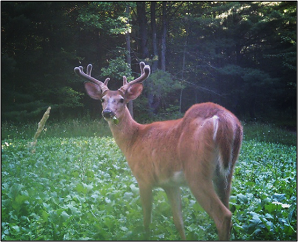
White-Tailed Deer Antler Growth: Let Young Bucks Go and Watch Them Grow!
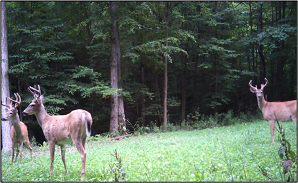
The days are long, and antlers are growing! By now, the healthiest, largest bucks are putting a quarter inch or more of new antler on a day and beginning signs of branching and tine development. At its peak, antlers are known to be one of the fastest growing animal tissues. Large antlers are driven by age, nutrition, and genetics, with age being the most significant factor. A yearling buck sporting merely 3-inch spikes its first year might grow an impressive 10-point rack by the time he is 4 ½ years old!
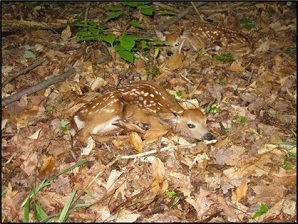
But let’s not forget about the does! Adequate nutrition in the form of high protein forage is needed for does to nurse fawns from spring through summer, getting them into optimal body condition to take on their first winter. Fawns that come out of winter in good condition are then able to put on more weight and more antler as yearlings. With a little luck and restraint from an on-looking hunter, these healthy young bucks can continue growth into adulthood, sporting larger bodies and head gear.
Providing superior habitat for increased nutrition and allowing bucks time to mature over several years are important ingredients in the recipe for producing healthy deer herds and quality bucks.
DEC Seeking Reports of Moose Sightings
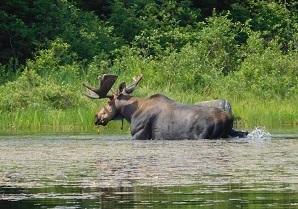
DEC asks the public to report moose sightings via an online form as part of ongoing efforts to monitor moose distribution across New York. While the Adirondacks are home to most New York moose, some live in the eastern part of the state along the Vermont and Massachusetts borders. Moose can also occasionally be found in southeastern New York and the Catskills, but these are usually individuals that have dispersed from other areas. Moose are the largest land mammal in the state. In the summer, when most sightings occur, moose typically spend a lot of time in ponds and wetlands feeding on submerged aquatic plants. During the rest of the year in cooler weather, they browse on leaves, twigs, and buds of trees and shrubs. Favored browse species include willows, birches, maples, balsam fir, viburnums, aspen, and mountain ash. Bulls weigh up to 1,200 pounds and stand up to six feet tall at the shoulder. Cows weigh anywhere from 500 to 800 pounds and usually give birth to one or two calves in late May or early June. Many moose sightings occur along roadways. Drive cautiously at dusk and dawn as moose can be hard to spot due to their dark color. If you see a moose, do not block traffic, and remember to respect wildlife by keeping quiet and viewing from a distance. If you manage to capture one of these magnificent mammals on camera, share your photos by sending them to wildlife@dec.ny.gov. Photo courtesy of G. Lee State Lands to Visit: Honeoye Inlet Wildlife Management Area
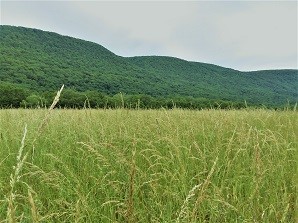
Honeoye Inlet Wildlife Management Area (WMA) is located in Ontario and Livingston Counties at the south end of Honeoye Lake and is named after the lake and stream that flows through the property. A great variety of wildlife find high-quality habitat on this WMA, making it a worthwhile stop for birding and other wildlife observation. Wood duck, great blue heron, swamp sparrow, and least flycatcher are abundant in the silver maple-ash swamp. Each spring, thousands of salamanders migrate from the surrounding upland forest into the swamp to breed. The pursuit of game is also quite good here. Deer, bear, turkey, and cottontail rabbit are common. Each fall, pheasants are released into the larger fields. American woodcock are abundant during migration. Several miles of trails exist on the WMA. A series of old farm lanes are located around—or traverse through—many of the fields, providing excellent views of the surrounding hills. Paddling is also a great way to experience the inlet and swamp. Kayaks and canoes can be put in just north of the WMA at the Honeoye Lake State Boat Launch, where there is a small parking fee. Read more about Honeoye Inlet WMA in the April/May 2022 edition of the Conservationist. Photo courtesy of M. Palermo |
|
The New York State Department of Environmental Conservation respects your right to privacy and welcomes your feedback | Update preferences or unsubscribe | Learn more about DEC Delivers |
|
Connect with DEC:     
|
|
| Basil Seggos, Commissioner | |