|
- Public & Stakeholder Participation Information
- A Bird’s-Eye-View of Air Pollution
- Not All Ozone is Harmful
- Dates to Remember
- AQI Alerts for Respiratory Health
- Connect with Us at Air Mail!
Public & Stakeholder Participation Information:
Air Mail! is the publication to announce public and stakeholder information about air quality topics. All NYS residents are environmental stakeholders – we welcome anyone to join the information sessions and other opportunities posted here.
A Bird’s-Eye-View of Air Pollution
Controlling air pollution is not just for the benefit of humans. Exposure to pollution can harm birds and other animals, just like it does people, while also harming the environment around them. Ground-level ozone pollution, for example, can contribute to habitat damage and food source loss for birds. In fact, habitat loss and degradation, on the whole, have resulted in an 80-99% decline in the abundance of grassland bird populations since 1966.
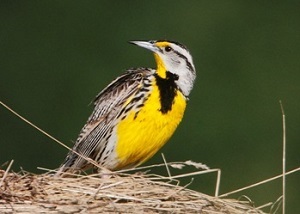 By reducing air pollution and conserving bird habitats, we can improve air quality and the environment for countless species. Scientists estimate that the U.S. has prevented the loss of 1.5 billion birds through air quality improvements over the past 40 years. In particular, the NOx Budget Trading Program helped protect bird populations by lowering the amount of ozone-forming pollution emitted into the air. To help conserve bird habitats in NYS, DEC created the Bird Conservation Area (BCA) Program. The BCA Program integrates bird conservation interests into agency decisions, protecting bird populations and food sources. By reducing air pollution and conserving bird habitats, we can improve air quality and the environment for countless species. Scientists estimate that the U.S. has prevented the loss of 1.5 billion birds through air quality improvements over the past 40 years. In particular, the NOx Budget Trading Program helped protect bird populations by lowering the amount of ozone-forming pollution emitted into the air. To help conserve bird habitats in NYS, DEC created the Bird Conservation Area (BCA) Program. The BCA Program integrates bird conservation interests into agency decisions, protecting bird populations and food sources.
Everyday actions that reduce air pollution can help increase bird populations and protect the environment and our air. You can help by avoiding spray pesticides, using sustainable landscaping techniques (electric or battery-powered equipment), and contributing to a citizen science project like Project Feederwatch or the North American Breeding Bird Survey. Do your part to keep our air clean, and visit a birding trail near you to enjoy watching the birds.
Not All Ozone is Harmful
Ozone is one of the most common reasons for air quality health alerts in NYS. However, not all ozone is harmful. At about 9-18 miles above our heads, there’s an ozone layer surrounding the Earth. This stratospheric ozone forms naturally and is much too far from the surface to cause any health problems. Not only that, but this ozone layer fulfills the crucial role of absorbing harmful solar radiation before it reaches the surface.
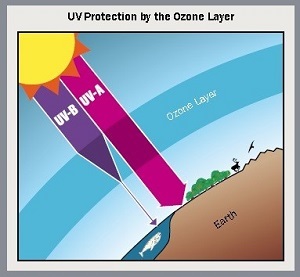 In the 1970s, scientists noticed that this protective ozone layer was disappearing. Pollutants, now known as “ozone-depleting substances,” were destroying the ozone layer faster than it could be replenished. These pollutants primarily came from chemicals and refrigerants, such as freon, that leaked from appliances and household products. To help protect the ozone layer, NYS began controlling propellants (PDF) used in spray cans in 1976. Then in 1987, countries around the world signed an international treaty called the Montreal Protocol. The Montreal Protocol was the first-ever universally ratified treaty and it focused on phasing out the production and use of over 100 ozone-depleting substances worldwide. In the 1970s, scientists noticed that this protective ozone layer was disappearing. Pollutants, now known as “ozone-depleting substances,” were destroying the ozone layer faster than it could be replenished. These pollutants primarily came from chemicals and refrigerants, such as freon, that leaked from appliances and household products. To help protect the ozone layer, NYS began controlling propellants (PDF) used in spray cans in 1976. Then in 1987, countries around the world signed an international treaty called the Montreal Protocol. The Montreal Protocol was the first-ever universally ratified treaty and it focused on phasing out the production and use of over 100 ozone-depleting substances worldwide.
Thanks to the Montreal Protocol and other regulations, the ozone layer is estimated to recover by the middle of the 21st century. Many older appliances still contain ozone-depleting substances and need to be disposed of responsibly at the end of their usable life. For more information on responsible appliance disposal, check out EPA’s Responsible Appliance Disposal Program. By preventing pollution, we can save the ozone layer and ensure the air we breathe is healthy for everyone.
Graphic Credit: United States Environmental Protection Agency
Helpful Links:
-
DECinfo Locator – An interactive map that lets you access DEC documents and public data about the environmental quality of specific sites in NYS as well as outdoor recreation information.
-
DEC Delivers – Stay in-the-know by subscribing to the environmental topics that interest you. We will send you information, updates, and e-newsletters on the topics of your choosing. As an Air Mail! subscriber, you may be interested in subscribing to the Air Quality Alert topic so you know when air quality levels are a concern in your area.
- AQI Forecasts – Check the daily ozone and particulate matter pollution forecast for your area of NYS.
-
NYSDEC YouTube – Keep up with what's going on with DEC staff by subscribing to our YouTube channel. Watch video clips of DEC public protection in action, learn about the Hudson River, or watch the latest episode of "On the Front Lines," DEC's video series.
-
Conservationist – NYS’ premiere outdoor magazine--bringing nature to your door! Published six times a year, Conservationist is a NYS-focused magazine that is packed with informative and entertaining articles, first-rate photography, and stunning artwork. Articles cover a broad range of environmental and natural history related topics. Subscribe today to get a piece of the outdoors in your mailbox.
Dates to Remember:
-
Second Tuesday of the Month: Sustainability Lunchtime Learning Webinars – A monthly series covering numerous topics of interest, such as Sustainable Flooring, Sustainability for Kids, and Creating a Backyard Vegetable Garden. Pre-registration is required.
-
Now through June: DEC Summer Camp registration is open – Now is the time to register your child for some summer fun at one of our DEC Camps. Submit applications through the online registration portal for your preferred summer camp week and location. Register early as some weeks fill up quickly!
-
June 5: World Environment Day – Air pollution has no borders and blows with the wind. Reducing your contributions to air pollution helps keep the world’s air clean.
-
June 8: World Oceans Day – Air pollution can easily become water pollution by adding a little rain. Learn about what you can do to protect water from the devastating effects of acid rain.
-
June 11: Get Outdoors & Get Together Day – Grab your friends and family and connect with nature by attending an active outdoor event near you.
-
June 21: First Day of Summer – Let the camping, fishing, and hiking begin! Stay safe when out and about this summer, and remember to keep an eye on the AQI so you can breathe easy while having fun outdoors.
-
July 1: DEC’s Birthday – This year, we are celebrating 52 years of environmental protection. We have had many successes along the way, but there are still environmental challenges to overcome.
-
July 4: Independence Day – Learn Before You Burn and take caution when starting any backyard or camping fire.
Stay Informed about Your Air Quality
NYS' ozone season runs from April through September. DEC publishes ground-level ozone forecasts during ozone season and particulate matter pollution forecasts year-round using a scale called the Air Quality Index (AQI). DEC sends out an air quality alert when there is a high AQI value, which indicates polluted air. Individuals with pre-existing respiratory or cardiovascular conditions, and people who exercise outdoors should take caution during an air quality alert. Find out if an Air Quality Alert is in effect by calling the toll-free Ozone Hotline: 1-800-535-1345.
The AQI can be accessed in three ways:
Connect with us at Air Mail!
Did you enjoy reading this issue? Perhaps your friends and family would too. Share Air Mail! by using the “Share” button below. If you would like to receive Air Mail! in your own email box, sign up now!
We would also like to know what you think. Send your Air Mail! questions and comments to the team at DAR.web@dec.ny.gov.
|