A Project of the Hudson River Estuary Program
Compiled and edited by Tom Lake, Consulting Naturalist
Love Our NY Lands
State Lands Belong to All of Us
All New Yorkers and visitors should be able to access, enjoy, and feel welcome on state lands. These lands belong to all of us, our families, and our neighbors. While enjoying these shared spaces, be respectful of other visitors. Share trails, treat people with kindness, and leave things as you found them for others to enjoy. All of us have a responsibility to protect State lands for future generations. For more information, visit: https://www.dec.ny.gov/outdoor/119881.html
Overview
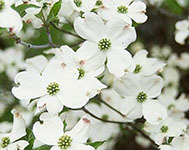 The forests in many areas of our watershed were glowing this week with stark-white native flowering dogwood. Our succession of major spring blooms that ran from forsythia to magnolia to shadbush to redbud concluded this week with lilac. For Hudson River commercial fishermen, the May arrival of lilac used to signal that the “lilac shad” had arrived from the sea, predominantly large gravid females. Lilac shad also signaled that soon it would be time to stow their nets until next spring. (Photo of flowering dogwood courtesy of Tom Lake) The forests in many areas of our watershed were glowing this week with stark-white native flowering dogwood. Our succession of major spring blooms that ran from forsythia to magnolia to shadbush to redbud concluded this week with lilac. For Hudson River commercial fishermen, the May arrival of lilac used to signal that the “lilac shad” had arrived from the sea, predominantly large gravid females. Lilac shad also signaled that soon it would be time to stow their nets until next spring. (Photo of flowering dogwood courtesy of Tom Lake)
Highlight of the Week
5/9 – City of Poughkeepsie, HRM 75: After dark, this evening, I heard a whip-poor-will calling in the woods behind my house. I was sitting at the kitchen table with the back door open and the bird's call pierced the silence and brought me into the yard to hear more. The bird moved from one location to another, about fifty yards away, and again, repeated its call. Then silence. I didn't hear it again the rest of the evening. It has been years since I have heard a whip-poor-will nearby, or anywhere for that matter. (Photo of Eastern whip-poor-will courtesy of Mary Holland)
- John Mylod
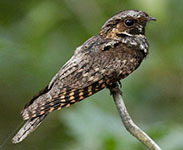 [The eastern whip-poor-will (Antrostomus vociferus) is a member of the nightjar family (Caprimulgidae). They are not often seen, but their distinctive call, April through June, uniquely identifies them. Roger Tory Peterson hears their call as “whip’ poor-weel.” They are first heard the last week of April. Strictly nocturnal, their call, repeated over and over, is usually heard a few hours after sunset and before sunrise. By dawn they are quiet. [The eastern whip-poor-will (Antrostomus vociferus) is a member of the nightjar family (Caprimulgidae). They are not often seen, but their distinctive call, April through June, uniquely identifies them. Roger Tory Peterson hears their call as “whip’ poor-weel.” They are first heard the last week of April. Strictly nocturnal, their call, repeated over and over, is usually heard a few hours after sunset and before sunrise. By dawn they are quiet.
It is difficult to know how many pairs remain in Dutchess County to breed, perhaps a half dozen or a few more. Reported approximately three times per year from 1985 to 1996, there are only three reports since, apart from the May Census when they are generally heard at Dover Furnace and Stissing Mountain. Nearly all reports come from the eastern half of the county, often on wooded hillsides. They winter in the southern U.S., eastern Mexico, and Central America. Stan DeOrsey, Barbara Butler]
In 2017, the eastern whip-poor-will was up-listed from least concern to near threatened on the IUCN Red List. This was based on citizen science observations noting populations of the eastern whip-poor-will had declined by over 60% between 1970 and 2014 (Hooper 2019)
This decline is likely due to increased forest disturbance, habitat loss, pesticides, and intensified agriculture, all of which have led to heavy declines in the flying insect populations that the eastern whip-poor-will requires. Tom Lake]
Natural History Entries
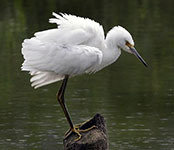 5/7 – Croton River, HRM 34: At low tide today, I visited the terminus of the Croton River as it runs into Croton Bay. Dozens of eager ring-billed gulls were enthusiastically diving low to snatch tiny, near colorless, fish off the water. As I ran through the possibilities of what they could be, I remembered that it was that time of the spring when thousands of newly-hatched river herring, alewives, were exiting tidal tributaries. Out on Croton Bay, along the low tide beach we call Inbuckie, three great egrets and one snowy egret were helping themselves to the bounty. (Photo of snowy egret courtesy of Deborarh Tracy Kral) 5/7 – Croton River, HRM 34: At low tide today, I visited the terminus of the Croton River as it runs into Croton Bay. Dozens of eager ring-billed gulls were enthusiastically diving low to snatch tiny, near colorless, fish off the water. As I ran through the possibilities of what they could be, I remembered that it was that time of the spring when thousands of newly-hatched river herring, alewives, were exiting tidal tributaries. Out on Croton Bay, along the low tide beach we call Inbuckie, three great egrets and one snowy egret were helping themselves to the bounty. (Photo of snowy egret courtesy of Deborarh Tracy Kral)
- Christopher Letts
*** Fish of the Week ***
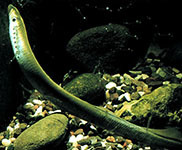 5/7 – Hudson River Watershed: Fish-of-the-Week for Week 172 is the American brook lamprey (Lethenteron appendix) number 2 (of 236), on our Hudson River Watershed List of Fishes. If you would like a copy of our list, e-mail: trlake7@aol.com 5/7 – Hudson River Watershed: Fish-of-the-Week for Week 172 is the American brook lamprey (Lethenteron appendix) number 2 (of 236), on our Hudson River Watershed List of Fishes. If you would like a copy of our list, e-mail: trlake7@aol.com
Lampreys are among the most primitive fishes in the world, modern remnants of a large group of jawless fishes that flourished in the Early Paleozoic (c. 500 million year ago). They were, in fact, the first vertebrates, although much of their skeleton is comprised of cartilage (C.L. Smith 1985).
The American brook lamprey is one of three lampreys (Petromyzontidae) in the watershed and the only one that is nonparasitic. They are small, averaging 6 to 8 inches, scaleless, with an elongated body that lacks paired fins, with a toothed, funnel-like sucking mouth (Mikko 2009).
Zoologist J.E. DeKay described the lamprey to science from a Hudson River specimen (type site, in part) in 1842.
American brook lamprey favors broad streams with stable, high-quality cold water. Like all lampreys, they die after spawning. This lamprey ranges from the upper Midwest, Great Lakes, and Mississippi River drainage, to the Saint Lawrence River and Atlantic Slope watersheds. In New York State, they seem to be relatively abundant in various western New York drainages and were formerly known from the Hudson River watershed.
However, the brook lamprey now appears to be gone (extirpated) from the watershed. Several years ago, Bob Schmidt went collecting with the world's expert on lampreys, Claude Renaud. They were looking for Hudson River specimens for DNA analysis as part of Renaud’s revision of world lampreys. They visited all the sites where brook lamprey was collected based on museum specimens and state surveys but failed to collect any. (Photo of American brook lamprey courtesy of Konrad Schmidt)
- Tom Lake
[To be, or not to be ...
Extant defines a population that is still found in a specific area, such as black bears and bobcats.
Extirpated means a species that is no longer found in a specific area but does exist elsewhere, for example the gray wolf and mountain lions.
Extinct means the population no longer exists, gone forever, like the American mastodon, woolly mammoth, and the passenger pigeon. Tom Lake]
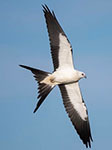 5/8 –Town of Poughkeepsie, HRM 70: We were out in our backyard gardening in late afternoon when we heard a ruckus and saw five black-colored birds (grackles, crows, or starlings) chasing a much larger bird that had a V-shaped tail. A few minutes later we got a better look at the larger bird. It was a swallow-tailed kite, a rare sighting, and possibly the same bird seen not far away three days ago by Eileen Stickle. (Photo of swallow-tailed kite courtesy of Adam Wilson) 5/8 –Town of Poughkeepsie, HRM 70: We were out in our backyard gardening in late afternoon when we heard a ruckus and saw five black-colored birds (grackles, crows, or starlings) chasing a much larger bird that had a V-shaped tail. A few minutes later we got a better look at the larger bird. It was a swallow-tailed kite, a rare sighting, and possibly the same bird seen not far away three days ago by Eileen Stickle. (Photo of swallow-tailed kite courtesy of Adam Wilson)
- Elizabeth Clifton, Allan Clifton
5/9 – Yonkers, HRM 18: Our staff at the Sarah Lawrence Center for the Urban River at Beczak, with assistance from students from Manhattan’s Dalton School, made nine hauls of our 30-foot seine. Perhaps because of a small peak in salinity, young-of-year Atlantic herring had reappeared after a short absence, along with yearling striped bass, young-of-the season blue crabs, and some grass shrimp. The water temperature was 53 degrees Fahrenheit (F), the salinity was 5.7 parts-per-thousand (ppt), and the dissolved oxygen was 10.0 parts-per-million (ppm).
- Emma Salada, Katie Lamboy, Christina Edsall w/ The Dalton School
5/9 – Manhattan, HRM 1-2: Our Hudson River Park's River Project staff, with assistance from one of our Harbor School interns, checked our sampling and collection gear that we deploy off Piers 26 and 40 in Hudson River Park. At Pier 40, we caught a whopping five black sea bass, 60-75 millimeters (mm), four of which were in one minnow pot. We also caught our second blackfish of the season (165 mm) in addition to several grass shrimp and isopods.
This was day one for our newly deployed sampling and collection gear off Pier 26, a bit farther south in the park. We caught no fish today, but we were treated to a diverse collection of invertebrates including mud crabs, grass shrimp, amphipods, isopods, blue mussels, and mud dog whelks. We are excitedly hopeful to discover what aquatic life we will see as our Pier 26 traps become more fouled with algae and attractive to fish.
- Zoe Kim
[Note: One-inch equals 25.4 millimeters (mm)].
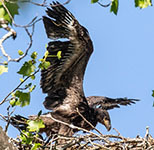 5/10 – Town of Poughkeepsie: The new leaves on the nest tree were slowly emerging and would soon obscure our visibility to see into bald eagle nest NY62, even from an appropriate distance. Today, mama and one of her two nestlings were caught in profile giving us a good look at how their size difference was diminishing. (Photo of bald eagle courtesy of Bob Rightmyer) 5/10 – Town of Poughkeepsie: The new leaves on the nest tree were slowly emerging and would soon obscure our visibility to see into bald eagle nest NY62, even from an appropriate distance. Today, mama and one of her two nestlings were caught in profile giving us a good look at how their size difference was diminishing. (Photo of bald eagle courtesy of Bob Rightmyer)
- Bob Rightmyer
[Bald eagle nest NY62 has sat in the crotch of several stout limbs in a tall tulip tree for twelve years. Trees like this one are routinely chosen by eagles for nesting as they afford easy-in, easy-out access. Tom Lake]
5/10 – Bedford, HRM 35: More great blue heron nestlings were beginning to make an appearance at the Bedford rookery. One surprise was seeing a nestling alone in its nest with no adult present. It was still covered in down feathers, but its parents must have felt secure enough to leave it while hunting for food. Three nests had a heron settled down either incubating or keeping new hatchlings warm. Another three nests had a guardian perched on the edge keeping watch while waiting for their mate to return for feeding. As the nestlings grow more will be seen.
- Jim Steck
5/10 – Yonkers, HRM 18: Our staff at the Sarah Lawrence Center for the Urban River at Beczak checked our fyke net that we had set overnight in the Beczak tidemarsh. The spring run of glass eels was still underway, albeit in much reduced numbers. Today, we found seven glass eels in the net along with grass shrimp and a white-fingered mud crab. The water temperature was 59 degrees F, the salinity was 5.9 ppt, and the dissolved oxygen was 10.8 ppm.
- Jason Muller, Emma Salada
5/11 – Little Stony Point, HRM 55: We were into the second day of stiff north winds that pushed a moderate chop onto the beach. We hauled our 35-foot seine along the beach, with the current, and continually netted only spottail shiners (80-110 mm), a native and resident species. For our final haul, we reversed the direction—upriver to downriver—and filled up with young-of-year alewives (31-36 mm). The river was 59 degrees F.
- Tom Lake, Dan Little
5/11 – Peekskill, HRM 44: On the favored incoming tide, today, I caught and released an 18-inch channel catfish during a four-hour shore-fishing session. It seems difficult to believe, but it was the only bite I got all day. At least I was not bothered by the extreme number of bait-stealers (golden shiners) that I encounter fishing at Beacon’s Long Dock.
- Bill Greene
5/11 – Yonkers, HRM 18: Our staff at the Sarah Lawrence Center for the Urban River at Beczak checked our fyke net that we had set in our tidemarsh. We were still monitoring glass eels (immature American eels), but their spring migration in from the sea was running dry. Today’s catch was a single glass eel. Also in the net was a marsh fiddler crab and a single young-of-year Atlantic herring. The water temperature was 56 degrees F, the salinity was 6.7 ppt, and the dissolved oxygen was 9.8 ppm.
- Jason Muller
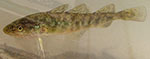 5/11 – Manhattan, HRM 13.5: In mid-afternoon, I was rod and reel fishing in the Harlem River off Inwood Park’s Dykeman Pier. The results of my recent fishing trips had been very poor so, hoping to change my luck, I tried raw shrimp in the rising tide as bait. Before long, I hooked and landed a large (by my estimation) Atlantic tomcod (9-inches-long). It was the largest tomcod I had seen in recent memory, and this one was my first catch of any kind since January 2. I released the tomcod back into the Harlem River. (Photo of Atlantic tomcod courtesy of Steve Stanne) 5/11 – Manhattan, HRM 13.5: In mid-afternoon, I was rod and reel fishing in the Harlem River off Inwood Park’s Dykeman Pier. The results of my recent fishing trips had been very poor so, hoping to change my luck, I tried raw shrimp in the rising tide as bait. Before long, I hooked and landed a large (by my estimation) Atlantic tomcod (9-inches-long). It was the largest tomcod I had seen in recent memory, and this one was my first catch of any kind since January 2. I released the tomcod back into the Harlem River. (Photo of Atlantic tomcod courtesy of Steve Stanne)
- Nicola Lagonigro
[Nicola Lagonigro is a longtime Hudson River Almanac supporter, and one of our favorite people. Today’s tomcod (Microgadus tomcod) was one of twelve fish species and crustaceans Nicola had has caught off Dykeman Pier over the years. Others include, oyster toadfish, spotted hake, hundreds of white perch, American eels, summer flounder (to 18-inches), tautog, channel catfish, striped bass (of various sizes), a gorgeous crevalle jack, a blue crab, and a single tiny shrimp. Tom Lake]
5/11 – Manhattan, HRM 1-2: Our Hudson River Park's River Project staff, with assistance from two of our Harbor School interns, checked our sampling and collection gear that we deploy off Piers 26 and 40 in Hudson River Park. In a crab pot at Pier 40, we were ecstatic to find our first oyster toadfish (Opsanus tau) of the season (220 mm). In a minnow trap we found a black sea bass (60 mm). Both fish were transported to our Hudson River Park WetLab tanks where they will be a major part of our education programs.
At Pier 26, we caught no fish again today, but found many invertebrates in our minnow pots including grass shrimp, sand shrimp, comb jellies, and mud dog whelks.
- Zoe Kim
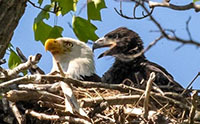 5/12 – Town of Poughkeepsie: One of the “sweet” moments that occurs each year in every bald eagle nest where nestlings are maturing and testing the bounds of their sticks-and-branches home in the trees, is the discovery of their huge, ironing-board size, wings. Initially, they seem to look at them either in awkward confusion or bewilderment, as if seeing them for the first time. Soon they will begin to practice jumps, even short flights from the nest to nearby branches. (Photo of bald eagles courtesy of Bob Rightmyer) 5/12 – Town of Poughkeepsie: One of the “sweet” moments that occurs each year in every bald eagle nest where nestlings are maturing and testing the bounds of their sticks-and-branches home in the trees, is the discovery of their huge, ironing-board size, wings. Initially, they seem to look at them either in awkward confusion or bewilderment, as if seeing them for the first time. Soon they will begin to practice jumps, even short flights from the nest to nearby branches. (Photo of bald eagles courtesy of Bob Rightmyer)
- Bob Rightmyer
[The events we describe nearly every day at bald eagle nest NY62, are also occurring at dozens of other nests throughout the watershed. NY62 is often featured because the nest has a dedicated cadre of skilled observers and photographers called The Soul of NY62. We also have others such as Howard Stoner (NY485-Peebles Island) and Nancy Winter (NY459-Town of Wappinger). Tom Lake]
5/12 – Yonkers, HRM 18: Our staff at the Sarah Lawrence Center for the Urban River at Beczak made five hauls of our 30-foot seine off the Beczak Beach. Our fish catch was led by young-of-year Atlantic herring (50 mm), but the featured fish was a young-of-year Atlantic tomcod (50 mm), our first of the year. Numerically (13), blue crabs dominated (30-95 mm carapace width). Also in the seine were grass shrimp, jumping around like popcorn, and one Leidy’s comb jelly (cherry-size).
From there we moved to our tidemarsh where we checked our fyke net for glass eels. Today there were two, plus one elver (last year’s glass eel), two Atlantic herring, and several grass shrimp. The water temperature was 58 degrees F, the salinity had risen to 8.0 ppt, and the dissolved oxygen was 9.3 ppm.
- Jason Muller, Bryan Coppede
[Note the standard research measurement for blue crabs is point-to-point across their carapace.]
5/13 – Hudson Valley: A strong eastern wind blew migrating Arctic terns from their habitual ocean migration route onto land, an epic event on 5/13/22. Many were seen on lakes and rivers in the northeast. There were still some stragglers on the Hudson, perhaps re-routing, on 5/14. Arctic terns are a pale, long-tailed, buoyant-flying tern that many were able to see on the river.
- Debbie van Zyl, Deb Tracy-Kral
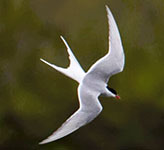 5/13 – Orange County, HRM 46: I traveled to Glenmere Lake, near Florida, this afternoon after Karen Miller reported several tern species on the lake, including Arctic terns. When I arrived, I found seven Arctic terns all in constant flight, quite distant, feeding over the lake. I took nearly 1,000 photos. This was a record first for Arctic tern in Orange County. (Photo of Arctic tern courtesy of Matt Zeitler) 5/13 – Orange County, HRM 46: I traveled to Glenmere Lake, near Florida, this afternoon after Karen Miller reported several tern species on the lake, including Arctic terns. When I arrived, I found seven Arctic terns all in constant flight, quite distant, feeding over the lake. I took nearly 1,000 photos. This was a record first for Arctic tern in Orange County. (Photo of Arctic tern courtesy of Matt Zeitler)
- Matt Zeitler
5/13 – Yonkers, HRM 18: I went solo today for the Sarah Lawrence Center for the Urban River at Beczak to check our fyke net that we had set overnight in our tidemarsh. Our glass eel numbers continued to dwindle—today just two. High count in the net went to grass shrimp (6) and white-fingered mud crab (4). The water temperature was 57 degrees F, the salinity had risen to 7.3 ppt, and the dissolved oxygen was 9.3 ppm.
- Jason Muller
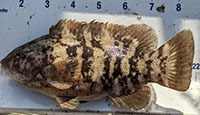 5/13 – Manhattan, HRM 2: Our Hudson River Park's River Project staff checked our sampling and collection gear that we deploy off Pier 40 in Hudson River Park. Overnight, our crab pot caught a feisty tautog, or blackfish (330 mm), as well as another juvenile black sea bass (65 mm). Additionally, our minnow pots caught many comb jellies, shrimp, and a mud dog whelk. (Photo of tautog courtesy of Siddhartha Hayes) 5/13 – Manhattan, HRM 2: Our Hudson River Park's River Project staff checked our sampling and collection gear that we deploy off Pier 40 in Hudson River Park. Overnight, our crab pot caught a feisty tautog, or blackfish (330 mm), as well as another juvenile black sea bass (65 mm). Additionally, our minnow pots caught many comb jellies, shrimp, and a mud dog whelk. (Photo of tautog courtesy of Siddhartha Hayes)
- Zoe Kim
[Blackfish is a colloquial name for tautog (Tautoga onitis) a rather common, bottom-dwelling fish in New York Harbor on out into saltwater. Their common name, blackfish, refers to the adults as they attain a deep and mottled coal black color. Among their favorite foods are shellfish that they find in abundance in near-shore rocky areas. In the spirit of “you are what you eat,” blackfish, perhaps owing to their shellfish diet, are one of the most sought-after food fishes. - Tom Lake]
Spring 2022 Natural History Programs and Events
June 11: Come out fishing for World Fish Migration Day
Join environmental educators for free fishing programs throughout New York Harbor and the lower Hudson River. The events are a celebration of World Fish Migration Day, exploring the creatures of the estuary through seining, angling, and other methods. Check out the website for locations, times, and partners: https://lamont.columbia.edu/ldeo-hudson-river-field-station/world-fish-migration-lower-hudson-fish-count
Announcing the 2022 Hudson River Striped Bass Cooperative Angler Program
You can share your fishing trip information and help biologists understand and manage our Hudson River striped bass fishery. Here’s how it works: Fill out a logbook provided by us whenever you fish on the Hudson River (by boat or from shore). You can also use our survey123 app and record your trips using a smart phone or computer. Record general location, time, gear used, what you caught (or if you didn’t catch anything) and return the logbook when you are done fishing for the season. You’ll receive an annual newsletter summarizing the information in addition to the latest news regarding regulations and the river. Whether you catch-and-release or take home a keeper, you can be part of the Cooperative Angler Program. Online logbook instructions can be found here: https://www.dec.ny.gov/docs/remediation_hudson_pdf/hrcoopanglerelogbook.pdf
Join today by contacting: hudsonangler@dec.ny.gov or call 845-256-3009
Hudson River Education
Teachers and students will enjoy our new Hudson River K-12 Unit of Study. This carefully curated group of lesson plans, arranged by topic and/or grade, brings together great learning tools developed by the DEC and dozens of estuary partners:
https://www.dec.ny.gov/education/25386.html
Hudson River Miles
The Hudson is measured north from Hudson River Mile 0 at the Battery at the southern tip of Manhattan. The George Washington Bridge is at HRM 12, the Tappan Zee 28, Bear Mountain 47, Beacon-Newburgh 62, Mid-Hudson 75, Kingston-Rhinecliff 95, Rip Van Winkle 114, and the Federal Dam at Troy, the head of tidewater, at 153. The tidal section of the Hudson constitutes a bit less than half the total distance – 315 miles – from Lake Tear of the Clouds to the Battery. Entries from points east and west in the watershed reference the corresponding river mile on the mainstem.
To Contribute Your Observations or to Subscribe
The Hudson River Almanac is compiled and edited by Tom Lake and emailed weekly by DEC's Hudson River Estuary Program. Share your observations by e-mailing them to trlake7@aol.com. To subscribe to the Almanac (or to unsubscribe), use the links on DEC's Hudson River Almanac or DEC Delivers web pages.
Useful Links
National Oceanic and Atmospheric Administration online tide and tidal current predictions are invaluable when planning Hudson River field trips. For real-time information on Hudson River tides, weather and water conditions from sixteen monitoring stations, visit the Hudson River Environmental Conditions Observing System website.
DEC's Smartphone app for iPhone and Android is now available at: New York Fishing, Hunting & Wildlife App.
|