Hunting and Trapping Newsletter
The New York State Department of Environmental Conservation sent this bulletin on 05/11/2022 11:41 AM EDT |
| DEC Delivers - Information to keep you connected and informed from the NYS Department of Environmental Conservation |
| Share or view as a web page || Update preferences or unsubscribe |
Hunting and Trapping Newsletter |
DEC Announces 2022-2023 Waterfowl Hunting Season DatesWaterfowl News for 2022-2023
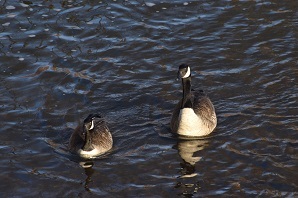
Photo courtesy of R. Sciorilli Youth Waterfowl Hunting Opportunities
Duck hunting seasons begin with designated "youth waterfowl hunts" across the state. These hunts allow youth hunters to spend time afield with experienced adult hunters and gain necessary knowledge and skills to become safe and responsible members of the hunting community. Junior hunters (12 to 15 years of age) accompanied by a licensed adult hunter with up-to-date Harvest Information Program registration and a duck stamp may participate. During the youth hunt, the adult hunter may not possess a firearm or shoot any birds unless the respective regular season is open. Daily bag limits are the same as those allowed during the regular hunting season for all species (excludes September Canada goose bag limits). The youth hunts are held on weekends in each zone of the state, as follows:
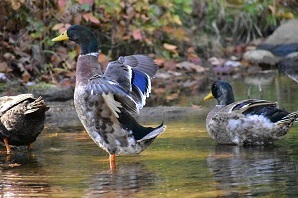
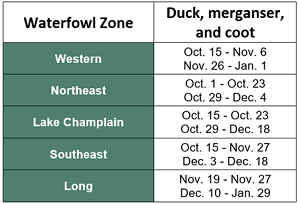
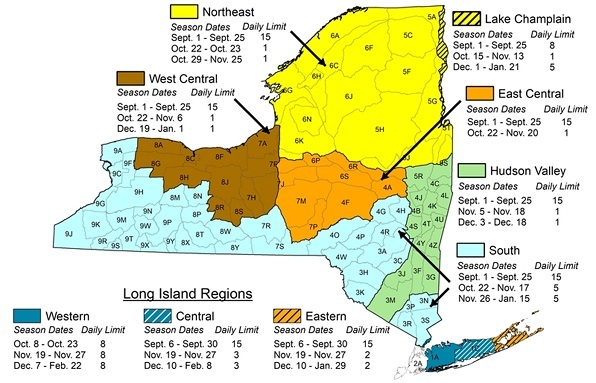
Photo courtesy of K. Beddow Duck Hunting Season Dates Each year, DEC works with the United States Fish and Wildlife Service (USFWS) and the Atlantic Flyway Council to develop waterfowl hunting regulations and season dates. This year, DEC, with the assistance of Cornell University and the waterfowl hunter task forces, implemented a new process for selecting the 60-day duck season dates within the dates allowed by the USFWS. New York duck seasons offer the opportunity to hunt from the first week of October through the last Sunday in January, depending on the waterfowl hunting zone. By having five waterfowl zones, it allows DEC to select dates that maximize duck abundance in each zone which varies based on habitat and latitude. For a full listing of all migratory bird season dates and bag limits visit the DEC website.
2022-2023 Canada Goose Seasons Canada goose hunting regulations can often be confusing because of the number of zones, varied bag limits and season lengths. Although some of the boundaries and bag limit differences appear to be random, they were designed using scientific data to maximize opportunity for resident Canada geese, but also to protect migratory populations that are much more sensitive to hunter harvest. Season lengths and bag limits are, again, developed in collaboration between the USFWS and the Atlantic Flyway Council. After the season frameworks are established (e.g., season length, bag limits, outside allowable dates), DEC gathers input from waterfowl hunters and the waterfowl hunter task forces to select dates that maximize opportunity for hunters in each zone.
It’s Spring Cleaning Season! Remove and Sanitize Your Bird Feeder to Limit Conflicts with Wildlife and Spread of Disease
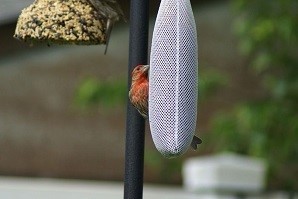
DEC recommends removing bird feeders in April so they do not attract hungry black bears and other wildlife. As the weather warms, natural foods become abundant and supplemental feeding isn’t as helpful as during the stressful winter period. It is also good practice to clean your bird feeders. Two diseases are commonly spread at bird feeders:
Other diseases potentially spread at feeders include Aspergillosis (sometimes associated with moldy seed) or Trichomoniasis (a protozoan parasite spread at bird baths). Highly Pathogenic Avian Influenza is not thought to be related to bird feeding or songbirds. Clean bird feeders with a warm, soapy solution and brush to remove solid particles, then sanitize for 10 minutes with a 10% bleach solution (1 part household bleach, 9 parts water). During the winter, clean feeders every two weeks and allow the feeder to dry thoroughly before re-filling it with feed. Note: Although we did not see any cases of the mysterious songbird eye disease in NY last year, DEC will be monitoring birds this spring and summer. We encourage people to report any unusual mortalities in fledgling birds this season, especially American robins, blue jays, common grackles, and European starlings. Photo courtesy of K. Hill |
|
The New York State Department of Environmental Conservation respects your right to privacy and welcomes your feedback | Update preferences or unsubscribe | Learn more about DEC Delivers |
|
Connect with DEC:     
|
|
| Basil Seggos, Commissioner | |