|
This bulletin provides only the most recent notices. Check the Adirondack Backcountry Information webpages for more detailed information on access, outdoor recreation infrastructure, and conditions.
Emergency Situations: If you get lost or injured; keep calm and stay put. If you have cell service, call 911 or the DEC Forest Ranger Emergency Dispatch, 833-NYS-RANGERS.
Welcome to the Adirondacks. The Welcome to the Adirondacks webpage is the place to go if you are interested in learning more about the Adirondacks. It provides information about the Forest Preserve, conservation easement lands, outdoor recreation, and Leave No Trace.
Love Our NY Lands: All New Yorkers and visitors should be able to access, enjoy, and feel welcome on state lands. These lands belong to all of us, our families, and our neighbors. While enjoying these shared spaces, be respectful of other visitors. Share trails, treat people with kindness, and leave things as you found them for others to enjoy. All of us have a responsibility to protect State lands for future generations. Learn more about how you can Love Our NY Lands.
Recreation Highlight: Mark Your Calendars for May 7 – I Love My Park Day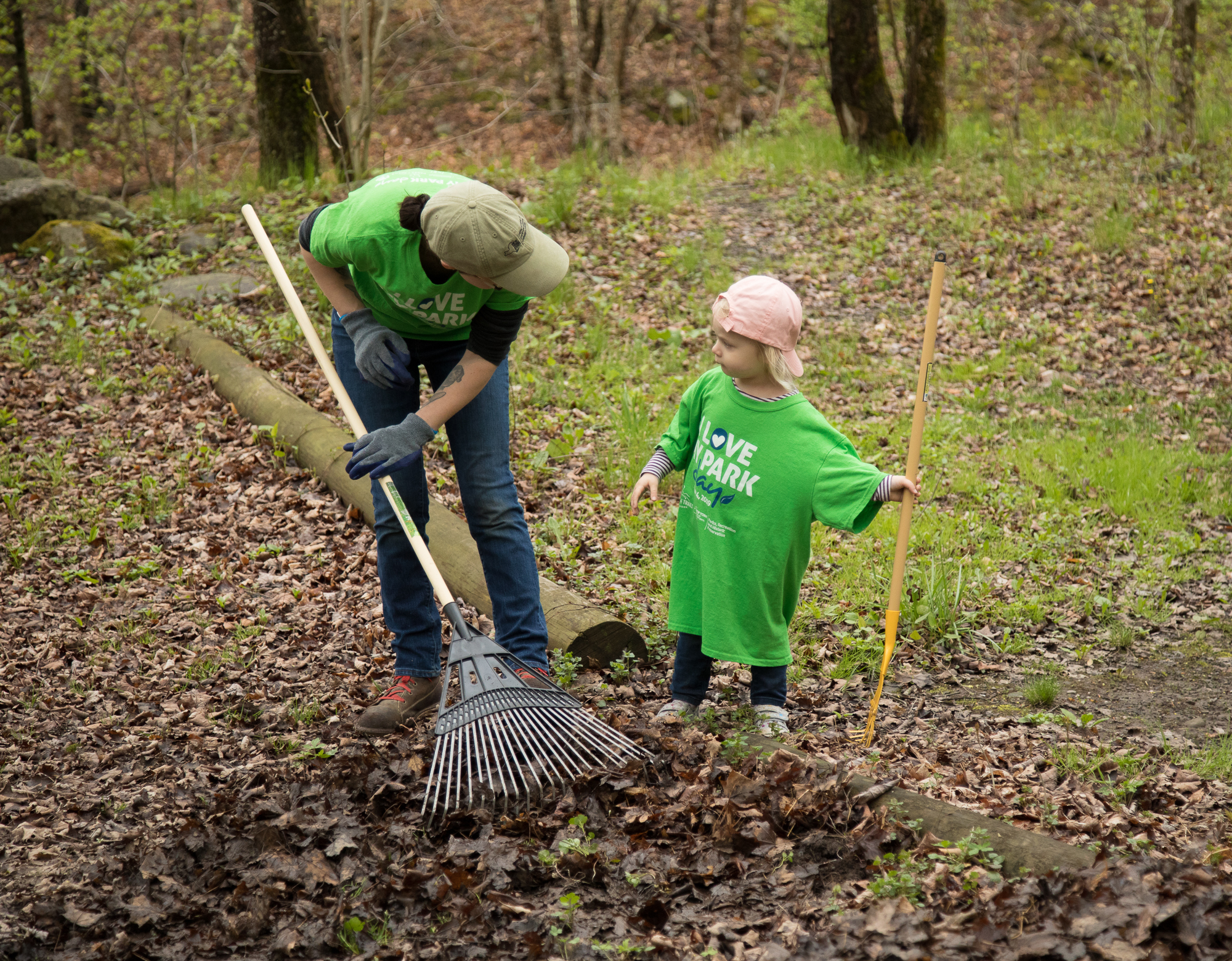
The 11th Annual I Love My Park Day will be held on Saturday, May 7. I Love My Park Day is hosted by Parks & Trails New York in partnership with DEC and New York State Parks will host events at 145 state parks, historic sites, and public lands across the state. Volunteers will celebrate New York's public lands by cleaning up debris, planting trees and gardens, restoring trails and wildlife habitats, removing invasive species, and working on various site improvement projects. Join one of 15 I Love My Park Day events in and around the Adirondacks and help clean up lands and beaches, plant trees and gardens, restore trail and wildlife habitat, remove invasive species, and work on various site improvement projects. Register for an event near you.
Events will be held at the following locations:
- Ausable Point Campground
- Crown Point State Historic Site
- Eighth Lake Campground
- Fish Creek Pond Campground
- Frontier Town Campground & Equestrian Area
- Hearthstone Point Campground
- Lake George Battlefield Day Use Area
- Lake George Battlefield Park
- Luzerne Campground
- Meadowbrook Campground
- Northampton Beach Campground
- Paul Smith's College VIC
- Conifer-Emporium Conservation Easement & Cranberry Lake Wild Forest
- Cranberry Lake Campground
- Nicks Lake Campground
Recent Notices
The following are the most recent notices pertaining to public lands in the Adirondacks. Please check the Adirondack Backcountry Information webpages for comprehensive and up-to-date information on seasonal road statuses, rock climbing closures, specific trail conditions, and other pertinent information.
NEW THIS WEEK:
High Peaks Wilderness: Snow Conditions, 04/27: Snowshoes are still required for most high elevation trails where snow remains deeper than 8 inches. Crampons and microspikes are still essential – many trails are still icy, especially above 3,000 feet. Trails are extremely muddy at lower elevations. Remaining ice on high elevation lakes is completely unstable and will not hold weight. Expect high water in drainages. Check summit weather forecasts for more accurate predictions at higher elevations. Recent heavy, wet snowfall has caused significant blowdown, making navigation more challenging. Carry a paper map and compass or GPS and know how to navigate. Please avoid all trails above 2,500 feet while DEC’s muddy trails advisory is in effect.
Saranac Lakes Wild Forest: There is a washout on the access road to Saint Germain and Meadow Ponds. This road will remain closed to public vehicles until it is repaired later this summer.
Lake George Wild Forest: Dacy Clearing Road has been opened for the season.
Watson’s East Triangle Wild Forest: The Bear Pond Road Gate has been opened, and gates on the Croghan and Oswegatchie Conservation Easement Tracts are likely to be opened within the next week.
LAST WEEK:
Terry Mountain State Forest: Motorized public access via the Mud Pond Road is closed for mud season.
General Notices
Visit the main Adirondack Backcountry Information page for more trip-planning resources, including travel information, weather resources, and seasonally-specific information about Adirondack recreation.
Know Before You Go (04/28): Depending on where you plan to visit, conditions may be very different. Continue to prepare for wet spring conditions at lower elevations and winter conditions at higher elevations, including snow and ice. DEC’s Muddy Trails Advisory encourages visitors to avoid all trails above 2,500 feet, including all High Peaks, to help prevent trail damage and erosion. Expect high, fast-moving water at crossings – do not attempt to cross high, fast waters where there is no bridge. Temperatures will vary significantly depending on your location, the time of day and your elevation. Be prepared with warm, waterproof layers, extra layers, and, depending on the elevation of your hike, proper gear for snow and ice, including snowshoes, microspikes and crampons. Cool, wet weather poses a significant risk of hypothermia, so learn how to recognize and avoid it. Wear sturdy waterproof boots that are already broken in.
Check the Weather: Check the forecast for your destination and pack and plan accordingly. Check the National Weather Service Northern Adirondacks and Southern Adirondacks Mountain Point Forecasts for select summit forecasts. Check both daytime and nighttime temperatures and remember that temperatures will drop as you gain elevation. Check wind chill temperatures and prepare for colder, windier summits.
Muddy Trails: Walk straight through mud instead rather than around it to prevent trail widening and vegetation damage. Opt for low elevation trails until high elevations have time to dry and harden. Follow the muddy trails advisory.
Monorails: Monorails are thin strips of hardpacked snow and ice in the center of trails, surrounded by minimal or no snow on the sides. Monorails can create difficult walking conditions. Microspikes and trekking poles can assist with traction and balance.
Seasonal Roads: Most seasonal access roads are closed for spring mud season. Where seasonal access roads are open to public motor vehicles, the use of four-wheel drive vehicles is strongly recommended.
Fire Danger: Check the fire rating map.
Water Conditions: Water levels throughout the Adirondack region are mostly average for this time of year. Check the USGS Current Water Data for New York for stream flow of selected waters. Water temperatures will be very cold. Personal Flotation Devices (PFDs aka lifejackets) are required to be worn until May 1. Where bridges are not available, do not attempt stream crossings during periods of high, fast-moving water.
Ticks: Wear light-colored clothing with a tight weave to spot ticks easily. Wear enclosed shoes, long pants and a long-sleeved shirt. Tuck pant legs into socks or boots and shirt into pants. Check clothes and any exposed skin frequently for ticks while outdoors. Consider using insect repellent. Stay on cleared, well-traveled trails and walk in the center of trails. Avoid dense woods and bushy areas. Additional tips for tick prevention.
Bear Canisters Required: NYSDEC requires the use of bear-resistant canisters by overnight users in the Eastern High Peaks Wilderness between April 1 and November 30. NYSDEC encourages campers to use bear-resistant canisters throughout the Adirondack backcountry. Bear canisters should be used to store all food, food garbage, toiletries, and other items with a scent. Canisters should be stored a minimum of 100ft from tents, lean-tos and cooking sites and kept closed whenever they are not being accessed. Learn more about bear canisters and avoiding human-bear conflicts.
Adirondack Rock Climbing Closures: DEC closes certain rock climbing routes in the Adirondacks to protect nesting peregrine falcons. For a full list of closures, visit Adirondack Rock Climbing Route Closures. Once peregrine nest sites are determined, climbing routes that will not disturb nesting will be reopened. Routes that remain closed will reopen after the young have fledged. Thank you for your cooperation. For more information please contact the Bureau of Wildlife at (518) 623-1240.
Adirondack Mountain Reserve: Parking reservations will be required May 1 through Oct. 31 for single-day and overnight access to the parking lot, trailheads, and trails located on the privately owned, 7,000-acre AMR property in the town of Keene in the High Peaks region. For a list of frequently asked questions and to register, visit AMR's website.
Safety & Education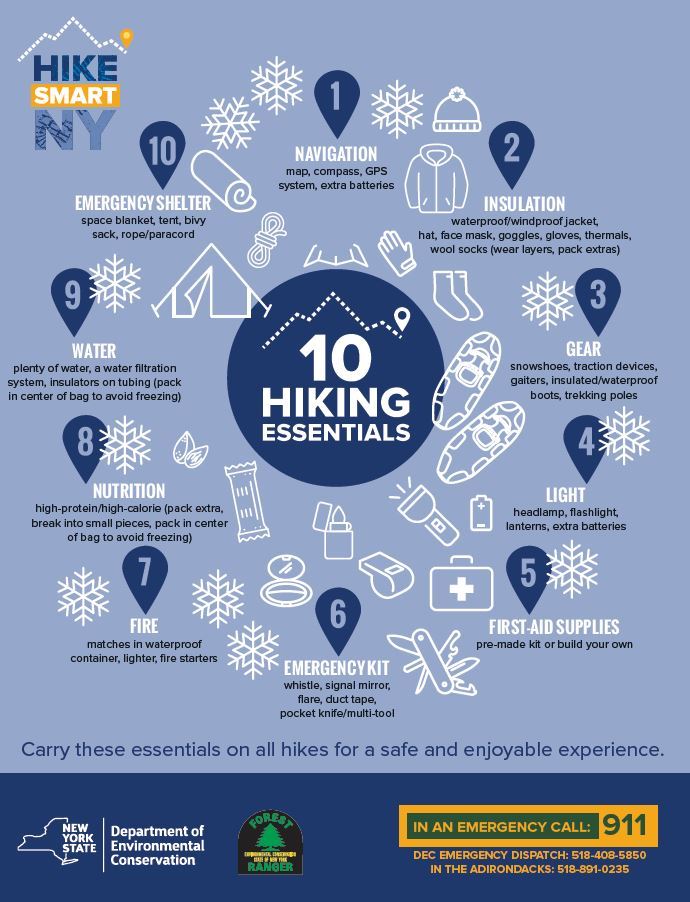
Spring is in full swing. Whether you’re going for a hike, a bike, a paddle, or fishing, Hike Smart NY can help you prepare with a list of 10 essentials, guidance on what to wear, and tips for planning your trip with safety and sustainability in mind.
Spring Water Safety
With longer days, warmer temperatures, and open water, canoes, kayaks and SUPs are calling us to begin summer paddling adventures. It’s important to remember, however, that spring water conditions can pose serious risks. Lakes and rivers are still extremely cold this time of year and falling in can quickly cause cold shock, loss of consciousness, and hypothermia. Consider wearing a wetsuit or drysuit until water temperatures increase. Personal Floatation Devices (PDFs) are required to be worn through May 1 and are strongly recommended to be worn in personal watercraft year-round. Between snowmelts and spring rains, be prepared for high, fast-moving waters. This can make paddling more challenging and pose significant risks to non-boaters at water crossings. Check water levels before you head out, and if water seems risky when you arrive, make plans to return a different day.
Leave No Trace
Follow the Seven Principles of Leave No Trace to maintain minimal impact on the environment and the natural resources of the Adirondacks. Use proper trail etiquette to ensure an enjoyable experience for yourself and others and tread lightly!
Minimizing Your Mud Season Impacts
Mud season – the time during and shortly after snowmelt when the saturated ground is soft and, well, muddy. This is a critical time for roads and trails, as they are particularly delicate and prone to damage. Many seasonal roads close during this time to allow roads to dry and harden. Muddy trail advisories encourage visitors not to hike above 2,500 feet where soil is thinnest and trails are the most fragile. While it’s tempting to embrace the warmer temperatures and rush to your favorite outdoor destinations, consider the following ways you can help minimize mud season damage:
-
Give the trails a break. Focus on other forms of outdoor recreation until muddy trail advisories have lifted. This is a great opportunity to try out new hobbies.
-
Stay low. If you do hike, choose low elevation trails. Muddy trail advisories recommend staying below 2,500 feet.
-
Get muddy. If you encounter mud on the trail, walk straight through it instead of around it to prevent trail widening and concentrate impacts.
-
Watch your step. Trailside vegetation is just starting to take hold. Stay on designated trails to avoid trampling delicate plants.
-
If you wouldn’t hike, don’t bike. Bike tires can heavily impact loose, wet trails. Make sure trails are fully dried and hardened before heading out on your bike.
|